


China pneumonia outbreak: Could it spread to India?
Amid the China pneumonia outbreak, there is growing concern that it could spread to other countries. And while India is reviewing public health preparedness, the health ministry has said there is a ‘low risk’ from the surge. Pandemic fears, then, seem largely exaggerated

There is a spike in respiratory illness in China and the world is worried. The mystery illness which is being likened to pneumonia is making children sick. Hospitals in north China – Beijing and Liaoning – are reportedly overwhelmed with the influx of patients as the first winter has set in since COVID-19 restrictions were lifted last December. It feels like déjà vu and everyone is wondering: Is another pandemic coming?
While health experts have urged caution over fears of another pandemic, the world, especially the neighbouring nations, is watching closely. India is taking precautionary steps as there are reports of a surge in cases in China.
Health authorities in the Communist nation, however, have attributed the rising infections to the end of strict COVID-19 restrictions, the arrival of the cold season, and the circulation of known pathogens including influenza, mycoplasma pneumonia, respiratory syncytial virus (RSV) and SARS-CoV-2.
 More from Explainers
We take a look at what India is doing amid China’s pneumonia outbreak and the chances of it spreading overseas.
What is India doing amid China’s pneumonia scare?
The Indian government issued a health advisory for all states and Union Territories on Sunday, asking them to review public health preparedness immediately amid reports of rising cases in China.
The Ministry of Health and Family said that it had decided to proactively review preparatory measures against respiratory illnesses as a matter of abundant caution. It has asked states to check the preparedness of hospitals like hospital beds, protective gear, drugs, vaccines for influenza, and medical oxygen among others.
“This is noted to be important in view of the ongoing influenza and winter season that results in an increase in respiratory illness cases. The Government of India is closely monitoring the situation and indicated that there is no need for any alarm,” the ministry said in a statement.
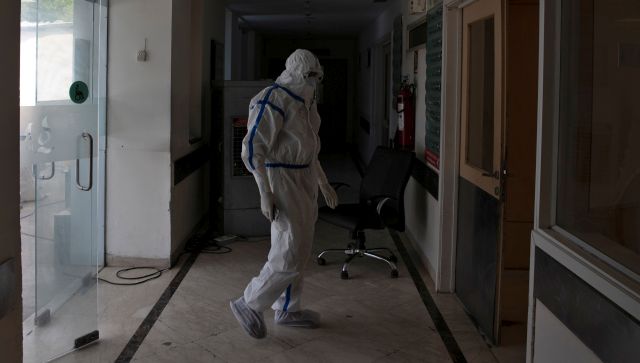
State authorities have been advised to implement Operational Guidelines for Revised Surveillance Strategy in the context of Covid-19’, which was shared earlier this year, according to a report in News18.com. It provides for integrated surveillance of respiratory pathogens presenting as cases of influenza-like illness (ILI) and severe acute respiratory illness (SARI). They have also been asked to ensure that the trends of ILI and SARI, particularly among children and adolescents, are closely monitored by district and state surveillance units of the Integrated Disease Surveillance Project (IDSP).
The data is expected to be uploaded to the IDSP portal. States have reportedly been instructed to send nasal and throat swab samples of patients with SARI, particularly children and adolescents, to the Virus Research and Diagnostic Laboratories for testing for respiratory pathogens.
On Friday, the health ministry said that there was a “low risk” to India from the recent outbreak of H9N2 and pneumonia cases being reported in parts of China. However, it was monitoring the situation closely.
“The usual causes of respiratory illness in children have been implicated and there has been no identification of an unusual pathogen or any unexpected clinical manifestations,” it said.
Also read: What’s the mystery pneumonia making children sick in China?
What Indian doctors are saying
As cases in China surge, Dr Ajay Shukla, director of Delhi’s Ram Manohar Lohia Hospital, advised people to be careful and follow everyday practices of cleanliness. He advised those suffering from respiratory illnesses and other infections to distance themselves from others.
“I would just advise people to be careful. Follow routine practices of cleanness and if you feel that there's someone who's got this respiratory illness or infection, since a lot of these cases are viral and they can be transmitted, try to maintain distance from other people," Dr Shukla was quoted as saying ANI.
He advised that people should wear masks if possible and wash their hands. “…we are also dealing with pollution if you're going out, and if you can afford it, it's better you should use a mask, preferably an N95 and N99 mask. Wash your hands and maintain safe, healthy practices,” he said.
Dr Shukla said that the increase in the small number of children going to hospitals with respiratory illnesses has disrupted the situation in China, according to ANI.
“It's very early I would say the amount of information that we are able to access is very, very little. The WHO is definitely very much concerned about it.”
“…so far the picture that is coming out, is that there is a great increase in the number of small children going into hospitals with respiratory illnesses, and in a few centres, they have reported an increase of almost 1200 children a day which is a huge number and a lot of schools have told children not to come to their classes inside the school. So the situation is definitely been disrupted,” he said on Friday.
Also read: 7,000 cases a day: How deadly is the pneumonia outbreak in China?
Can the illness spread to India, other nations?
The current outbreak is linked to mycoplasma pneumoniae, a bacteria which usually causes a mild infection with symptoms similar to a cold. It does not require hospitalisation, save for rare cases. However, children with nascent immune systems face a greater risk of catching pneumonia, which explains the rising cases among children in China.
The outbreak remains fairly contained for now and China too has ramped up testing and surveillance.
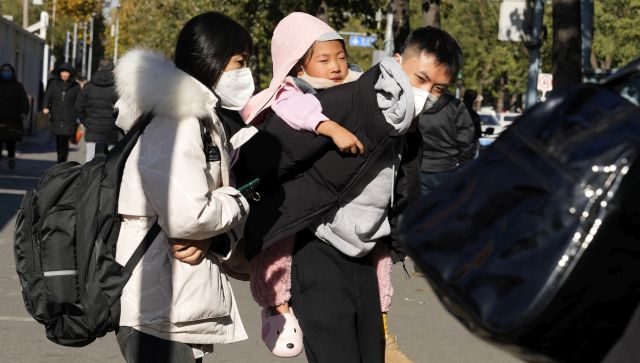
According to Dr Shukla, experts have said that there was no need to worry about the disease in India as symptoms have not been seen in the country. “Not a single patient infected with this disease has been found in India yet. There is no increase in cases in any part of India so far, or any part of the world apart from China. So all the cases that we’re hearing are from China,” he said.
While there are concerns of spread because of what happened during the COVID-19 pandemic, mycoplasma is a well-known and common germ that tends to cause fresh outbreaks every few years, according to a report in Bloomberg. And other viruses are circulating too, particularly RSV. There is a likelihood that this winter countries across the world will see a rise in the number of pathogens.
Even if the outbreak spreads to other nations, from what we know so far, vaccines and medicines are available to fight it. Mycoplasma pneumonia can be treated with the antibiotic Azithromycin, reports The Indian Express.
How bad is the situation in China?
The Beijing children’s hospital saw an average of 7,000 patients every day, exceeding its capacity last week, according to the state-owned China National Radio.
According to a report in Al-Jazeera, a major Beijing hospital was seeing 1,200 patients enter their emergency room on an average every day on Thursday.
Concerns about the disease started after an alert by monitoring service ProMed last Tuesday about ‘undiagnosed pneumonia’ in Beijing and Liaoning. The first-ever notice of COVID-19 also spoke of ‘undiagnosed pneumonia in China’s Hubei). Hence, fears of a new pandemic started to emerge.
However, China’s health ministry has said that the surge in respiratory illnesses is caused by the flu and other known pathogens and not by a novel virus, reports The Associated Press.
Recent clusters of respiratory infections are caused by an overlap of common viruses such as the influenza virus, rhinoviruses, respiratory syncytial virus (RSV) and adenovirus, as well as bacteria such as mycoplasma pneumoniae, which is a common culprit for respiratory tract infections, a National Health Commission spokesperson said.
“Efforts should be made to increase the opening of relevant clinics and treatment areas, extend service hours and increase the supply of medicines,” said the ministry spokesperson, Mi Feng.
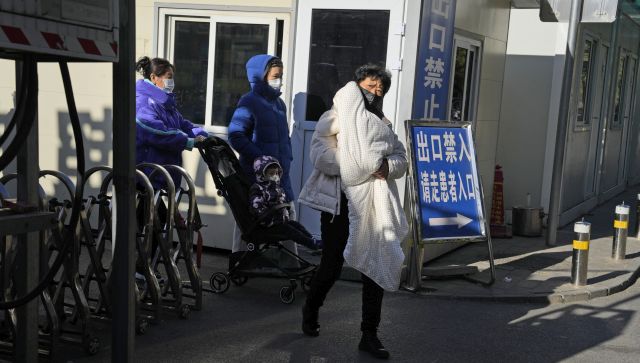
The World Health Organisation (WHO) had last week requested China to provide information about the potentially worrying rise in respiratory illnesses. The UN health agency said that Chinese health officials had provided the requested data and it showed an increase in hospital admissions of children due to diseases including bacterial infection, RSV, influenza and common cold viruses since October.
With inputs from agencies

Military drones & police check-ups: How Sri Lanka is fighting against worst dengue outbreak in a decade
How Facebook job ad lured 2 Karnataka men into Myanmar cyber scam camp
Why is India seeing 95% cloud cover despite a Super El Niño?
What is CJP’s fourth demand to the government as protests in Delhi intensify?
The new geography of war: Why the Houthis can no longer be ignored