


China has built a ‘String of Pearls’ in the Indo-Pacific. Here’s how India is countering it
For nearly two decades, China has been building ports across the Indo-Pacific — from Pakistan’s Gwadar to Sri Lanka’s Hambantota. However, India isn’t trying to match Beijing port for port; it is focused on building partnerships. The Sabang Port agreement in Indonesia is the clearest indicator that New Delhi is writing its own playbook in the region

For nearly two decades, China has approached the Indo-Pacific with an ambitious infrastructure strategy. Ports have sprung up from Pakistan’s Gwadar to Sri Lanka’s Hambantota, from Myanmar to the eastern coast of Africa. Officially, these were commercial investments. Strategically, they came to be known as the “String of Pearls” — a network of maritime footholds that steadily expanded Beijing’s reach while quietly attempting to corner India in its own neighbourhood.
Every new Chinese-funded port prompted the same question: What was India doing? The answer, it turns out, was something far more patient. Rather than trying to match China port for port, India has focused on building partnerships. Prime Minister Narendra Modi’s visit to Indonesia is perhaps the clearest sign yet that New Delhi has stopped reacting to China’s geopolitical playbook and started writing its own.
 More from Explainers
Why is Sabang Port significant?
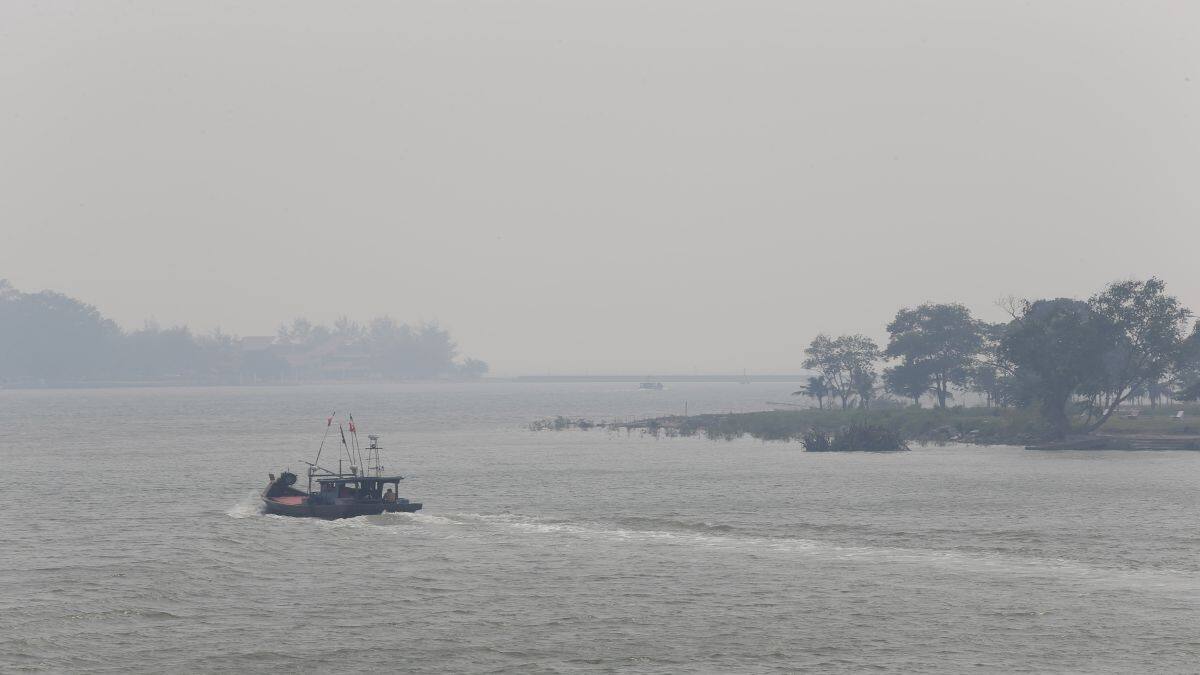
The headline is the Sabang Port agreement, but the larger story is India’s evolving Indo-Pacific strategy. Sabang sits at the northern tip of Indonesia’s Sumatra Island, overlooking the entrance to the Strait of Malacca — one of the world’s most strategically important waterways.
Around 22 per cent of global maritime trade and nearly 29 per cent of the world’s seaborne oil passes through this narrow corridor connecting the Indian Ocean with the Pacific. It is the energy lifeline linking West Asia to the industrial economies of China, Japan, and South Korea.
Contrary to some exaggerated claims, India will not “control” the Strait of Malacca because of Sabang. What India has secured is arguably more valuable: strategic access and a trusted maritime partnership at one of the world’s most important maritime chokepoints.
Over the past year, the importance of global sea trade chokepoints has become increasingly evident. In geopolitics, proximity creates influence, and influence shapes calculations. Often, changing an adversary’s calculations is more valuable than making dramatic declarations. That is diplomacy at its most effective.
How does this compare with China’s strategy?
The significance of the Indonesia partnership becomes even clearer when viewed against recent developments. Only weeks before PM Modi’s visit, China strengthened its strategic footprint in Bangladesh by advancing another port project on India’s eastern flank. For years, Beijing’s approach to regional influence has remained straightforward: finance infrastructure, build ports, and create long-term dependencies.
India could have attempted to outspend China, but that would have been both difficult and impractical. Instead, New Delhi has chosen to outmanoeuvre Beijing.
What else does the Indo-Indonesia partnership include?
The partnership extends well beyond maritime cooperation. Defence ties have expanded through agreements covering the export of BrahMos supersonic cruise missiles and Astra air-to-air missiles. Maritime security cooperation is deepening, while critical minerals, defence manufacturing, and strategic coordination have all become areas of collaboration.
More importantly, India no longer appears to view geopolitics as a collection of rigid military blocs. Instead, it is building multiple, overlapping layers of influence through hard power, soft power, economic partnerships, educational exchanges, civilisational ties, and symbolic initiatives.
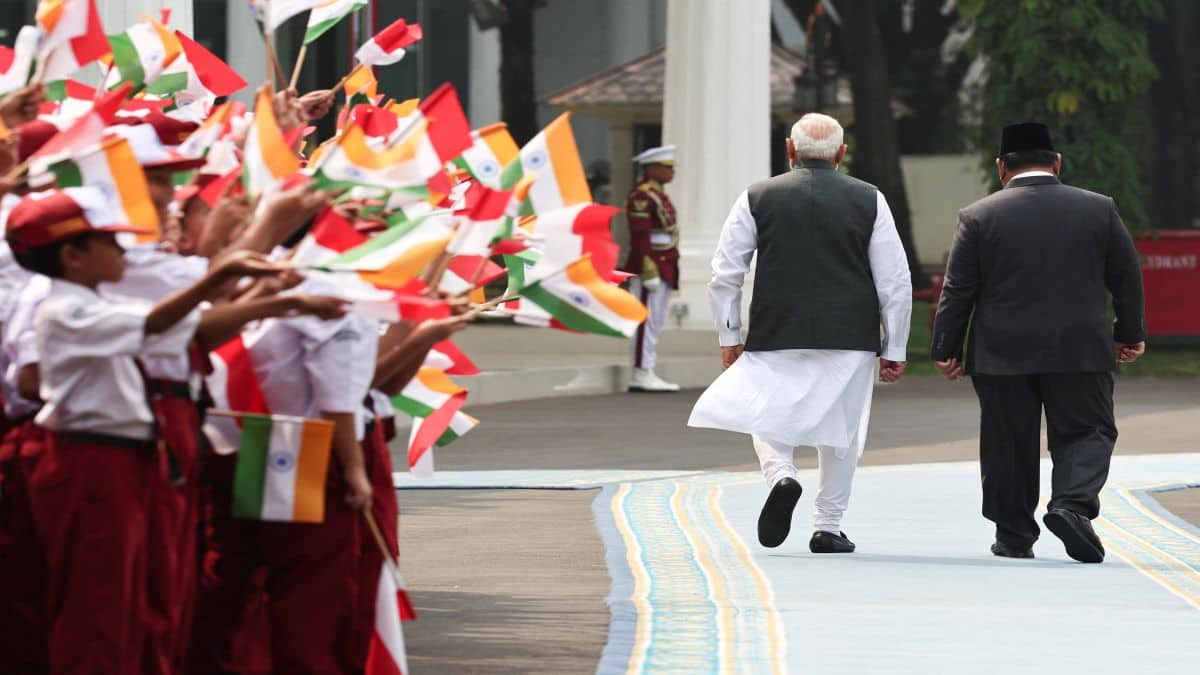
One example is the joint restoration of a ninth-century Hindu temple in Indonesia, highlighting how strategic partnerships can be strengthened through shared history rather than shared anxieties.
At the same time, IIM Bangalore is establishing its first overseas campus in Indonesia, exporting not merely education but long-term intellectual influence. This is diplomacy that thinks in decades rather than news cycles.
Is Indonesia an isolated example?
Not at all. Across the western Indian Ocean, India has deepened maritime cooperation with island nations such as Seychelles, helping strengthen coastal radar networks and maritime domain awareness.
In the east, strategic coordination with Japan continues to grow under the Quad framework. Australia has also become an increasingly important defence and security partner. Modi’s outreach to Australia and New Zealand reflects the same broader objective: weaving together a resilient Indo-Pacific network where no single country has to face coercion alone.
Viewed individually, these partnerships may appear disconnected. Viewed together, a clear pattern emerges.
China built what has been described as a necklace of strategic “pearls”. India is weaving a net. One can potentially be weakened by snapping a few strings. The other grows stronger with every new knot.
What is the biggest weakness of the ‘String of Pearls’?
This is where Beijing’s strategy reveals its greatest limitation. Ports can be financed. Harbours can be leased. Concrete can be poured. Trust, however, cannot. Infrastructure can secure geography, but it cannot guarantee political goodwill. That is why the Sabang partnership matters.
It is not merely about one port overlooking one strategic waterway. It signals that countries across the Indo-Pacific increasingly see India not simply as a balancing power, but as a dependable partner willing to invest in mutual security rather than purely transactional influence.
Does this mean India has overtaken China?
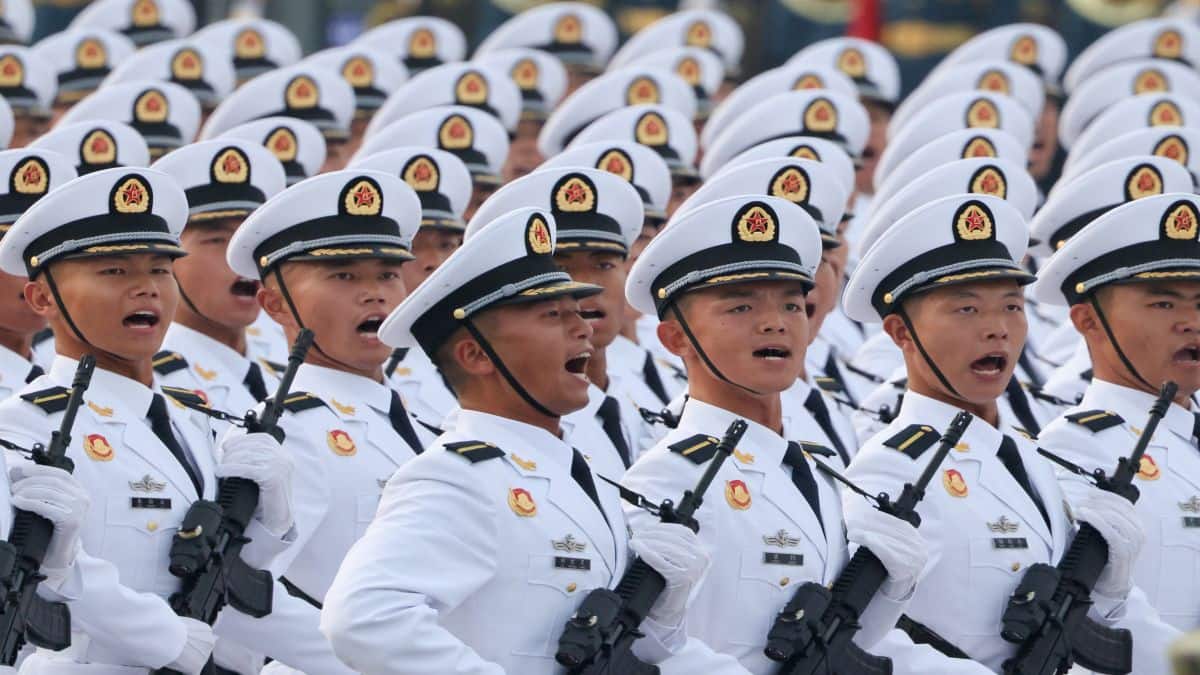
Not necessarily. China still possesses a larger navy, greater financial resources, and an unmatched ability to fund infrastructure at scale. But power is no longer measured only by the number of ports a country can build. It is also measured by the number of partners willing to stand beside a country when the seas become contested.
For years, China perfected the art of writing cheques. India appears to be perfecting the art of building trust. And in geopolitics, trust remains the one currency no rival can simply buy.
(The author is a freelance journalist and features writer based out of Delhi. Her main areas of focus are politics, social issues, climate change and lifestyle-related topics. Views expressed in the above piece are personal and solely those of the author. They do not necessarily reflect Firstpost’s views.)

Military drones & police check-ups: How Sri Lanka is fighting against worst dengue outbreak in a decade
How Facebook job ad lured 2 Karnataka men into Myanmar cyber scam camp
Why is India seeing 95% cloud cover despite a Super El Niño?
What is CJP’s fourth demand to the government as protests in Delhi intensify?
The new geography of war: Why the Houthis can no longer be ignored