


Chernobyl could have destroyed all of Europe. How this 3-man 'suicide squad' prevented that
40 years ago, on this day (April 26), a safety test at the Chernobyl Power Plant in Ukraine set off two explosions, triggering the world’s biggest nuclear disaster. However, it could have been worse had it not been for the heroism of three men — Alexei Ananenko, Valeri Bespalov, and Boris Baranov — who took part in an operation to drain water from under the power station to prevent a further explosion. Today, they are known as Chernobyl’s ‘suicide squad’

Today (April 26) marks the 40th anniversary of the explosion at the fourth reactor of the Chernobyl Nuclear Power Plant in northern Ukraine, which changed the lives of thousands of Soviet citizens. It was on this day in 1986 that the reactor melted down, and the resulting disaster was the worst nuclear power plant accident in history, both in costs and casualties.
Even today, the Chernobyl disaster is considered horrific and evokes dread in the minds of people. However, it could have been much, much worse, had it not been for the heroism and sacrifice of three brave volunteers, dubbed the ‘suicide squad’.
Who was in Chernobyl’s ‘suicide squad’ and what did they do?
 More from Explainers
What happened at Chernobyl Nuclear Power Plant?
On April 26, 1986, employees conducted a systems test at Chernobyl Nuclear Power Plant in Ukraine. However, the test went severely awry, triggering two explosions at Chernobyl’s Unit 4, killing many people. (The long-term death count is still growing, and estimates are disputed even today among scientists, government officials, and international bodies.) Experts say the long-term death count from the radiation poisoning is still growing 40 years after the catastrophe.
It is reported that the explosions released 400 times as much radiation as the bomb the US dropped on Hiroshima in 1945. All the fires were extinguished in the next six hours.
However, on May 1, 1986, just five days after the explosion, authorities at Chernobyl made a terrifying discovery — the core of the reactor that had exploded was still melting down. The core contained 185 tonnes of nuclear material, and the nuclear reaction was continuing at an alarming rate.
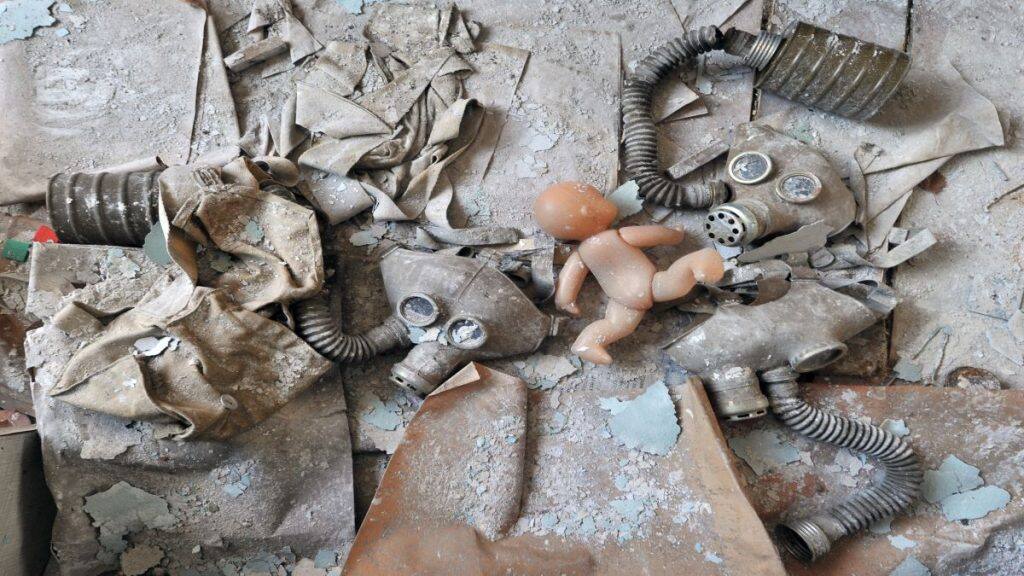
The fear officials had was that when the melting reactor core would touch the huge pool of water below it, it would trigger a massive, radiation-contaminated steam explosion. As author Andrew Leatherbarrow told Tech Insider, “If that happened, it would have triggered a second steam explosion that would have done unimaginable damage and destroyed the entire power station, including the three other reactors.”
Many estimate that this steam explosion would wipe out half of Europe, leaving it uninhabitable for 500,000 years. As journalist Stephen McGinty wrote in The Scotsman, “This would trigger a nuclear explosion that, Soviet physicists calculated, would vapourise the fuel in the three other reactors, level 200 square kilometres [77 square miles], destroy Kyiv, contaminate the water supply used by 30 million people, and render northern Ukraine uninhabitable for more than a century.”
The 2009 School of Russian and Asian Studies had an even bleaker assessment: If the melting core reached the water, the resulting explosion “would have wiped out half of Europe and made Europe, Ukraine, and parts of Russia uninhabitable for approximately 500,000 years.”
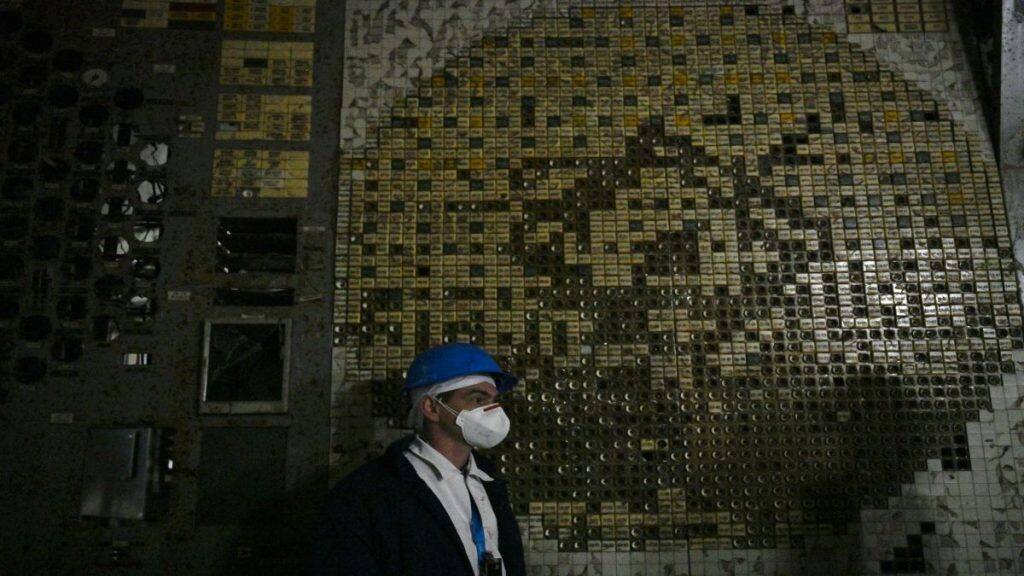
What’s the Chernobyl ‘Suicide Squad’?
Enter Chernobyl’s ‘Suicide Squad’. To avert this disaster from unfolding, workers needed to drain the pool underneath the reactor. However, the basement had flooded, and the valves were underwater.
Hence, firefighters launched a mission that pumped some of the water out, but gallons of radioactive water remained. It was then that engineers drew up a plan — a dive through the flooded chambers of Reactor 4, following which they would have to locate a pair of gate valves and twist them open, allowing the water to drain out completely before the melting reactor core made contact.
But who would undertake such a task where return wasn’t guaranteed? Three unassuming men from the plant then offered themselves up for the mission. They were mechanical engineer Alexei Ananenko, senior engineer Valeri Bespalov, and shift supervisor Boris Baranov.
Even though they were told they could refuse the mission, they went ahead and suited up to achieve the impossible.
“I was ordered to go there, so I went,” recounted Ananenko years later to AFP. “I wasn’t afraid.”
In a separate interview, Ananenko recounts, “I never thought it might mean death, and they only sent me because I knew how to do it. They couldn’t have sent anyone else! And of course, in that position, I could hardly have said No – why would you employ someone like that [as a maintenance engineer]?”
How did Chernobyl’s ‘suicide squad’ avert disaster?
Once the three were suited in their diving suits with only respirators, they negotiated the partially flooded corridors under the reactor.
As Leatherbarrow wrote in his book 1:23:40: The Incredible True Story of the Chernobyl Nuclear Disaster, “The men entered the basement in wetsuits, radioactive water up to their knees, in a corridor stuffed with myriad pipes and valves,” he wrote, adding, “it was like finding a needle in a haystack.”
However, using flashlights, they managed to find the locks for the water tank in the dark and quickly opened them. “When the searchlight beam fell on a pipe, we were joyous: The pipe led to the valves. We heard the rush of water out of the tank. And in a few more minutes, we were being embraced by the guys,” Ananeko recounted.
“We heard a rush of water out of the tank,” Ananenko went on, “and in a few more minutes we were being embraced by the guys”.
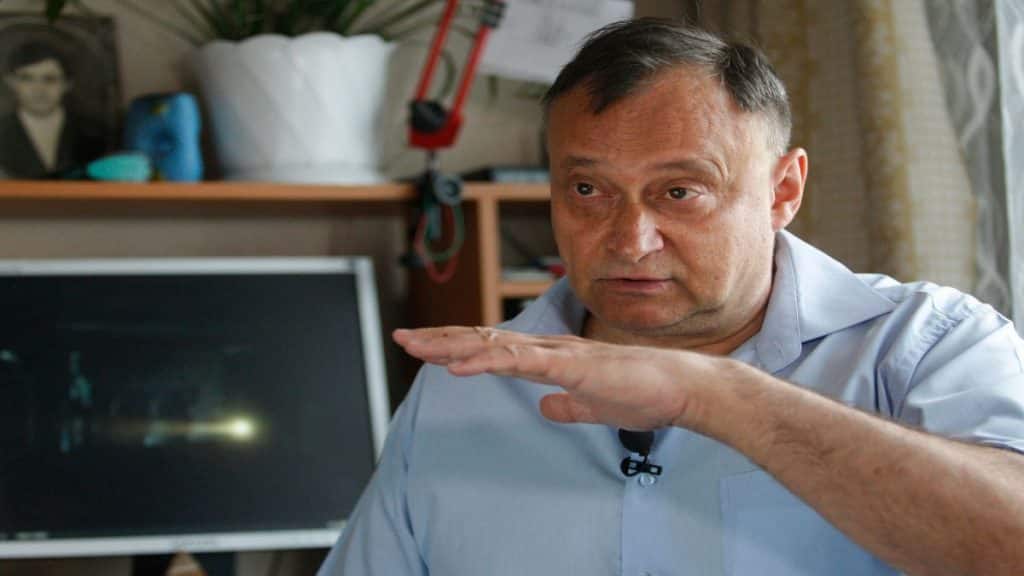
What are the members of the ‘suicide squad’ doing now?
Shockingly, the men didn’t endure serious long-term effects from the mission; they did, however, suffer a degree of radiation sickness over the weeks that followed. Black marks appeared on Ananenko’s legs, which he casually describes as a ‘radioactive tan’.
However, the three continued to work at the nuclear power plant.
In 2005, one of the three members of Chernobyl’s suicide squad, Boris Baranov, died of a heart attack.
Meanwhile, Ananenko and Bespalov remain alive. In 2022, it was reported that Ananenko fled Kyiv for western Ukraine amid the war. “I have never been so offended by Russia, but now I realise that I cannot forgive this genocide of the Ukrainian people, this destruction of us as a people,” said Ananenko’s wife, Valentina.
Additionally, in April of 2018, Ukrainian President Petro Poroshenko presented state awards to Ananenko, Bespalov, and Baranov.
The Chernobyl ‘suicide squad’ may not think their actions to be heroic, but we disagree.
With inputs from agencies
Tags

Military drones & police check-ups: How Sri Lanka is fighting against worst dengue outbreak in a decade
How Facebook job ad lured 2 Karnataka men into Myanmar cyber scam camp
Why is India seeing 95% cloud cover despite a Super El Niño?
What is CJP’s fourth demand to the government as protests in Delhi intensify?
The new geography of war: Why the Houthis can no longer be ignored