
Advertisement


Sections
Chandrayaan-3 launch: Why is exploring the Moon important for humanity?
Experts say exploring the Moon will allow us to study the history of the Earth and the universe, bring technological and economic benefits, give us a launching pad to Mars and deep space. ISRO has slated Chandrayaan-3 mission for launch at 2.35 pm on Friday

On Friday, the Indian Space Research Organisation (ISRO) will look to the heavens yet again. The aim? Launching the Chandrayaan-3 and sending it to the Moon.The ISRO last week announced that the Chandrayaan-3 mission is slated for launch at 2.35 pm on 14 July. The lander is expected to soft-land on the surface of the Moon on 23 or 24 August.The ISRO mission comes four years after the failure of Chandrayaan-2.But why is it so important for human beings to explore the Moon more than half a century after Neil Armstrong and Buzz Aldrin’s historic mission?Let’s take a closer look:National Aeronautics and Space Administration posed the questions “why should we return to the moon?" and "what do we hope to accomplish through lunar exploration?" to scientists, engineers, commercial entrepreneurs, space advocates, and the general public.These were the most common replies NASA received:![]()
- To establish a presence on the moon
- To solve the fundamental questions about the history of Earth, the solar system and the universe
- To test technologies, systems, flight operations and exploration techniques
- To unite humanity through a challenging, shared and peaceful activity
- To benefit life on Earth through lunar activities
- To create a high-tech workforce needed to address challenges of the future
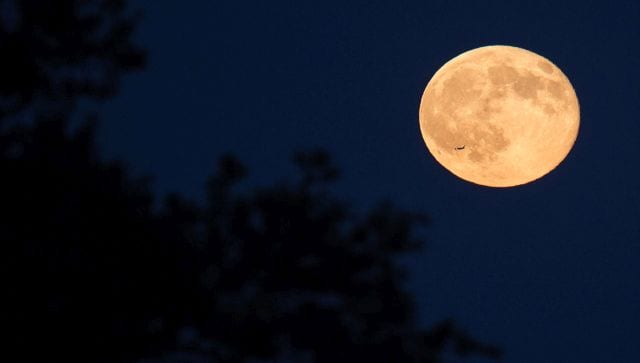
The Moon. NASA[/caption]David Parker, director of human and robotic exploration for the European Space Agency, said that the moon “has lain virtually undisturbed for the last 4.5 billion years.”
“It is a museum of the history of the solar system,” Parker added.Jatan Mehta, contributing editor, The Planetary Society, on his blog stated that the Moon is a ‘geological time capsule.’Technological and economic benefitsMehta noted that NASA and ISRO have, in the past two decades, jointly discovered water ice on the Moon’s poles.“Future human habitats on the Moon could tap into this water ice for drinkable water, breathable air and rocket fuel. Chasing the possibility of extending commercial services to our cosmic neighbor, many companies and organizations worldwide have shown an accelerated interest in building for the Moon,” Mehta wroteGateway to Mars and deep spaceExperts say the Moon is also an excellent launching pad for where we want to go next – Mars.That is the real goal for humanity,” Parker told The Guardian. “However, getting humans there safely is going to be an incredibly difficult undertaking. We will have to learn first how to conquer the moon.”Dr P Sreekumar, professor and director of the Manipal Centre for Natural Sciences, told India Today the Moon’s gravitational field is much weaker than that of the Earth.Meaning? For vehicles heading to Mars and into deep space, this means dealing with a much lower escape velocity, Sreekumar explained.Sreekumar added that the Moon’s lack of atmosphere makes it much easier to plan the trajectory of a probe compared to that of Earth.Mehta concurred, writing on his blog, “In the long run, the Moon’s low gravity barrier could make it an efficient rocket platform to sustainably expand human settlements across the Solar System.”Bring humanity togetherThe India Today piece noted that cooperation is essential to survive in space – even between arch enemies like US and Russia who continue to collaborate on the International Space Station.Sreekumar, former ISRO Space Science Program Office director told India Today, that ultimately, cooperation is the key for humanity to benefit from Moon exploration.India, in the backdrop of Prime Minister Narendra Modi’s first state visit to the United States, signed the Artemis Accords.This is a non-binding multilateral arrangement between the American government and other world governments participating in the Artemis programme, a US-led effort to return humans to the moon by 2025.“India joins 26 other countries committed to peaceful, sustainable, and transparent cooperation that will enable exploration of the Moon, Mars, and beyond. NASA will provide advanced training to Indian Space Research Organization (ISRO) astronauts with the goal of launching a joint effort to the International Space Station in 2024,” a White House statement said.With inputs from agencies
Tags
First Published:Jul 11, 2023, 16:06:28 IST
Advertisement
Advertisement

Military drones & police check-ups: How Sri Lanka is fighting against worst dengue outbreak in a decade
Sri Lanka is fighting its most severe dengue outbreak in nearly a decade, with infections rising sharply across the nation. Military drones have been deployed to tackle the outbreak, which has claimed 56 lives. Health officials said the outbreak is being driven primarily by the DENV-2 variant of the virus
3 min read
How Facebook job ad lured 2 Karnataka men into Myanmar cyber scam camp
The Karnataka Cyber Command has rescued two youths from a scam compound in Myanmar operated by Chinese fraudsters. The duo from Karnataka were lured on the pretext of data-entry jobs. They were asked to work for 16 hours a day and were expected to sleep for six hours daily
4 min read
Why is India seeing 95% cloud cover despite a Super El Niño?
India is witnessing nearly 95 per cent cloud cover despite a Super El Niño, a climate event usually linked to weaker monsoons. Regional weather systems, cyclonic circulations, the monsoon trough and moisture from two seas are temporarily overpowering one of the world's strongest climate phenomena
5 min read
What is CJP’s fourth demand to the government as protests in Delhi intensify?
The protest by the Cockroach Janta Party at Delhi’s Jantar Mantar refuses to die down. The group have made a fourth demand to the Centre, asking that no FIRs are filed against the agitators and that no legal action be taken. The government has expressed willingness to speak to the protesters, but refused to accede on the resignation of Education Minister Dharmandra Pradhan
5 min read
The new geography of war: Why the Houthis can no longer be ignored
The rise of the Houthis marks the emergence of a new geography of war — one in which influence flows not only from capitals and conventional armies, but also from rugged mountains overlooking vital sea lanes
6 min read
Advertisement
Advertisement