
Advertisement


Sections
Chandrayaan-3 costs lesser than big films: How India keeps its space missions frugal
At an estimated Rs 615 crore, Chandrayaan-3 is one of India’s most cost-effective space missions. It is cheaper than its predecessor, Chandrayaan-2, and costs far less than big-budget films like Adipurush. What is the secret behind India’s economical space explorations?

India is keeping its fingers crossed and its eyes trained on the ambitious Chandrayaan-3. The spacecraft heading toward the Moon is all set to touchdown on 23 August, Wednesday, around 6.04 pm IST. This is India’s third attempt at a lunar mission and while Chandrayaan-3 is bigger and better than its predecessor, Chandrayaan-2, it is surprisingly cheaper.We take a look at the money involved and how the Indian Space Research Organisation (ISRO) manages to keep the costs of its projects low.What is the cost of Chandrayaan-3? After the Chandrayaan-2 mission failed, India announced Chandrayaan-3. It was expected to be launched in 2021 but the COVID-19 pandemic led to delays and the spacecraft took flight on 14 July.Now as it hurtles closer to the Moon, history is in the making. If successful, India will become the first country to land on the treacherous and unexplored south pole of the satellite. Yet, it is not shelling out hundreds of billions like other nations have on lunar explorations.One of the many interesting aspects of Chandrayaan-3 is its cost. An estimated Rs 615 crore has been spent on the project and it is said to be one of the country’s most cost-effective space missions.In December 2019, ISRO reportedly requested the initial funding of the project – Rs 75 crore out of which Rs 60 crore would be utilised for meeting expenses of machinery, equipment and other capital expenditure. The remaining Rs 15 crore was sought under the revenue expenditure head, reports CNBC TV18.In 2020, former ISRO chief K Sivan said that the cost of Chandrayaan-3 was around Rs 615 crore. The lander, rover and propulsion module cost Rs 250 crore and the launch services cost around Rs 365 crore.There is a possibility that the mission’s budget has increased considering it was supposed to be launched in 2021 and has been delayed by two years. But unlike budgets for roads and infrastructure which escalate massively over time, the cost of India’s moon mission is likely to have remained under control. To put things in perspective, the Dwarka Expressway, India’s first eight-lane elevated highway connecting Delhi and Haryana, is built for Rs 9000 crore.Also read: How is ISRO’s Chandrayaan-3 mission different from Chandrayaan-2?In fact, Bollywood and Hollywood movies have budgets far bigger than Chandrayaan-3. Tom Cruise’s latest Mission: Impossible – Dead Recoking Part One had a staggering budget of Rs 2,386 crore ($ 290 million) and the Prabhas and Kriti Sanon-starrer Adipurush is budgeted at Rs 700 crore.Interestingly, Chandrayaan-2 cost more than Chandrayaan-3. The first cost India Rs 978 crore, which included Rs 603 crore for the orbiter, lander, rover, navigation and ground support network. The Geo-stationary Satellite Launch Vehicle cost Rs 375 crore.[caption id="attachment_13027102" align="alignnone" width="640"]![]() An illustration showing ISRO's Chandrayaan-3 after the orbit of the Landing Module (LM) was successfully reduced to 25 km x 134 km. PTI[/caption]How much do other countries spend on space missions? Chandrayaan-3 was up against Russia’s Luna-25 in the race for the Moon’s south pole. However, the Russian mission failed as crashed into the lunar surface.Luna-25 was Russia’s first mission to the moon in 47 years and the country reportedly spent an estimated $200 million (Rs 1,659 core) on it. This is said to have included the expense of building the spacecraft, developing launch operations, mission control and more.The total cost of China’s Chang’e-4 lunar mission, which touched down on the moon in January 2019, was “not too much”, according to Wu Yanhua, deputy director of the project. “The cost is close to building one kilometre of subway,” he said in a press conference back then. The cost per kilometre of a subway in China varies from 500 million yuan (Rs 568 crore) to 1.2 billion yuan (Rs 1,365 crore), reports CGNT.[caption id="attachment_13027122" align="alignnone" width="640"]
An illustration showing ISRO's Chandrayaan-3 after the orbit of the Landing Module (LM) was successfully reduced to 25 km x 134 km. PTI[/caption]How much do other countries spend on space missions? Chandrayaan-3 was up against Russia’s Luna-25 in the race for the Moon’s south pole. However, the Russian mission failed as crashed into the lunar surface.Luna-25 was Russia’s first mission to the moon in 47 years and the country reportedly spent an estimated $200 million (Rs 1,659 core) on it. This is said to have included the expense of building the spacecraft, developing launch operations, mission control and more.The total cost of China’s Chang’e-4 lunar mission, which touched down on the moon in January 2019, was “not too much”, according to Wu Yanhua, deputy director of the project. “The cost is close to building one kilometre of subway,” he said in a press conference back then. The cost per kilometre of a subway in China varies from 500 million yuan (Rs 568 crore) to 1.2 billion yuan (Rs 1,365 crore), reports CGNT.[caption id="attachment_13027122" align="alignnone" width="640"]![]() In this photo released by the Roscosmos State Space Corporation, the moon lander Luna-25 automatic station is seen inside a plant shop at the Vostochny Cosmodrome in Russia's Far East on 26 July. The spacecraft crashed into the moon after it spun into an uncontrolled orbit. AP[/caption]The cost of NASA’s new moon rocket Space Launch System (SLS), which intends to return humans to the moon, has been going up significantly. Four contracts for the rocket's booster and engine were initially projected to cost $7 billion (Rs 58,185 crore) over 14 years but are now projected to cost at least $13.1 billion (Rs 1.08 lakh crore) over nearly 25 years, according to Space.com.The complex Artemis, which requires building a facility similar to the International Space Station in the moon’s orbit, is estimated to cost $100 billion (Rs 8.3 lakh crore) by 2025.Even India’s other space missions have been cheaper than Western standards. NASA’s MAVEN Mars mission had an estimated cost of $671 million (Rs 5,566 crore) while the European Space Agency Mars Express had a budget of around $164 million (Rs 1,349 crore). India’s Mangalyaan, an operational mission to the red planet, was developed at Rs 450 crore ($74 million).How has India kept costs low?Leave alone other space missions, ISRO’s projects are often compared with Hollywood space films like Interstellar and Gravity. In 2014, Prime Minister Narendra Modi was in full praise of the country’s cost-effective space programme, saying the Mars mission cost less than Gravity, which was made at an estimated cost of $100 million.Even today, at Rs 1,062 crore ($165 million), the 2014 sci-fi blockbuster Interstellar costs more than twice as much as Chandrayaan-3’s entire budget.Former ISRO chairman Dr K Sivan told The Times of India (TOI) in 2018, “We keep strict vigil on every stage of spacecraft’s development, therefore, we are able to avoid wastage of products.”India has used the PSLV for multiple missions to keep launch budgets in check. In a 2014 speech, PM Modi mentioned how rocket cones are transported on bicycles, as he praised the “power of imagination” of Indian scientists.[caption id="attachment_13027172" align="alignnone" width="640"]
In this photo released by the Roscosmos State Space Corporation, the moon lander Luna-25 automatic station is seen inside a plant shop at the Vostochny Cosmodrome in Russia's Far East on 26 July. The spacecraft crashed into the moon after it spun into an uncontrolled orbit. AP[/caption]The cost of NASA’s new moon rocket Space Launch System (SLS), which intends to return humans to the moon, has been going up significantly. Four contracts for the rocket's booster and engine were initially projected to cost $7 billion (Rs 58,185 crore) over 14 years but are now projected to cost at least $13.1 billion (Rs 1.08 lakh crore) over nearly 25 years, according to Space.com.The complex Artemis, which requires building a facility similar to the International Space Station in the moon’s orbit, is estimated to cost $100 billion (Rs 8.3 lakh crore) by 2025.Even India’s other space missions have been cheaper than Western standards. NASA’s MAVEN Mars mission had an estimated cost of $671 million (Rs 5,566 crore) while the European Space Agency Mars Express had a budget of around $164 million (Rs 1,349 crore). India’s Mangalyaan, an operational mission to the red planet, was developed at Rs 450 crore ($74 million).How has India kept costs low?Leave alone other space missions, ISRO’s projects are often compared with Hollywood space films like Interstellar and Gravity. In 2014, Prime Minister Narendra Modi was in full praise of the country’s cost-effective space programme, saying the Mars mission cost less than Gravity, which was made at an estimated cost of $100 million.Even today, at Rs 1,062 crore ($165 million), the 2014 sci-fi blockbuster Interstellar costs more than twice as much as Chandrayaan-3’s entire budget.Former ISRO chairman Dr K Sivan told The Times of India (TOI) in 2018, “We keep strict vigil on every stage of spacecraft’s development, therefore, we are able to avoid wastage of products.”India has used the PSLV for multiple missions to keep launch budgets in check. In a 2014 speech, PM Modi mentioned how rocket cones are transported on bicycles, as he praised the “power of imagination” of Indian scientists.[caption id="attachment_13027172" align="alignnone" width="640"]![]() People wave the Indian flags as an ISRO rocket carrying the Chandrayaan-3 spacecraft lifts off from the Satish Dhawan Space Centre in Sriharikota, an island off the coast of Andhra Pradesh on 14 July. AFP[/caption]India has over the years prioritised homegrown components and technologies over costly imports. “ISRO pursues the indigenisation programme for critical components and materials with industry participation to reduce the dependence on import. The Indian industry is contributing significantly in the designing, manufacturing and testing of components and material as well as sub-systems as per ISRO's requirements,” a scientist working with the space organisation told Outlook.Another big aspect of keeping costs low is India’s ability to adapt existing space technologies. There is no dearth of skilled engineers and scientists in the country who earn far less than their Western counterparts.India also likes to keep things simple. The payload of Mangalyaan was about 15 kg compared to that of the Maven, which explains the difference in costs. India’s Chandrayaan-3 is less powerful than America’s Saturn V. It is slower than Russia’s Luna-25. But today, there are more chances of India making history.Over the years, the country’s space programme has gathered momentum. It has come a long way since it first sent a probe to orbit the Moon in 2008. India might be slow but it is definitely steady and it is here to win the race.With inputs agencies
People wave the Indian flags as an ISRO rocket carrying the Chandrayaan-3 spacecraft lifts off from the Satish Dhawan Space Centre in Sriharikota, an island off the coast of Andhra Pradesh on 14 July. AFP[/caption]India has over the years prioritised homegrown components and technologies over costly imports. “ISRO pursues the indigenisation programme for critical components and materials with industry participation to reduce the dependence on import. The Indian industry is contributing significantly in the designing, manufacturing and testing of components and material as well as sub-systems as per ISRO's requirements,” a scientist working with the space organisation told Outlook.Another big aspect of keeping costs low is India’s ability to adapt existing space technologies. There is no dearth of skilled engineers and scientists in the country who earn far less than their Western counterparts.India also likes to keep things simple. The payload of Mangalyaan was about 15 kg compared to that of the Maven, which explains the difference in costs. India’s Chandrayaan-3 is less powerful than America’s Saturn V. It is slower than Russia’s Luna-25. But today, there are more chances of India making history.Over the years, the country’s space programme has gathered momentum. It has come a long way since it first sent a probe to orbit the Moon in 2008. India might be slow but it is definitely steady and it is here to win the race.With inputs agencies
 An illustration showing ISRO's Chandrayaan-3 after the orbit of the Landing Module (LM) was successfully reduced to 25 km x 134 km. PTI[/caption]How much do other countries spend on space missions? Chandrayaan-3 was up against Russia’s Luna-25 in the race for the Moon’s south pole. However, the Russian mission failed as crashed into the lunar surface.Luna-25 was Russia’s first mission to the moon in 47 years and the country reportedly spent an estimated $200 million (Rs 1,659 core) on it. This is said to have included the expense of building the spacecraft, developing launch operations, mission control and more.The total cost of China’s Chang’e-4 lunar mission, which touched down on the moon in January 2019, was “not too much”, according to Wu Yanhua, deputy director of the project. “The cost is close to building one kilometre of subway,” he said in a press conference back then. The cost per kilometre of a subway in China varies from 500 million yuan (Rs 568 crore) to 1.2 billion yuan (Rs 1,365 crore), reports CGNT.[caption id="attachment_13027122" align="alignnone" width="640"]
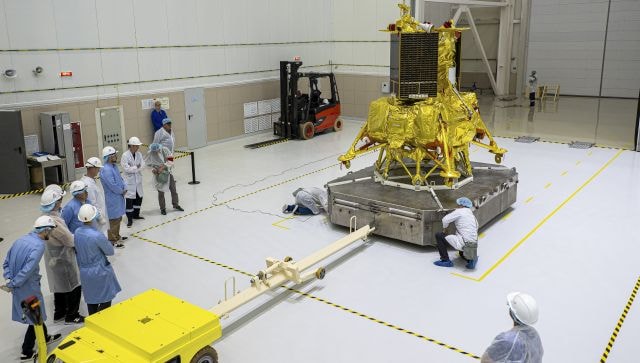 In this photo released by the Roscosmos State Space Corporation, the moon lander Luna-25 automatic station is seen inside a plant shop at the Vostochny Cosmodrome in Russia's Far East on 26 July. The spacecraft crashed into the moon after it spun into an uncontrolled orbit. AP[/caption]The cost of NASA’s new moon rocket Space Launch System (SLS), which intends to return humans to the moon, has been going up significantly. Four contracts for the rocket's booster and engine were initially projected to cost $7 billion (Rs 58,185 crore) over 14 years but are now projected to cost at least $13.1 billion (Rs 1.08 lakh crore) over nearly 25 years, according to Space.com.The complex Artemis, which requires building a facility similar to the International Space Station in the moon’s orbit, is estimated to cost $100 billion (Rs 8.3 lakh crore) by 2025.Even India’s other space missions have been cheaper than Western standards. NASA’s MAVEN Mars mission had an estimated cost of $671 million (Rs 5,566 crore) while the European Space Agency Mars Express had a budget of around $164 million (Rs 1,349 crore). India’s Mangalyaan, an operational mission to the red planet, was developed at Rs 450 crore ($74 million).
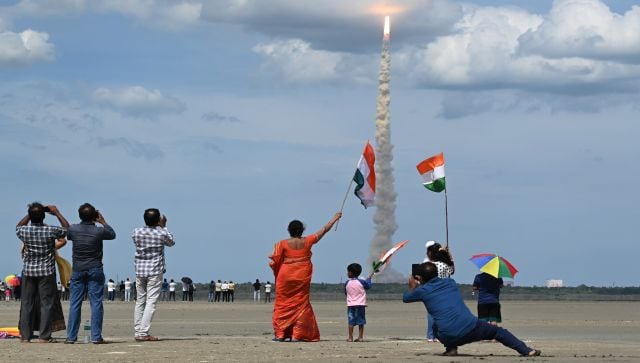 People wave the Indian flags as an ISRO rocket carrying the Chandrayaan-3 spacecraft lifts off from the Satish Dhawan Space Centre in Sriharikota, an island off the coast of Andhra Pradesh on 14 July. AFP[/caption]India has over the years prioritised homegrown components and technologies over costly imports. “ISRO pursues the indigenisation programme for critical components and materials with industry participation to reduce the dependence on import. The Indian industry is contributing significantly in the designing, manufacturing and testing of components and material as well as sub-systems as per ISRO's requirements,” a scientist working with the space organisation told Outlook.Another big aspect of keeping costs low is India’s ability to adapt existing space technologies. There is no dearth of skilled engineers and scientists in the country who earn far less than their Western counterparts.India also likes to keep things simple. The payload of Mangalyaan was about 15 kg compared to that of the Maven, which explains the difference in costs. India’s Chandrayaan-3 is less powerful than America’s Saturn V. It is slower than Russia’s Luna-25. But today, there are more chances of India making history.Over the years, the country’s space programme has gathered momentum. It has come a long way since it first sent a probe to orbit the Moon in 2008. India might be slow but it is definitely steady and it is here to win the race.With inputs agencies
 First Published:Aug 23, 2023, 08:45:36 IST
Advertisement
Advertisement

Military drones & police check-ups: How Sri Lanka is fighting against worst dengue outbreak in a decade
Sri Lanka is fighting its most severe dengue outbreak in nearly a decade, with infections rising sharply across the nation. Military drones have been deployed to tackle the outbreak, which has claimed 56 lives. Health officials said the outbreak is being driven primarily by the DENV-2 variant of the virus
3 min read
How Facebook job ad lured 2 Karnataka men into Myanmar cyber scam camp
The Karnataka Cyber Command has rescued two youths from a scam compound in Myanmar operated by Chinese fraudsters. The duo from Karnataka were lured on the pretext of data-entry jobs. They were asked to work for 16 hours a day and were expected to sleep for six hours daily
4 min read
Why is India seeing 95% cloud cover despite a Super El Niño?
India is witnessing nearly 95 per cent cloud cover despite a Super El Niño, a climate event usually linked to weaker monsoons. Regional weather systems, cyclonic circulations, the monsoon trough and moisture from two seas are temporarily overpowering one of the world's strongest climate phenomena
5 min read
What is CJP’s fourth demand to the government as protests in Delhi intensify?
The protest by the Cockroach Janta Party at Delhi’s Jantar Mantar refuses to die down. The group have made a fourth demand to the Centre, asking that no FIRs are filed against the agitators and that no legal action be taken. The government has expressed willingness to speak to the protesters, but refused to accede on the resignation of Education Minister Dharmandra Pradhan
5 min read
The new geography of war: Why the Houthis can no longer be ignored
The rise of the Houthis marks the emergence of a new geography of war — one in which influence flows not only from capitals and conventional armies, but also from rugged mountains overlooking vital sea lanes
6 min read
Advertisement
Advertisement