
Advertisement


Sections
Can Israel and Hamas be held accountable for war crimes against civilians?
There is no justification for violence that indiscriminately targets innocent civilians, whether by Hamas or Israeli forces. This is absolutely prohibited under international law and amounts to a war crime, according to UN independent experts

International humanitarian law – the law of armed conflict – aims to constrain how wars are fought. It is designed to protect noncombatants and limit the means of warfare.As each hour brings news of further horror in the Israel-Hamas conflict, what role should international law be playing? And does it actually have any capacity to constrain the behaviour of the combatants?A humanitarian nightmare is unfoldingOn 7 October, the Hamas militant group launched thousands of rockets against Israel in advance of a ground attack. Militants killed more than 1,400 people and wounded 3,400 others in towns and kibbutzim across southern Israel. It was the deadliest day for Jewish people since the Holocaust.Most of those killed were civilians, including many children who were shot, blown up or burned to death. Hundreds of young people were also massacred at a music festival, and Hamas took around 200 hostages back to Gaza.Israel is responding to this attack with airstrikes, which have to date killed at least 4,000 people in Gaza and injured thousands more. The vast majority of these casualties are Palestinian civilians.Israel has also rapidly mobilised around 360,000 reservists in preparation for an anticipated ground offensive on Gaza.In recent days, a blast at a Gaza hospital killed hundreds, including patients and displaced people seeking sanctuary. Hamas and several Arab states have blamed Israel for the explosion, while Israel has blamed Palestinian Islamic Jihad.The situation in Gaza is dire for people with urgent needs, including 5,000 women due to give birth this month and newborn babies whose families cannot find drinking water to prepare formula.Meanwhile, Israel has cut off water, electricity and fuel supplies to Gaza and ordered a total siege of the territory. Israel has also ordered residents of northern Gaza to evacuate to the south. Aid agencies have been unable to provide desperately needed humanitarian assistance to civilians through the border crossing with Egypt.[caption id="attachment_13277492" align="alignnone" width="640"]![]() Palestinians look for survivors after Israeli airstrikes in Gaza City, Gaza Strip. AP[/caption]Prior to this latest horrific escalation, Gaza was already entrenched in a humanitarian crisis. The situation now is beyond comprehension.Léo Cans, the head of mission for Doctors Without Borders in Palestine, said hospitals are being overwhelmed and hundreds will die without electricity being restored:This is something that is known and could be prevented just by letting fuel and supplies inside Gaza. What is ahead of us is beyond words […] at the end of the road it’s a big wall, and this big wall is full of dead people.Principles governing the conduct of warInternational humanitarian law is a pragmatic body of law. Its existence acknowledges the inevitability of armed conflict and it aims to mitigate war’s impact on people.International humanitarian law is not, in itself, concerned with the justifications for why combatants engage in war. It applies even in situations where a state is entitled to act in self-defence under broader international law.We are witnessing gross violations of fundamental humanitarian law principles in the conflict. Here are some examples:Distinction between civilians and combatantsAttacks are considered unlawful if they are:
Palestinians look for survivors after Israeli airstrikes in Gaza City, Gaza Strip. AP[/caption]Prior to this latest horrific escalation, Gaza was already entrenched in a humanitarian crisis. The situation now is beyond comprehension.Léo Cans, the head of mission for Doctors Without Borders in Palestine, said hospitals are being overwhelmed and hundreds will die without electricity being restored:This is something that is known and could be prevented just by letting fuel and supplies inside Gaza. What is ahead of us is beyond words […] at the end of the road it’s a big wall, and this big wall is full of dead people.Principles governing the conduct of warInternational humanitarian law is a pragmatic body of law. Its existence acknowledges the inevitability of armed conflict and it aims to mitigate war’s impact on people.International humanitarian law is not, in itself, concerned with the justifications for why combatants engage in war. It applies even in situations where a state is entitled to act in self-defence under broader international law.We are witnessing gross violations of fundamental humanitarian law principles in the conflict. Here are some examples:Distinction between civilians and combatantsAttacks are considered unlawful if they are:![]() Wounded Palestinians arrive at al-Shifa hospital following Israeli airstrikes on Gaza City, Gaza Strip. AP[/caption]Humanitarian protectionCommon Article 3 of the Geneva Conventions requires humane protection for all people in enemy hands. It prohibits murder and hostage-taking. It also requires the provision of humanitarian assistance to all people without distinction.Obligations of occupying powersIt is arguable Israel is a de facto occupying power of the Gaza Strip because it has such a high level of control over people’s lives. For example, it has the ability to shut off supplies of essential life services. The argument Israel is occupying Gaza will be strengthened should Israel launch a ground invasion.As such, the rules of international humanitarian law on occupiers are also relevant. These include an obligation to protect civilians from attacks and respect their human rights.Hamas and humanitarian lawInternational humanitarian law applies to all combatants, whether they are state or non-state actors. UN independent experts say Hamas has clearly committed war crimes, including the murders and hostage-taking of Israeli civilians.Hamas also put Palestinian civilians in harm’s way by telling them not to evacuate to southern Gaza, as ordered by Israel. The group has a history of using civilians as human shields as a strategic tool in conflicts with Israel.However, holding Hamas accountable for violating international humanitarian law is very challenging. As a non-state actor, Hamas is not a member of forums like the United Nations, where pressure may be brought to bear on member states.If individual Hamas militants are apprehended, they could be charged with war crimes and tried in Israeli courts or the International Criminal Court. Even though Hamas is a non-state actor, Palestine has accepted the court’s jurisdiction.In fact, the International Criminal Court opened an investigation into alleged war crimes in Palestine in 2021. The current Gaza conflict would fall within the court’s mandate and could lead it to direct greater energy to that ongoing investigation.The court’s chief prosecutor, Karim Khan, said on 13 October:
Wounded Palestinians arrive at al-Shifa hospital following Israeli airstrikes on Gaza City, Gaza Strip. AP[/caption]Humanitarian protectionCommon Article 3 of the Geneva Conventions requires humane protection for all people in enemy hands. It prohibits murder and hostage-taking. It also requires the provision of humanitarian assistance to all people without distinction.Obligations of occupying powersIt is arguable Israel is a de facto occupying power of the Gaza Strip because it has such a high level of control over people’s lives. For example, it has the ability to shut off supplies of essential life services. The argument Israel is occupying Gaza will be strengthened should Israel launch a ground invasion.As such, the rules of international humanitarian law on occupiers are also relevant. These include an obligation to protect civilians from attacks and respect their human rights.Hamas and humanitarian lawInternational humanitarian law applies to all combatants, whether they are state or non-state actors. UN independent experts say Hamas has clearly committed war crimes, including the murders and hostage-taking of Israeli civilians.Hamas also put Palestinian civilians in harm’s way by telling them not to evacuate to southern Gaza, as ordered by Israel. The group has a history of using civilians as human shields as a strategic tool in conflicts with Israel.However, holding Hamas accountable for violating international humanitarian law is very challenging. As a non-state actor, Hamas is not a member of forums like the United Nations, where pressure may be brought to bear on member states.If individual Hamas militants are apprehended, they could be charged with war crimes and tried in Israeli courts or the International Criminal Court. Even though Hamas is a non-state actor, Palestine has accepted the court’s jurisdiction.In fact, the International Criminal Court opened an investigation into alleged war crimes in Palestine in 2021. The current Gaza conflict would fall within the court’s mandate and could lead it to direct greater energy to that ongoing investigation.The court’s chief prosecutor, Karim Khan, said on 13 October:![]() Palestinians collect water in Nuseirat camp in the central Gaza Strip, during ongoing Israeli bombardment on Tuesday. AP[/caption]But there is a distinction to be drawn between a state’s right to self-defence and what that right permits, in the sense of how war is conducted.For example, UN independent experts have condemned Israel’s “indiscriminate military attacks” against Palestinian civilians:
Palestinians collect water in Nuseirat camp in the central Gaza Strip, during ongoing Israeli bombardment on Tuesday. AP[/caption]But there is a distinction to be drawn between a state’s right to self-defence and what that right permits, in the sense of how war is conducted.For example, UN independent experts have condemned Israel’s “indiscriminate military attacks” against Palestinian civilians:
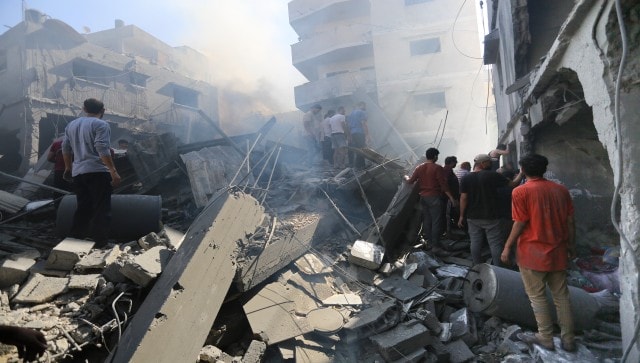 Palestinians look for survivors after Israeli airstrikes in Gaza City, Gaza Strip. AP[/caption]Prior to this latest horrific escalation, Gaza was already entrenched in a humanitarian crisis. The situation now is beyond comprehension.Léo Cans, the head of mission for Doctors Without Borders in Palestine, said hospitals are being overwhelmed and hundreds will die without electricity being restored:This is something that is known and could be prevented just by letting fuel and supplies inside Gaza. What is ahead of us is beyond words […] at the end of the road it’s a big wall, and this big wall is full of dead people.Principles governing the conduct of warInternational humanitarian law is a pragmatic body of law. Its existence acknowledges the inevitability of armed conflict and it aims to mitigate war’s impact on people.International humanitarian law is not, in itself, concerned with the justifications for why combatants engage in war. It applies even in situations where a state is entitled to act in self-defence under broader international law.We are witnessing gross violations of fundamental humanitarian law principles in the conflict. Here are some examples:Distinction between civilians and combatantsAttacks are considered unlawful if they are:
- directed specifically against civilians
- launched indiscriminately without distinction between civilians and combatants
- or directed at military targets but anticipated to cause harm to civilians disproportionate to the military advantage being sought.
No protected person may be punished for an offence he or she has not personally committed. Collective penalties and likewise all measures of intimidation or of terrorism are prohibited.This prohibition reflects the idea of individual criminal responsibility under international criminal law. Prosecutions for breaches of humanitarian law are directed towards individuals who can be proven responsible, rather than against states or populations.[caption id="attachment_13277522" align="alignnone" width="640"]
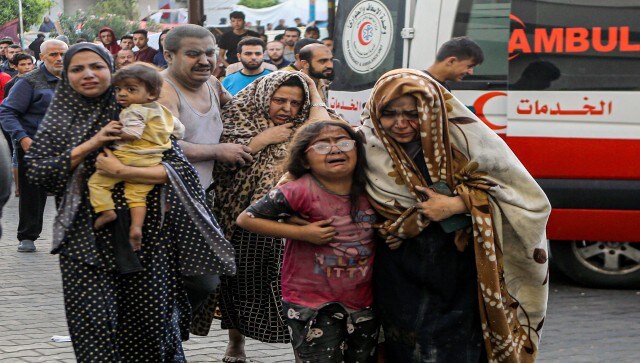 Wounded Palestinians arrive at al-Shifa hospital following Israeli airstrikes on Gaza City, Gaza Strip. AP[/caption]Humanitarian protectionCommon Article 3 of the Geneva Conventions requires humane protection for all people in enemy hands. It prohibits murder and hostage-taking. It also requires the provision of humanitarian assistance to all people without distinction.Obligations of occupying powersIt is arguable Israel is a de facto occupying power of the Gaza Strip because it has such a high level of control over people’s lives. For example, it has the ability to shut off supplies of essential life services. The argument Israel is occupying Gaza will be strengthened should Israel launch a ground invasion.As such, the rules of international humanitarian law on occupiers are also relevant. These include an obligation to protect civilians from attacks and respect their human rights.Hamas and humanitarian lawInternational humanitarian law applies to all combatants, whether they are state or non-state actors. UN independent experts say Hamas has clearly committed war crimes, including the murders and hostage-taking of Israeli civilians.Hamas also put Palestinian civilians in harm’s way by telling them not to evacuate to southern Gaza, as ordered by Israel. The group has a history of using civilians as human shields as a strategic tool in conflicts with Israel.However, holding Hamas accountable for violating international humanitarian law is very challenging. As a non-state actor, Hamas is not a member of forums like the United Nations, where pressure may be brought to bear on member states.If individual Hamas militants are apprehended, they could be charged with war crimes and tried in Israeli courts or the International Criminal Court. Even though Hamas is a non-state actor, Palestine has accepted the court’s jurisdiction.In fact, the International Criminal Court opened an investigation into alleged war crimes in Palestine in 2021. The current Gaza conflict would fall within the court’s mandate and could lead it to direct greater energy to that ongoing investigation.The court’s chief prosecutor, Karim Khan, said on 13 October:
We have jurisdiction for any Rome Statute crimes […] committed by Palestinians in Israel and also we have clear jurisdiction for any crimes committed by the forces of Israel in Palestine.Israel and humanitarian lawIsrael and its allies also have a complex relationship with international humanitarian law.One key issue is Israel’s right to self-defence in response to the October 7 attack by Hamas. International law confirms a state may use force to defend itself in response to an armed attack. Israel, the United States and other allies contend the Hamas attack triggered Israel’s right to self-defence.[caption id="attachment_13277532" align="alignnone" width="640"]
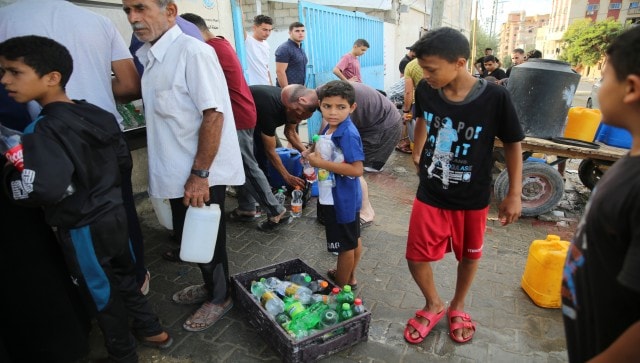 Palestinians collect water in Nuseirat camp in the central Gaza Strip, during ongoing Israeli bombardment on Tuesday. AP[/caption]But there is a distinction to be drawn between a state’s right to self-defence and what that right permits, in the sense of how war is conducted.For example, UN independent experts have condemned Israel’s “indiscriminate military attacks” against Palestinian civilians:
This amounts to collective punishment. There is no justification for violence that indiscriminately targets innocent civilians, whether by Hamas or Israeli forces. This is absolutely prohibited under international law and amounts to a war crime.Neither Israel nor the United States is a party to the International Criminal Court. Neither state would accept the court’s jurisdiction over its nationals. Indeed, the United States has condemned the court’s decision to open its investigation into alleged war crimes in Palestine.In time, the court may seek to hold Israeli nationals accountable for war crimes, but its capacity to do so seems very limited.What about the United Nations?UN Secretary-General Antonio Guterres has called for an immediate ceasefire.He said the grievances of the Palestinian people after more than 50 years of occupation do not “justify the acts of terror committed by Hamas”. And he said the Hamas attack on October 7 does not “justify the collective punishment of the Palestinian people”.UN human rights chief Volker Türk has also warned all parties that violations of humanitarian law will have consequences, and those who commit war crimes will be held accountable.But the UN Security Council, which is charged with maintaining international peace and security, has yet to agree on a statement on the conflict.The debate in the council since the latest escalation in this perpetual conflict demonstrates the deep diplomatic fault lines between the key global players and the warring parties.At this point, a sad reality is that international law and global institutions can do little to constrain the actions of the combatants on both sides or provide assistance to the millions at grave risk of harm.This article is republished from The Conversation under a Creative Commons license. Read the original article.
First Published:Oct 20, 2023, 20:18:40 IST
Advertisement
Advertisement

Military drones & police check-ups: How Sri Lanka is fighting against worst dengue outbreak in a decade
Sri Lanka is fighting its most severe dengue outbreak in nearly a decade, with infections rising sharply across the nation. Military drones have been deployed to tackle the outbreak, which has claimed 56 lives. Health officials said the outbreak is being driven primarily by the DENV-2 variant of the virus
3 min read
How Facebook job ad lured 2 Karnataka men into Myanmar cyber scam camp
The Karnataka Cyber Command has rescued two youths from a scam compound in Myanmar operated by Chinese fraudsters. The duo from Karnataka were lured on the pretext of data-entry jobs. They were asked to work for 16 hours a day and were expected to sleep for six hours daily
4 min read
Why is India seeing 95% cloud cover despite a Super El Niño?
India is witnessing nearly 95 per cent cloud cover despite a Super El Niño, a climate event usually linked to weaker monsoons. Regional weather systems, cyclonic circulations, the monsoon trough and moisture from two seas are temporarily overpowering one of the world's strongest climate phenomena
5 min read
What is CJP’s fourth demand to the government as protests in Delhi intensify?
The protest by the Cockroach Janta Party at Delhi’s Jantar Mantar refuses to die down. The group have made a fourth demand to the Centre, asking that no FIRs are filed against the agitators and that no legal action be taken. The government has expressed willingness to speak to the protesters, but refused to accede on the resignation of Education Minister Dharmandra Pradhan
5 min read
The new geography of war: Why the Houthis can no longer be ignored
The rise of the Houthis marks the emergence of a new geography of war — one in which influence flows not only from capitals and conventional armies, but also from rugged mountains overlooking vital sea lanes
6 min read
Advertisement
Advertisement