


Blood on the streets in PoK: What's triggered Pakistan’s deadly crackdown on protesters?
The latest crisis in Pakistan-occupied Kashmir erupted in Rawalakot when violence broke out after supporters of the recently banned Joint Awami Action Committee (JAAC) gathered outside a hospital morgue where the body of an activist had been taken. Security forces attempted to disperse the crowd, leading to clashes. However, the seeds of this crisis have been sown for years

Pakistan-occupied Kashmir is in turmoil.
Today (June 9), the region is witnessing one of the most serious waves of unrest in years.
This comes after deadly violence in Rawalakot over the weekend, which saw clashes between protesters and security forces reportedly leaving several people dead and hundreds injured.
But what happened? What do we know?
Let’s take a closer look.
What happened?
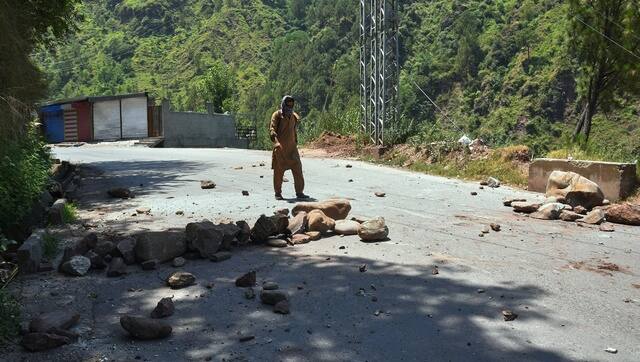
The latest crisis erupted in Rawalakot when violence broke out after Joint Awami Action Committee (JAAC) supporters gathered outside a hospital morgue where the body of an activist had been taken. Security forces attempted to disperse the crowd, leading to clashes. Officials claimed that protesters used firearms and petrol bombs, while activists accused security forces of firing on civilians.
 More from Explainers
There have also been reports that as many as 30 people were killed and around 200 injured in clashes between protesters and security forces in Pakistan-occupied Kashmir. However, these figures remain unverified.
However, NDTV reported that some local residents and activists claimed the civilian toll could be significantly higher. “Four police officers and a passerby died after miscreants shot at them,” Sardar Waheed Khan, commissioner of the Poonch sector in the region, told Reuters, adding, “As the result of the law enforcers’ response, six protesters were killed.”
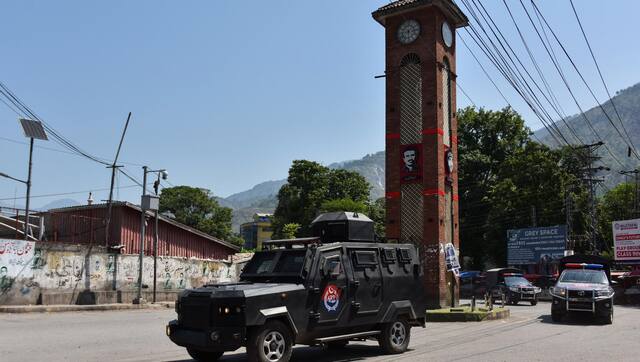
Demonstrations have spread across Muzaffarabad, Gilgit-Baltistan, Dadial, Rawalakot, Sudhnoti, and Tattapani, according to India Today TV. Protests also erupted in Mirpur and Bhimbar, as per ANI. As unrest spread, authorities have imposed restrictions including internet shutdowns and limits on movement.
According to Frontline, communication services have been cut, leaving families unable to contact relatives and increasing anxiety within and outside the region. India Today reported that mobile data services have been disrupted, large gatherings restricted, and security deployments increased.
Clashes erupted on Sunday amid heightened tensions after the Supreme Court of PoK ruled that 12 legislative seats reserved for Kashmiri refugees living in Pakistan are constitutionally protected and cannot be abolished without a constitutional amendment.
The JAAC, formed in 2003, according to AP, demands greater political rights for the people of Kashmir and the abolition of the refugee seats. The group, which AP described as being known for violent protests, has been banned by authorities. The group had also called for a “long march” from Rawalakot to Muzaffarabad, which authorities moved to prevent.
India has also reacted to the developments. The Ministry of External Affairs said: “We continue to see in this context, a pattern of fake news and videos emanating from Pakistan. It is a desperate attempt by Pakistan to cover up its own failings and deflect attention away from its human rights abuses. There are reports of severe police brutality in Pakistan-occupied Kashmir in which several protesters have been killed and many injured. We hope the international community will hold Pakistan accountable for its misdeeds and abuses.”
Economic distress and the JAAC’s role
Much of the protests have been spurred by the JAAC. According to Frontline, the JAAC is a broad coalition of civil society groups, traders, and socio-religious organisations. The group has mobilised people across regions such as Muzaffarabad, Rawalakot, and Mirpur.
The JAAC had been leading a civil society-led mobilisation around inflation, particularly rising flour prices and electricity tariffs. The report notes that protesters were demanding subsidised essentials and economic relief.
According to India Today, the JAAC has held repeated demonstrations over the past two years over issues of the economy, political rights, and governance. The emergence of the JAAC and its ability to bring thousands to the streets have left authorities in Pakistan-occupied Kashmir concerned.
The JAAC and its supporters have been upset, among other things, over representation in the legislative assembly, elections for which are scheduled for July 27, as per The Indian Express.
The JAAC had called for protests against the reservation of a dozen seats in the 45-member Assembly for refugees living outside Pakistan-occupied Kashmir. These seats are contested by candidates residing in Pakistan but who still influence the region’s governance. The group has demanded that these seats be abolished.
According to India Today, the protesters have contended that this undermines local representation and dilutes the political voice of residents. Frontline has reported that demonstrators demanded the abolition of these reserved seats. However, the Supreme Court of PoK has now ruled against their demand.
Crackdown and escalation
The situation was inflamed after authorities, accusing the JAAC of causing unrest, recently banned it under anti-terror laws. This came just days before a planned protest.
Authorities then attempted to clamp down on protests. As per India Today, this resulted in a string of arrests, restrictions on gatherings, and heightened security. Protesters, however, saw the ban as an attempt to suppress legitimate dissent.
Frontline reported that analysts have called the authorities’ response “disproportionate and repressive”. Ershad Mahmud, a well-known journalist-author born in Rawalakot who is currently in Calgary, Canada, told Frontline that the actions had “bruised the hearts” of everyone living in Pakistan-occupied Kashmir.
“The JAAC has given lockdown calls in the past too. Nothing adverse would have happened if the protesters had been allowed to march to Muzaffarabad, as they are peaceful and their demands enjoy popular support. The use of force to suppress the non-violent movement for political demands is uncalled for,” Mahmud said.
“Of these 12 seats, eight generally go to the kitty of whichever is the ruling party in Punjab province, two are forcibly taken by the Pakistan Peoples Party (PPP) in Sindh province, while in some cases, the seats have also been captured by those who have absolutely nothing to do with Kashmir. In some cases, the courts in the past have described them as ineligible.”
Meanwhile, the Pakistani government is preparing to take stronger legal action. According to News18, the government is looking to reopen hundreds of older cases against protest leaders and pursue serious charges such as murder in connection with earlier unrest.
Frontline quoted Moeed Pirzada, a British-Pakistani geostrategic analyst and former television anchor, as saying: “In reality, the governments in [Pakistan-occupied] Kashmir have never been free. More often, these have been puppet regimes or rubber stamps, duly approved by the governments in power in Islamabad. In recent times, the region has witnessed public gatherings and rallies with massive turnout under the banner of the JAAC, demanding political and economic rights.”
“The decision to impose a ban on the JAAC under an anti-terror law is a recipe for disaster. It is an unwise decision demonstrating stupidity. How can you ban such a popular organisation?”
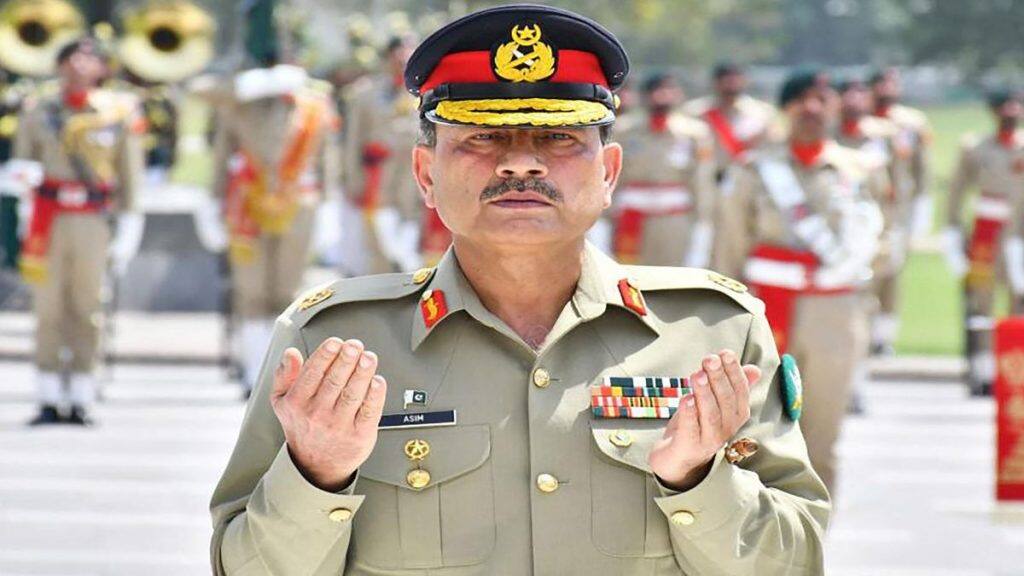
UK-based Pakistani-origin human rights lawyer Sabine Kayani slammed the Asim Munir-led Pakistani establishment. Kayani, taking to X, wrote that the peaceful protesters seeking “bread, electricity, dignity” were met with “live fire and clouds of tear gas”.
Kayani claimed the Pakistan Army, led by Munir, turned “grief into a massacre” and said Kashmiris were being treated as “internal enemies”. She called the “Rawalakot bloodshed a profound spiritual betrayal”.
Germany-based Pakistani-origin human rights activist Aladeen on X said while “Pakistan accuses India of suppressing Kashmiris, security forces in Pakistan-occupied territory were using lethal force against their own citizens and protesters”.
“Every year, the lives of citizens are taken for the sole purpose of preserving a government that was put together with the help of thieves and collaborators. This is done only to keep that arrangement intact. Every general acts in the same way for his own interests, and in the end, he has to flee. The same pattern keeps repeating itself,” Aladeen posted on X.
What next?
India Today reported that authorities have tightened security in anticipation of further unrest as the July 27 election approaches. JAAC leaders, meanwhile, have vowed to continue their agitation.
“The state has begun a massacre of our people in Rawalakot,” JAAC leader Shaukat Nawaz Mir said in a video message on X.
Khan responded, “The JAAC leadership is misleading the masses by terming it a massacre. The state’s action was meant to restore law and order.”
It remains to be seen if the unrest in Pakistan-occupied Kashmir calms down anytime soon.
FAQs
1. What triggered the latest unrest in Pakistan-occupied Kashmir?
The immediate trigger was clashes in Rawalakot after JAAC supporters gathered at a hospital morgue. However, tensions had already risen following a court ruling upholding reserved legislative seats for refugees and a planned protest march by the group.
2. What is the Joint Awami Action Committee (JAAC)?
The JAAC is a coalition of civil society groups, traders, and other organisations that has led protests in Pakistan-occupied Kashmir over economic issues, governance, and political representation. It has recently been banned by authorities.
3. Why are the 12 reserved seats controversial?
The seats are reserved for refugees from Jammu and Kashmir who live in Pakistan. Protesters argue this dilutes the political voice of residents in Pakistan-occupied Kashmir, while authorities say the arrangement is constitutionally protected.
With inputs from agencies

Military drones & police check-ups: How Sri Lanka is fighting against worst dengue outbreak in a decade
How Facebook job ad lured 2 Karnataka men into Myanmar cyber scam camp
Why is India seeing 95% cloud cover despite a Super El Niño?
What is CJP’s fourth demand to the government as protests in Delhi intensify?
The new geography of war: Why the Houthis can no longer be ignored