


Bharat Taxi, like Amul, is a cooperative. Here is how it will run
Bharat Taxi, a new cooperative inspired by the success of the Anand Milk Union Limited (Amul), is set to take on ride-sharing companies such as Uber and Ola. But how do such cooperatives work?

Will Bharat Taxi become the new Amul?
A new cooperative inspired by the success of the Anand Milk Union Limited (Amul), a cooperative comprising millions of farmers across India, is set to take on ride-sharing companies such as Uber and Ola.
Much like Amul, this project too has support from the Centre. Those involved, professionals who previously worked with Amul, hope that it will bring similar benefits for drivers that it did for farmers.
Home Minister Amit Shah is set to launch the app in New Delhi today (February 5). Shah said in January that the cooperative is “aimed at freeing the country’s commercial vehicle drivers from dependence on private companies”.
But what do we know? How does it work?
Let’s take a closer look:
 More from Explainers
What we know about Bharat Taxi
Bharat Taxi is run by Sahakar Taxi Cooperative Limited. This driver-owned cooperative seeks to replicate the ‘Amul model’ in the Indian taxi industry. The idea is to give drivers an ownership stake in the firm as well as a say in its governance and operations.
Bharat Taxi was launched as a pilot programme in several cities including Delhi-NCR and Rajkot last year. It claims to have onboarded over 50,000 drivers initially. The programme was then launched across several cities including Ahmedabad. According to the government, over 4 lakh drivers have already joined the platform, with 10,000 rides being completed every day.
How cooperative model works
Now, let’s examine how cooperatives work and why Amul is such a shining example.
A cooperative is an enterprise owned and controlled by the people who use its services. Unlike private firms, where ownership is concentrated among shareholders and investors, cooperatives are designed to distribute ownership and decision-making power among members.
For example, in Amul’s case, millions of milk producers are members of village-level cooperatives. These are then linked to district unions and a state-level federation that markets products nationally. The money that is generated from selling milk and dairy products flows back to the farmers.
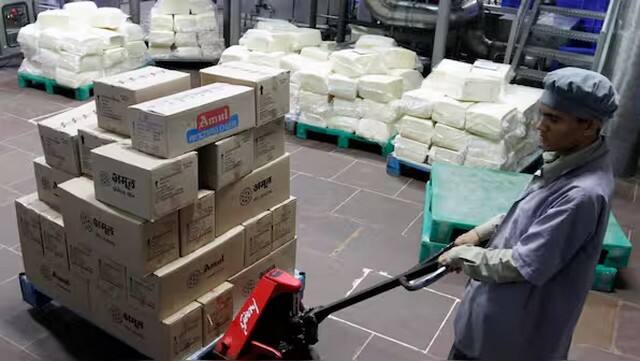
This ensures their income remains steady and gives them the power of collective bargaining. Bharat Taxi seeks to bring this same system over to ride-sharing. The idea is to break the dominance of private, commission-based aggregators like Ola and Uber and improve the lot of drivers.
For drivers, by drivers
Under this system, drivers are co-owners of the cooperative rather than simply being ‘partners’ of the platform. Each driver, referred to as a ‘Sarathi’, holds five shares in Sahakar Taxi Cooperative Limited. These five shares are worth Rs 500. When the company turns a profit, the drivers will be paid a dividend.
This gives them a stake in the success of the cooperative and allows them to put their own welfare first. This will allow drivers and their representatives to make decisions on pricing policies, fee structures and welfare measures. This is not just speculation either. It has been reported that elected representatives of drivers will be on the governing board of Sahakar Taxi.
Ride-sharing platforms work on commissions. For example, a driver usually forks over around 20 to 30 per cent of every ride back to the platform. However, Bharat Taxi works on a zero-commission model, which means drivers can pocket almost the entire amount they make driving. There are reports that a percentage of driver earnings will be pooled in order to run the cooperative.
So, how does it work? Rather than commissions, drivers pay a flat daily fee of Rs 30 to Sahakar Taxi Cooperative Limited in order to access the app. Proponents of this cooperative model say this will protect drivers from sudden fluctuations in commission rates or incentives, which has long been a bone of contention between drivers and the platforms.
The cooperative also proposes to offer welfare benefits such as health and accident insurance, alongside safety features including police connectivity through the app. These measures are intended to mirror the support services that agricultural cooperatives provide to their members. In India, ride-sharing apps like Uber do not classify their partners as employees. Thus, they do not get employee benefits such as health insurance, paid leave and pension contributions.
The technology behind Bharat Taxi
Bharat Taxi is using the backend of Namma Yatri, an open-source zero-commission platform that was launched in Bengaluru in November 2022 and backed by the Open Network for Digital Commerce (ONDC). It is made by Moving Tech Innovations, the same developer that made the Namma Yatri app.
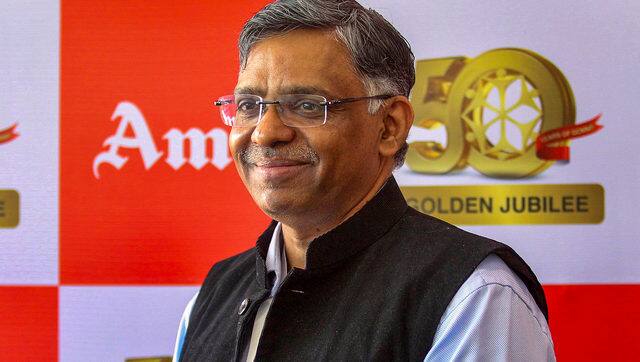
The initiative is backed by the Gujarat Cooperative Milk Marketing Federation (Amul), with Amul managing director Jayen Mehta appointed as chairman. However, Amul is not alone. Other firms such as the Indian Farmers Fertiliser Cooperative (IFFCO), the National Cooperative Development Corporation (NCDC) and the National Bank for Agriculture and Rural Development (NABARD) are also supporting the project.
However, questions about whether the Amul model can successfully translate into the ride-sharing space remain. After all, these companies have spent years refining their algorithms and scaling up their operations. Meanwhile, profitability remains out of reach for all but a few companies. Uber announced a net profit after spending billions of dollars over a number of years. Lyft, meanwhile, has announced profits in some quarters.
How do customers benefit?
Proponents of Bharat Taxi say customers will benefit too.
For many customers of ride-sharing platforms, surge pricing has long been a bugbear. Customers have expressed frustration when ride-sharing companies hike prices for certain routes at crucial times, for example during an emergency like a heavy downpour or when leaving the office at the end of a long day. There have also been reports that the companies even charge certain customers who are in greater need — for example, those who are low on battery — extra.
Bharat Taxi is promising to do away with surge pricing entirely and is thus hoping to attract disaffected customers. Some industry experts estimate that prices on Bharat Taxi could be as much as a third cheaper than on platforms such as Uber and Ola.
However, it remains to be seen how many customers flock to the Bharat Taxi app until the service has built up a reputation for reliability and being customer-friendly.
Bharat Taxi is facing a few problems in the early days.
The Indian Express quoted Anuroop Chauhan, who used the service from Delhi airport, as saying: “The people managing the booth don’t know how to operate the software properly, which leads to queues. The prices have also gone up significantly. Earlier, I used to pay around Rs 300–400 for a ride to my home. Now, they are charging me Rs 600.”
However, drivers using the app say they hope things will improve.
Dharmesh Goswami, who is at Rajkot International Airport, told the newspaper he is sure the number of people who use Bharat Taxi will steadily increase. Goswami, who drives a Hyundai Xcent sedan on the app, belongs to a 300-member informal cab drivers’ group known as ‘Rajkot e-cab Unity’.
“We would much prefer using the government app rather than private aggregator companies that take commission from us,” Goswami concluded.
Inspiration from New York
Bharat Taxi’s cooperative model has been inspired by The Drivers Cooperative in New York City. This non-profit, driver-owned ride-hailing platform was launched in 2021. It came about in the aftermath of drivers in the city being upset by Uber and Lyft’s commission structures and working conditions.
While it has not replaced Uber or Lyft, it has offered an alternative to these ride-sharing platforms. Proponents of this cooperative argue that India, with its larger driver base, support from the government and the use of the ONDC-backed app, could fare even better than The Drivers Cooperative.
However, critics say that, given how well-entrenched Uber and its other ride-sharing competitors seem to be in India, it remains to be seen how well platforms like Bharat Taxi can mount a real challenge.
With inputs from agencies
Tags

Military drones & police check-ups: How Sri Lanka is fighting against worst dengue outbreak in a decade
How Facebook job ad lured 2 Karnataka men into Myanmar cyber scam camp
Why is India seeing 95% cloud cover despite a Super El Niño?
What is CJP’s fourth demand to the government as protests in Delhi intensify?
The new geography of war: Why the Houthis can no longer be ignored