


Bandi jackets and beret: What’s in Indian Army’s new uniform code?
The Indian Army has rolled out a new uniform policy to align military traditions with contemporary Indian values. The manual titled ‘The Army Uniforms–2026’ introduces bandi jackets in formal settings, drops archaic terms like ‘royal’ in a title and brings a new winter dress, comprising an angola shirt with a battle jacket and beret, for all ranks

The Indian Army has revised dress regulations in a bid to modernise military traditions and shed colonial-era vestiges. It has introduced closed-neck bandi jackets in formal settings, while disallowing ceremonial pouch belts.
The Army Uniforms–2026 standardises dress regulations across the force. The new policy reportedly comes eight years after the last edition.
What reforms do the new dress rules bring?
Let’s take a closer look.
Indian Army’s new uniform code
The Indian Army has released a 174-page manual titled “Army Uniforms-2026” to align military traditions with India's sovereign identity.
“In keeping with the nation’s sentiments and evolving sovereign identity, a number of deliberate refinements have been incorporated. Collectively, these refinements represent a progressive review of residual colonial-era vestiges while preserving the dignity, functionality and enduring traditions of the Indian Army,” the document said in a section titled “Indigenisation and Alignment with National Ethos”, as per Hindustan Times (HT).
 More from Explainers
The foreword to the manual states that the 2026 edition "reflects a considered step towards aligning our dress regulations with contemporary Indian ethos through the progressive removal of residual colonial-era practices, accoutrements and terminology."
As per The Hindu, the revised regulations bring a common Uniform Numbering Scheme for the Army, Navy and Air Force.
Uniforms will continue to be divided into four broad categories — Ceremonial Dress, Working Dress, Mess Dress and Combat Dress. Unique dress numbers have been assigned to each uniform for the convenience of identification and administration.
What changes are in the Army uniform code?
According to the revised dress regulations pamphlet, the Indian Army has introduced a new winter dress called 3B for all ranks, comprising an angola shirt with a battle jacket and beret.
The battle jacket will once again become standard winter outerwear for all ranks. It will gradually replace the existing jersey-based winter uniform (Dress 3A) by June 2029, reported ANI.
A closed-neck coat, commonly called a bandi jacket, can be worn over a full-sleeved shirt.
“The bandi jacket may be with or without the neck hook fastening (both patterns are authorised) and will be of solid, sober colour only. Matching formal trousers of sober design and formal closed footwear will be worn,” as per the manual.
Women officers can wear sober-coloured sarees, or kurta-salwar and ankle-length straight pants with a dupatta. Sleeveless kurtas and casual lowers such as palazzo and cigarette pants have been explicitly banned.
The Army has removed the pouch belt from Mess Dress No 5 and No 6. Such belts will remain permitted for officers up to the rank of colonel in the armoured corps, mechanised infantry, regiment of artillery, rifle regiments, Maratha Light Infantry, Jammu and Kashmir Light Infantry, and Corps of Signals, reported HT.
“Pouch belt will not be worn with Dress No 5 and 6. However, it may be worn with ceremonial dresses during regimental/corps functions,” the manual stated.
Dresses Nos 5 and No 6 are worn on several occasions, including state functions at Rashtrapati Bhavan or Raj Bhavan, dining-in or attending formal receptions at the residences of the Prime Minister, the three service chiefs, and army commanders, as well as during state functions in honour of visiting foreign heads of state.
The Army has also dropped the use of archaic term "royal".
The document stated: "These measures, reflected at appropriate places across this Pamphlet and further listed herein, include the introduction of the Bandi Jacket as part of civil formal dress, removal of the pouch belt from Mess Dress Nos. 5 and 6, the stipulation that sword carriage by Reviewing Officer is optional and discontinuation of archaic terminology such as 'Royal'."
The manual reduces the number of occasions on which swords may be carried. They will only be carried by parade commanders, contingent commanders and designated personnel at the time of major ceremonial events such as Republic Day, Independence Day, Army Day parades and Guards of Honour. The regulations state: "Reviewing Officers will not carry sword on parade."
What remains prohibited?
The manual lays down extensive rules for personal appearance, reminding soldiers that tattoos and body piercings are banned.
Moustaches should not be longer than 12 cm. Deodorants and perfumes are not allowed in uniform, but after-shave lotions can be used.
For women, lipstick, coloured nail polish, bindis, and nose pins are barred. Sindoor (vermillion) can be worn, but should not be visible under the beret or peak cap.
Personnel are banned from wearing any type of bracelet in uniform, except for a single sacred thread on the wrist on the day of a pooja. No religious markings or symbols are allowed, except for Sikh soldiers.
Why were the changes needed?
In recent years, the Indian military has taken several measures to do away with colonial customs.
In 2021, Prime Minister Narendra Modi had told the top commanders of the three services at the Combined Commanders Conference in Gujarat’s Kevadia to “rid themselves of legacy systems and practices that have outlived utility and relevance”. Since then, the Indian military has been trying to shed its colonial antecedents.
On February 24, 2023, the Indian Army scrapped various colonial-era practices, including the use of horse-driven buggies at functions, ceremonial pull-out events at retirements, and pipe bands at dinners.
Earlier this year, the Indian Army renamed 246 roads, buildings and facilities across its establishments in an effort to shed colonial legacies.
Now, the Indian Army has revamped its uniform code as part of a broader effort to modernise dress regulations while preserving the service’s dignity, functionality and long-standing traditions.
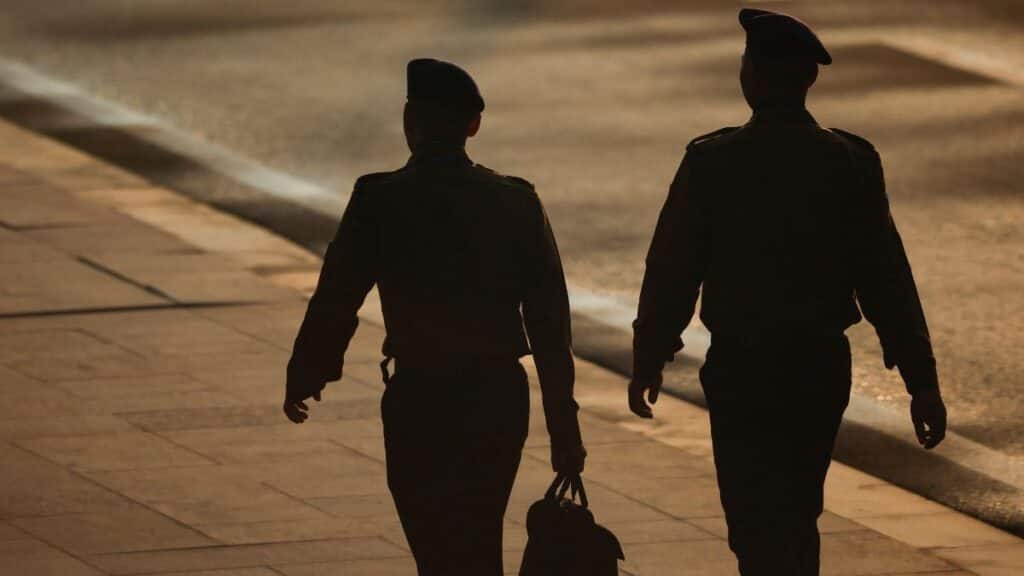
The manual says that the Army Uniforms Pamphlet 2026 represents "a deliberate and balanced progression towards standardisation, simplification and modernisation of dress regulations in keeping with the evolving ethos of the Indian Army."
With inputs from agencies
Tags

Military drones & police check-ups: How Sri Lanka is fighting against worst dengue outbreak in a decade
How Facebook job ad lured 2 Karnataka men into Myanmar cyber scam camp
Why is India seeing 95% cloud cover despite a Super El Niño?
What is CJP’s fourth demand to the government as protests in Delhi intensify?
The new geography of war: Why the Houthis can no longer be ignored