


Mojtaba absent, but 3 other sons appear at Ayatollah Ali Khamenei’s funeral. Who are they?
While Mojtaba has remained absent for his father Ayatollah Ali Khamenei’s funeral ceremony on Sunday (July 5), his three brothers were seen offering prayers in Tehran. Mostafa, Meysam, and Masoud are all clerics in the country. While Mostafa, the eldest, chooses to remain private, Meysam and Masoud are more prominent and hold sway among senior officials

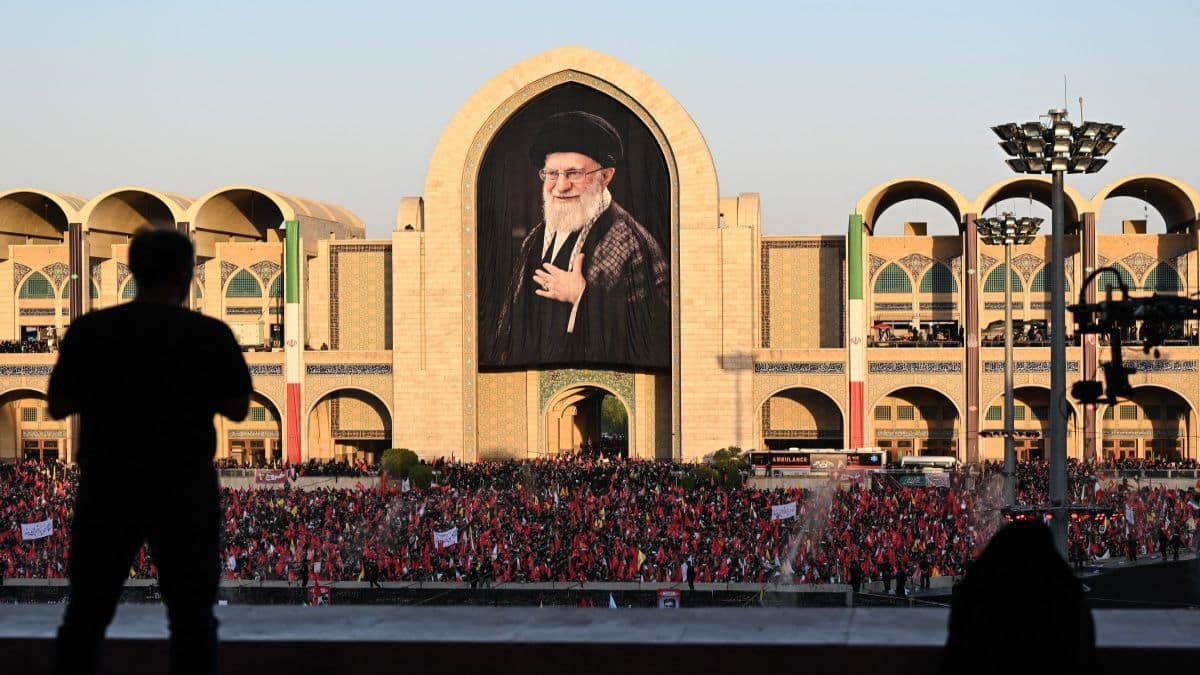
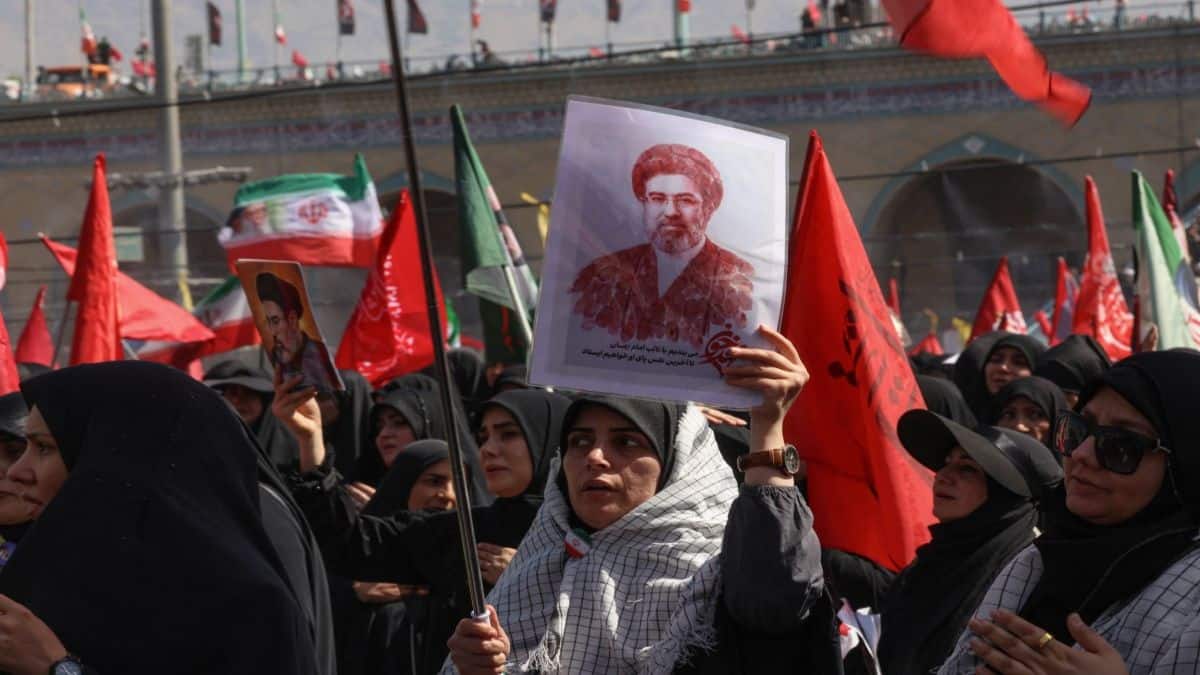
The grand funeral of Iran’s former Supreme Leader Ayatollah Ali Khamenei continues to hold the world’s attention. Today (July 6), the main funeral procession will travel approximately 10 kilometres from Imam Hossein Square to Azadi (Freedom) Square after funeral prayers for the slain Ayatollah and his family.
A day earlier, tens of thousands packed the Iranian capital to bid adieu to their former supreme leader, who was killed in US-Israel strikes in February. The 86-year-old’s killing marked the start of the war with Iran on February 28. In the ensuing months, the fighting claimed the lives of over 50 senior-ranking political and military officials, reshaping the established leadership of Iran.
Among the thousands who turned up for Khamenei’s funeral on Sunday (July 5) were the Iranian leader’s three sons. Footage from Iranian state media showed three of Khamenei's sons — Mostafa, Meysam, and Masoud — crying as the coffins of their father and other family members were carried out into Tehran’s Grand Mosalla on Sunday. Yet, one of Khamenei’s sons has been notably absent: his successor, Mojtaba Khamenei.
 More from Explainers
Who are Khamenei’s three sons, who appeared at the funeral?
On Sunday (July 5), Khamenei’s three sons — Mostafa, Meysam, and Masoud — were seen standing behind the coffins laid out in the vast courtyard of Tehran’s Imam Khomeini Grand Mosalla, a sprawling religious complex.
Their presence has sparked interest in who they are and their roles in Iran’s power structure.
Ayatollah Ali Khamenei had six children, four sons and two daughters, with his wife, Mansoureh Khojasteh Bagherzadeh. Their sons are Mostafa, Mojtaba, Masoud, and Meysam, while their daughters are Boshra and Hoda.
Mostafa is the eldest of Khamenei’s children and the most private. He reportedly lives in Qom and teaches at the seminary there. State media occasionally publish photos showing his simple lifestyle or his presence at rallies and shrines. It remains unclear as to what Mostafa’s specific role is in Iran.
The other son seen at the funeral was Masoud Khamenei. According to reports, Masoud directs the Office for preserving and publishing Khamenei’s works.
An Iran International report states that Masoud is in charge of a huge propaganda apparatus in the Islamic Republic. His office has a huge state budget and is connected to numerous institutions, including the Khat-e-Hezbollah weekly magazine, Fars News Agency, and several research organisations. These agencies helped shape public opinion and maintained Ayatollah Ali Khamenei’s official image.
He is also known to wield influence in the judiciary. One news report claims that he helped the former Iran Khodro CEO avoid severe punishment despite being arrested on financial abuse charges.
The youngest son of Ali Khamenei is Meysam. He teaches at the Tehran Seminary and works at the Office for preserving and publishing the Supreme Leader’s works. Known to be quiet, Meysam rarely appears in public. However, over the years, his name has often appeared in corruption investigations.
In October 2025, a report alleged that Meysam purchased the four-star Hampton Hotel in Hungary’s capital using a substantial loan from Ayandeh Bank. The allegations had raised concerns about nepotism and corruption within Iran’s clerical establishment.
His name also emerged in the Iran Petrochemical Commercial Company case. It was alleged that Meysam’s wife’s relatives, the Khamoushi family, allegedly leveraged political connections to acquire the firm at far below market value, moving billions of euros through opaque channels without consequence.
What about Mojtaba Khamenei?
While Ali Khamenei’s three sons appeared publicly to bid their father goodbye, his second son, Mojtaba, has appeared conspicuously absent from the funeral.
Appointed Supreme Leader of Iran after his father’s death, Mojtaba has not been seen or heard publicly, despite appearing on posters across Tehran. The Supreme Leader didn’t even attend his wife’s funeral last week.
In March, US Defence Secretary Pete Hegseth had said that Mojtaba had been “wounded and likely disfigured” by the attack that killed his father, mother, and wife. A Reuters report from April stated that the leader was recovering from severe facial and leg injuries, saying that he had potentially even lost a leg in the strikes.
These injuries could be the reason why Mojtaba is refraining from making an appearance at the funeral. As Negar Mortazavi, senior fellow at the Center for International Policy, told TIME: Avoiding a public appearance also prevents projecting an image of vulnerability at a moment when the state is trying to project resilience, unity, and strength.”
However, Iran has dismissed claims of serious injuries to Mojtaba. An aide of his also said earlier that security concerns were the biggest reason for him not being seen in public. Earlier, Iranian officials had expressed concern that his appearance could result in an assassination attempt.
US President Donald Trump also referred to this in his remarks to Axios on Saturday. “They are all there. One shot and we can take them all out. But we are not going to do that.”
All eyes remain on Iran to see if Mojtaba Khamenei does make an appearance at his father’s funeral before he is buried in Mashhad, Iran, on July 9.
With inputs from agencies

Military drones & police check-ups: How Sri Lanka is fighting against worst dengue outbreak in a decade
How Facebook job ad lured 2 Karnataka men into Myanmar cyber scam camp
Why is India seeing 95% cloud cover despite a Super El Niño?
What is CJP’s fourth demand to the government as protests in Delhi intensify?
The new geography of war: Why the Houthis can no longer be ignored