
Advertisement


Sections
Australian Open 2024 has added an extra day. Here's why everyone's talking about it
For the first time, the Australian Open will begin on a Sunday instead of a Monday, giving the tournament an extra day. Organisers say this will help with the problem of late-night match finishes. But why are players complaining about these marathon games?

Tennis has returned and we are just days away from the first Grand Slam of the season – the Australian Open. This Australian Open is particularly special, with some even calling it historic, as it will be a 15-day tournament rather than the usual 14 days, starting this Sunday (14 January).The four Grand Slams have traditionally been played over 14 days, but the Australian Open has now joined the French Open in adding on an extra day at the start. This also means that the first round will be played over three days now instead of the previous two days.The Australian Open tournament director was quoted as saying earlier, “We’ve listened to feedback from the players and fans and are excited to deliver a solution to minimise late finishes while continuing to provide a fair and equitable schedule on the stadium courts.”But why has the Grand Slam down under extended playing days? Will this hurt or help players? We get you the full analysis and tell you if this counts as a fault or an ace.A longer Australian OpenThe Australian Open, the first Grand Slam of the season, usually begins on a Monday. However, last October, the organisers of the tournament announced that it would run a day longer in an attempt to combat late finishes, owing to many matches being scheduled on the first day.Tournament director Craig Tiley had then said a Sunday start – making the Open a 15-day event for the first time – would help alleviate the pressure of late-night finishes for competitors and spectators.With this change, organisers said that day sessions on Rod Laver Arena and Margaret Court Arena – the two main courts at the tournament – will see two matches instead of three.The tournament has extended the number of sessions from 47 to 52, saying that fans will now get to see more tennis at a friendlier time and players won’t have to endure the effects of playing extremely late matches that affect their recovery and could eventually ruin their chances of winning the next match.A solution to late-night finishesFor the Australian Open, the addition of a day is their solution to late-match finishes.Tennis is perhaps one of the only sports with no definite time period. Tennis matches can stretch over hours – the longest ever professional match to be played was between John Isner and Nicolas Mahut at Wimbledon in 2010, at a whopping 11 hours spread over three days – causing delays to the schedule and also affecting a player’s performance in future matches.Late finishes have particularly been a problem for the Australian Open, which schedules a men’s and women’s singles match in the night session. For instance, at last year’s tournament, multiple Grand slam winner Andy Murray and Thanasi Kokkinakis battled it out for nearly six hours in their second round encounter, with the match ending at 4.05 am.[caption id="attachment_13602552" align="alignnone" width="640"]![]() At last year's Australian Open, Andy Murray took six hours to beat Thanasi Kokkinakis in a match that ended at 4.05 am. File image/Reuters[/caption]It was the third-latest recorded finish in the history of professional tennis. The only other matches that have ended later than this are Alexander Zverev’s win over Jenson Brooksby at the Acapulco tournament, which ended at 4.54 am, and homeboy Lleyton Hewitt’s victory over Marcos Baghdatis at the 2008 Australian Open, finishing at 4.34 am.Murray after his six-hour duel had then called it a farce, saying “If my child was a ball kid for a tournament, and they’re coming home at 5 in the morning, as a parent I’m snapping at that,” Murray said. “It’s not beneficial for them. It’s not beneficial for the umpires, the officials. I don’t think it’s amazing for the fans. It’s not good for the players.”He added later, “Rather than it being like epic Murray-Kokkinakis match, it ends in a bit of a farce.”Adverse effects of late finishesAnd it’s not just Murray who has voiced his feelings about late finishes and its impact on the players.Women’s world No 1, Iga Swiatek has also voiced her displeasure over matches finishing at absurdly late hours. She was quoted as saying, “For sure it’s not healthy to play at that hour and it’s something we should totally work on because we’re going to have more and more players that are burned out and having physical problems.”Tennis’ so-called ‘bad boy’ Nick Kyrgios has also spoken out about playing late into the night and how it’s particularly draining on their mental health. “I was always last match, going on court at 10 pm., finishing matches around, like 1 am., then doing media and treatment and eating,” Kyrgios said. “I was not going to sleep before 4 am. every night. And I felt as if, you know, I was going out night-clubbing or something. It was like I’m not even getting enough sleep to go and perform the next day.”He added that decompressing late at night was a real challenge. And if you think about it, he’s not wrong.[caption id="attachment_13602572" align="alignnone" width="640"]
At last year's Australian Open, Andy Murray took six hours to beat Thanasi Kokkinakis in a match that ended at 4.05 am. File image/Reuters[/caption]It was the third-latest recorded finish in the history of professional tennis. The only other matches that have ended later than this are Alexander Zverev’s win over Jenson Brooksby at the Acapulco tournament, which ended at 4.54 am, and homeboy Lleyton Hewitt’s victory over Marcos Baghdatis at the 2008 Australian Open, finishing at 4.34 am.Murray after his six-hour duel had then called it a farce, saying “If my child was a ball kid for a tournament, and they’re coming home at 5 in the morning, as a parent I’m snapping at that,” Murray said. “It’s not beneficial for them. It’s not beneficial for the umpires, the officials. I don’t think it’s amazing for the fans. It’s not good for the players.”He added later, “Rather than it being like epic Murray-Kokkinakis match, it ends in a bit of a farce.”Adverse effects of late finishesAnd it’s not just Murray who has voiced his feelings about late finishes and its impact on the players.Women’s world No 1, Iga Swiatek has also voiced her displeasure over matches finishing at absurdly late hours. She was quoted as saying, “For sure it’s not healthy to play at that hour and it’s something we should totally work on because we’re going to have more and more players that are burned out and having physical problems.”Tennis’ so-called ‘bad boy’ Nick Kyrgios has also spoken out about playing late into the night and how it’s particularly draining on their mental health. “I was always last match, going on court at 10 pm., finishing matches around, like 1 am., then doing media and treatment and eating,” Kyrgios said. “I was not going to sleep before 4 am. every night. And I felt as if, you know, I was going out night-clubbing or something. It was like I’m not even getting enough sleep to go and perform the next day.”He added that decompressing late at night was a real challenge. And if you think about it, he’s not wrong.[caption id="attachment_13602572" align="alignnone" width="640"]![]() Late-night finishes aren't just a problem for players. Even fans find it hard to stay up and watch. In fact, during a match between Marcos Baghdatis of Cyprus and Australia's Lleyton Hewitt in 2008, fans had fallen asleep as the match continued until 4.34 am. File image/Reuters[/caption]Many experts have observed that late finishes hurt the player in the long run. They are unable to sleep, which puts their recovery in jeopardy. Sleep expert James Wilson has said that sleep is of utmost importance to a player.In the Andy Murray instance, he was quoted as telling the BBC, “Murray’s body clock would have been out of sync; it wouldn’t have known if it should be sleeping or shouldn’t.”And it’s not just the player who is affected by late-finishes. Fans in the stadium find it difficult to sit for such long hours and often leave. If they do stay, they are falling asleep in the stands.'A money grab'While the tournament has pegged the move as a solution to late finishes, not everyone concurs. Seven-time Grand Slam champion, John McEnroe, who now wears the commentators hat, calls the Australian Open’s decision a “money grab”.Speaking at a press conference before the tournament commences, he said, “It’s a money grab as far as I’m concerned. They just found another way to make some money. I don’t agree with it.“The players, if they accept it and they’re getting something from it — like some money for their pensions or retirement for some players that don’t have insurance — I would say that’s a good thing that they have added an extra day. I don’t think that has happened, just like it didn’t happen at the French Open (when it became a 15-day event).“I completely disagree with it. That’s probably me being selfish that I have to be away from home an extra day or two.”[caption id="attachment_13602602" align="alignnone" width="640"]
Late-night finishes aren't just a problem for players. Even fans find it hard to stay up and watch. In fact, during a match between Marcos Baghdatis of Cyprus and Australia's Lleyton Hewitt in 2008, fans had fallen asleep as the match continued until 4.34 am. File image/Reuters[/caption]Many experts have observed that late finishes hurt the player in the long run. They are unable to sleep, which puts their recovery in jeopardy. Sleep expert James Wilson has said that sleep is of utmost importance to a player.In the Andy Murray instance, he was quoted as telling the BBC, “Murray’s body clock would have been out of sync; it wouldn’t have known if it should be sleeping or shouldn’t.”And it’s not just the player who is affected by late-finishes. Fans in the stadium find it difficult to sit for such long hours and often leave. If they do stay, they are falling asleep in the stands.'A money grab'While the tournament has pegged the move as a solution to late finishes, not everyone concurs. Seven-time Grand Slam champion, John McEnroe, who now wears the commentators hat, calls the Australian Open’s decision a “money grab”.Speaking at a press conference before the tournament commences, he said, “It’s a money grab as far as I’m concerned. They just found another way to make some money. I don’t agree with it.“The players, if they accept it and they’re getting something from it — like some money for their pensions or retirement for some players that don’t have insurance — I would say that’s a good thing that they have added an extra day. I don’t think that has happened, just like it didn’t happen at the French Open (when it became a 15-day event).“I completely disagree with it. That’s probably me being selfish that I have to be away from home an extra day or two.”[caption id="attachment_13602602" align="alignnone" width="640"]![]() An extra day of Australian Open means added sale of tickets, with one expert saying that at least 40,000 to 50,000 more tickets could be sold for this year's tournament. File image/Reuters[/caption]While some would scoff at McEnroe’s argument, the numbers do support him. How, you may ask? Here’s the math. With an added day, the Australian Open will be able to sell more tickets – which translates into more money.Australian tennis great Todd Woodbridge told The Age that an extra day would help the Australian Open sell at least another 40,000 to 50,000 tickets.[caption id="attachment_13602692" align="alignnone" width="640"]
An extra day of Australian Open means added sale of tickets, with one expert saying that at least 40,000 to 50,000 more tickets could be sold for this year's tournament. File image/Reuters[/caption]While some would scoff at McEnroe’s argument, the numbers do support him. How, you may ask? Here’s the math. With an added day, the Australian Open will be able to sell more tickets – which translates into more money.Australian tennis great Todd Woodbridge told The Age that an extra day would help the Australian Open sell at least another 40,000 to 50,000 tickets.[caption id="attachment_13602692" align="alignnone" width="640"]![]() Some have said that the simplest solution to late-night match finishes is to make the men play a best of three sets as women do. File image/AP[/caption]Other possible solutionsBesides having an extra day at a tournament, some tennis experts note that there are other ways to combat late finishes. Many have expressed their support of reducing men’s matches to a best of three (women already play best-of-three everywhere). However, many players on the circuit don’t agree with this, saying Grand Slams are different and should continue with the five-set format.Another option would be to schedule one singles match each night, alternating men and women. Players have also suggested an earlier start time for night sessions.There’s also the suggestion of having a curfew like the one in Wimbledon. At Wimbledon, play is suspended at 11 pm, which ensures players can leave work and rest up before resuming the match the next day. But once again, it’s not a measure that is liked by all.One thing is certain, if no measures are taken, there will be many more late nights to come and players getting burnt out.With inputs from agencies
Some have said that the simplest solution to late-night match finishes is to make the men play a best of three sets as women do. File image/AP[/caption]Other possible solutionsBesides having an extra day at a tournament, some tennis experts note that there are other ways to combat late finishes. Many have expressed their support of reducing men’s matches to a best of three (women already play best-of-three everywhere). However, many players on the circuit don’t agree with this, saying Grand Slams are different and should continue with the five-set format.Another option would be to schedule one singles match each night, alternating men and women. Players have also suggested an earlier start time for night sessions.There’s also the suggestion of having a curfew like the one in Wimbledon. At Wimbledon, play is suspended at 11 pm, which ensures players can leave work and rest up before resuming the match the next day. But once again, it’s not a measure that is liked by all.One thing is certain, if no measures are taken, there will be many more late nights to come and players getting burnt out.With inputs from agencies
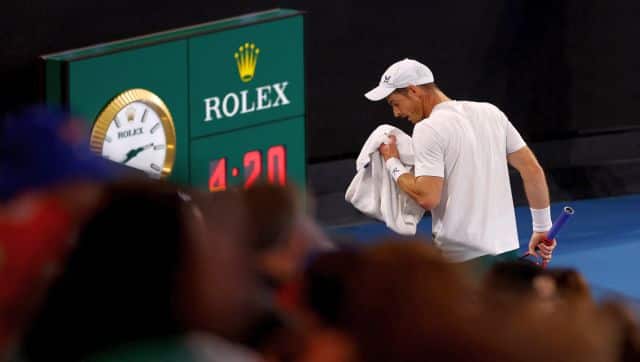 At last year's Australian Open, Andy Murray took six hours to beat Thanasi Kokkinakis in a match that ended at 4.05 am. File image/Reuters[/caption]It was the third-latest recorded finish in the history of professional tennis. The only other matches that have ended later than this are Alexander Zverev’s win over Jenson Brooksby at the Acapulco tournament, which ended at 4.54 am, and homeboy Lleyton Hewitt’s victory over Marcos Baghdatis at the 2008 Australian Open, finishing at 4.34 am.Murray after his six-hour duel had then called it a farce, saying “If my child was a ball kid for a tournament, and they’re coming home at 5 in the morning, as a parent I’m snapping at that,” Murray said. “It’s not beneficial for them. It’s not beneficial for the umpires, the officials. I don’t think it’s amazing for the fans. It’s not good for the players.”He added later, “Rather than it being like epic Murray-Kokkinakis match, it ends in a bit of a farce.”Adverse effects of late finishesAnd it’s not just Murray who has voiced his feelings about late finishes and its impact on the players.Women’s world No 1, Iga Swiatek has also voiced her displeasure over matches finishing at absurdly late hours. She was quoted as saying, “For sure it’s not healthy to play at that hour and it’s something we should totally work on because we’re going to have more and more players that are burned out and having physical problems.”Tennis’ so-called ‘bad boy’ Nick Kyrgios has also spoken out about playing late into the night and how it’s particularly draining on their mental health. “I was always last match, going on court at 10 pm., finishing matches around, like 1 am., then doing media and treatment and eating,” Kyrgios said. “I was not going to sleep before 4 am. every night. And I felt as if, you know, I was going out night-clubbing or something. It was like I’m not even getting enough sleep to go and perform the next day.”He added that decompressing late at night was a real challenge. And if you think about it, he’s not wrong.[caption id="attachment_13602572" align="alignnone" width="640"]
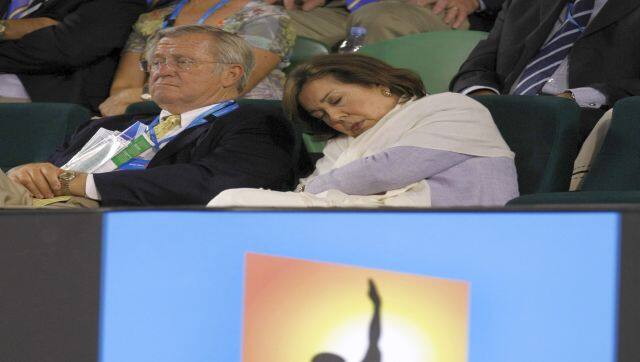 Late-night finishes aren't just a problem for players. Even fans find it hard to stay up and watch. In fact, during a match between Marcos Baghdatis of Cyprus and Australia's Lleyton Hewitt in 2008, fans had fallen asleep as the match continued until 4.34 am. File image/Reuters[/caption]Many experts have observed that late finishes hurt the player in the long run. They are unable to sleep, which puts their recovery in jeopardy. Sleep expert James Wilson has said that sleep is of utmost importance to a player.In the Andy Murray instance, he was quoted as telling the BBC, “Murray’s body clock would have been out of sync; it wouldn’t have known if it should be sleeping or shouldn’t.”And it’s not just the player who is affected by late-finishes. Fans in the stadium find it difficult to sit for such long hours and often leave. If they do stay, they are falling asleep in the stands.'A money grab'While the tournament has pegged the move as a solution to late finishes, not everyone concurs. Seven-time Grand Slam champion, John McEnroe, who now wears the commentators hat, calls the Australian Open’s decision a “money grab”.Speaking at a press conference before the tournament commences, he said, “It’s a money grab as far as I’m concerned. They just found another way to make some money. I don’t agree with it.“The players, if they accept it and they’re getting something from it — like some money for their pensions or retirement for some players that don’t have insurance — I would say that’s a good thing that they have added an extra day. I don’t think that has happened, just like it didn’t happen at the French Open (when it became a 15-day event).“I completely disagree with it. That’s probably me being selfish that I have to be away from home an extra day or two.”[caption id="attachment_13602602" align="alignnone" width="640"]
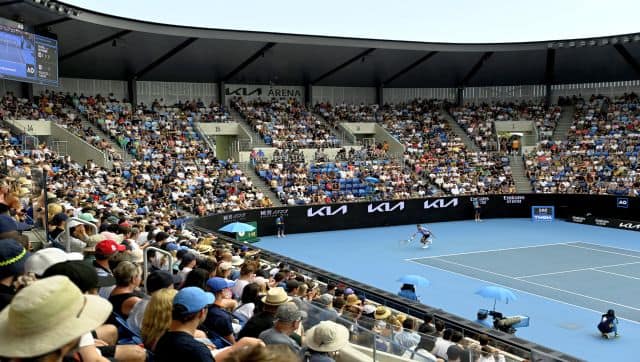 An extra day of Australian Open means added sale of tickets, with one expert saying that at least 40,000 to 50,000 more tickets could be sold for this year's tournament. File image/Reuters[/caption]While some would scoff at McEnroe’s argument, the numbers do support him. How, you may ask? Here’s the math. With an added day, the Australian Open will be able to sell more tickets – which translates into more money.Australian tennis great Todd Woodbridge told The Age that an extra day would help the Australian Open sell at least another 40,000 to 50,000 tickets.[caption id="attachment_13602692" align="alignnone" width="640"]
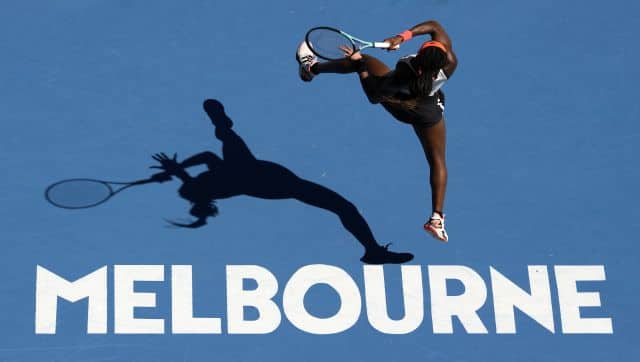 Some have said that the simplest solution to late-night match finishes is to make the men play a best of three sets as women do. File image/AP[/caption]Other possible solutionsBesides having an extra day at a tournament, some tennis experts note that there are other ways to combat late finishes. Many have expressed their support of reducing men’s matches to a best of three (women already play best-of-three everywhere). However, many players on the circuit don’t agree with this, saying Grand Slams are different and should continue with the five-set format.Another option would be to schedule one singles match each night, alternating men and women. Players have also suggested an earlier start time for night sessions.There’s also the suggestion of having a curfew like the one in Wimbledon. At Wimbledon, play is suspended at 11 pm, which ensures players can leave work and rest up before resuming the match the next day. But once again, it’s not a measure that is liked by all.One thing is certain, if no measures are taken, there will be many more late nights to come and players getting burnt out.With inputs from agencies
First Published:Jan 11, 2024, 16:44:25 IST
Advertisement
Advertisement

Military drones & police check-ups: How Sri Lanka is fighting against worst dengue outbreak in a decade
Sri Lanka is fighting its most severe dengue outbreak in nearly a decade, with infections rising sharply across the nation. Military drones have been deployed to tackle the outbreak, which has claimed 56 lives. Health officials said the outbreak is being driven primarily by the DENV-2 variant of the virus
3 min read
How Facebook job ad lured 2 Karnataka men into Myanmar cyber scam camp
The Karnataka Cyber Command has rescued two youths from a scam compound in Myanmar operated by Chinese fraudsters. The duo from Karnataka were lured on the pretext of data-entry jobs. They were asked to work for 16 hours a day and were expected to sleep for six hours daily
4 min read
Why is India seeing 95% cloud cover despite a Super El Niño?
India is witnessing nearly 95 per cent cloud cover despite a Super El Niño, a climate event usually linked to weaker monsoons. Regional weather systems, cyclonic circulations, the monsoon trough and moisture from two seas are temporarily overpowering one of the world's strongest climate phenomena
5 min read
What is CJP’s fourth demand to the government as protests in Delhi intensify?
The protest by the Cockroach Janta Party at Delhi’s Jantar Mantar refuses to die down. The group have made a fourth demand to the Centre, asking that no FIRs are filed against the agitators and that no legal action be taken. The government has expressed willingness to speak to the protesters, but refused to accede on the resignation of Education Minister Dharmandra Pradhan
5 min read
The new geography of war: Why the Houthis can no longer be ignored
The rise of the Houthis marks the emergence of a new geography of war — one in which influence flows not only from capitals and conventional armies, but also from rugged mountains overlooking vital sea lanes
6 min read
Advertisement
Advertisement