
Advertisement


Sections
Australia is banning recreational vaping: How dangerous are e-cigarettes and why are teens addicted to them?
With teenage addiction to e-cigarettes on the rise, Australia is set to ban recreational vaping. But it’s not Australia alone, several nations are battling this epidemic among children

When vaping first started gaining popularity in the 2010s many smokers looked at it as a way to kick to the butt. Some argue that e-cigarettes are a good substitute for regular cigarettes. Vaping though is seemingly less harmful than smoking, is far from safe. And teenagers the world over are hooked on it. To crack down on vaping among children, Australia is banning recreational vaping in what is being dubbed the biggest tobacco and vaping reform in the country in a decade.All single-use disposable vapes will be banned in the country. Minimum quality standards will also be introduced and the sale of vapes restricted to pharmacies.In Australia, nicotine vapes already require a prescription. However, a black market is thriving as the industry is poorly regulated.Australia’s health minister Mark Butler said while speaking on ABC’s “Q&A” on Monday night that vaping is creating a “new generation of nicotine addicts” and he was “determined to stamp out this public health menace”.“Just like they did with smoking... ‘Big Tobacco’ has taken another addictive product, wrapped it in shiny packaging and added sweet flavours to create a new generation of nicotine addicts,” Butler said, as he announced the reforms.Vapes have been targeted at children and “sold alongside lollies and chocolate bars” in retail stores, he added.How vaping addiction is growing among teens People have been calling the poisons hotlines in Australia to report children under the age of four getting sick from using a vape, while one in six teenagers aged between 14 to 17 has used an e-cigarette, according to a Bloomberg report.The use of e-cigarettes is restricted in the United States and Canada. And while the smoking rate in the US has fallen to a historic low, the use of e-cigarettes has risen.According to the latest preliminary data from the National Health Interview Survey, a biannual survey in the US that provides general information about health-related topics, e-cigarette use rose to nearly 6 per cent last year, that’s up from about 4.9 per cent the year before.Also read: Evolution of e-cigarettes: A timeline of the rise of vaping devices and subsequent ban in multiple countriesE-cigarettes are much more popular than cigarettes among teens, so the adult e-cigarette user numbers will likely continue to grow, says a CNN report. About 14 per cent of American high school students said they used e-cigarettes, and 2 per cent of high school students smoked cigarettes last year, according to separate Centers for Diseases Control (CDC) data.The rate of kids that use e-cigarettes high, says the American Academy of Pediatrics (AAP).A new study published in the journal Children by researchers at Brescia University College and Western University found about a quarter of high school students in Canada reportedly vaped in March this year, some of which include vapes with nicotine. Researchers found that 11.3 per cent of students are using both nicotine and nicotine-free vapes, while 2.5 per cent are using nicotine-free vapes only.[caption id="attachment_12536792" align="alignnone" width="640"]![]() In the US, while the cigarette smoking rate has fallen to its lowest ever, the number of e-cigarette users has seen a steady rise. AFP[/caption]In March, one of the United Kingdom’s leading respiratory doctors warned of a ‘vaping epidemic’ among teenagers even though it is illegal before the age of 18. According to Dr Mike McKean, the vice president of policy for the Royal College of Paediatricians and Child Health, the prevalence could now be as high as 15 per cent, after NHS figures for 2021 showed that nine per cent of 11- to 15-year-old children used e-cigarettes, up from six per cent in 2018, and a figure which rises to 18 per cent for 15-year-olds. Meanwhile, 2022 figures for Scotland showed levels at 10 per cent for 15- to 16-year-olds, reports The Guardian.While India has banned e-cigarettes, vaping is common in colleges, after-school parties and pubs, according to a report in ThePrint.[caption id="attachment_12536772" align="alignnone" width="640"]
In the US, while the cigarette smoking rate has fallen to its lowest ever, the number of e-cigarette users has seen a steady rise. AFP[/caption]In March, one of the United Kingdom’s leading respiratory doctors warned of a ‘vaping epidemic’ among teenagers even though it is illegal before the age of 18. According to Dr Mike McKean, the vice president of policy for the Royal College of Paediatricians and Child Health, the prevalence could now be as high as 15 per cent, after NHS figures for 2021 showed that nine per cent of 11- to 15-year-old children used e-cigarettes, up from six per cent in 2018, and a figure which rises to 18 per cent for 15-year-olds. Meanwhile, 2022 figures for Scotland showed levels at 10 per cent for 15- to 16-year-olds, reports The Guardian.While India has banned e-cigarettes, vaping is common in colleges, after-school parties and pubs, according to a report in ThePrint.[caption id="attachment_12536772" align="alignnone" width="640"]![]() Graphic: Pranay Bhardwaj[/caption]Why do teens take to vapingE-cigarettes heat nicotine (extracted from tobacco), flavourings and other chemicals to create an aerosol that is inhaled. Teens are attracted to flavours like menthol, strawberry, bubblegum and juice. E-cigs are discreet and high-tech.Many teenagers are led to believe that vaping is less harmful than regular cigarettes. The US FDA didn’t regulate vapes and e-cigarettes as tobacco products until 2016. Juul, a popular e-cigarette brand, which was under fire for ‘kid-friendly’ marketing, was banned by the US Food and Drug Administration only in July year.“Advertising brings the horse to water, flavours is what gets them to drink, and nicotine is what keeps them coming back,” said Brian King, current director of the Center for Tobacco Products at the US FDA, when he worked at the CDC.A Generation Vape Research Project, which surveyed teens between 13 and 17 across Australia, found that the main factor driving vaping among children was flavouring and taste.According to a 17-year-old ever-vaper, “no one” buys the non-nicotine devices because “they don’t give you head spins, so they are pointless. It’s almost like wasting money.”How harmful is vaping?It is risky regardless of what people vape. The use of e-cigarettes or switching from regular cigarettes to e-cigarettes increases health risks.According to the Generation Vape Research Project, teens who regularly vape experience nicotine withdrawal while at school, which can feel like anxiety or stress, feel distracted and find it difficult to focus, and feel stressed about hiding the device and their habit at school, reports The Conversation.The CDC says that most e-cigarettes contain nicotine, which is highly addictive and can harm adolescent brain development, which continues into the early to mid-20s. Young people who use e-cigarettes may be more likely to smoke cigarettes in the future, it says.[caption id="attachment_12536842" align="alignnone" width="640"]
Graphic: Pranay Bhardwaj[/caption]Why do teens take to vapingE-cigarettes heat nicotine (extracted from tobacco), flavourings and other chemicals to create an aerosol that is inhaled. Teens are attracted to flavours like menthol, strawberry, bubblegum and juice. E-cigs are discreet and high-tech.Many teenagers are led to believe that vaping is less harmful than regular cigarettes. The US FDA didn’t regulate vapes and e-cigarettes as tobacco products until 2016. Juul, a popular e-cigarette brand, which was under fire for ‘kid-friendly’ marketing, was banned by the US Food and Drug Administration only in July year.“Advertising brings the horse to water, flavours is what gets them to drink, and nicotine is what keeps them coming back,” said Brian King, current director of the Center for Tobacco Products at the US FDA, when he worked at the CDC.A Generation Vape Research Project, which surveyed teens between 13 and 17 across Australia, found that the main factor driving vaping among children was flavouring and taste.According to a 17-year-old ever-vaper, “no one” buys the non-nicotine devices because “they don’t give you head spins, so they are pointless. It’s almost like wasting money.”How harmful is vaping?It is risky regardless of what people vape. The use of e-cigarettes or switching from regular cigarettes to e-cigarettes increases health risks.According to the Generation Vape Research Project, teens who regularly vape experience nicotine withdrawal while at school, which can feel like anxiety or stress, feel distracted and find it difficult to focus, and feel stressed about hiding the device and their habit at school, reports The Conversation.The CDC says that most e-cigarettes contain nicotine, which is highly addictive and can harm adolescent brain development, which continues into the early to mid-20s. Young people who use e-cigarettes may be more likely to smoke cigarettes in the future, it says.[caption id="attachment_12536842" align="alignnone" width="640"]![]() E-liquids are displayed for sale, with nicotine warning labels, in a vape shop in Los Angeles, California. Its the flavouring and the taste that attracts teens towards vaping. AFP[/caption]E-cigarettes produce several chemicals that are not good for human health, including acrolein, acetaldehyde, and formaldehyde. Studies show these chemicals are known as aldehydes and can cause lung and heart disease, according to the American Lung Association.E-cigarette aerosol can irritate lungs, throat and eyes and can also make teens more likely to catch colds or get the flu. Young users risk exposing their respiratory systems to potentially harmful chemicals in vapes.There is also a risk of poisoning. The liquid nicotine used to refill the devices can kill children. A one-year-old died from liquid nicotine poisoning in December 2014.[caption id="attachment_12536862" align="alignnone" width="640"]
E-liquids are displayed for sale, with nicotine warning labels, in a vape shop in Los Angeles, California. Its the flavouring and the taste that attracts teens towards vaping. AFP[/caption]E-cigarettes produce several chemicals that are not good for human health, including acrolein, acetaldehyde, and formaldehyde. Studies show these chemicals are known as aldehydes and can cause lung and heart disease, according to the American Lung Association.E-cigarette aerosol can irritate lungs, throat and eyes and can also make teens more likely to catch colds or get the flu. Young users risk exposing their respiratory systems to potentially harmful chemicals in vapes.There is also a risk of poisoning. The liquid nicotine used to refill the devices can kill children. A one-year-old died from liquid nicotine poisoning in December 2014.[caption id="attachment_12536862" align="alignnone" width="640"]![]() While vaping is considered less harmful that smoking, it is not safe. Reuters[/caption]“These (refills) are being sold in hundreds of different flavours, including flavours and colours that would be absolutely appealing to kids,” said Kyran Quinlan, a top American paediatrician and former chair of the AAP council on injury, violence and poison prevention. “It’s such a small quantity and yet it's so toxic and so deadly. I don’t think (people) realise what a deadly toxin they have in their house when they have liquid nicotine.”Several studies claim that vaping is “95 per cent safer than cigarettes”. But it’s been around for about a decade and while it is harmful its complete effects are not even known yet.The fancy packaging on e-cigs might not come with a warning. But the truth is: Vaping is injurious to health.With inputs from agencies Read all the Latest News, Trending News, Cricket News, Bollywood News,India News and Entertainment News here. Follow us on Facebook, Twitter and Instagram.
While vaping is considered less harmful that smoking, it is not safe. Reuters[/caption]“These (refills) are being sold in hundreds of different flavours, including flavours and colours that would be absolutely appealing to kids,” said Kyran Quinlan, a top American paediatrician and former chair of the AAP council on injury, violence and poison prevention. “It’s such a small quantity and yet it's so toxic and so deadly. I don’t think (people) realise what a deadly toxin they have in their house when they have liquid nicotine.”Several studies claim that vaping is “95 per cent safer than cigarettes”. But it’s been around for about a decade and while it is harmful its complete effects are not even known yet.The fancy packaging on e-cigs might not come with a warning. But the truth is: Vaping is injurious to health.With inputs from agencies Read all the Latest News, Trending News, Cricket News, Bollywood News,India News and Entertainment News here. Follow us on Facebook, Twitter and Instagram.
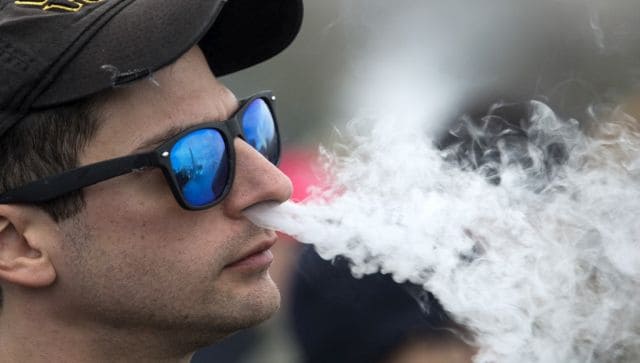 In the US, while the cigarette smoking rate has fallen to its lowest ever, the number of e-cigarette users has seen a steady rise. AFP[/caption]In March, one of the United Kingdom’s leading respiratory doctors warned of a ‘vaping epidemic’ among teenagers even though it is illegal before the age of 18. According to Dr Mike McKean, the vice president of policy for the Royal College of Paediatricians and Child Health, the prevalence could now be as high as 15 per cent, after NHS figures for 2021 showed that nine per cent of 11- to 15-year-old children used e-cigarettes, up from six per cent in 2018, and a figure which rises to 18 per cent for 15-year-olds. Meanwhile, 2022 figures for Scotland showed levels at 10 per cent for 15- to 16-year-olds, reports The Guardian.While India has banned e-cigarettes, vaping is common in colleges, after-school parties and pubs, according to a report in ThePrint.[caption id="attachment_12536772" align="alignnone" width="640"]
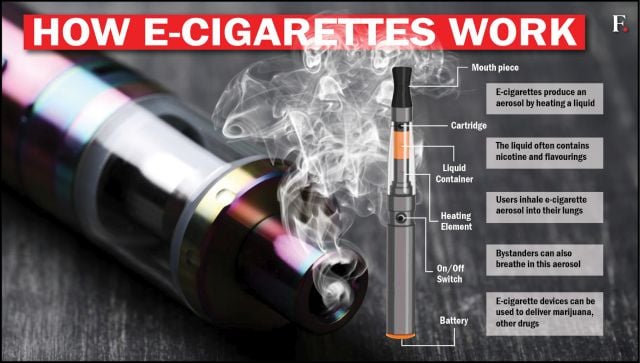 Graphic: Pranay Bhardwaj[/caption]Why do teens take to vapingE-cigarettes heat nicotine (extracted from tobacco), flavourings and other chemicals to create an aerosol that is inhaled. Teens are attracted to flavours like menthol, strawberry, bubblegum and juice. E-cigs are discreet and high-tech.Many teenagers are led to believe that vaping is less harmful than regular cigarettes. The US FDA didn’t regulate vapes and e-cigarettes as tobacco products until 2016. Juul, a popular e-cigarette brand, which was under fire for ‘kid-friendly’ marketing, was banned by the US Food and Drug Administration only in July year.
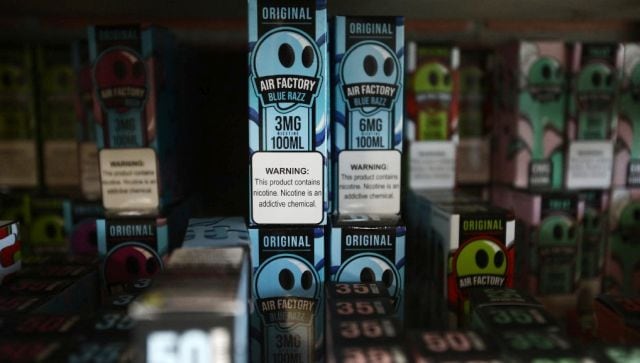 E-liquids are displayed for sale, with nicotine warning labels, in a vape shop in Los Angeles, California. Its the flavouring and the taste that attracts teens towards vaping. AFP[/caption]E-cigarettes produce several chemicals that are not good for human health, including acrolein, acetaldehyde, and formaldehyde. Studies show these chemicals are known as aldehydes and can cause lung and heart disease, according to the American Lung Association.E-cigarette aerosol can irritate lungs, throat and eyes and can also make teens more likely to catch colds or get the flu. Young users risk exposing their respiratory systems to potentially harmful chemicals in vapes.There is also a risk of poisoning. The liquid nicotine used to refill the devices can kill children. A one-year-old died from liquid nicotine poisoning in December 2014.[caption id="attachment_12536862" align="alignnone" width="640"]
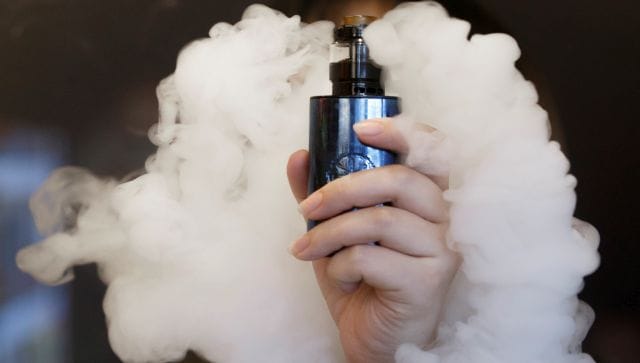 While vaping is considered less harmful that smoking, it is not safe. Reuters[/caption]“These (refills) are being sold in hundreds of different flavours, including flavours and colours that would be absolutely appealing to kids,” said Kyran Quinlan, a top American paediatrician and former chair of the AAP council on injury, violence and poison prevention. “It’s such a small quantity and yet it's so toxic and so deadly. I don’t think (people) realise what a deadly toxin they have in their house when they have liquid nicotine.”Several studies claim that vaping is “95 per cent safer than cigarettes”. But it’s been around for about a decade and while it is harmful its complete effects are not even known yet.The fancy packaging on e-cigs might not come with a warning. But the truth is: Vaping is injurious to health.With inputs from agencies Read all the Latest News, Trending News, Cricket News, Bollywood News,India News and Entertainment News here. Follow us on Facebook, Twitter and Instagram.
First Published:May 02, 2023, 14:21:29 IST
Advertisement
Advertisement

Military drones & police check-ups: How Sri Lanka is fighting against worst dengue outbreak in a decade
Sri Lanka is fighting its most severe dengue outbreak in nearly a decade, with infections rising sharply across the nation. Military drones have been deployed to tackle the outbreak, which has claimed 56 lives. Health officials said the outbreak is being driven primarily by the DENV-2 variant of the virus
3 min read
How Facebook job ad lured 2 Karnataka men into Myanmar cyber scam camp
The Karnataka Cyber Command has rescued two youths from a scam compound in Myanmar operated by Chinese fraudsters. The duo from Karnataka were lured on the pretext of data-entry jobs. They were asked to work for 16 hours a day and were expected to sleep for six hours daily
4 min read
Why is India seeing 95% cloud cover despite a Super El Niño?
India is witnessing nearly 95 per cent cloud cover despite a Super El Niño, a climate event usually linked to weaker monsoons. Regional weather systems, cyclonic circulations, the monsoon trough and moisture from two seas are temporarily overpowering one of the world's strongest climate phenomena
5 min read
What is CJP’s fourth demand to the government as protests in Delhi intensify?
The protest by the Cockroach Janta Party at Delhi’s Jantar Mantar refuses to die down. The group have made a fourth demand to the Centre, asking that no FIRs are filed against the agitators and that no legal action be taken. The government has expressed willingness to speak to the protesters, but refused to accede on the resignation of Education Minister Dharmandra Pradhan
5 min read
The new geography of war: Why the Houthis can no longer be ignored
The rise of the Houthis marks the emergence of a new geography of war — one in which influence flows not only from capitals and conventional armies, but also from rugged mountains overlooking vital sea lanes
6 min read
Advertisement
Advertisement