


Assam tables UCC bill after Uttarakhand and Gujarat: What changes for live-in couples?
A Uniform Civil Code bill has been introduced in Assam. It mandates 21 years as the minimum age of marriage for men and 18 years for women, bans polygamy and calls for live-in relationships to be registered. The bill says this will help protect the rights of both partners, as well as children born of such unions

The Assam government has announced that it will bring in a Uniform Civil Code (UCC) bill.
The bill, introduced by Assam Parliamentary Affairs Minister Atul Bora on behalf of Chief Minister Himanta Biswa Sarma, seeks to outlaw polygamy and mandate the registration of live-in relationships.
If passed, it would make Assam the third state in India to implement legislation on the UCC. This is in line with Article 44 of the Indian Constitution, which says that the State shall “endeavour to secure for citizens a Uniform Civil Code throughout the territory of India”. Opposition parties, which have come out against the Bill, have accused the BJP of attempting to implement a ‘political agenda’.
But what do we know about the Bill? Which states have implemented the UCC? Which are looking to introduce it?
Let’s take a closer look.
A brief look at Assam UCC Bill
First, let’s take a brief look at the proposed law entitled “The Uniform Civil Code, Assam, 2026 Bill”.
According to Deccan Chronicle, the Bill’s statement of objections and reasons states that the proposed law aims to ‘simplify and bring together rules related to marriage, divorce, succession, and live-in relationships’. The Bill mandates 21 years as the minimum age of marriage for men and 18 years for women.
 More from Explainers
As per News18, the Bill also seeks to mandate the registration of marriages and divorces in order to decide maintenance, inheritance, and other legal protections for spouses. It also bans polygamy.
“It introduces uniform rules for inheritance, ensuring that the transfer of assets is handled justly for all residents of the state,” Sarma said. “This ensures that the code is not just a policy but a practical tool for social justice and equality in Assam.”
It also calls for live-in relationships to be registered. The Bill says this will help protect the rights of both partners, as well as children born of such unions.
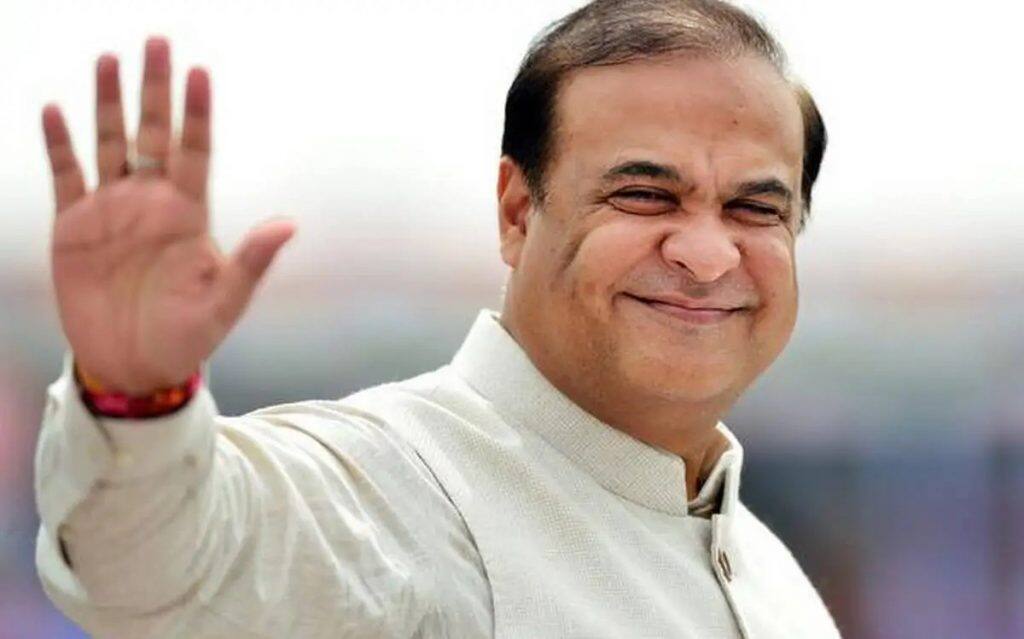
“The Constitution, under Article 44, directs the State to strive for a Uniform Civil Code for its citizens. This Bill seeks to implement this principle within Assam to ensure a common legal framework for all residents, regardless of their religion,” Sarma added.
However, those from Scheduled Tribes will be exempted from the provisions of the UCC. Traditional religious customs, practices, and rituals will also remain unaffected.
According to the Hindustan Times, tribal communities comprise around 12.45 per cent of Assam’s population, while Muslims comprise around 34.22 per cent. The newspaper cited these statistics using data from the 2011 Census.
However, the full details of the Bill remain unknown as of now. This will likely become clearer when the Bill is tabled in the State Assembly on May 27 (Wednesday).
Which states have passed a UCC?
Until now, Uttarakhand and Gujarat have passed a UCC. Uttarakhand did so in early 2024, while Gujarat did so in March 2026. Now let’s take a look at these two states and the UCC Bills they passed.
Uttarakhand UCC
Uttarakhand passed its UCC in February 2024 via voice vote in the Assembly. “The Uniform Civil Code (UCC) will create equal laws for men and women across all faiths and will help create a non-partisan and non-discriminatory society,” Chief Minister Pushkar Singh Dhami said at the time.
He added that it will protect the rights of women and put an end to their exploitation, and that the move fulfils the BJP’s commitment made to the citizens of Uttarakhand in the run-up to the 2022 Assembly polls. “It fulfils a commitment we had made to the people of the state in the run-up to the 2022 Assembly polls.”
The Uttarakhand UCC bans bigamy and polygamy. According to Mint, the law under Section 4 of the UCC lists five conditions for the solemnisation of marriage between a man and a woman. These include:
1. Neither party has a spouse living at the time of the marriage.
2. At the time of the marriage, neither party
(a) is incapable of giving valid consent in consequence of unsoundness of mind; or
(b) though capable of giving valid consent, has been suffering from a mental disorder of such a kind or to such an extent as to be unfit for marriage; or
(c) has been subject to recurrent attacks of insanity.
3. The man has completed the age of twenty-one years and the woman the age of eighteen years.
4. The parties are not within the degrees of prohibited relationship unless the custom or usage governing one of them permits marriage between the two, provided that such customs and usage are not against public policy and morality.
5.The marriage is not prohibited under any law in force.
Under the law, sons and daughters have been given equal property rights. All other children, including illegitimate children, adopted children, children born via surrogacy, and children born through assisted reproductive technology, are also considered biological children. In essence, the law makes no distinction between legitimate and illegitimate children.

When it comes to a person passing away intestate (without a will), a person’s wife, children, and parents are now given equal property rights. The law says that if there is no immediate family, the property then passes to other relatives — specifically first cousins from the father’s side. It also spells out the order of succession, how shares are distributed, and who can be disqualified. It stresses equal treatment for heirs and also lays out the government’s role in case there are no heirs.
The law also removes any distinction between self-acquired and ancestral property, as per the newspaper. “The estate of a person dying intestate shall devolve… firstly, upon heirs — son, daughter, widow, mother, and father… Secondly, if there is no heir of Class 1, then upon the heirs being relatives — brother, sister, brother’s son, sister’s son, brother’s daughter, sister’s daughter…,” the law says. Thirdly, if there is no heir of the two classes, then upon the other relatives. Lastly, if there is no heir belonging to any of the clauses above, then by escheat upon the government; and the government shall take the estate subject to all the obligations and liabilities to which an heir would have been subject,” the Bill added. “Where a widow or widower of any predeceased relative of an intestate has married again in the lifetime of the intestate, such widow or widower shall not succeed to the estate of the intestate.”
The Bill received the President’s assent on March 11, 2024, and came into force on January 27, 2025. This made Uttarakhand the first state in independent India to have a UCC. Scheduled Tribes in Uttarakhand remain exempt from the provisions of the law.
Gujarat’s UCC
Gujarat passed the Gujarat Uniform Civil Code Bill, 2026, on March 24, 2026. The Bill was tabled in the State Assembly by Chief Minister Bhupendra Patel. The development came a week after a State-appointed panel tabled its final report on the implementation of the UCC.
As per News18, the Bill mandates the registration of live-in relationships. It also allows their dissolution via a formal declaration. Like the UCC in Uttarakhand, it too takes aim at bigamy and polygamy and seeks to outlaw them.
“The present Bill seeks to give effect to these recommendations by providing a uniform legal framework governing civil matters for all citizens of the State, irrespective of religion, caste, creed, or gender. It aims to uphold the principles of secularism, gender justice, and social reform, thereby strengthening the unity and integrity of society,” the Bill document stated.
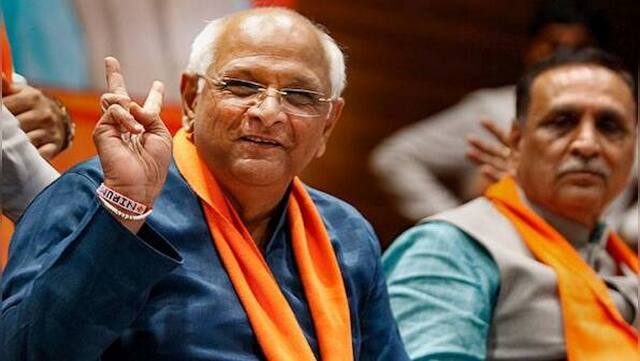
Much like the Uttarakhand UCC, this Bill too gives equal recognition to children born inside and outside of marriage, including those born through assisted reproductive technologies, as well as adopted ones. It says that though marriages may be conducted as per the customs or religious ceremonies of a community, they must be registered.
It also spells out penalties for not registering a marriage or giving false information. It also standardises laws for matrimonial disputes, conjugal rights, judicial separation, and annulment. Like the proposed law in Assam and the UCC passed in Uttarakhand, this Bill too exempts Scheduled Tribes from its provisions. However, the Bill is yet to receive the nod from the President of India.
Goa’s Portuguese Civil Code
Interestingly, Goa follows the Portuguese Civil Code, 1867. This was extended to overseas provinces of Portugal on July 1, 1870, which brought Goa, Daman, and Diu under its ambit. However, several provisions of the original civil code have since been repealed. However, it is not strictly speaking a UCC, since it has specific provisions for certain communities.
For example, Hindu men have the right to bigamy under specific circumstances mentioned in the Codes of Usages and Customs of Gentile Hindus of Goa (if the wife fails to deliver a child by the age of 25, or if she fails to deliver a male child by the age of 30).
Which states are looking to bring in UCC?
Madhya Pradesh
Madhya Pradesh has said that it wants to implement a UCC by the end of the year. People in the know told the Hindustan Times that Chief Minister Mohan Yadav had ordered officials to begin the process to do so.
According to News on Air, the Madhya Pradesh government in April 2026 formed a high-level committee to examine the feasibility of doing so. It announced that the committee is being chaired by former Supreme Court judge Justice Ranjana Prasad Desai. The committee also includes ex-IAS officer Shatrughna Singh, legal expert Anoop Nair, educationist Gopal Sharma, and social worker Budhpal Singh. Ajay Katesariya, Additional Secretary in the General Administration Department, has been appointed as the Secretary of the committee.
“The committee will hear views from all sections of society. It will then study the existing legal framework and submit recommendations to the State Government on implementing a UCC. We will try to finalise our recommendations by July,” Singh was quoted as saying by The Pioneer.
Chhattisgarh
The Chhattisgarh Cabinet in April had announced the formation of a high-level committee to prepare a UCC draft. It announced that the committee would be chaired by retired judge Ranjana Prakash Desai. The Cabinet said that the committee would be tasked to simplify laws relating to marriage, divorce, inheritance, and adoption to promote religious and gender equality.
West Bengal
The BJP, during the recently held West Bengal elections, had vowed to implement the UCC in West Bengal within six months if it was voted to power. As per NDTV, Home Minister Amit Shah, during the election, had said that the BJP would make sure that “there is one law in Bengal for every citizen.”
Now, with the state getting its first-ever BJP Chief Minister at the helm in Suvendu Adhikari, all eyes are on the BJP.
FAQs
1. What does the Assam UCC Bill propose?
It seeks to outlaw polygamy, mandate registration of marriages and live-in relationships, and standardise laws on inheritance, maintenance, and succession.
2. Which states have implemented a UCC?
Uttarakhand and Gujarat have passed UCC laws, while Assam is proposing one.
3. Are Scheduled Tribes included in UCC laws?
No. Most UCC frameworks, including Assam’s proposal, exempt Scheduled Tribes and preserve certain customary practices.
With inputs from agencies

Military drones & police check-ups: How Sri Lanka is fighting against worst dengue outbreak in a decade
How Facebook job ad lured 2 Karnataka men into Myanmar cyber scam camp
Why is India seeing 95% cloud cover despite a Super El Niño?
What is CJP’s fourth demand to the government as protests in Delhi intensify?
The new geography of war: Why the Houthis can no longer be ignored