


Argentina celebrates win over England with Falklands banner. Why is this controversial?
After their 2-1 win against England at the World Cup, Argentina celebrated by waving a banner that read ‘Las Malvinas Son Argentinas (The Malvinas are Argentine)’. The banner refers to the 74-day Falklands Island war of 1982, where nearly 650 Argentinian soldiers died. This act could lead to the Lionel Messi side being sanctioned as it is in contravention of FIFA rules

Another win, another controversy. At the 2026 FIFA World Cup, Argentina has become controversy’s child. The Lionel Messi side once again kicked up a row in their 2-1 win against England in the semi-final.
After the ill-tempered game in Atlanta, some of the Argentine players held up a banner which read, ‘Las Malvinas son Argentinas’, which translates as, ‘The Falklands are Argentine’
Now, this celebration by the Argentinians puts them at risk of being sanctioned by FIFA.
But why is this banner controversial? What could happen next?
Argentina celebrates win with banner
The defending champions staged a stunning comeback once again in their match against England — they were down after England took the lead in the 55th minute through Anthony Gordon — with Enzo Fernandez equalising and Lautaro Martinez striking a last-minute goal to seal Argentina’s 2-1 win.
 More from Explainers
When the final whistle blew at the Atlanta stadium, Argentina’s midfielder Giovani Lo Celso appeared on the field with a banner saying, “Las Malvinas son Argentinas,” which translates to “The Malvinas are Argentine.”
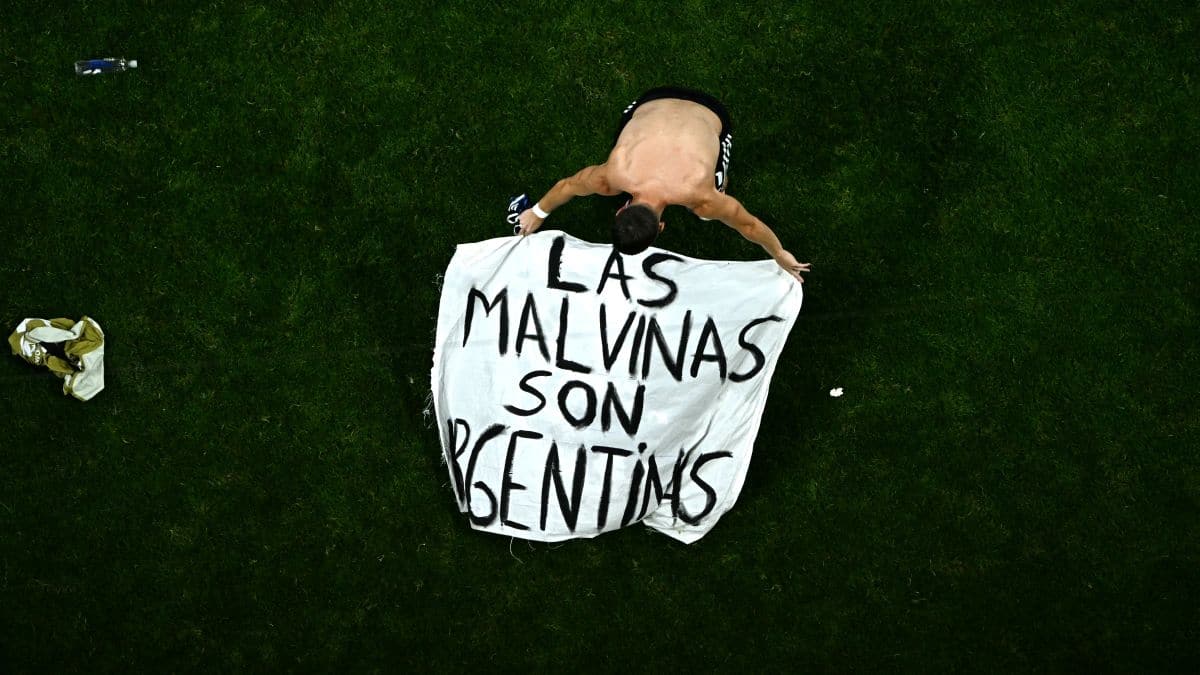
Lo Celso held the banner, which appeared to have first been displayed by supporters in the crowd, with defender Nicolas Otamendi, only to then briefly put it away. He then laid it out on the pitch.
The significance of the Malvinas banner
The banner held up by the Argentinian players refers to the long-standing dispute over the territory, which is referred to as the Falkland Islands in Britain and Islas Malvinas in Argentina. Since 1833, the archipelago in the South Atlantic Ocean has been a British Overseas Territory.
The group of islands was believed to be completely uninhabited when they were discovered, which meant Britain settled there. This is disputed by activists in Argentina, who have long believed it should have sovereignty.
This came to a head in 1982 when the Argentine military dictatorship invaded it. At the time, Argentina didn’t expect an aggressive response from Britain. However, the British sent its fleet across the Atlantic, resulting in the 74-day Falklands War. The conflict led to 907 deaths — 649 Argentine military personnel, 255 from Britain, and three Falkland Islanders.
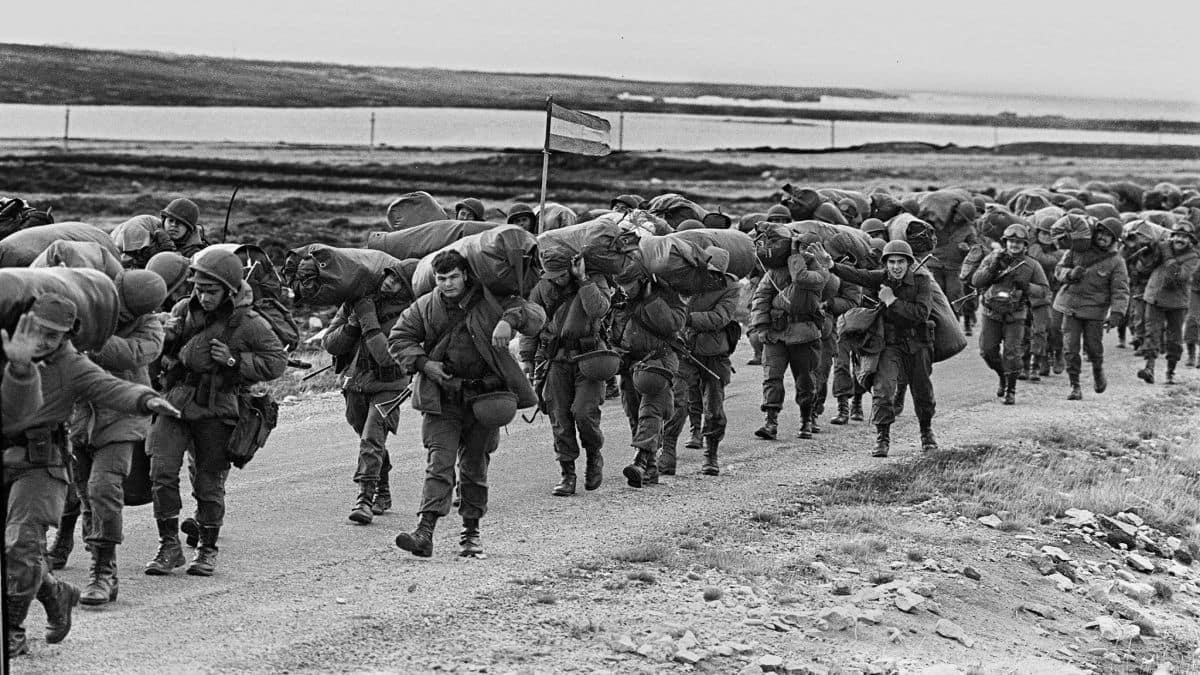
Years later, even today, the Falklands issue simmers. Britain claims sovereignty over the islands and maintains a military presence there, while Argentina continues to pursue its ambitions through diplomatic channels and international bodies, including the United Nations.
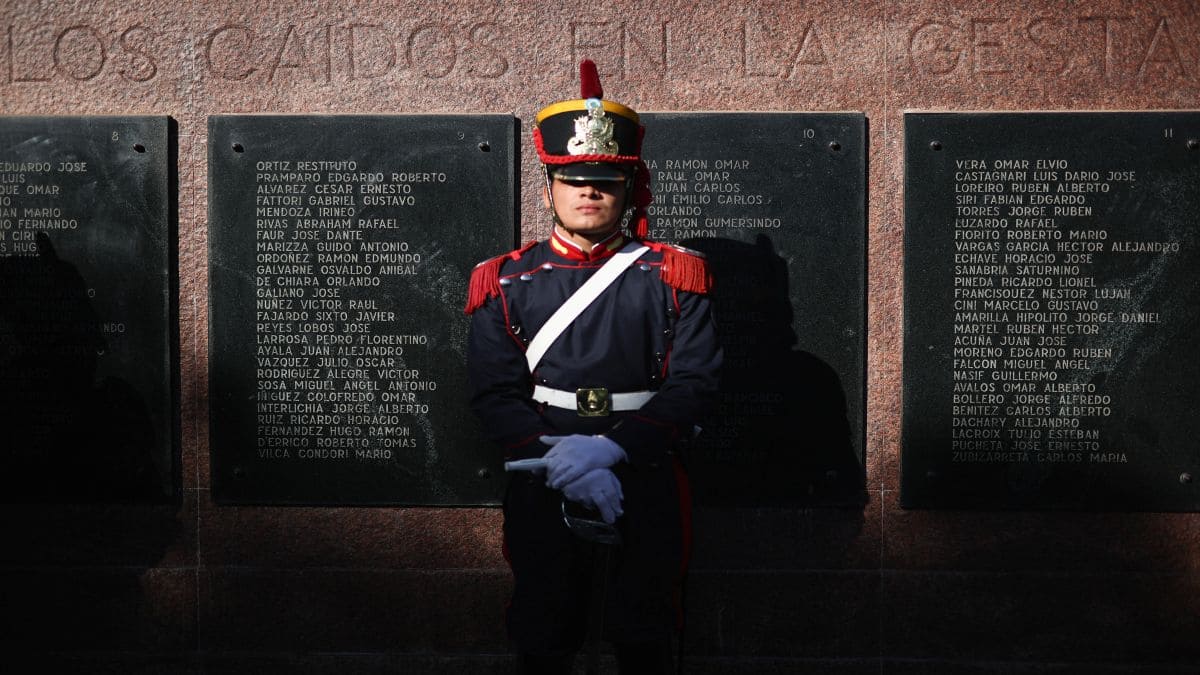
In fact, the Malvinas are enshrined in the Argentinian psyche. As Argentine journalist Nicolas Rotnitzsky told the BBC, “It’s part of the Argentine culture. It’s important to get our identity around what happened with the Malvinas. It’s about who we are.”
Even before the match, the Falkland issue reared its head. At the time, Argentina midfielder Rodrigo de Paul noted, “We understand it’s a football game that transcends, it brings back memories of what Diego did. We sing songs about our Malvinas heroes, mainly to remember them, but we have to understand that it’s a football match and that the Malvinas have to be discussed elsewhere. What happened was an atrocity, and we always remember the fallen, but what we want is to win this match to get to the final.”
However, it’s hard to keep politics and sport separate.
Before the Argentinians took on England, Argentina Vice-President Victoria Villarruel said the semi-final was “about putting the invaders in their place”. And after her side scored a win, she once again posted on X, “it wasn’t just another match” alongside a video of what appeared to be Argentine soldiers.
“The Falklands are Argentine,” Villarruel posted. “They banned bringing them to the stadium and forgot that we carry them in our blood and our hearts.”
Argentina likely to face FIFA action
However, the Argentinian celebration could risk the Lionel Messi-led team facing disciplinary action from FIFA.
That’s because the International Football Association Board (IFAB), football’s lawmakers, and FIFA have a clear stance on political flags, slogans, and symbols being displayed.
“Equipment must not have any political, religious, or personal slogans, statements, or images. Players must not reveal undergarments that show political, religious, personal slogans, statements, or images, or advertising other than the manufacturer’s logo,” states IFAB’s rulebook.
“For any offence, the player and/or the team will be sanctioned by the competition organiser, national football association, or by FIFA.”
FIFA’s Stadium Code of Conduct also bans “banners, flags, flyers, apparel, and other paraphernalia that are of a political, offensive, and/or discriminatory nature” inside stadiums.
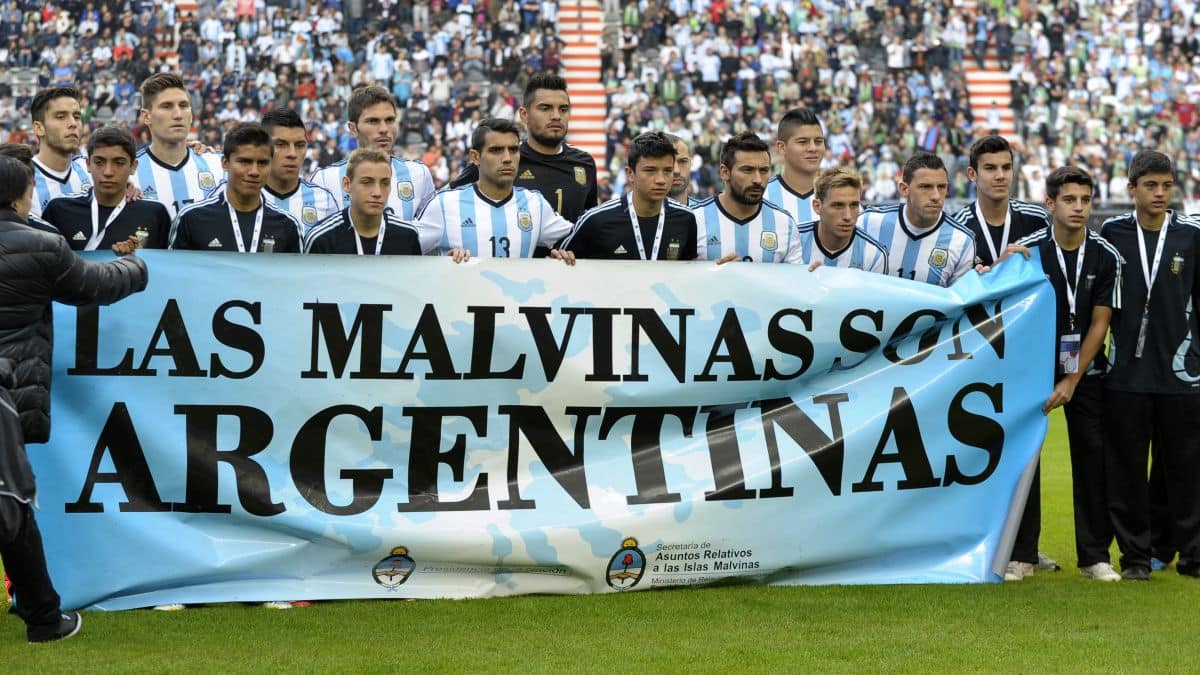
While FIFA has been reached for a comment, it’s unclear as to what punishment the Argentinians will face for the banner celebration. Any investigation would come just days before Argentina face Spain in Sunday’s World Cup final, where Messi and Co attempt to become the first nation since Brazil in 1962 to successfully defend the men’s World Cup title.
However, there are past cases that could provide some clues. In 2014, Argentina’s Football Association (AFA) was fined £19,540 after their players displayed a similar banner before a 2-0 friendly win against Slovenia in La Plata.
Will Argentina’s celebration cost them? Only time will tell.
With inputs from agencies

Military drones & police check-ups: How Sri Lanka is fighting against worst dengue outbreak in a decade
How Facebook job ad lured 2 Karnataka men into Myanmar cyber scam camp
Why is India seeing 95% cloud cover despite a Super El Niño?
What is CJP’s fourth demand to the government as protests in Delhi intensify?
The new geography of war: Why the Houthis can no longer be ignored