


Are penguins at risk after deadly bird flu hits Antarctica for first time?
A deadly type of bird flu has been confirmed on the mainland of Antarctica for the first time. There are heightened concerns about a potential risk for the southern region’s hundreds of thousands of penguin colonies because of their low immunity

A deadly type of bird flu has been confirmed on the mainland of Antarctica for the first time, scientists said.
There are heightened concerns about a potential risk for the southern region’s ecosystem, which is the breeding ground for more than 100 million birds, including hundreds of thousands of penguins found nowhere else on Earth.
Here’s all we know about it.
Two seabirds found dead
Two dead skua seabirds were found by Argentine scientists near its base, Primavera, and a scientific research station located on the Antarctic Peninsula.
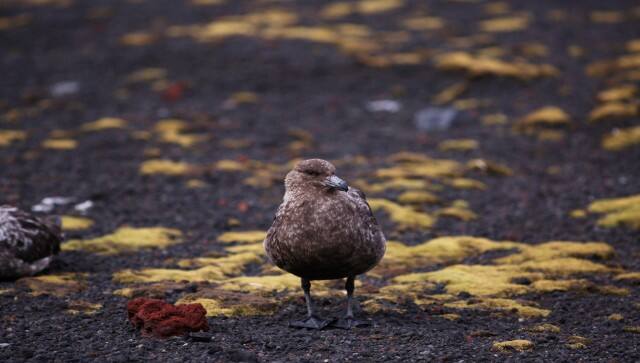
The presence of the H5N1 avian virus was confirmed in the samples of the dead birds by the Spanish National Research Council (CSIC) on 24 February.
 More from Explainers
“This discovery demonstrates for the first time that the highly pathogenic avian influenza virus has reached Antarctica, despite the distance and natural barriers that separate it from other continents,” scientists from the Severo Ochoa Molecular Biology Center of the Higher Council for Scientific Research stated in a press release on Sunday.
"Analysis has conclusively shown that the birds were infected with the H5 subtype of avian influenza and at least one of the dead birds contained the highly pathogenic avian influenza virus," CSIC said, as per Reuters.
According to The Washington Post, CSIC added that scientists obtained samples from the two dead skuas using “maximum security measures to prevent transmission of the virus to people,” sending them by ship to the Spanish base on Deception Island for testing.
Penguins at risk
Since 2020, when the highly infectious virus emerged again, it has devastated both wild and domestic animals. It has made its way to the majority of the continents, except Australia.
The flu has proven potent enough for transmission from birds to mammals, killing polar bears, fur seals, and elephants.
Last year, in October, the Scientific Committee on Antarctic Research’s risk assessment of the effects of bird flu spreading to the continent found that penguins, birds of prey, sheathbills, and giant petrels are most at risk, followed by fur seals, sea lions, skuas, and gulls.
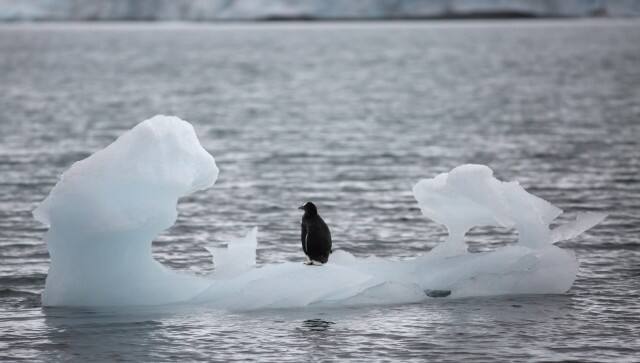
There are hundreds of thousands of penguins, which like to waddle together in packed colonies, on the Antarctic continent and nearby islands.
The current arrival of H5N1 avian influenza highlights the risk to colonies in the ecosystem. In January this year, over 200 Gentoo penguin chicks and several adults were found dead off the Falkland Islands coast — but not in the actual Antarctic territory, according to a report by India Today.
The Telegraph says Antarctica has never had an outbreak of bird flu before, which is why the immunity of its residents is very low. The unexpected flu hit could even result in mass mortality.
“You have these massive, densely packed together bird colonies and some of those mega charismatic, highly threatened species, which are all packed together down there,” Christian Walzer, a wildlife veterinarian and executive director of health at the Wildlife Conservation Society told the Scientific American, adding, “If (a virus outbreak) does hit, the impacts will be potentially really devastating... Entire populations may disappear... This would be a catastrophe.”
The scientists in a preprint research paper released in November 2023 even expressed fears that it could cause “one of the largest ecological disasters of modern times.”
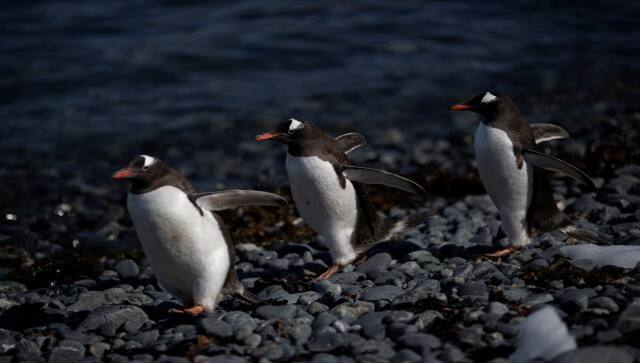
Penguins in Antarctica are not only facing the virus outbreak risk but also the rising temperatures, which deplete the sea ice they need to survive.
The Washington Post quoted the US Fish and Wildlife Service in 2022 as saying that the continent’s emperor penguins are threatened with extinction due to climate change.
Meanwhile, researchers from Spain have advised preparing national polar programmes to avoid the transmission of infections to humans.
About the H5N1 strain
H5N1 is a highly pathogenic avian influenza (HPAI) virus.
The first human H5N1 avian flu outbreak occurred in 1997 in Hong Kong, according to the National Library of Medicine of the US government.
In 2020, the strain first appeared in Europe. Since then, it has quickly spread to several countries, including South America.
A fatal variant of the H5N1 sub-type is to blame for the current pandemic, which has resulted in the deaths of millions of birds in 2022 alone, according to Nature magazine.
In South America alone, more than 500,000 seabirds, including penguins, pelicans, and boobies, have died, as per Down To Earth.
With inputs from agencies

Military drones & police check-ups: How Sri Lanka is fighting against worst dengue outbreak in a decade
How Facebook job ad lured 2 Karnataka men into Myanmar cyber scam camp
Why is India seeing 95% cloud cover despite a Super El Niño?
What is CJP’s fourth demand to the government as protests in Delhi intensify?
The new geography of war: Why the Houthis can no longer be ignored