


Are India’s monsoon breaks becoming longer or more frequent?
India’s southwest monsoon has swung from a June rainfall deficit to heavy downpours in July and back to a break phase. This stop-start pattern is not unprecedented. Experts say this intraseasonal variability is fairly common, particularly during El Niño years

After a sluggish June, India’s southwest monsoon returned with a vengeance in early July, reducing the nationwide rainfall deficit from 40 per cent at the end of June to 14 per cent by July 9. But with the monsoon slipping back into a break phase, the deficit widened again to 18 per cent by July 12.
That has revived a familiar question: Are India’s monsoon breaks becoming longer or more frequent?
As it turns out, this year’s stop-start pattern is not unprecedented. “The active-break monsoon cycle refers to the alternating periods of enhanced (active) and suppressed (break) rainfall over the Indian summer monsoon region,” says Dr Rajib Chattopadhyay, scientist at the Indian Institute of Tropical Meteorology (IITM). These fluctuations occur over periods ranging from about 10 to 90 days and are a defining feature of the Indian summer monsoon.
 More from Explainers
During a break phase, rainfall decreases sharply over central and northwest India as the monsoon trough shifts northwards towards the Himalayan foothills. Rain-bearing systems from the Bay of Bengal also become less frequent, while rainfall shifts towards the Himalayan foothills, northeast India and sometimes the equatorial Indian Ocean. “Monsoon breaks are a natural part of rainfall variability during the monsoon. Conversely, periods of widespread heavy rainfall are known as active spells,” says Dr Chattopadhyay.
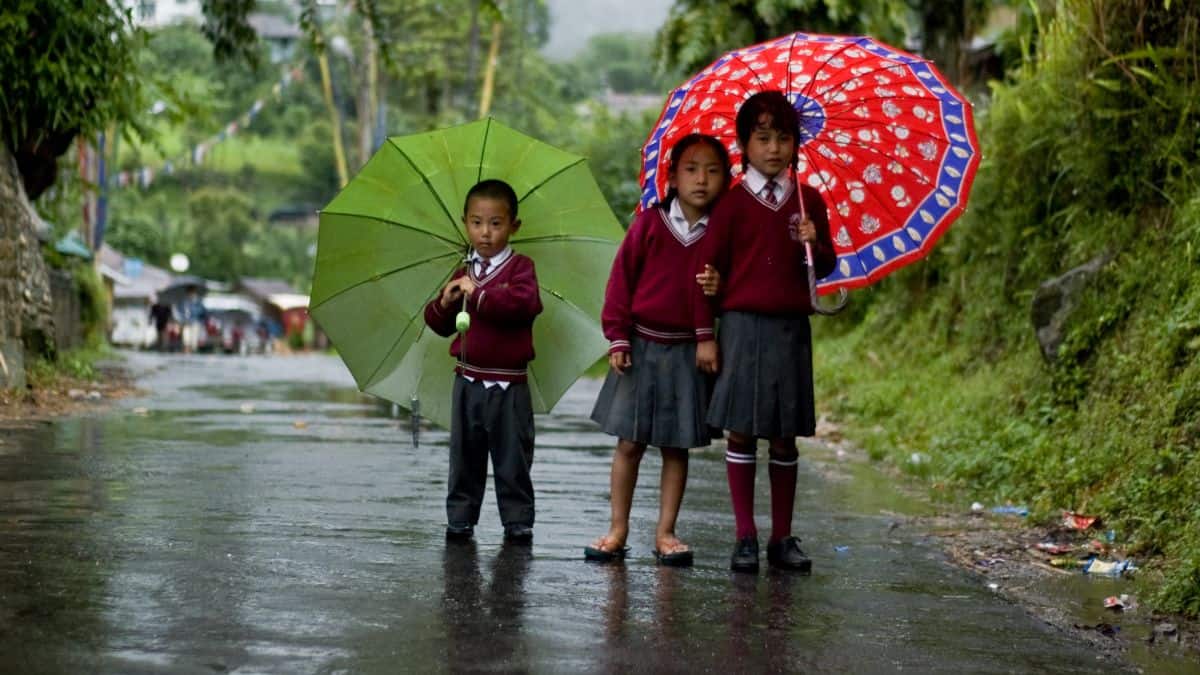
Why this year’s monsoon has seen variability
According to Dr Akshay Deoras, senior research scientist at the National Centre for Atmospheric Science and the University of Reading, this kind of intraseasonal variability is fairly common, particularly during El Niño years. Although El Niño generally weakens the monsoon, shorter-term atmospheric patterns can still produce episodes of intense rainfall.
This year’s weak June and the current break appear to share a common trigger. “The delayed progression of the monsoon during June was linked to a strong intrusion of dry air from the arid regions to the west and northwest of India. These dry air intrusions stabilise the atmosphere, suppressing the formation of rain clouds and reducing rainfall. A similar dry intrusion is affecting India at present and has contributed to the current weakening of the monsoon,” Dr Deoras explains.
His research has shown that most monsoon break phases are associated with these dry air intrusions. “When the intrusions are particularly strong, the resulting breaks also tend to be more severe,” he adds.

Are monsoon breaks becoming more common?
While this year’s dramatic swings have renewed interest in the question, the experts say the evidence for long-term changes remains mixed. “There is no coherent study that shows that the active-break cycle as such has changed drastically,” says Dr Chattopadhyay.
While some studies have reported an increase in the frequency of dry days in parts of India, others have found regional changes in wet and dry spells. According to Dr Chattopadhyay, longer-duration break spells and prolonged rainfall deficits are associated with a combination of atmospheric and oceanic factors, including mid-latitude circulation, soil moisture and the seasonal mean state associated with El Niño and La Niña.
In other words, one erratic monsoon season cannot, by itself, be taken as evidence that monsoon breaks are becoming longer or more frequent.
But even if seasonal rainfall totals end up close to normal, the way rain is distributed through the season can have significant consequences. According to Dr Chattopadhyay, prolonged dry spells can delay sowing, increase irrigation costs and affect fertiliser use, while crops such as rice are particularly vulnerable to water shortages during key growth stages. Reservoir management also becomes more challenging. Heavy rainfall concentrated into short bursts generates rapid runoff, while cities become vulnerable to flash floods when drainage systems are overwhelmed.
What lies ahead
Dr Deoras says seasonal climate models suggest much of India could receive below-average rainfall during August and September. However, he also cautions that it is still too early in the season to draw firm conclusions about whether this year’s active and break phases differ significantly from recent years.
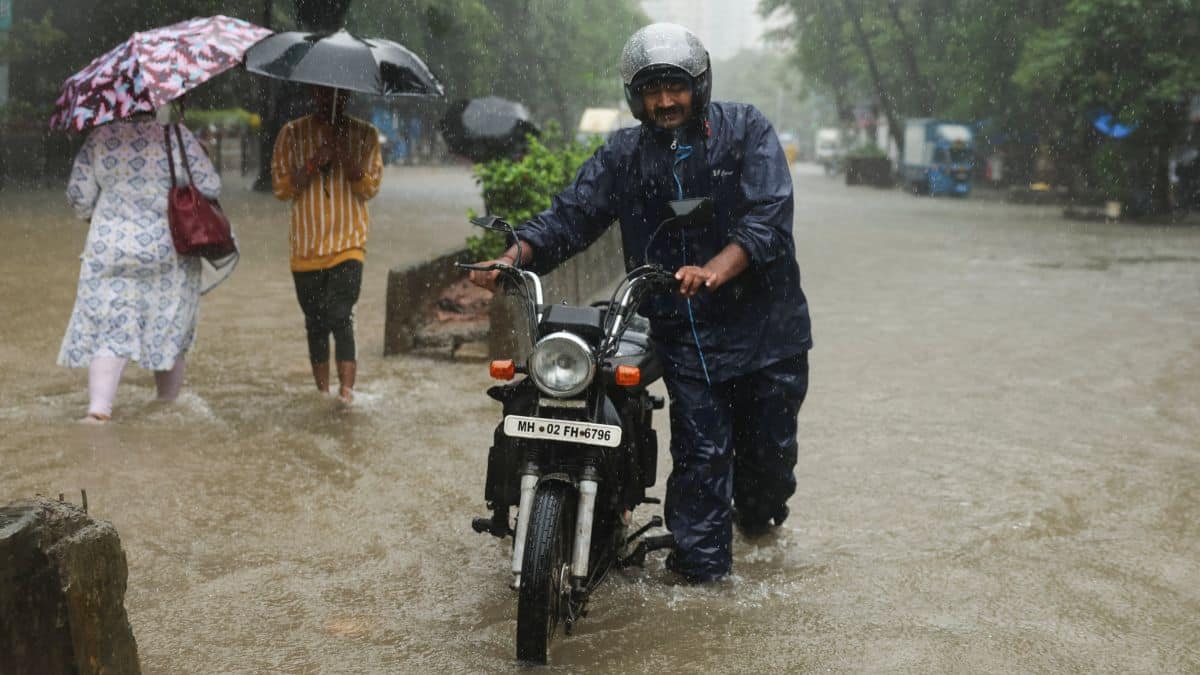
“Climate models have limited skill in predicting the intraseasonal weather patterns that can temporarily strengthen the monsoon, as we saw in early July. Whether similar episodes occur will be a key factor in determining how the rest of the season evolves. If they do, we are likely to continue seeing periods of intense rainfall interspersed with dry spells, resulting in pronounced intraseasonal variability through the remainder of the monsoon season,” he emphasises.
This year's monsoon underscores that seasonal rainfall totals tell only part of the story. The timing and distribution of rainfall can matter just as much. Whether the monsoon’s active-break cycle is fundamentally changing remains an open scientific question, one that will require decades of observations rather than a single erratic season to answer.

Military drones & police check-ups: How Sri Lanka is fighting against worst dengue outbreak in a decade
How Facebook job ad lured 2 Karnataka men into Myanmar cyber scam camp
Why is India seeing 95% cloud cover despite a Super El Niño?
What is CJP’s fourth demand to the government as protests in Delhi intensify?
The new geography of war: Why the Houthis can no longer be ignored