


Anwaar-ul-Haq Kakar sworn in as Pakistan’s new caretaker PM: Who is he?
Anwaar-ul-Haq Kakar (71), hailing from Balochistan and an ex-member of the Balochistan Awami Party, has been sworn in as Pakistan’s eighth caretaker prime minister. His most important responsibility will be to oversee free and fair elections in the crisis-hit nation within 90 days

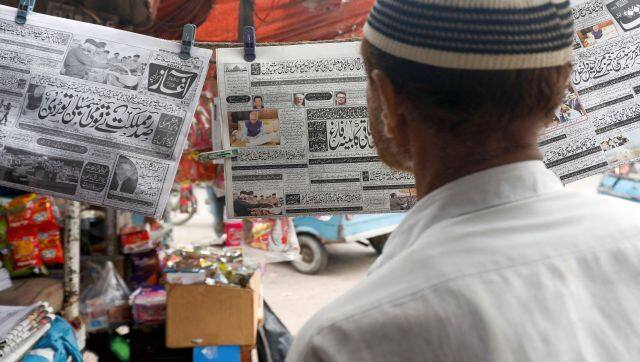
A man reads a newspaper, a day after Pakistan's parliament was dissolved by the president on Prime Minister Shehbaz Sharif's advice, at a makeshift stall in Karachi, Pakistan. Reuters[/caption]Why was Kakar been named as interim PM?Kakar being appointed as the caretaker PM comes after the dissolution of the National Assembly on 9 August. In Pakistan, once a government’s term ends, a caretaker must be established to oversee the next general elections.Kakar’s name for interim PM came as a surprise to many, as he is considered a relative unknown. A member of the outgoing ruling coalition told The Dawn that Kakar’s name “came from somewhere else and it had to be accepted by all stakeholders”. The politician was apparently referring to the powerful military establishment.On his appointment, the party of former prime minister Imran Khan, who is currently in jail and barred from contesting elections for five years following his conviction for corruption in the Toshakhana case, expressed hope that Kakar would ensure free, fair and credible elections.“If there are questions over the credibility of elections, there will be no political stability, which is critical for economic certainty,” former Foreign Minister Shah Mahmood Qureshi, who is currently leading Khan’s party, said in a TV interview.What are the major challenges awaiting Kakar?Simply put, the biggest challenge for Kakar as caretaker PM would be to hold elections on time.The caretaker government, as per Pakistan’s constitution, must hold elections within 90 days. However, after the outgoing government approved a new census in its final days, new electoral boundaries must be drawn up by the Election Commission. This exercise in a country of 241 million people may take at least six months or more. Moreover, it may also involve litigation by candidates over the new formations of the constituencies, which could further push back the poll dates.Economic stabilisation is another challenge; Pakistan’s economy is in the doldrums and was on the verge of a debt default before the International Monetary Fund bailed the nation out.The ongoing political turmoil with the Imran Khan party, the Pakistan Tehreek-e-Insaf (PTI), is another matter that political pundits have flagged.With inputs from agencies

Military drones & police check-ups: How Sri Lanka is fighting against worst dengue outbreak in a decade
How Facebook job ad lured 2 Karnataka men into Myanmar cyber scam camp
Why is India seeing 95% cloud cover despite a Super El Niño?
What is CJP’s fourth demand to the government as protests in Delhi intensify?
The new geography of war: Why the Houthis can no longer be ignored