
Advertisement


Sections
Capital punishment, lynching, sedition: How criminal laws could change
Home minister Amit Shah introduced three Bills in Lok Sabha today (11 August), with an aim to reform India’s criminal justice system. From capital punishment for mob lynching to repealing sedition law, here are the big modifications proposed by the Centre

Union home minister Amit Shah introduced three Bills in Lok Sabha today (11 August) that intend to reform India’s criminal justice system. The Bharatiya Nyaya Sanhita, 2023 will replace the Indian Penal Code (IPC), framed by the British in 1860.The Code of Criminal Procedure (CrPC) will give way to Bharatiya Nagarik Suraksha Sanhita, 2023, while the Indian Evidence Act of 1872 will be replaced by the Bharatiya Sakshya Bill, 2023, noted Bar and Bench.Addressing the Lower House of Parliament, Shah said the aim of these bills is not to “punish” but “provide justice”. "The laws that will be repealed... the focus of those laws was to protect and strengthen the British administration, the idea was to punish and not to give justice. By replacing them, the new three laws will bring the spirit to protect the rights of the Indian citizen," the Home Minister said, as per the news agency PTI."The aim will not be to punish, it will be to provide justice. Punishment will be given to create a sentiment of stopping crime," he added.These three Bills will be sent for further scrutiny to a parliamentary panel, Shah said, as per the news agency.Let’s take a closer look at some of the big overhauls of the criminal laws proposed by the Centre.Sedition to be 'repealed'Union minister Shah told Parliament that the sedition law will be "completely repealed" in the new legislation. Section 124A of the IPC which criminalises sedition will be replaced by Section 150 which includes “acts endangering the sovereignty, unity and integrity of India”. Bhartiya Nyaya Sanhita Bill also has provisions for "offences against the state”.As per NDTV, Section 150 states: "Whoever, purposely or knowingly, by words, either spoken or written, or by signs, or by visible representation, or by electronic communication or by use of financial means, or otherwise, excites or attempts to excite, secession or armed rebellion or subversive activities, or encourages feelings of separatist activities or endangers sovereignty or unity and integrity of India; or indulges in or commits any such act shall be punished with imprisonment for life or with imprisonment which may extend to seven years and shall also be liable to fine”.Its explanation reads: “Comments expressing disapprobation of the measures, or administrative or other action of the Government with a view to obtain their alteration by lawful means without exciting or attempting to excite the activities referred to in this section.”Meanwhile, Section 124A of the IPC says: Whoever, by words, either spoken or written, or by signs, or by visible representation, or otherwise, brings or attempts to bring into hatred or contempt, or excites or attempts to excite disaffection towards, the Government established by law in, shall be punished with imprisonment for life, to which fine may be added, or with imprisonment which may extend to three years, to which fine may be added, or with fine.Death penalty in mob lynching casesThe Centre plans to bring the provision of capital punishment in mob lynching cases."When a group of five or more persons acting in concert commits murder on the ground of race, caste or community, sex, place of birth, language, personal belief or any other ground each member of such group shall be punished with death or with imprisonment for life or imprisonment for a term which shall not be less than seven years, and shall also be liable to fine," India Today cited the new provision as saying.[caption id="attachment_12987372" align="alignnone" width="640"]![mob lynching]() Mob lynching will be made punishable with seven years or life imprisonment or the death penalty. Reuters (Representational Image)[/caption]Other changesShah said introducing the Bharatiya Suraksha Sanhita Bill, 2023 that as many as 313 alterations are being brought in India's criminal justice system, reported Indian Express.The Centre has proposed a punishment of 20 years or life imprisonment in gang rape cases and the death penalty for the rape of minors, as per NDTV.Recording statements on video of victims of sexual crimes will be made compulsory, as per LiveLaw.[caption id="attachment_12987322" align="alignnone" width="640"]
Mob lynching will be made punishable with seven years or life imprisonment or the death penalty. Reuters (Representational Image)[/caption]Other changesShah said introducing the Bharatiya Suraksha Sanhita Bill, 2023 that as many as 313 alterations are being brought in India's criminal justice system, reported Indian Express.The Centre has proposed a punishment of 20 years or life imprisonment in gang rape cases and the death penalty for the rape of minors, as per NDTV.Recording statements on video of victims of sexual crimes will be made compulsory, as per LiveLaw.[caption id="attachment_12987322" align="alignnone" width="640"]![rapes in india]() The new laws propose the death penalty for rape of minors. Reuters (Representational Image)[/caption]The term "life imprisonment" has been described as "imprisonment for natural life". According to India Today, the new laws also want to grant punishment for revealing the identity of rape survivors.As per LiveLaw, offences against children will now attract 10 years in jail from the previous seven years.Shah told Parliament that these new Bills ensure the police cannot “exploit their powers”. The police would not be able to delay investigations and will have to file charge sheets within 90 days of the filing of FIR, the Union minister said. “The investigation will have to be completed within 180 days in all cases. The judge will have to give verdicts within 30 days of framing of charges,” according to Hindustan Times (HT)."'Deemed Sanction' to prosecute civil servants, police officer accused of criminal offences in case of authority's failure to respond within 120 days of application”, according to LiveLaw.Under the new laws, trials can be conducted even if the accused is absconding.The Union home minister said the Centre plans to increase conviction rate above 90 per cent. Under Bharatiya Suraksha Sanhita Bill, 2023, “we have set the goal that the conviction ratio has to be taken above 90 per cent. That is why, we have brought an important provision that the Sections which provide for seven years or a greater jail term, under all those cases forensic team's visit to the crime scene will be made compulsory..." Indian Express quoted Shah as saying.Organised crimes can lead to harsher punishments, while a separate provision for chain/mobile snatching and similar offences is also proposed under the new laws, as per LiveLaw.With inputs from agencies
The new laws propose the death penalty for rape of minors. Reuters (Representational Image)[/caption]The term "life imprisonment" has been described as "imprisonment for natural life". According to India Today, the new laws also want to grant punishment for revealing the identity of rape survivors.As per LiveLaw, offences against children will now attract 10 years in jail from the previous seven years.Shah told Parliament that these new Bills ensure the police cannot “exploit their powers”. The police would not be able to delay investigations and will have to file charge sheets within 90 days of the filing of FIR, the Union minister said. “The investigation will have to be completed within 180 days in all cases. The judge will have to give verdicts within 30 days of framing of charges,” according to Hindustan Times (HT)."'Deemed Sanction' to prosecute civil servants, police officer accused of criminal offences in case of authority's failure to respond within 120 days of application”, according to LiveLaw.Under the new laws, trials can be conducted even if the accused is absconding.The Union home minister said the Centre plans to increase conviction rate above 90 per cent. Under Bharatiya Suraksha Sanhita Bill, 2023, “we have set the goal that the conviction ratio has to be taken above 90 per cent. That is why, we have brought an important provision that the Sections which provide for seven years or a greater jail term, under all those cases forensic team's visit to the crime scene will be made compulsory..." Indian Express quoted Shah as saying.Organised crimes can lead to harsher punishments, while a separate provision for chain/mobile snatching and similar offences is also proposed under the new laws, as per LiveLaw.With inputs from agencies
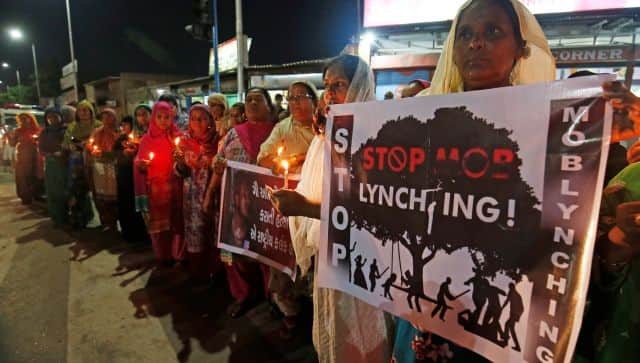 Mob lynching will be made punishable with seven years or life imprisonment or the death penalty. Reuters (Representational Image)[/caption]Other changesShah said introducing the Bharatiya Suraksha Sanhita Bill, 2023 that as many as 313 alterations are being brought in India's criminal justice system, reported Indian Express.The Centre has proposed a punishment of 20 years or life imprisonment in gang rape cases and the death penalty for the rape of minors, as per NDTV.Recording statements on video of victims of sexual crimes will be made compulsory, as per LiveLaw.[caption id="attachment_12987322" align="alignnone" width="640"]
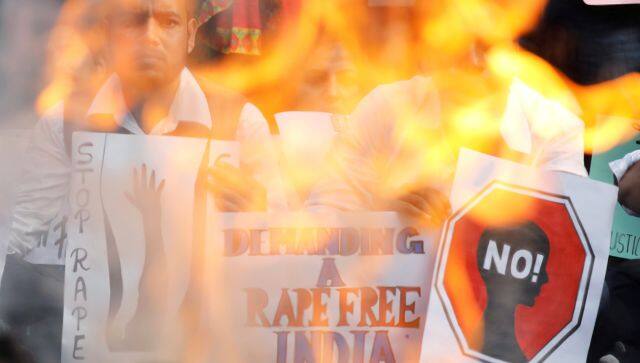 The new laws propose the death penalty for rape of minors. Reuters (Representational Image)[/caption]The term "life imprisonment" has been described as "imprisonment for natural life". According to India Today, the new laws also want to grant punishment for revealing the identity of rape survivors.As per LiveLaw, offences against children will now attract 10 years in jail from the previous seven years.Shah told Parliament that these new Bills ensure the police cannot “exploit their powers”. The police would not be able to delay investigations and will have to file charge sheets within 90 days of the filing of FIR, the Union minister said. “The investigation will have to be completed within 180 days in all cases. The judge will have to give verdicts within 30 days of framing of charges,” according to Hindustan Times (HT)."'Deemed Sanction' to prosecute civil servants, police officer accused of criminal offences in case of authority's failure to respond within 120 days of application”, according to LiveLaw.Under the new laws, trials can be conducted even if the accused is absconding.The Union home minister said the Centre plans to increase conviction rate above 90 per cent. Under Bharatiya Suraksha Sanhita Bill, 2023, “we have set the goal that the conviction ratio has to be taken above 90 per cent. That is why, we have brought an important provision that the Sections which provide for seven years or a greater jail term, under all those cases forensic team's visit to the crime scene will be made compulsory..." Indian Express quoted Shah as saying.Organised crimes can lead to harsher punishments, while a separate provision for chain/mobile snatching and similar offences is also proposed under the new laws, as per LiveLaw.With inputs from agencies
First Published:Aug 11, 2023, 17:17:21 IST
Advertisement
Advertisement

Military drones & police check-ups: How Sri Lanka is fighting against worst dengue outbreak in a decade
Sri Lanka is fighting its most severe dengue outbreak in nearly a decade, with infections rising sharply across the nation. Military drones have been deployed to tackle the outbreak, which has claimed 56 lives. Health officials said the outbreak is being driven primarily by the DENV-2 variant of the virus
3 min read
How Facebook job ad lured 2 Karnataka men into Myanmar cyber scam camp
The Karnataka Cyber Command has rescued two youths from a scam compound in Myanmar operated by Chinese fraudsters. The duo from Karnataka were lured on the pretext of data-entry jobs. They were asked to work for 16 hours a day and were expected to sleep for six hours daily
4 min read
Why is India seeing 95% cloud cover despite a Super El Niño?
India is witnessing nearly 95 per cent cloud cover despite a Super El Niño, a climate event usually linked to weaker monsoons. Regional weather systems, cyclonic circulations, the monsoon trough and moisture from two seas are temporarily overpowering one of the world's strongest climate phenomena
5 min read
What is CJP’s fourth demand to the government as protests in Delhi intensify?
The protest by the Cockroach Janta Party at Delhi’s Jantar Mantar refuses to die down. The group have made a fourth demand to the Centre, asking that no FIRs are filed against the agitators and that no legal action be taken. The government has expressed willingness to speak to the protesters, but refused to accede on the resignation of Education Minister Dharmandra Pradhan
5 min read
The new geography of war: Why the Houthis can no longer be ignored
The rise of the Houthis marks the emergence of a new geography of war — one in which influence flows not only from capitals and conventional armies, but also from rugged mountains overlooking vital sea lanes
6 min read
Advertisement
Advertisement