


Amid Iran war, crude crosses $100 mark. How oil prices have swung dramatically
Crude oil prices have crossed $100 a barrel amid the ongoing Iran war. However, this is not the first time crude prices have soared; earlier during Russia's invasion of neighbouring Ukraine, cost of one barrel reached $100, while during the Covid pandemic, prices dipped to as low as minus $40.32

The price of the US benchmark WTI oil contract topping $100 after the United States launched a military attack against major crude producer Iran is the latest significant swing experienced by the commodity this century.
AFP examines the volatile movements, including when crude surged to record highs close to $150 per barrel in 2008, before turning negative 12 years later during the Covid19 pandemic.
2022: Russia's invasion of Ukraine
Crude futures last climbed above $100 in February 2022, soon after the invasion of Ukraine by oil and gas producer Russia.
In March of that year, prices approached their 2008 highs, with Brent reaching $139.13 and the main US contract, West Texas Intermediate (WTI), $130.50.
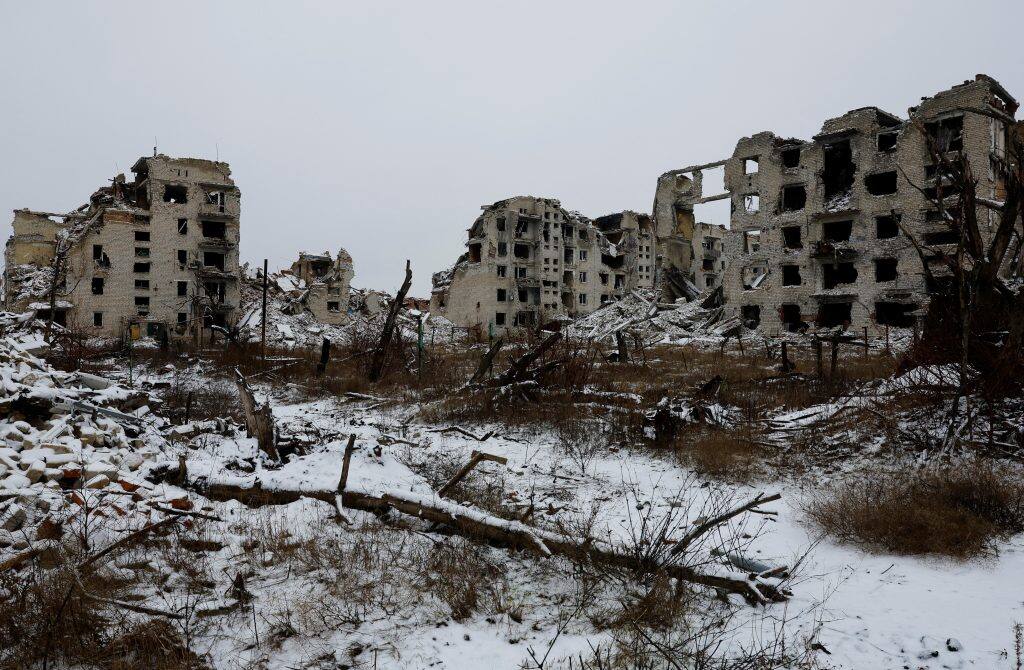
Fears of insufficient oil supplies as Western sanctions against Russia followed -- coupled with increased demand after the Covid19 pandemic -- kept prices mostly above $100 until the summer of 2022.
 More from Explainers
Prices went on to fall back largely owing to high supplies.
2020: Covid pandemic
Just two years before surpassing $100 following Russia's invasion, oil prices briefly turned negative following the onset of the coronavirus pandemic that shut offices and factories -- and grounded planes worldwide.
The market also tumbled on scarce storage facilities and a Saudi-Russia price war.
WTI slumped to minus $40.32, meaning that producers paid buyers to take the oil off their hands.
At the same time, Brent tanked to a record low of $15.98.
2012: Iran crude embargo
After falling under $90 over a eurozone economic crisis, oil prices rose back above $100 after Western powers imposed a raft of economic sanctions on Iran, including crude exports, aimed at halting its nuclear programme, long a source of Washington-Tehran tension.
Wider tensions in the West Asia owing to the Syria conflict kept prices almost continuously above $100 until 2014, before sliding under $50 at the start of the following year as a result of American shale oil flooding the market.
2011: Arab Spring
Brent soared to $127 in March 2011 following unrest in the oil-producing West Asia and North Africa region.
The market bounded higher after the so-called Arab Spring uprisings toppled the long-standing leaders of Tunisia, Egypt, and Yemen, while unrest also rocked other parts of the region, especially crude producer Libya.
2008: Record-high $147
On July 11, 2008, Brent hit a record high of $147.50 per barrel, having breached $100 at the start of the year for the first time.
The same day, WTI achieved an all-time peak at $147.27 per barrel.

Crude surged thanks to falling stockpiles in the United States, strong Chinese demand, and unrest in key Opec members Iran and Nigeria.
A weaker dollar also lent strong support, making crude priced in the greenback cheaper for buyers holding other currencies.
But by December 2008, Brent had tanked to sit at around $36 owing to a severe economic recession worldwide in the wake of the global financial crisis.

Military drones & police check-ups: How Sri Lanka is fighting against worst dengue outbreak in a decade
How Facebook job ad lured 2 Karnataka men into Myanmar cyber scam camp
Why is India seeing 95% cloud cover despite a Super El Niño?
What is CJP’s fourth demand to the government as protests in Delhi intensify?
The new geography of war: Why the Houthis can no longer be ignored