


Alaskapox claims its first victim. Should we worry?
Alaskapox is a double-stranded DNA virus that primarily occurs in small mammals such as red-backed voles and shrews Just seven cases of the disease have been reported since 2015 — all of them in Alaska

It was first identified in an individual Alaska’s Fairbanks in 2015.According to Sky News, it is a double-stranded DNA virus.Since 2015, just seven cases of the Alaskapox have been reported – all of them in Alaska.As per Alaska Beacon, the second case occurred in 2020, the third and fourth occurred in 2021, the fifth in 2022 and the sixth last year.The seventh and final case was detected this year.Of all the cases, five have occurred in persons in the Fairbanks North Star Borough.Just one person was from the Kenai Peninsula Borough.The Alaska Department of Health says evidence that the virus primarily occurs in small mammals.It has been identified in red-backed voles and shrews in the Fairbanks North Star Borough.[caption id="attachment_13718472" align="alignnone" width="640"]
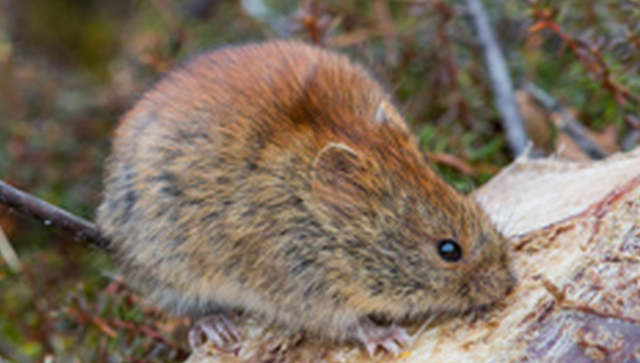
The Northern Red-Backed Vole, found throughout Alaska, is one species that has shown evidence of having Alaskapox virus. Health.Alaska.gov[/caption]However, the virus is likely more widespread in small mammal population throughout the state.It is also possible that humans may have had the disease but went undiagnosed.Dogs and cats may also spread Alaskapox.According to the Alaska Beacon, one common factor in the Fairbanks patients were that they all lived in the woods.Another commonality was that they all had cats and dogs that seemingly had contact with small mammals.“All 6 prior cases were identified in an outpatient setting and involved mild illnesses that were largely resolved within a few weeks without hospitalization. None of these patients had significant prior medical history, including immunocompromising conditions,” state epidemiologist Julia Rogers told the newspaper.The department website states that no human-to-human transmission of Alaskapox virus has ever been recorded.Its symptoms include
- One or more skin lesions (bumps or pustules)
- Swollen lymph nodes
- Joint and muscle pain.
The cat scratched him near the area where his first symptoms started.While the cat tested negative for the virus, it could have carried the disease on its claws.The Alaska health department recommends people with skin lesions keep the affected area covered with a bandage.According to Sky News, those with suspected Alaskapox ought to avoid touching lesions, keep them dry and covered, and following hand hygiene practices.Link Olson, curator of mammals at the University of Alaska Museum of the North, told the Alaska Beacon the virus was found in a 25-year-old vole specimen in the museum’s collection.“We know this is not a last-10-years-thing,” Olson added.Olson said there is a fair chance the virus will be found in animal populations well beyond the state’s borders and even beyond North America.“I fully expect that this will be detected across the boreal forest,” he added.Some experts say there's no cause for concern.“People should not necessarily be concerned but more aware,” Rogers, told the Anchorage Daily News."So we’re hoping to make clinicians more aware of what Alaskapox virus is, so that they can identify signs and symptoms.”Daily Caller quoted state epidemiology chief Dr Joe McLaughlin as saying the other infected had healthy immune systems and did not need medical care.But others take a much dimmer view.“I totally appreciate that that’s a new case, that people are surprised. But then, if you know the reality of diseases and the history of diseases, we shouldn’t be surprised,” Falk Huettmann, a University of Alaska Fairbanks biologist told the Alaska Beacon.“Everything is possible by now.”

Military drones & police check-ups: How Sri Lanka is fighting against worst dengue outbreak in a decade
How Facebook job ad lured 2 Karnataka men into Myanmar cyber scam camp
Why is India seeing 95% cloud cover despite a Super El Niño?
What is CJP’s fourth demand to the government as protests in Delhi intensify?
The new geography of war: Why the Houthis can no longer be ignored