


6 months after Air India crash, where does the investigation stand?
Air India Flight 171, headed for London’s Gatwick Airport, with 230 passengers and 12 crew aboard, crashed just moments after taking off from the Ahmedabad airport around 1:30 pm on June 12. Only one person survived after the Boeing 787-8 Dreamliner began to lose thrust shortly after take-off. Today, six months later, many questions remain unanswered

It has been six months since the Air India plane crash that left 241 dead.
Air India Flight 171, headed for London’s Gatwick Airport, with 230 passengers and 12 crew aboard, crashed just moments after taking off from the Ahmedabad airport around 1:30 pm on June 12.
Only one person survived after the Boeing 787-8 Dreamliner began to lose thrust shortly after take-off. It went down just a few hundred metres from the runway and into a building of a medical university.
But where does the investigation stand? What has changed? What about the victims’ families?
Where the investigation stands
Officials from India's Aircraft Accident Investigation Bureau (AAIB) are set to meet representatives of America’s National Transportation Safety Board (NTSB) in Washington this week.
Those in the know said the AAIB investigators will go over data found from the plane's cockpit voice and flight data recorders with the US officials. The NTSB is involved because the plane that crashed and the engines were both made by Boeing.
 More from Explainers
The meeting, which will be held at the NTSB’s headquarters in Washington, will be attended by several stakeholders, including officials from Boeing.
The AAIB in its July report said that the fuel supply switches for both engines were almost simultaneously placed in the "off" position just after take-off.
The preliminary report reveals that both engine fuel cut-off switches "transitioned from RUN to CUTOFF position one after another with a time gap of one second”. This occurred as the aircraft hit its maximum speed of 180 knots during take-off.
Investigators have still not explained why this happened. The theories range from pilot error to mechanical failure or electronic issues.
"In the cockpit voice recording, one of the pilots is heard asking the other why did he cut off (the fuel supply). The other pilot responded that he did not do so," the report states. The plane was being manned by First Officer Clive Kunder and Captain Sumeet Sabharwal. However, the report does not state who made what remark.
The aircraft then began to lose altitude.
The report also notes that an auxiliary power unit, intended to provide power to the aircraft in the event of engine failure, deployed automatically. Less than 10 seconds later, both switches were returned to the "on" position.
Immediately afterwards, "one of the two pilots" managed to transmit "Mayday, Mayday, Mayday", before the plane crashed. The 15-page document does not mention whether the turning off of the fuel switches could have been caused by pilot manoeuvre or by any kind of malfunction.
Investigators in the report have noted that the aircraft that crashed, earlier that day, had a ‘hard landing’ in Ahmedabad. The crew then reported a tail/stabiliser issue. Engineers performed troubleshooting, found no fault and cleared the aircraft.
Investigators in their report noted this development but did not link it to the fatal crash. They say the probe to determine the cause of the crash remains ongoing.
However, investigators have ruled out weather, bird strikes, the aircraft's weight, balance and configuration, fuel issues and engine trouble. However, the aviation investigator did note that "the information is preliminary and subject to change."
It added that "additional details are being gathered based on the initial leads" and that the investigation team will "review and examine additional evidence, records and information that is being sought from the stakeholders."
The final report is awaited, but this could take months or even years.
What’s changed
The Directorate General of Civil Aviation (DGCA), in the aftermath of the crash, ordered Air India to conduct safety checks on all its 787 and 789 aircraft that had GenX engines. The civil aviation regulator also ordered airlines to carry out a number of specific checks before each flight.
These included:
- Keeping a close eye on fuel levels
- Carrying out an electronic engine control system test
- Making sure that mechanical parts delivering fuel to the engine are working properly
- Ensuring take-off settings, like engine thrust, flap positions, and weight calculations, are right
- Checking flight control systems during transfers
- Double-checking to see if engines are producing the required thrust and performance levels every two weeks
- Reviewing and fixing repeated technical issues in 15 days
What about victims’ families?
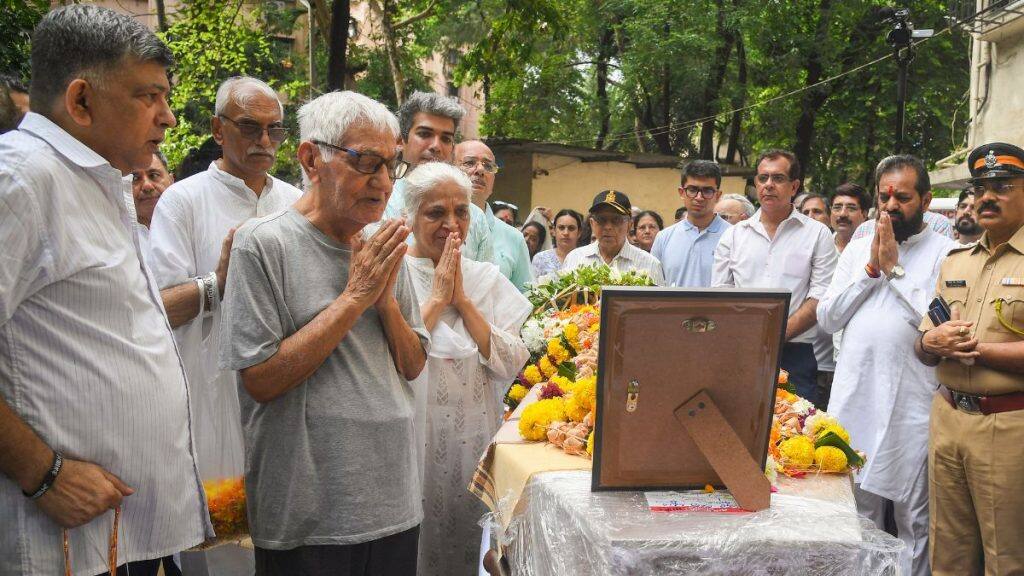
The victims’ families continue to wait for answers. Many have given up thoughts of ever returning to London.
Hiren Dayani, whose mother Kailashben was on the flight, told The Times of India he keeps thinking about that day incessantly. "She would create halarda (lullaby) for my son and sing them," Hiren said. “All these memories flood back every time I think about that day.”
Hiren and his family have abandoned any thoughts of returning to London. He, his wife Namrata, and their three-year-old son Vaastu have moved to Surat. Namrata, a former National Health Service (NHS) employee, has opened a clinic while Hiren, a clinical research scientist, is looking for a job.
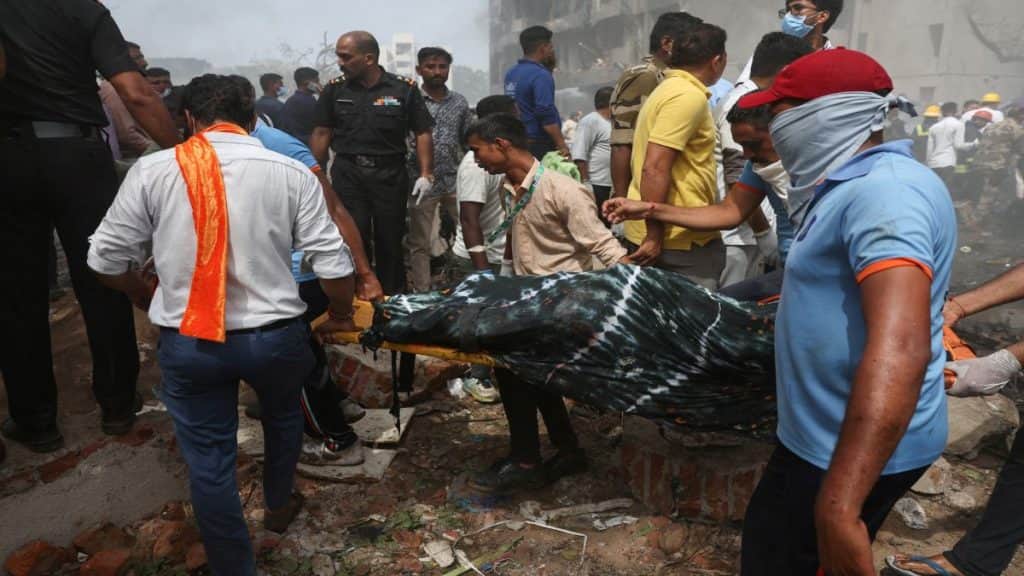
Mobbashera Vahora was pregnant when her husband Parvez and their four-year-old daughter Zuveriya were killed in the crash. Her daughter is now five months old. "We migrated for better prospects for our children,” she said. “We dreamed of building a life there, but all of that is lost now."
Harish Godhaniya, who lost his wife Riddhi and three-year-old son Kriyansh, added, "I have nobody there anymore. What would I do there? We emigrated with dreams of a better life. That day took my whole world.”
Madan Singh Rajpurohit, whose newly married eldest daughter Khushbu died in the incident, continues to wonder about it.
“I cannot explain… We are still upset. What feeling one has when a family member suddenly vanishes?…There will be compensation, but that’s not enough… Bas yeh tasalli honi chahiye ki kaise hua, kyon hua, kiski galti se hua, yeh jannana zaroori hai (There should be satisfactory answers to how and why it happened…),” Rajpurohit told The Indian Express.
Rajpurohit’s son-in-law has filed a case in London.
The family of Dirth Patel, 24, who died in the crash, are also shattered. Krutik, the older brother of Dirth, who was going to work at the University of Huddersfield, has returned to his native place of Gujarat alongside his wife.
Krutik has to repay a Rs 15 lakh education loan for his brother. “…we are still paying an EMI of Rs 22,000. Despite repeated requests to the bank, we were offered a maximum of a 10% discount on the principal amount,” Krutik added.
Mike Andrews from US law firm Beasley Allen, who is representing over 100 families, says they are “focused on finding the truth”.
“Very early on, the emotions were very raw… And now they seem much more resolved to be patient and find the truth. Every single family I’ve met seemed much more resolved now,” added Andrews.
‘Profoundly flawed’
Many are unhappy with investigators.
Pushkaraj Sabharwal, 91, father of pilot Sumeet Sabharwal, called the preliminary report "profoundly flawed".
Sabharwal, who moved the Supreme Court in his petition, argued that investigators seemed to "predominantly focus on the deceased pilots, who are no longer able to defend themselves, while failing to examine or eliminate other more plausible technical and procedural causes of the crash".
British lawyer Sarah Stewart, who represents around 50 families of victims, also favours a scenario not involving the pilots.
"The factual information raises a troubling spectre that this accident may have been caused by uncommanded fuel cut-off, suggesting a possible failure in the Boeing systems," she said in a statement.
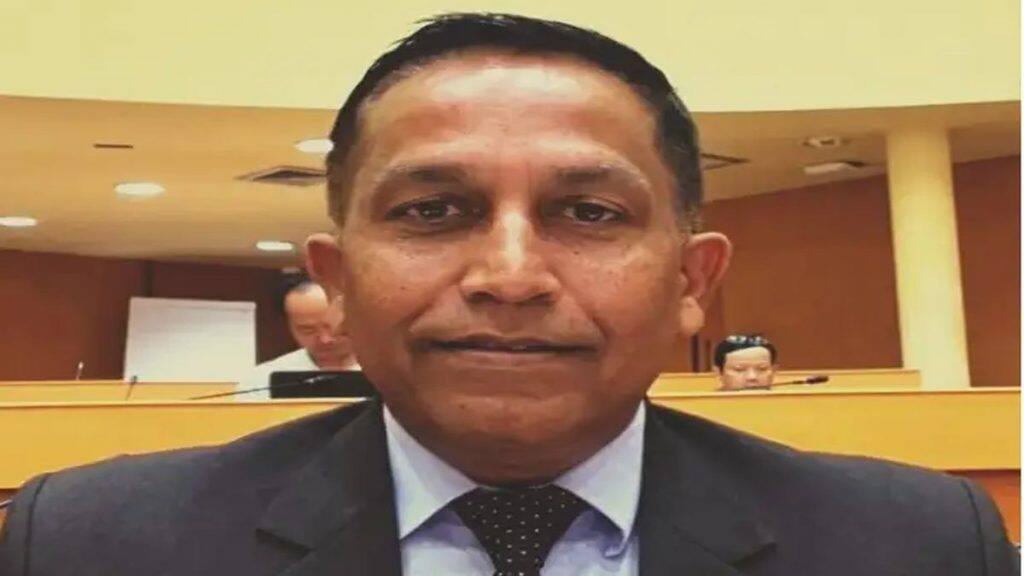
Air India CEO Campbell Wilson, in a speech on September 10, said that the "preliminary report indicates nothing wrong with the aircraft, nothing wrong with the engines, nothing wrong with the airline's operation".
Some experts, however, have thrown cold water on the statement.
"There were electrical faults reported before the crash on this plane," former commercial pilot Amit Singh, founder of Safety Matters Foundation, said. "The narrative of the report is built in such a way that the reader tends to believe that the pilots are responsible," even though "a lot of the data presented are not sourced," he said. The final report "could be manipulated", he warned.
Aviation expert Mark Martin went even further, calling it a "cleverly designed cover-up". "Boeing did exactly the same after the 737 MAX crashes — they blamed the pilots," he said of the accidents in 2018 and 2019, noting that an investigation later found a design flaw. "Boeing cannot afford to take the blame for the crash," said Martin.
With inputs from agencies

Military drones & police check-ups: How Sri Lanka is fighting against worst dengue outbreak in a decade
How Facebook job ad lured 2 Karnataka men into Myanmar cyber scam camp
Why is India seeing 95% cloud cover despite a Super El Niño?
What is CJP’s fourth demand to the government as protests in Delhi intensify?
The new geography of war: Why the Houthis can no longer be ignored