


First Take: Bollywood & its portrait of desolation
The incredibly gifted Rajkummar Rao, no stranger to internalized performances, immerses himself in Vikram Motwane’s Trapped with such arresting authenticity that after a while we cease to watch the skill that underlines the outstanding performance.

Nothing comparable with Shabana Azmi's portrayal of desolation in Mrinal Sen's Khandhar. But three films in recent years came close to getting the dynamics of isolation right.What would you do if you were trapped in a highrise for days without food, water or company? Eat a bird although you are vegetarian? Check. Drink your own urine to quench your thirst? Check. Talk to a rat for company’s sake? Check. The incredibly gifted Rajkummar Rao, no stranger to internalized performances, immerses himself in Vikram Motwane’s Trapped with such arresting authenticity that after a while we cease to watch the skill that underlines the outstanding performance.[caption id="attachment_11655861" align="alignnone" width="640"]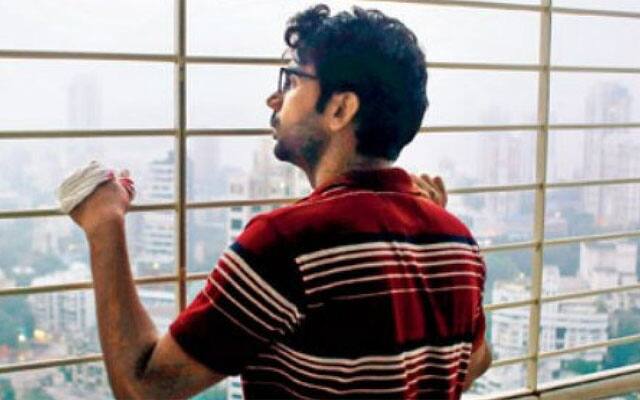 Trapped[/caption]All we see is the suffering of the trapped soul, his desperation to get out of that apartment where Shourya is locked away far from civilization though not even a road away from the bustle.Unlike other great survival dramas like Robert Zemeckis’ Castaway or Ang Lee’s The Life Of Pi (the later exceedingly overpraised) Trapped is set right in the heart of a swarming city filled with people who ….how do we put this politely?….don’t give a duck about the next person.Motwane who also helmed the underwhelming Lootera brings out the apathy in the large city in a sequence where Rao announces his departure to his flat mates. They barely muster a response and one of them indifferently asks where he is going Answer not relevant. The preamble which includes a sudden eruption of romance with a woman Noorie (Geetanjali Thapa) ends just as suddenly once Rao’s character is trapped in an apartment so far removed from human contact that no scream of help reaches anyone’s ear. It’s terrifying premise executed effectively by a script that relentlessly explores the theme of isolation and survival.Cinematographer Siddharth Diwan is as fearless behind the camera as Rao is in the front. Together they shoot Shourya’s growing decline and fading hope for rescue with minimalist magnificence. The shots are cut with no room for lingering woundedness. If Shourya bleeds we can’t look away.Rao’s projection of his character’s waning strength is as authentic as Tom Hanks in Castaway. Rao’s Shourya is no islanded recluse. The little apartment perched smugly and stoically in the sky is all the world that Motwane’s plot inhabits. There are no frills and no digressions. The background score by Aloknanda Dasgupta is used with rationed effect, quite like time, food water and hope running out on the protagonist. The one time that the background score lights up the soundscape is when Shourya collects rainwater in every vessel he can find in his high rise prison. It is an interlude that reminds us of what we have and what we take for granted can be snatched away within moments. Even the flashbacks are severely restricted(just one , actually, when we see Shourya arguing passionately in favour of vegetarianism before being forced to eat a bird in the present crisis). What we get is the core element of survival. The very epicenter of self preservation where no action or reaction is prohibited. It is very difficult for one actor to hold our attention for two hours. Rajkummar Rao gets our undivided attention unconditionally. His character’s awful predicament is so tangibly tactile as to leave us shaken for good. Among the many remarkable hurdles that Motwane’s storytelling crosses with its beleaguered protagonist is the whole idea of getting the geographical periphery of the crisis right. The apartment building, the isolated flat and its distance from any human contact are all measured out by the storytellers, so that we never feel we are being tricked into believing in Shourya’s crisis. At one point during the actor’s journey from self assertion to self abnegation, and beyond, we see Rajkummar Rao’s trousers fall off from his waist to the ground. This is probably a random unscheduled crisis that was allowed to remain on the editing table. It helps serve two purposes. It shows the character’s complete repudiation of vanity in the face of death. It also shows how much weight the actor has lost in the course of his journey. It’s hard to imagine Trapped working so effectively without Rajkummar Rao. He lives every second of Shourya’s struggle for self-preservation. His journey is so illustrative of a migrant’s metropolitan melancholy as to make any attempt to add signboards to the storytelling is akin to shining torchlight to supplement sunlight.Rarely does the location serve as an antagonist. In most films the environment that nurtures the plot and the characters is captured with affection. Not so in Dipesh Jain’s Gali Guleiyan. It is the first film I’ve seen that doesn’t romanticize the location that nurtures the character's innermost fears of being trapped in the environment that breeds only stagnancy. Old Delhi, Chandni Chowk is the villain of debutant director Dipesh Jain’s haunting parable on desolation and self-destruction. Manoj Bajpayee has portrayed loneliness before with remarkable resonance and restrain in Hansal Mehta’s Aligarh. Here, it is a quality of exacerbated desolation conveying such innerving decrepitude that we soon realize we can’t trust Khudoos (Bajpai) to tell the truth to himself, let alone to his only friend Ganeshi (Ranveer Shorey, as realiably solid as ever) or to us, the bystanders who are sucked into Khudoos’ world of weltering disaffection.[caption id="attachment_11655881" align="alignnone" width="640"]
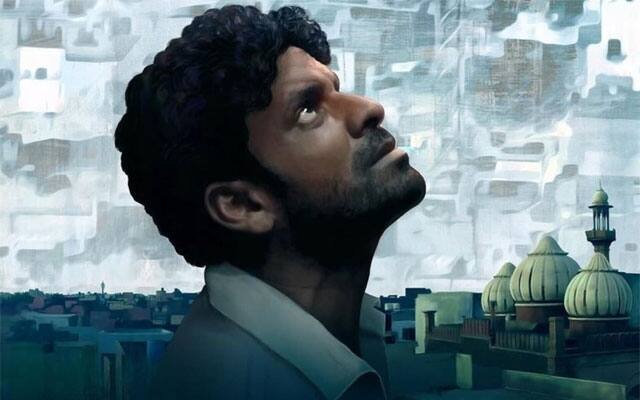 Gali Guleiyan[/caption]There is a constant flow of ambivalence in the narrative, buoyed by the stifling location. The claustrophobic hemmed-in gullies of Old Delhi serve as suffocating relics of a mind that is rapidly losing touch with reality. Bajpayee plays the man on the brink of disintegration with a remarkable degree of anguished control. He is a man who can blow up like a home-made bomb at any time. When Khudoos does explode at a seedy hotel where he is eating and (contrary to law) drinking on a cheap table ,he spares us and himself none of his swirling wrath.Lekin Khudoos ko gussa kyon aata hai? As portrayed by Bajpai, Khudoos is the epitome of bitter disenchantment. Life has offered him nothing. He has accepted his state of nullity so far. But now the CCTV cameras that he likes to look at the world through, has captured a young adolescent boy Idris(Om Singh) being thrashed by his father (Neeraj Kabi, as defiantly fearless as ever). The boy, played with unrehearsed sensitivity by newcomer Om Singh , spends most of days gallivanting with his only friend Ginny, and dreads going home to the cloistered sterile environment of dreaded domesticity. It is in the way the narrative brings together the two disparate yet conjoined worlds of Khudoos and Idris that this remarkably sunless dim-lit drama acquires its piercing light of illuminated darkness.At times, I felt Dipesh Jain had worked his way backwards from his clever and startling finale. But then there is so much here that is genuinely raw, hurting and hurtful that I quickly banished all possibilities of subterfuge. Writer-director Dipesh Jain takes us into the world of the young and the ones who forsake their youth to become prematurely old . The narrative brings both the past and the present in the same line of vision . It plays a cruel game of deception with Khudoos’ mind allowing him access into a world of adolescent pain that he, Khudoos has experienced personally. This empathetic knowledge does not give Khudoos the right to own the pain of a boy who is a mirror-reflection of his own tattered childhood.For what it tells us about desolation and its consequences Gali Guleiyan is an enormously significant work of cinema. Do we care about the person who lives nextdoor? Manoj Bajpai’s projection of disorientation doesn’t allow us to feel any extravagant empthy for Khudoos. What we feel is his abject wretchedness. Manoj owns every nervous twitch every slurred word of his character. This is a performance of tremendous skill, bringing to the psychologically disturbed character a sense of imperturbable impunity. And debutant Om Singh’s scenes with his screenmother played by the wonderful Shahana Goswami are so filled with warmth you almost expect the tale to eventually embrace the growing sense of tenderness that seems to mushroom from somewhere deep in the recesses of the suffocating setting.But then life for those who lives in inescapable misery is not about a way out, but survival.Gali Guleiyan strips desolation and loneliness of all the romance that Mrinal Sen had brought to Shabana Azmi’s face in Khandhar. On Manoj Bajpayee's face all we see is despair, and a longing for a better life that we know will never be his.The meek can never inherit the earth. Manoj Bajpayee’s depiction of human desolation in Hansal Mehta’s Aligarh is the best since Jennifer Kapoor in 36
 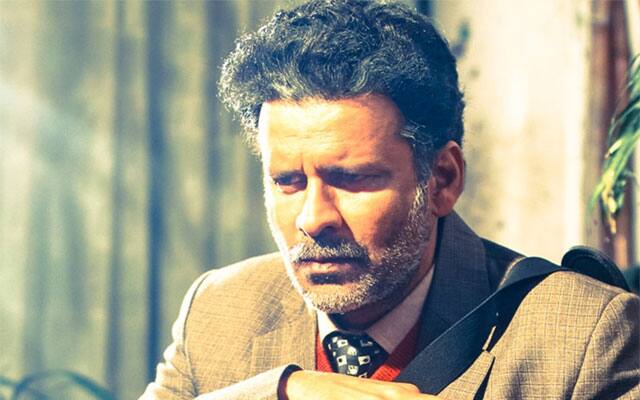 Aligarh[/caption]But its sound resonates across the professor’s silent universe, like a melodic meteor cutting through a sky of solitude.It’s a life-defining moment. Director Hansal Mehta holds the unflinchingly intimate camera(Satya Nagpaul’s lensing is lucid leisurely and lingering) with ruthless resilience on his protagonist Manoj Bajpai’s face. For a good 5-7 minutes we see Bajpai’s respond to the amazing lyrics by Raja Mehdi Ali Khan, with Lata Mangeshkar’s voice imbuing the words with impassioned immortality, the Professor’s emotions swell up and spill over , his face gradually collapsing into a map of his broken heart. It’s a lengthy sequence with no cuts. For most of the film there are only two characters on screen . The Professor and his solitude. Sometimes they are joined by an affable journalist from Delhi . The greatness of Aligarh as a cinematic achievement comes entirely from the way Hansal Mehta captures the eerie stillness of protagonist’s isolation .There is no attempt heighten the pathos of the professor’s predicament. Siras’ professional and social ostracism come only as further ratification of his stunning aloneness .Hansal
Subhash K Jha is a Patna-based journalist. He's been writing about Bollywood for long enough to know the industry inside out.

How Spider-Man actor Tom Holland has been on a sobriety journey of 4.5 years after being "addicted to alcohol"
Sitar virtuoso Rishab Sharma steals the spotlight with Rs 35.8 lakh Jacob & Co Ram Janmabhoomi watch at ‘Ramayana’ event: Here's what makes it rare
Amitabh Bachchan reveals being admitted to the ICU and undergoing surgery, calls recovery 'the most difficult phase of life'
Avengers Doomsday trailer out: What to expect from Marvel's ultimate crossover
Christopher Nolan banned the orchestra for 'The Odyssey': The sound of gongs, scrap metal and more