


After a week of grief, remembering Hirokazu Kore-eda’s After Life, which promises a happy eternity
At a time we are surrounded by mortal fear (and we’ve just lost two of our most beloved actors), it’s perhaps natural that the mind drifts towards death, which has inspired some of the most inventive cinematic narratives.

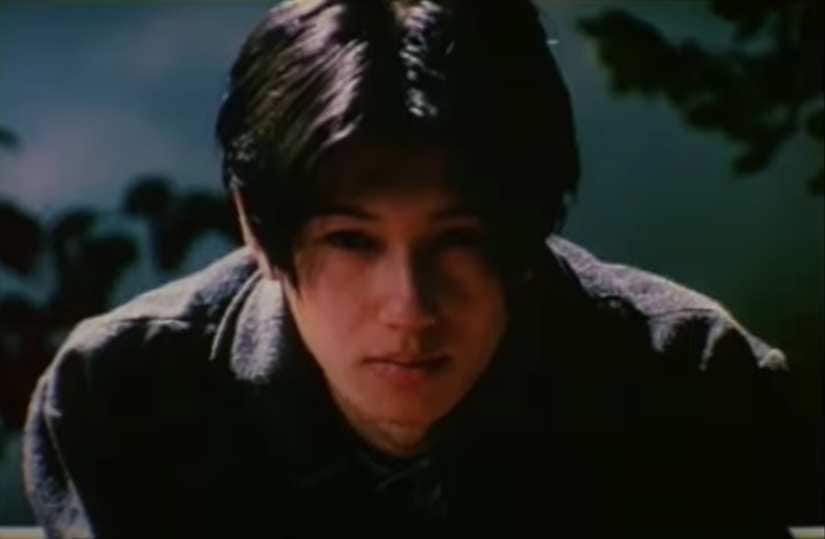
A still from After Life. Image from YouTube[/caption]“When you’ve chosen your memory, our staff will do their best to recreate it on film.. We’ll screen the films for you. As soon as you’ve relived your memory, you will move on, taking only that memory with you.” And the social workers are not kidding when they say they’ll “recreate it on film”. In the evenings and nights, they turn into “filmmakers”. Feverish discussions take place, the way a director and his team might plan the next day’s shoot.For instance, here’s one of the memories they have to stage: “We need to recreate a kind of intense summer heat inside the tram, and also blow in a cool, not a cold breeze, through the window.” This is how they figure out the logistics: “How about using a fan? To get the feeling of a breeze on him, let's use the old one stopped at the park. That will feel like a breeze. It’s difficult to convey temperature with visual images. Instead let’s try spraying his forehead, to create a little sweat.”Let’s pause for a minute to marvel at this conceit, which uses the medium of cinema to capture — for eternity — the things we remember most fondly. Maybe that’s why movie stars don’t really “die”. They are always “alive” on someone’s TV screen, someone’s tablet, on a song playing on someone’s phone.And with the number of photographs and videos we take today — of ourselves, of those around us — every “memory” is preserved for eternity. When the premise of After Life was revealed, I wondered which one among those thousands of unthinking clicks on my phone camera I would choose had I been in that situation. It took me back to my childhood, when a roll of film was precious, and you wanted to make sure you used every frame “usefully”. You were careful about which memory you wanted to enshrine. Today, a single day can result in a hundred “memories”.Anyway, back to the film. One man says, “Whatever else they tell you, for a man, it’s when you’re doing it. That’s the best!” He recalls it all. “I started at 16… If you waste too much time making up your mind [in the brothel], they close up shop at eleven… After that, none of them are presentable. Early in the evening, the beauties would call out: ‘Hey, handsome, you look like a regular. Come on over!’ And I’d fall for it… They’d be so expensive! But later in the evening, just before closing at eleven, they’d start discounting. 1,000 Yen down to 500. That’s the deal you're waiting for, but you can’t be lucky every day…”A teenage girl chooses to remember her time at Disneyland. A young man recalls a memory from five or six months after he was born. “I was naked, lying on the futon, when I was bathed in this amazing sunlight, an autumn light, not too hot.” Can someone have a memory from such an early phase of life? Apparently, yes. When the social workers gather at the end of the day, their chief says, “Some people can remember as far back as being in the womb. Medical research proves it… If you close your eyes and immerse yourself in water, the memory of the sense of security of being inside your mother can help with anxiety and other conditions.”The idea is that the recently deceased will have this one memory and every other memory will be erased before they leave for the afterlife. “Well, then that really is heaven!” exclaims a man. Isn’t it? Imagine spending all of eternity with the memory of eating ice-cream with your closest friends from school, or the memory of your spouse’s ecstatic face when you proposed. All the bad stuff, all the pain, all the mistakes that fill you with regret? Poof! Gone!At first, the film has a repetitive structure — it’s the recitation of one memory after another. But the second hour brings in a wonderfully sentimental twist, when a social worker discovers a connection with one of his “clients”. Questions do come up. Why does the “memory” have to be “staged”? If we are in the realm of fantasy, can’t the social workers simply pluck that particular “memory” out of the ether and give it to the particular person? Why do the recently deceased need to drink tea, or use hair dryers, and why does the snow crunch under their feet? (Aren’t they… ghosts?) But these idiosyncratic “physical” details root the film in a recognisable half-world between the earth and the hereafter, which is where its characters are.About a decade after the film’s release, Kore-eda was asked, in a Flavorwire interview, what memory he would choose if he were a character from After Life. Unsurprisingly, it was a cinematic memory, from the time he was 19, when he slipped into the local art-house theatre and saw Kurosawa’s Ikiru. “At the end of this film, everybody in the theatre stood up and clapped. There were no actors, no directors -- nobody was there to be clapped for. I understand that you’d clap at the end of a play or a live show, but for a film, this was a really new experience for me.”“I think they really enjoyed this movie from the bottom of their heart. That was the moment when I realised that film is really powerful… And I think that experience strongly influenced my decision to not become a novelist, but to make films.” The most moving part in this anecdote, for me, is that the film he saw was about a man coming to terms with the fact that he does not have long to live. Like After Life, Ikiru is a gentle dissertation on death.Baradwaj Rangan is Editor, Film Companion (South).

How Spider-Man actor Tom Holland has been on a sobriety journey of 4.5 years after being "addicted to alcohol"
Sitar virtuoso Rishab Sharma steals the spotlight with Rs 35.8 lakh Jacob & Co Ram Janmabhoomi watch at ‘Ramayana’ event: Here's what makes it rare
Amitabh Bachchan reveals being admitted to the ICU and undergoing surgery, calls recovery 'the most difficult phase of life'
Avengers Doomsday trailer out: What to expect from Marvel's ultimate crossover
Christopher Nolan banned the orchestra for 'The Odyssey': The sound of gongs, scrap metal and more