
Advertisement


Sections
A Twelve-Year Night movie review: This Uruguayan film is an excellent account of isolation and claustrophobia
A Twelve-Year Night shows us that every freedom comes at a cost, and that it is important that we remember that cost from time to time.

When it comes to such issues as peace, good governance, low corruption, freedom of press and the general quality of democracy, Uruguay holds the top position among Latin American countries today. But things were not always this way and this freedom has come at a terrible cost. The civic-military dictatorship of Uruguay, that lasted 12 long years between 1973 and 1985, robbed people of their freedom, dignity and even their lives. Director Alvaro Brechner’s film La noche de 12 años (A Twelve-Year Night) tells the story of three men who were incarcerated and tortured under the military regime. Among these three men was the future president of the country.[caption id="attachment_5945111" align="alignnone" width="825"]![A still from A Twelve-Year Night. YouTube]() A still from A Twelve-Year Night. YouTube[/caption]The film begins with a brilliant single-take opening scene, shot from within a guard’s post bang in the centre of a network of prison corridors. There is the post in the middle, the corridors spreading out radially from it in the four directions. It is night time. As the doors buzz, the camera begins to rotate, giving us a 360 degree look at dozens of armed military men invading the prison, forcing inmates out, beating them mercilessly and huddling them — hooded and handcuffed — into trucks, to be ferried to undisclosed locations. For three of those inmates — José Mujica, Mauricio Rosencof and Eleuterio Fernández Huidobro — that night is to last what seems like eternity, as they are shifted from one prison to another (as many as 40, in all) over the course of the next 12 years, held in solitary confinement, often kept in the filthiest of conditions, deprived of all senses or human contact, and subjected to unspeakable physical and emotional torture.The film does an excellent job of depicting the isolation and claustrophobia that Mujica, Rosencof and Huidobro must have felt through their long-drawn imprisonment. Director Alvaro Brechner and his cinematographer Carlos Catalan shot in real prisons, often in tiny solitary cells as 2x2 meters, in order to try and give us a sense of what the prisoners must have gone through. The successful outcome aside, even the technical feat of shooting sequences in such cramped spaces is a marvel in itself. The art direction is brilliant, the sound design (especially during the hallucination scenes) is of the highest order, the background music is mostly sparse to signify lack of hope, and when it does come, it brings with it an unmistakable tenderness and empathy. And that brings us to the writing.At first viewing, the film felt too long to me. Nothing much seemed to be happening. All that I could see on screen was the suffering of these three men. When I stayed with the film for a few hours though, I saw the purpose of it. If I felt so uncomfortable watching a movie about the 12 years of hate and threat filled incarceration that these men were subjected to, imagine what it must have been to have actually lived those years! It is that sense of hopelessness and dejection that the film beautifully manages to portray — something that I have not quite experienced very often while watching films of this nature. And yet, sprinkled less than generously over this layer of tragedy is the rare dressing of dark humour — for instance in the scene in which Huidobro is handcuffed to an overhead water pipe while trying to defecate, making it impossible for him to do so. The alarming speed at which the situation becomes an almost bureaucratic nightmare comes as somewhat of a relief from the monotony of sadism. Perhaps this was deliberate too. Perhaps it is this kind of dark humour that kept the three men alive in moments of despair.It is especially well written are two heart-wrenching scenes — both involving a game or sport. In the first, we see two inmates Rosencof and Huidobro develop a system of codes (not unlike Morse) to knock on the walls of their cells in order to communicate with each other. What was particularly impressive (and tragic — at the same time) was to see the two men playing game after game of chess with each other, from their individual solitary cells, with no chessboard, no pieces — employing just their code to communicate complex moves on an imaginary chessboard. In the second scene, when after nearly ten years of solitary confinement, when Huidobro is allowed to step out into the prison’s yard, his former friends and colleagues — now imprisoned in the same facility — recognize him through his tattered clothes and unkempt facial hair. Huidobro responds in gratitude by dribbling an invisible soccer ball through the length of the yard, till he scores a ‘goal’, amidst deafening cheers by the other inmates — whose fate would not have been too different from his own. These are instances of beautiful writing that keep us invested in an otherwise bleak world.The performances by all three leading men are top-notch. Antonio de la Torre is particularly good as Mujica — who almost succumbs to the mental torture, developing chronic paranoia — until a sharp rebuke by his unyielding mother and a sensitive urge by a well-meaning physician (Soledad Villamil in a scene-stealing cameo) makes him get a grip on himself. Chino Darin portrays his artistic side beautifully, as he helps a prison sergeant write love letters to the latter’s girlfriend, thus earning his favour and gratitude in a Shawshank-Redemption-style sequence. And César Troncoso is remarkable as the slightly quirky one among the three, mocking the guards with his silent condescending stare at every opportunity.I highly recommend A Twelve-Year Night. It is a well-executed story of human resilience and endurance — driving its point home without being sensational. It also shows us that every freedom comes at a cost, and that it is important that we remember that cost from time to time — lest we forget that we have something precious, something that needs to be protected.
A still from A Twelve-Year Night. YouTube[/caption]The film begins with a brilliant single-take opening scene, shot from within a guard’s post bang in the centre of a network of prison corridors. There is the post in the middle, the corridors spreading out radially from it in the four directions. It is night time. As the doors buzz, the camera begins to rotate, giving us a 360 degree look at dozens of armed military men invading the prison, forcing inmates out, beating them mercilessly and huddling them — hooded and handcuffed — into trucks, to be ferried to undisclosed locations. For three of those inmates — José Mujica, Mauricio Rosencof and Eleuterio Fernández Huidobro — that night is to last what seems like eternity, as they are shifted from one prison to another (as many as 40, in all) over the course of the next 12 years, held in solitary confinement, often kept in the filthiest of conditions, deprived of all senses or human contact, and subjected to unspeakable physical and emotional torture.The film does an excellent job of depicting the isolation and claustrophobia that Mujica, Rosencof and Huidobro must have felt through their long-drawn imprisonment. Director Alvaro Brechner and his cinematographer Carlos Catalan shot in real prisons, often in tiny solitary cells as 2x2 meters, in order to try and give us a sense of what the prisoners must have gone through. The successful outcome aside, even the technical feat of shooting sequences in such cramped spaces is a marvel in itself. The art direction is brilliant, the sound design (especially during the hallucination scenes) is of the highest order, the background music is mostly sparse to signify lack of hope, and when it does come, it brings with it an unmistakable tenderness and empathy. And that brings us to the writing.At first viewing, the film felt too long to me. Nothing much seemed to be happening. All that I could see on screen was the suffering of these three men. When I stayed with the film for a few hours though, I saw the purpose of it. If I felt so uncomfortable watching a movie about the 12 years of hate and threat filled incarceration that these men were subjected to, imagine what it must have been to have actually lived those years! It is that sense of hopelessness and dejection that the film beautifully manages to portray — something that I have not quite experienced very often while watching films of this nature. And yet, sprinkled less than generously over this layer of tragedy is the rare dressing of dark humour — for instance in the scene in which Huidobro is handcuffed to an overhead water pipe while trying to defecate, making it impossible for him to do so. The alarming speed at which the situation becomes an almost bureaucratic nightmare comes as somewhat of a relief from the monotony of sadism. Perhaps this was deliberate too. Perhaps it is this kind of dark humour that kept the three men alive in moments of despair.It is especially well written are two heart-wrenching scenes — both involving a game or sport. In the first, we see two inmates Rosencof and Huidobro develop a system of codes (not unlike Morse) to knock on the walls of their cells in order to communicate with each other. What was particularly impressive (and tragic — at the same time) was to see the two men playing game after game of chess with each other, from their individual solitary cells, with no chessboard, no pieces — employing just their code to communicate complex moves on an imaginary chessboard. In the second scene, when after nearly ten years of solitary confinement, when Huidobro is allowed to step out into the prison’s yard, his former friends and colleagues — now imprisoned in the same facility — recognize him through his tattered clothes and unkempt facial hair. Huidobro responds in gratitude by dribbling an invisible soccer ball through the length of the yard, till he scores a ‘goal’, amidst deafening cheers by the other inmates — whose fate would not have been too different from his own. These are instances of beautiful writing that keep us invested in an otherwise bleak world.The performances by all three leading men are top-notch. Antonio de la Torre is particularly good as Mujica — who almost succumbs to the mental torture, developing chronic paranoia — until a sharp rebuke by his unyielding mother and a sensitive urge by a well-meaning physician (Soledad Villamil in a scene-stealing cameo) makes him get a grip on himself. Chino Darin portrays his artistic side beautifully, as he helps a prison sergeant write love letters to the latter’s girlfriend, thus earning his favour and gratitude in a Shawshank-Redemption-style sequence. And César Troncoso is remarkable as the slightly quirky one among the three, mocking the guards with his silent condescending stare at every opportunity.I highly recommend A Twelve-Year Night. It is a well-executed story of human resilience and endurance — driving its point home without being sensational. It also shows us that every freedom comes at a cost, and that it is important that we remember that cost from time to time — lest we forget that we have something precious, something that needs to be protected.
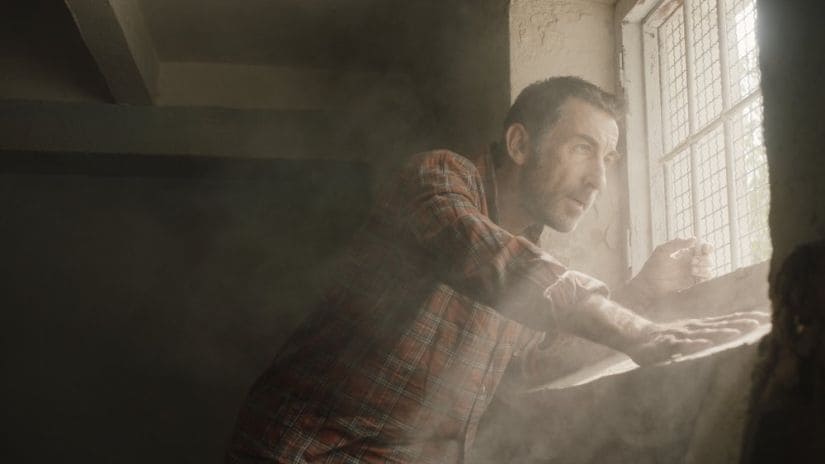 A still from A Twelve-Year Night. YouTube[/caption]The film begins with a brilliant single-take opening scene, shot from within a guard’s post bang in the centre of a network of prison corridors. There is the post in the middle, the corridors spreading out radially from it in the four directions. It is night time. As the doors buzz, the camera begins to rotate, giving us a 360 degree look at dozens of armed military men invading the prison, forcing inmates out, beating them mercilessly and huddling them — hooded and handcuffed — into trucks, to be ferried to undisclosed locations. For three of those inmates — José Mujica, Mauricio Rosencof and Eleuterio Fernández Huidobro — that night is to last what seems like eternity, as they are shifted from one prison to another (as many as 40, in all) over the course of the next 12 years, held in solitary confinement, often kept in the filthiest of conditions, deprived of all senses or human contact, and subjected to unspeakable physical and emotional torture.The film does an excellent job of depicting the isolation and claustrophobia that Mujica, Rosencof and Huidobro must have felt through their long-drawn imprisonment. Director Alvaro Brechner and his cinematographer Carlos Catalan shot in real prisons, often in tiny solitary cells as 2x2 meters, in order to try and give us a sense of what the prisoners must have gone through. The successful outcome aside, even the technical feat of shooting sequences in such cramped spaces is a marvel in itself. The art direction is brilliant, the sound design (especially during the hallucination scenes) is of the highest order, the background music is mostly sparse to signify lack of hope, and when it does come, it brings with it an unmistakable tenderness and empathy. And that brings us to the writing.At first viewing, the film felt too long to me. Nothing much seemed to be happening. All that I could see on screen was the suffering of these three men. When I stayed with the film for a few hours though, I saw the purpose of it. If I felt so uncomfortable watching a movie about the 12 years of hate and threat filled incarceration that these men were subjected to, imagine what it must have been to have actually lived those years! It is that sense of hopelessness and dejection that the film beautifully manages to portray — something that I have not quite experienced very often while watching films of this nature. And yet, sprinkled less than generously over this layer of tragedy is the rare dressing of dark humour — for instance in the scene in which Huidobro is handcuffed to an overhead water pipe while trying to defecate, making it impossible for him to do so. The alarming speed at which the situation becomes an almost bureaucratic nightmare comes as somewhat of a relief from the monotony of sadism. Perhaps this was deliberate too. Perhaps it is this kind of dark humour that kept the three men alive in moments of despair.It is especially well written are two heart-wrenching scenes — both involving a game or sport. In the first, we see two inmates Rosencof and Huidobro develop a system of codes (not unlike Morse) to knock on the walls of their cells in order to communicate with each other. What was particularly impressive (and tragic — at the same time) was to see the two men playing game after game of chess with each other, from their individual solitary cells, with no chessboard, no pieces — employing just their code to communicate complex moves on an imaginary chessboard. In the second scene, when after nearly ten years of solitary confinement, when Huidobro is allowed to step out into the prison’s yard, his former friends and colleagues — now imprisoned in the same facility — recognize him through his tattered clothes and unkempt facial hair. Huidobro responds in gratitude by dribbling an invisible soccer ball through the length of the yard, till he scores a ‘goal’, amidst deafening cheers by the other inmates — whose fate would not have been too different from his own. These are instances of beautiful writing that keep us invested in an otherwise bleak world.The performances by all three leading men are top-notch. Antonio de la Torre is particularly good as Mujica — who almost succumbs to the mental torture, developing chronic paranoia — until a sharp rebuke by his unyielding mother and a sensitive urge by a well-meaning physician (Soledad Villamil in a scene-stealing cameo) makes him get a grip on himself. Chino Darin portrays his artistic side beautifully, as he helps a prison sergeant write love letters to the latter’s girlfriend, thus earning his favour and gratitude in a Shawshank-Redemption-style sequence. And César Troncoso is remarkable as the slightly quirky one among the three, mocking the guards with his silent condescending stare at every opportunity.I highly recommend A Twelve-Year Night. It is a well-executed story of human resilience and endurance — driving its point home without being sensational. It also shows us that every freedom comes at a cost, and that it is important that we remember that cost from time to time — lest we forget that we have something precious, something that needs to be protected.
First Published:Jan 23, 2019, 10:26:05 IST
Advertisement
Advertisement

How Spider-Man actor Tom Holland has been on a sobriety journey of 4.5 years after being "addicted to alcohol"
Tom Holland has been open about his struggle with alcohol addiction and his 4.5-year sobriety journey, even at the height of his Spider-Man and The Odyssey fame.
3 min read
Sitar virtuoso Rishab Sharma steals the spotlight with Rs 35.8 lakh Jacob & Co Ram Janmabhoomi watch at ‘Ramayana’ event: Here's what makes it rare
Sitarist Rishab Sharma grabbed attention at the Ramayana event with a limited-edition Rs 35.8 lakh Jacob & Co. Epic X Ram Janmabhoomi watch. Here's what makes the luxury timepiece so special.
2 min read
Amitabh Bachchan reveals being admitted to the ICU and undergoing surgery, calls recovery 'the most difficult phase of life'
Amitabh Bachchan has revealed he was hospitalised, underwent surgery and spent time in the ICU. The veteran actor reflected on the emotional and physical challenges of recovery in a deeply personal blog post.
2 min read
Avengers Doomsday trailer out: What to expect from Marvel's ultimate crossover
Marvel Studios has dropped the first trailer for Avengers: Doomsday. From Robert Downey Jr.'s Doctor Doom and Chris Evans' return to the X-Men crossover, here's everything you need to know.
3 min read
Christopher Nolan banned the orchestra for 'The Odyssey': The sound of gongs, scrap metal and more
Composer Ludwig Göransson reveals how he built the epic's entire sound world from bronze gongs, scrap metal and ancient Greek instruments like the aulos and lyre.
2 min read
Advertisement
Advertisement