


AI is rewriting the memory chip industry. Can India build its own ecosystem?
The AI boom is creating an unexpected global memory chip crunch, with consequences for smartphones, laptops and India's semiconductor ambitions. Firstpost spoke to Ashok Chandak, President of the India Electronics and Semiconductor Association (IESA) and SEMI India, about the causes, the challenges and India's path towards building a memory ecosystem.

It is ironic how quickly fortunes have changed in the smartphone market.
Not long ago, consumers were enjoying some of the lowest smartphone prices in years, helped by oversupply, slowing demand and intense competition among brands. Today, that trend is beginning to reverse. Behind the scenes, a different battle is unfolding, one that has little to do with smartphones themselves and everything to do with artificial intelligence.
As Microsoft, Google, OpenAI, Meta and Amazon pour hundreds of billions of dollars into AI infrastructure, they are consuming enormous quantities of one of the world's most critical semiconductor components: memory chips. The consequences are already rippling through the technology industry, from smartphones and laptops to cars and industrial electronics.
 More from Tech
What appears to be a chip shortage is, in reality, a global competition over where memory manufacturing capacity should go. And for countries like India, the crisis raises an equally important question: should the country finally begin manufacturing its own memory chips?
AI has turned memory chips into the world's hottest commodity
Every AI model, whether it powers ChatGPT, Gemini or Claude, runs inside enormous data centres packed with thousands of specialised processors. But those processors cannot function alone. They require equally sophisticated memory chips to constantly feed them data.
Think of the processor as the brain and memory as the plate carrying its food. The faster the brain works, the more food it demands.
Today's AI servers rely heavily on High Bandwidth Memory (HBM), an advanced form of memory that stacks multiple chips vertically using sophisticated packaging technologies. The result is significantly faster performance, but also far greater manufacturing complexity.
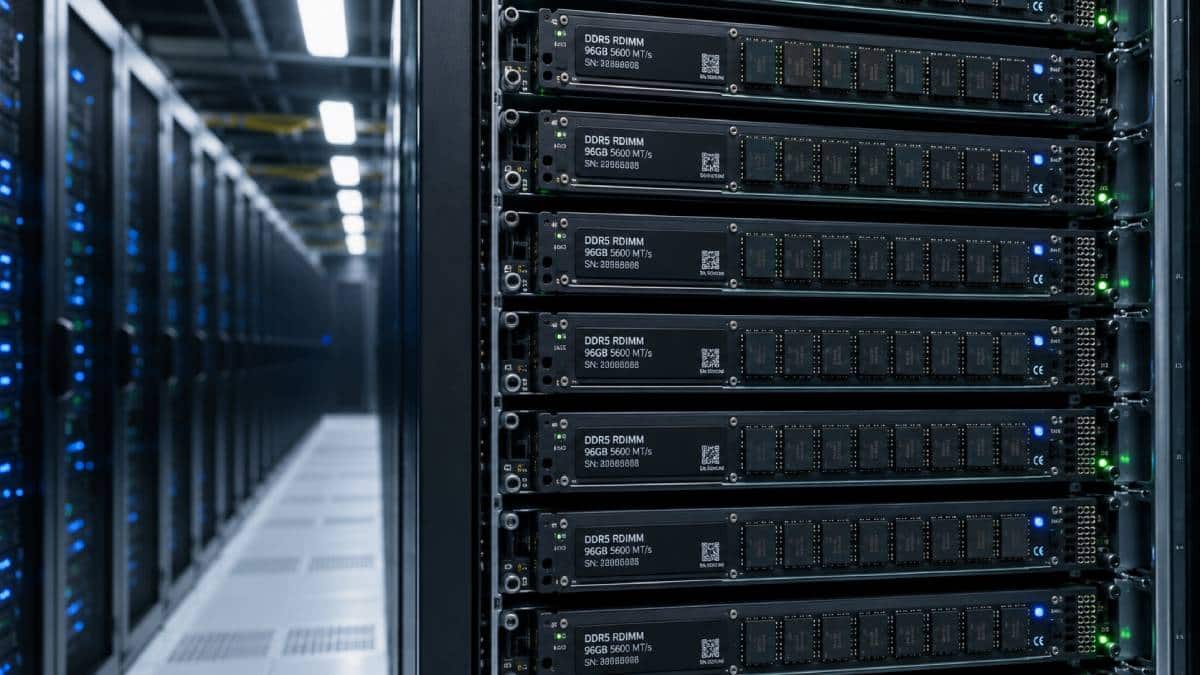
That has fundamentally altered the economics of the memory industry.
"The current memory tightness is primarily being driven by the unprecedented growth in AI infrastructure," Ashok Chandak, President of the India Electronics and Semiconductor Association (IESA) and SEMI India, tells Firstpost.
According to Chandak, leading manufacturers are increasingly dedicating wafer production and advanced packaging capacity to HBM because it delivers significantly higher returns than conventional DRAM and NAND memory used in smartphones, PCs, consumer electronics and vehicles.
"This is fundamentally a capacity allocation issue rather than a technology limitation," he explained.
Unlike logic chips, memory manufacturing cannot simply be scaled up overnight. New fabrication plants cost tens of billions of dollars, require years to construct and demand highly specialised manufacturing expertise.
Even though several global expansion projects are underway, Chandak believes meaningful additional capacity will only begin arriving over the next 18 to 24 months, with the market likely remaining tight through 2026.
That aligns with recent analysis from Deutsche Bank, which described memory production as becoming a "zero-sum game". Every silicon wafer allocated to HBM for AI servers is one less wafer available for smartphones, personal computers or automotive electronics.
This results in AI's insatiable appetite is pushing up memory costs across almost every consumer device.
Why India cannot simply start making memory chips
India has made semiconductors a strategic priority, but memory manufacturing presents perhaps the toughest challenge in the entire industry.
Unlike chip design or assembly, leading-edge DRAM and NAND fabrication requires more than capital. It demands decades of manufacturing experience, proprietary intellectual property, sophisticated process technology and massive economies of scale currently controlled by only a handful of global companies.
"Memory manufacturing is among the most capital-intensive and technologically complex segments of the semiconductor industry," Chandak said.
A single cutting-edge memory fabrication plant can require investments exceeding US$10-15 billion, alongside continuous technology upgrades and access to manufacturing know-how that India currently lacks.
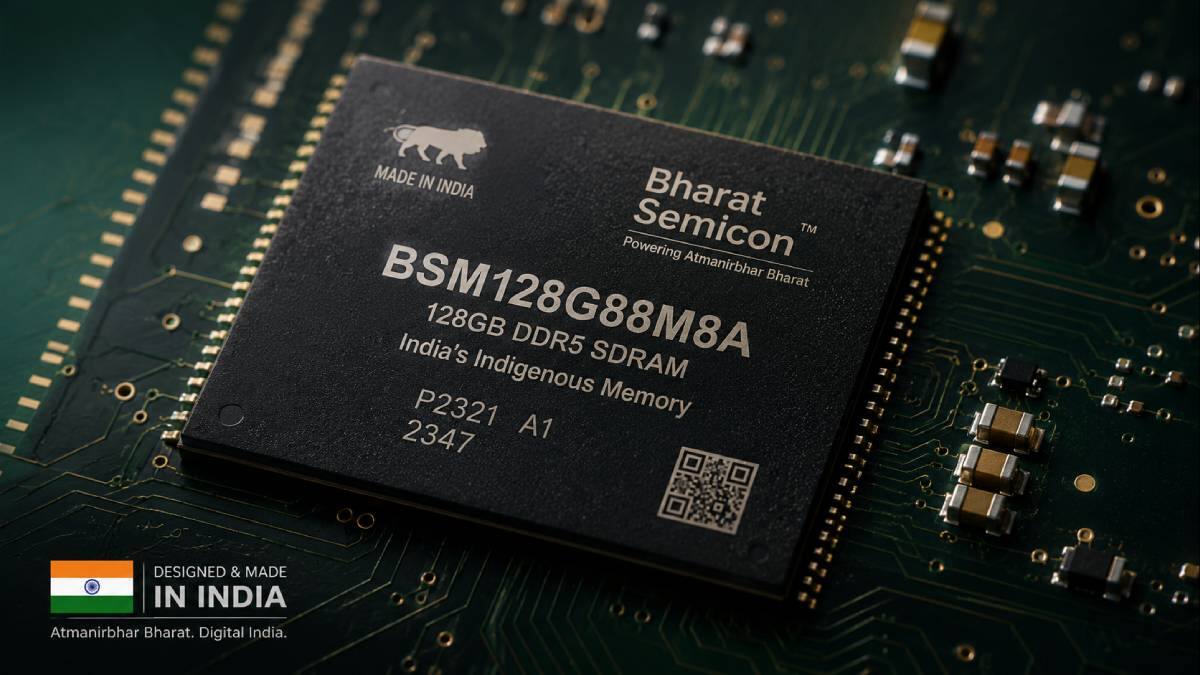
Unless one of the world's established memory manufacturers decides to establish fabrication operations in India, building a globally competitive memory foundry from scratch would remain extremely difficult.
That, however, does not mean India has been left behind.
India is quietly building the foundations of a memory ecosystem
Rather than attempting to leap directly into wafer fabrication, India is focusing on strengthening every other layer of the memory supply chain.
Micron's Advanced Testing, Assembly and Packaging (ATMP) facility in Sanand, Gujarat, marks one of the country's biggest semiconductor investments. While the memory wafers themselves are still manufactured overseas, the plant will package and test DRAM and NAND chips destined for global markets.
According to Chandak, this represents far more than an assembly operation.
It helps develop specialised talent, supplier networks, manufacturing expertise and process capabilities that will eventually support more advanced semiconductor production.
The ecosystem is expanding elsewhere too. Companies such as 3D Glass Solutions are investing in advanced glass substrates, an emerging technology expected to play an increasingly important role in packaging next-generation AI processors and high-performance memory.
"India may not yet manufacture leading-edge DRAM or NAND wafers, but it is steadily building critical capabilities across the memory value chain," Chandak said.
He believes a successful memory ecosystem requires far more than just fabrication. Advanced packaging, specialty chemicals, substrates, testing, equipment, design capabilities, research and development, skilled engineers and long-term policy support must all evolve together.
With continued backing through the India Semiconductor Mission and stronger partnerships with global technology leaders, India could gradually move up the semiconductor value chain.
For now, however, the world's AI race has exposed an uncomfortable reality. Memory chips have evolved from an invisible commodity inside electronic devices into one of the most strategically important resources in the global economy. And until supply catches up with AI's extraordinary demand, consumers should prepare for higher prices, while countries like India continue laying the groundwork for a future in which they are no longer dependent on overseas memory production.
Unnati is a tech journalist with almost half a decade of experience. She has a keen interest to cull out unique story angle. She reviews the latest consumer and lifestyle gadgets, along with covering pop culture and social media news. When away from the keyboard, you might find her reading a fiction, at the gym or drinking coffee.

OpenAI launches Presence to bring AI agents into customer support and enterprise workflows
Samsung Galaxy Fold 8 Ultra, Fold 8, Flip 8 launched: Here is how much it costs in India with discounts
Florida pastor sues OpenAI, says ChatGPT's medical advice delayed emergency treatment: Report
US accuses China's Moonshot AI of using Anthropic's Fable to build K3 model
Apple's biggest Mac refresh in years could bring 11 new models: Report