


Exclusive | No place for women in the ‘Sport of Kings’?
Women’s polo in India remains a niche within a niche, with just 28 registered players this season. Despite equal rules in the sport, limited tournaments, high costs, and lack of visibility continue to restrict growth. Firstpost explores the grit of female athletes fighting for recognition on the turf

The thundering of hooves against the sun-baked turfs of India's polo grounds is a sound that carries the weight of centuries. It is the "Sport of Kings," a title earned through a lineage of maharajas, cavalry officers, and the sheer, staggering cost of participation.
But as the dust starts to settle on the 2025-26 Indian polo season, a quieter, more persistent question lingers in the air: Is there actually a place for "Queens" in this gruelling pursuit?
On paper, the answer is a complicated "not yet."
According to recent data from the Indian Polo Association (IPA) website, the disparity is stark.
In a country of 1.4 billion people, there are only 28 women polo players registered this season. Contrast that with more than 430 male players, and the gender gap looks less like a hurdle and more like a canyon.
 More from Sports
Even more telling is that out of those 28, only a handful are active on the circuit. At the top of the women’s game in the subcontinent, the highest handicap currently stands at 0 — held by seasoned players Monica Saxena and Devyani Rao.
Behind them is a thin pipeline of emerging talent, including Sanjula Mann, who, at a current handicap of -1, is widely seen as one of the most promising young players in the circuit.
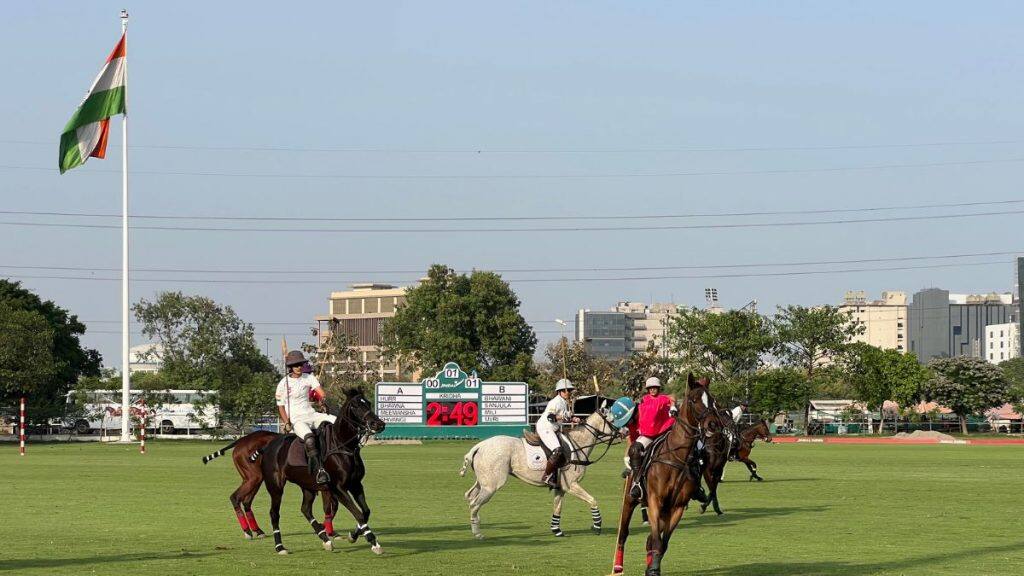
This imbalance is not because the sport excludes women. In fact, polo’s rules explicitly ensure the opposite. There is no gender segregation in team formation — a rarity in global sport.
The philosophy is simple and deeply symbolic: the horse, often described as the true athlete in polo, does not distinguish between the gender of the rider.
But does this equality on paper translate into equality in opportunity?
A season of exhibitions... and one tournament
The 2025-26 Indian polo season offered glimpses of progress, but also underlined the limitations. Across the country, several exhibition matches featuring women were organised alongside major tournaments:
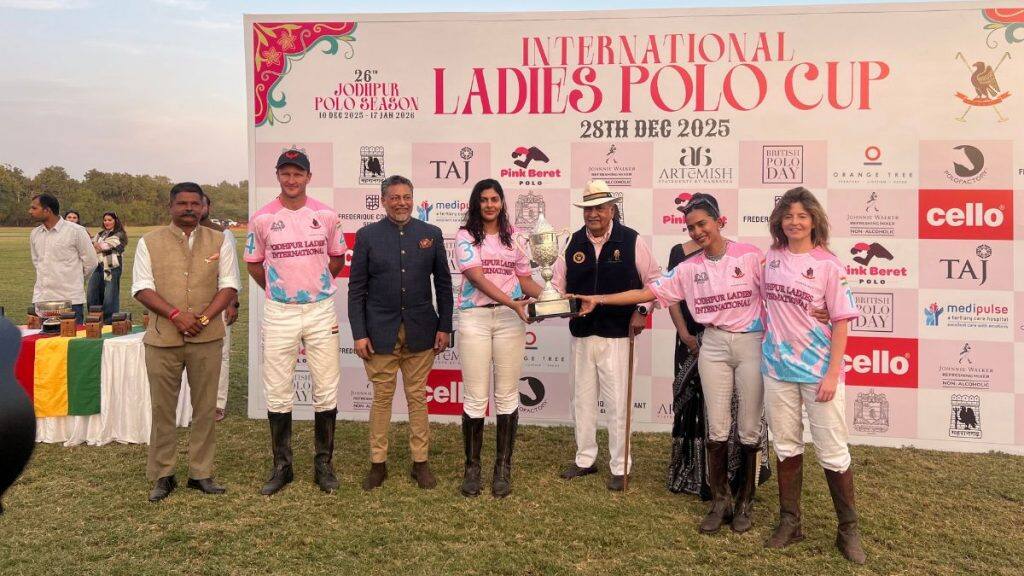
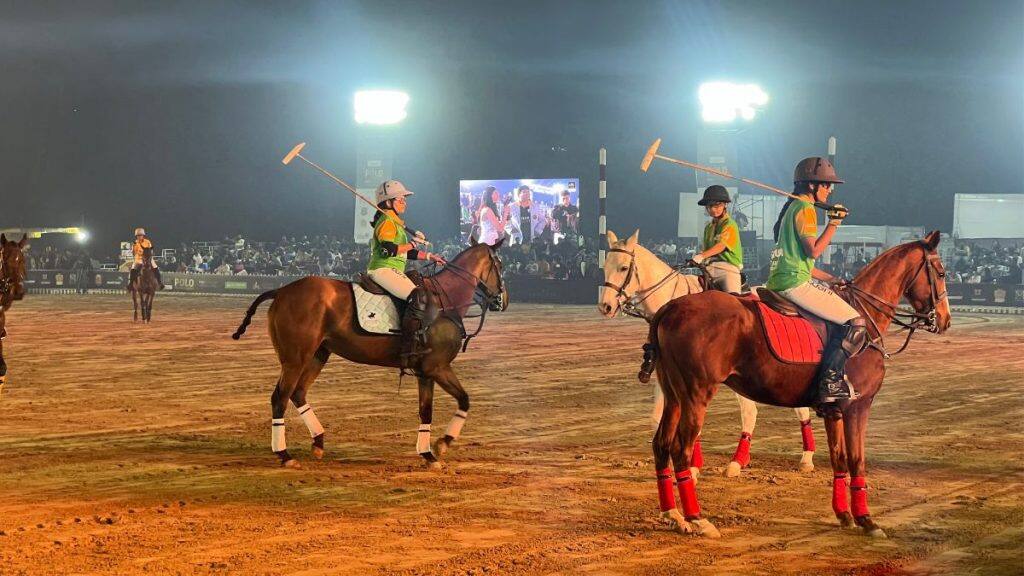
- December 28, 2025 | International Ladies Polo Cup | Jodhpur
- January 3, 2026 | Ladies Exhibition Match (Arena Polo) | Ahmedabad
- February 22, 2026 | PDKF Ladies Polo Cup | Jaipur
- March 15, 2026 | Kridha Women’s Polo Exhibition | Noida (Jindal Polo Estate)
These matches provided visibility and valuable playing time, but they were, by definition, peripheral to the main competitive calendar.
While exhibition matches dominated most of the polo season, the Northeast provided the season's only true competitive format for women. The 7th Manipur International Women's Polo Tournament, held from January 28 to February 2, showcased what the sport could look like with proper institutional backing.
The tournament featured four distinct teams, including international squads from South Africa and Zambia.
- South Africa: Spies Chrisa (C), Abraham Clair Bridge, Reitz Olivia Elizabeth, Cranje Ritali.
- Zambia: Paterson Emily Jane (C), Brown Samantha Grace, Stubbs Nolte Lisa Franziska, Pamela Margaret Greeshields.
- India Team A (IPA): Mili Vedant Sheth, Monica Saxena, Shivangi Singh (C), Sanjana Sanjula Mann.
- India Team B (Manipur): Naoroibam Laxmi Devi, Khundongbam Deventy Devi, Thoudam Tanna Devi (C), Veronica Oinam, Khundongbar Habe Devi, Moirangthem Bijent Devi.
In a thrilling finale, India Team B (Manipur) defeated South Africa, proving that when given a dedicated platform, Indian women are not just participants — they are champions.
Yet, the fact that a country as vast as India hosted just one women’s tournament in an entire season speaks volumes. But it must be stated that Manipur on its own has been outshining the rest of the country when it comes to supporting women in polo.
“Very few… three or four, honestly”
For Dr. Shivangi Jai Singh, a 26-year-old polo player and medical professional, the answer lies somewhere between passion and reality. Her journey into the sport was anything but conventional.
"One of my very close friends, Ashok ji plays polo [Ashok Chandna is a member of the Rajasthan Legislative Assembly who plays polo professionally in India]. So, I just started riding first of all and then I got bored with it," Singh shared with Firstpost.
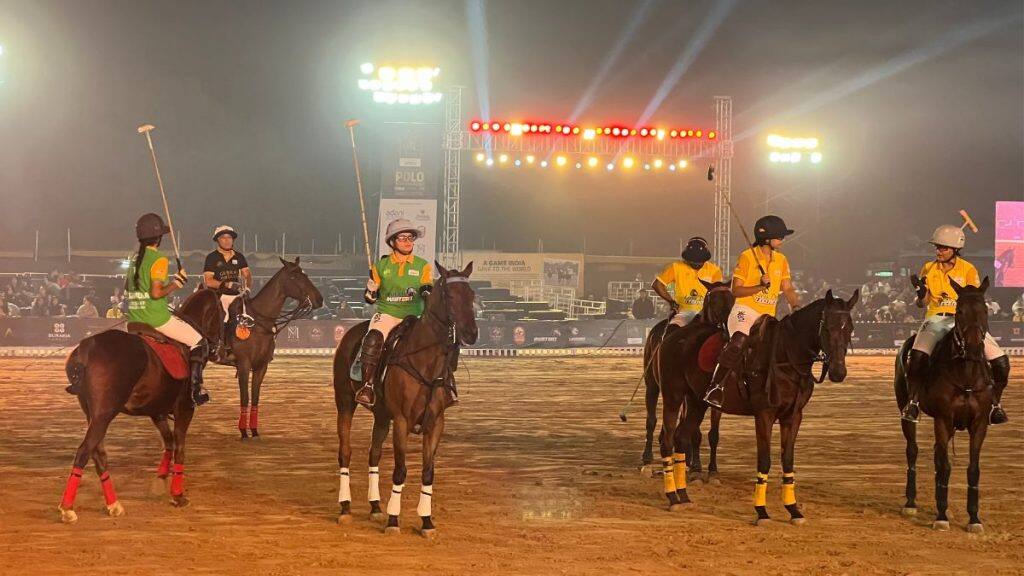
"But then I saw a polo match and I knew I needed to do that. So, I started practising with no agenda to play professionally one day. But I think the polo bug bites you and you cannot leave it. So, I just kept doing it and now it's doing pretty well."
Yet, despite her commitment, Singh is acutely aware of how small the women’s ecosystem is.
“It's the harsh truth. I think three or four players are actually active, honestly. Many of them don't play professionally. We just get to play some exhibitions or a few things here and there, but not on a good level.”
Her assessment reflects a broader reality that while women are not barred from mainstream polo, the lack of numbers and structured competition keeps them largely on the margins.
The cost of entry
One of the most consistent barriers cited by players is the sheer cost of the sport. “Of course, one needs a solid financial model for polo, it's not as simple as just picking up a bat and going to the ball,” Singh explained.
Unlike most sports, polo demands not just personal skill but an entire ecosystem.
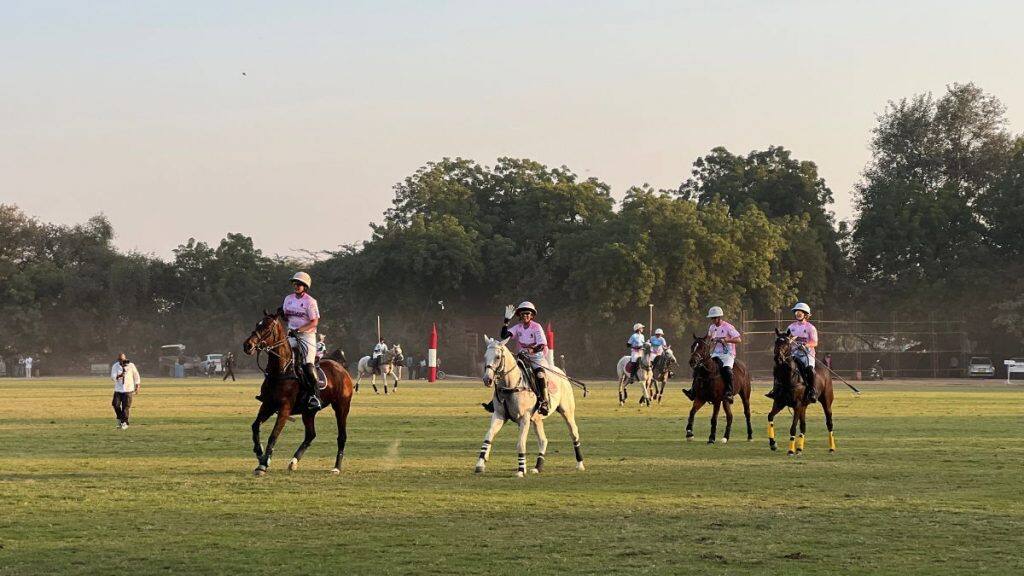
“So, you start riding, but if you have to play a polo tournament, you need four horses of yourself or you rent them. So, I think no matter what, you have to spend some amount of money because even riding or renting a horse is expensive,” opined Singh.
Vijayashree Shaktawat, a -2 handicap player and the women’s representative at the IPA, echoed this sentiment, describing polo as more than just a sport.
“It's a sport that requires a lot of organisation, a lot of planning, a lot of work on your horses, on your strength, on your riding, on your fitness. Behind every player, there's about six to eight horses. You have a whole team of grooms, riders, trainers. So there's a lot that goes into polo and it really is a lifestyle.”
This financial and logistical intensity naturally narrows the entry pool — and for women, the effect is even more pronounced.
Equality: advantage or limitation?
One of the most intriguing debates in Indian polo revolves around its gender-neutral structure. On the surface, it appears progressive. But does it inadvertently hinder the growth of women’s polo?
Singh believes separate tournaments could help — but only once the player base expands.
“If we had a different tournament, it would be better, but then we don't have enough players yet,” Singh explained.
“So, the day we have enough players, we can make a tournament by ourselves. Like no one's stopping you to do that. But yeah, first you need the players and for that, it's a long route."
Shaktawat, however, sees the lack of gender division as one of polo’s greatest strengths. “What I believe personally, I think is one of the most phenomenal things about polo is that polo does not see gender. And it does not bifurcate,” she told Firstpost.
When asked whether this could be counterproductive, she was clear. “I do not think so. Because if we just waited to have a women's team, we wouldn't even be where we are today or not be able to get the opportunity that we do. So I actually think it's phenomenal that there is a sport that looks at each athlete as an athlete and less as a man or a woman.”
The practice gap & geography
For players like Mili Joshi Sheth from Bhavnagar, Gujarat, the challenges are as much about access as they are about competition. Her introduction to polo came a decade ago through exposure — a recurring theme among women players.
“Well, I started horse riding 10 years back and then I just came across a polo player. I went to Jaipur and I saw the game. So I decided that I wanted to do it,” Sheth shared with Firstpost.
But once inside the sport, the lack of peers becomes a hurdle. “There aren’t many women polo players to practise with and as any other team sports, you only get better when you practise so we have to play with male polo players to practise and obviously, that's challenging.”
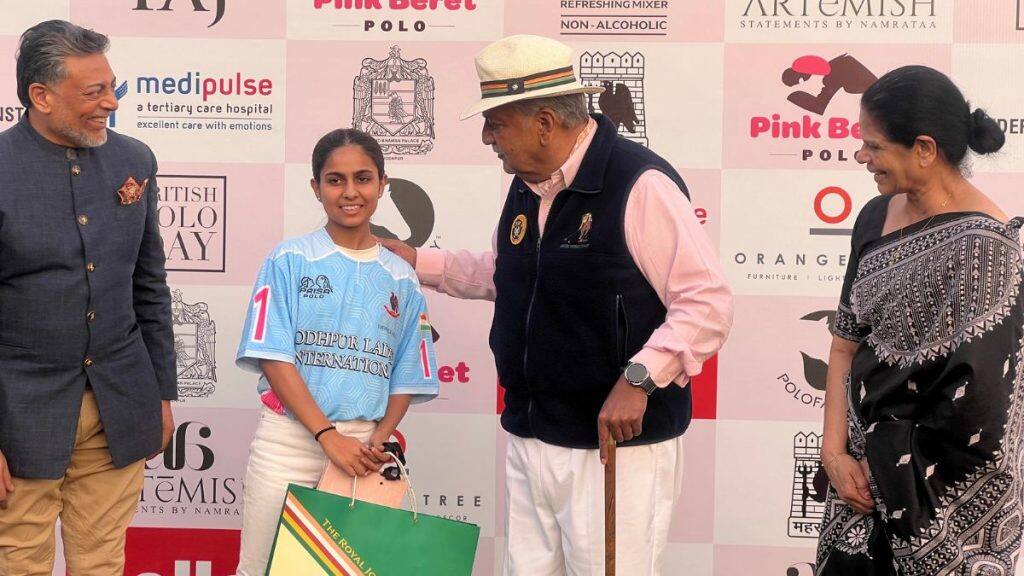
Another structural issue is geography. “I think it's not accessible,” Singh noted. “Because even in India, it's only two states who do polo at this point, Delhi or Jaipur. So, if you're not living in these, it's very difficult for you to even play polo or become a player.”
The global contrast
Interestingly, the situation in India stands in sharp contrast to the global landscape. “It's doing so good globally,” Singh said of women’s polo abroad.
“So, when I travel to England and Argentina, there's so many women's tournaments. They have like proper pros who get paid equal to the men pros. So, they can manage their horses and they can afford to do so. Because there's sponsorships, actually.”
Her point underscores a crucial gap which is financial backing. “The problem in India is sponsorships and people showing some support to women or the sport for that fact.”
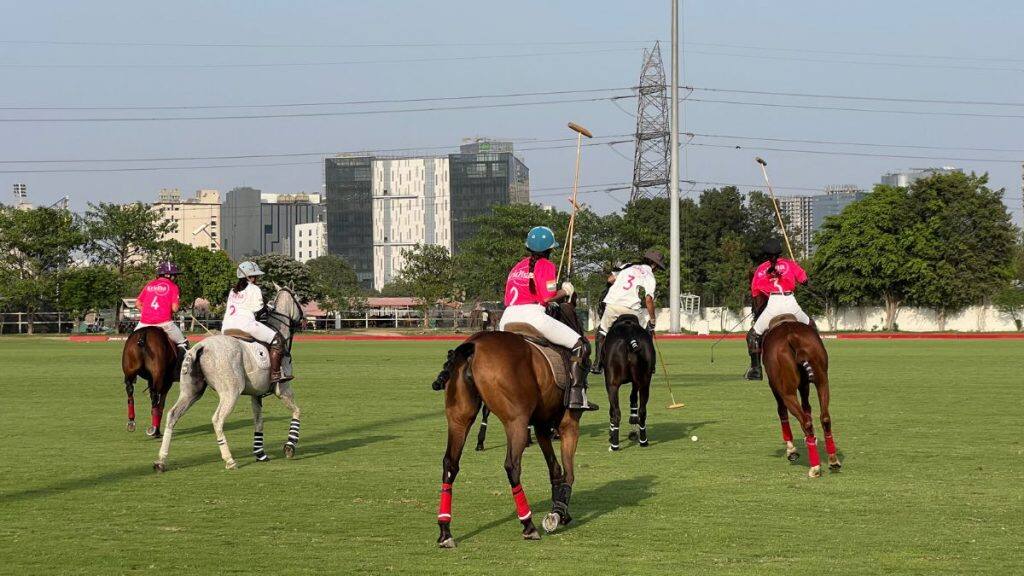
Without commercial interest, the sport struggles to build momentum — and women’s polo, being a smaller subset, feels the impact more acutely.
Viewership: the missing link
For Shaktawat, the solution begins with visibility. “Well, what would really help is if we were able to bring more viewership to the game. Because I believe if we were able to get viewership, we would be able to take polo, which is a phenomenal game to watch. We would be able to take it to a bigger number of people.”
She believes that increased exposure could create a ripple effect. “And I believe that would most definitely garner a lot of interest in the sport, boys and girls alike.”
Her suggestion goes beyond spectatorship.
“And when it comes to women polo and supporting women's polo, what would be phenomenal is if we could get our current players, even sponsors, and we could get sponsors to set up camps for women that are in cities or centres that have equestrian clubs, etc., and get girls going just so that we can at least introduce the sport.”
Building from the grassroots
Sheth offers a similar perspective, emphasising outreach.
“One thing can be done is that we can organise tournaments like this [Gujarat Arena Polo Tournament] and promote women polo players as much as we can. I mean a lot of people see it and they want to take up the sport and we can make it accessible by introducing it to schools and colleges.”
Her focus is on early exposure — creating a pipeline that currently does not exist. “So many women can be introduced to it and then they can take up the challenge.”
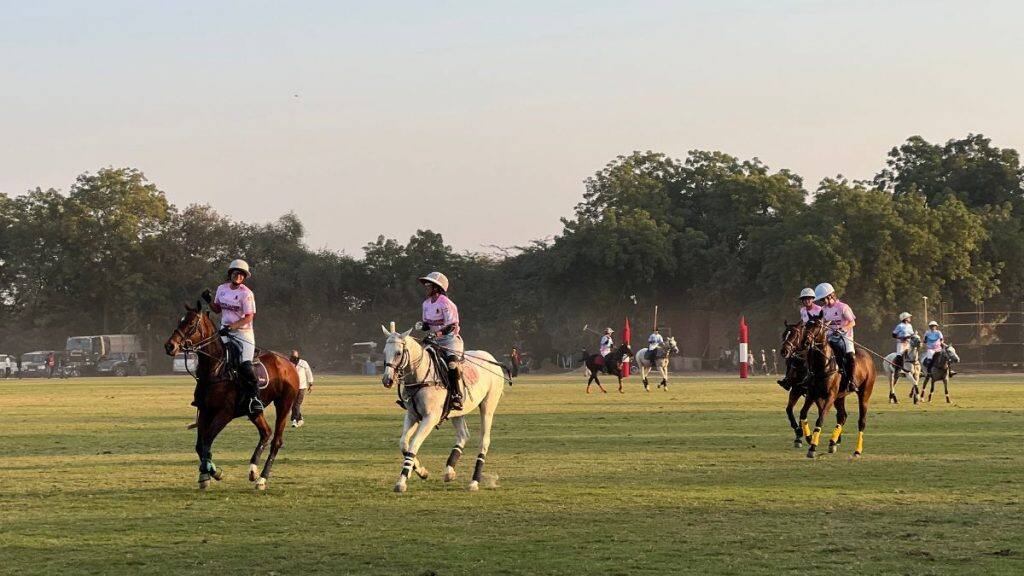
Yet, perhaps the most compelling aspect of this story is the resilience of the players themselves. They navigate high costs, limited opportunities, and a sparse competitive calendar — driven not by financial returns, but by passion.
As Singh candidly put it when asked about returns on investment. “Not for anybody. I mean, if you go pro, of course, there is, but I don't see anybody going pro in India.”
So, is there “no place for women” in the Sport of Kings? The answer is not straightforward.
Polo offers something rare: a level playing field where gender is not a barrier. Therefore, what emerges is not exclusion, but under-representation.
Women are present. They are playing. They are competing — often alongside men. But they are few, and their pathways are narrow.
At Firstpost, we extensively covered Indian polo through the 2024-25 season, first focusing on the origins of the sport, and then diving deep into the role of the Indian Armed Forces in reviving polo as well as the challenges the sport faces in the subcontinent.
Now we are in the middle of a new series of features focusing on the 2025-26 Indian polo season.
Inhaling global affairs on a daily basis, Anmol likes to cover stories that intrigue him, especially around history, climate change and polo. He has far too many disparate interests with a constant itch for travel. You can follow him on X (_anmol_singla), and please feel free to reach out to him at anmol.singla@nw18.com for tips, feedback or travel recommendations

'It's not over yet': PV Sindhu makes bold declaration following historic Japan Open title victory
The Luis de la Fuente effect: Spain’s secret weapon in their 2026 World Cup victory
Rodri beats Messi to win Golden Boot award; Check out full list of 2026 World Cup award winners
Messi breaks down after World Cup defeat, shares touching hug with Lamine Yamal
FIFA World Cup jackpot: What does Spain take home after beating Argentina?