


The Luis de la Fuente effect: Spain’s secret weapon in their 2026 World Cup victory
Spain’s 2026 FIFA World Cup triumph was not about a single superstar but about a collective force shaped by Luis de la Fuente’s leadership. His ability to value every player created a family‑oriented squad that thrived under pressure.

Oftentimes, winning the FIFA World Cup is the justification for the Ballon d’Or. That was the case in 2006 with Fabio Cannavaro, in 2002 with Ronaldo, and in 2022 with Lionel Messi. This time, there likely won’t be that same effect: Spain’s second World Cup title was not the product of individual star power, but a collection of superb players who took turns delivering the goods.
The likeliest Spanish candidate for the award, Lamine Yamal, delivered an underwhelming tournament by his lofty standards. But whilst Spain’s title may not land them another Ballon d’Or winner, it should land Luis de la Fuente the Best FIFA Football Coach award of 2026.
After a 16-year professional career that saw him play for Athletic Club, Sevilla, and Alavés, De la Fuente managed various lower-tier Spanish teams before switching over to international management in 2013. He claimed the U-19 Euros with Spain in 2015, the U-21 Euros in 2019, and a silver medal to his tally in the 2020 Summer Olympics, before replacing Luis Enrique as Spain manager following the 2022 World Cup.
 More from Football News
It was his first time representing Spain’s senior team, having played for them at the U-18, U-21 and Olympic level.
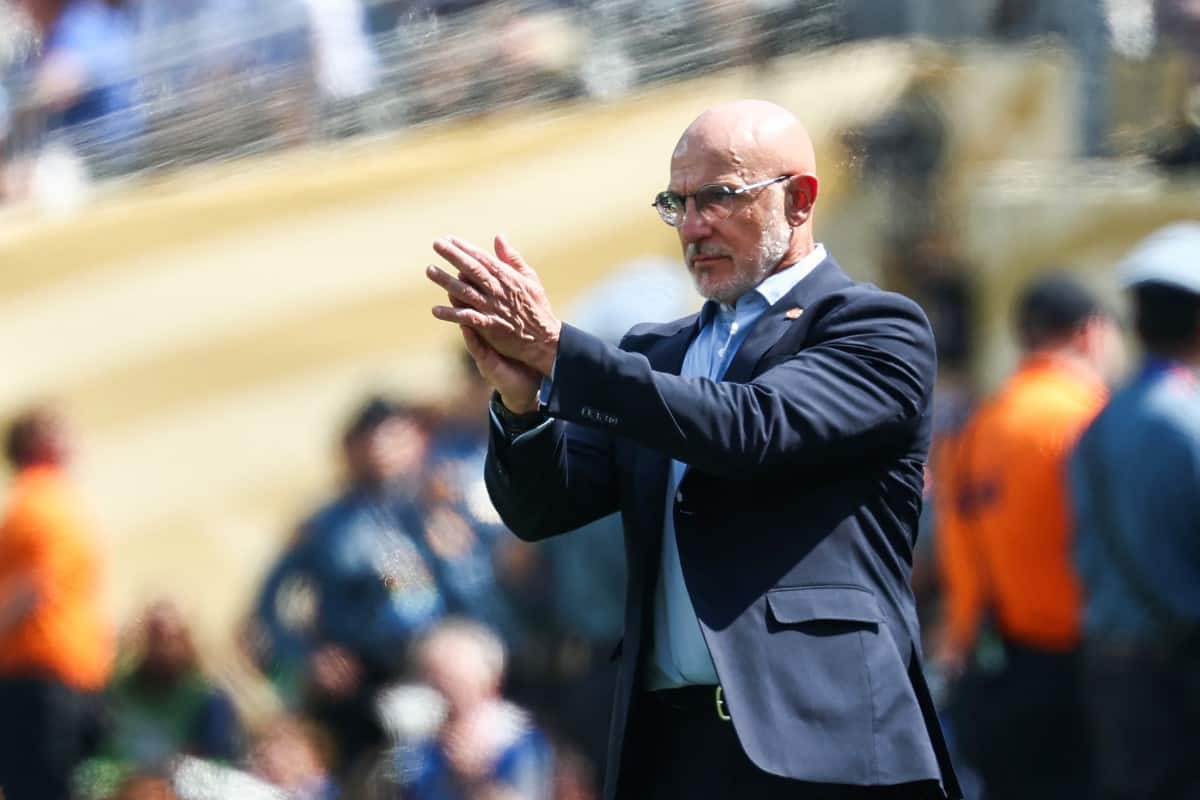
Whilst he initially found himself at risk of losing his job after an unconvincing first international window, De la Fuente consolidated his status with a UEFA Nations League title before leading them to the European Championship in 2024. After spending the past decade in hibernation, Spain had finally arisen from their slumber.
Even so, they were not regarded as one of the main favourites for the World Cup, with France’s all-dominant attack and Argentina’s inevitability overshadowing Spain. And after drawing to Cape Verde, it seemed that Spain’s spate of injuries in the final third would prevent them from reaching the promised land.
But De la Fuente never panicked and made the necessary changes to see them breeze past Saudi Arabia and Uruguay en route to topping the group. And after trouncing Austria 3-0 to secure their first World Cup knockout round victory since the 2010 final, La Roja were put to the test against Portugal – the last team to defeat Spain (albeit on penalties).
Just when it seemed they were headed for an extra-time clash, De la Fuente’s in-game tactics proved essential as substitutes Ferran Torres and Mikel Merino combined for the winning goal.
Also Read | FIFA World Cup jackpot: What does Spain take home after beating Argentina?
Throughout the tournament, De la Fuente managed to tweak his tactics without ever abandoning his footballing DNA. Against Belgium, he benched Pedri for Fabian Ruiz – a change that he retained for the rest of the tournament – and once again, Merino scored the decisive winner immediately after coming off the bench. Even after relinquishing their unprecedented streak of 650 minutes without conceding a goal vs. Belgium, Spain didn’t look flustered against a seemingly unstoppable France side, breaking the deadlock early on.
Whereas other teams like England or Argentina would have sat back and defended, they merely pressed on and dominated en route to a 2-0 win.
Next came the final against an Argentina side seeking to become the first-ever national team to win four straight major trophies. Whereas Argentina had grown reliant on Messi’s unstoppable brilliance, Spain knew that they could count on every single player to fill their role to perfection and pin the opponents deep in their own half.
In contrast to previous Spain sides that have held possession for possession’s sake, Spain played with a directness and verticality that struck fear into their rivals’ minds. They asphyxiated Argentina with their aggressive pressing and their vertical approach, closing down Messi and co. immediately and winning the ball back, and creating central overloads to free up space for their forwards to exploit.
More than anything, though, he made sure that every single player felt valued, whether they were an undisputed starter like Yamal or a substitute like Merino. It’s precisely this family-oriented mentality which allowed every single one of his 26 players to keep competing and pushing each of their teammates to their limit.
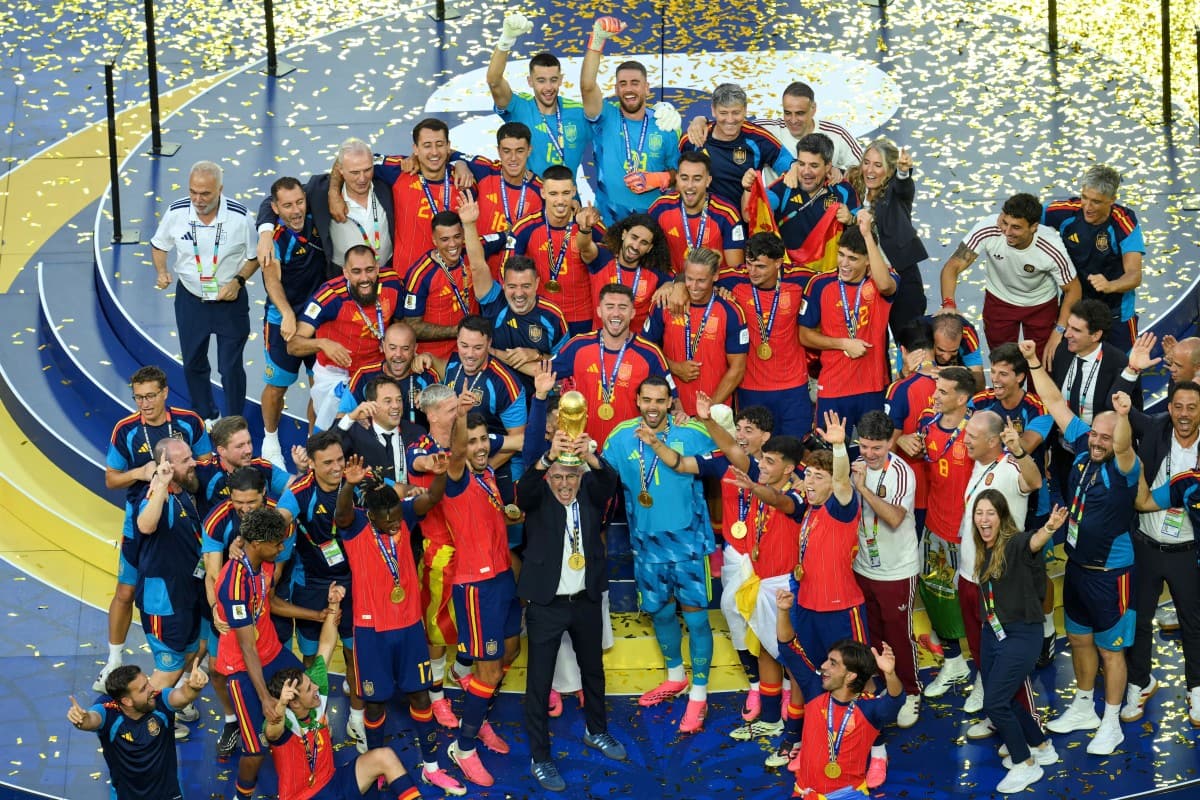
And just when it seemed that 10-man Argentina would hold on for penalties, two of De la Fuente’s substitutes – Ferran Torres and Nico Williams – combined to score the winning goal. It was a justified result for a team that, despite not necessarily having the best player, certainly had the best team from start to finish.
"I’m so proud of this generation of footballers who have grown up with this philosophy, remained true to it, made it even better, and set an example as a team and a family – they’re excellent, world-class footballers with exceptional talent," stated De la Fuente after the match. "I’m very moved. Looking back and thinking about them, we’ve won everything, absolutely everything, with this generation of players."
Zach Lowy is a seasoned freelance football journalist with more than a decade of experience writing for top-tier news outlets like ESPN, The Guardian, and The Independent. His expertise and insights have also made him a sought-after guest on radio and television, including appearances on BBC, SiriusXMFC, and other prominent sports platforms. Fluent in Spanish, Portuguese, and Italian, Lowy’s multilingualism has enabled him to bridge gaps and communicate with a number of different figures. Having previously covered the 2025 FIFA Club World Cup, Lowy is now covering the 2026 FIFA World Cup in the United States.

Rodri beats Messi to win Golden Boot award; Check out full list of 2026 World Cup award winners
Messi breaks down after World Cup defeat, shares touching hug with Lamine Yamal
FIFA World Cup jackpot: What does Spain take home after beating Argentina?
De la Fuente credits team spirit for Spain's World Cup glory
World Cup 2026: Torres' late extra-time goal turns him into Spain's national icon