


Rich history and a future hotbed of sport: How Rajgir Sports Complex is redefining Bihar’s place on Indian sporting map
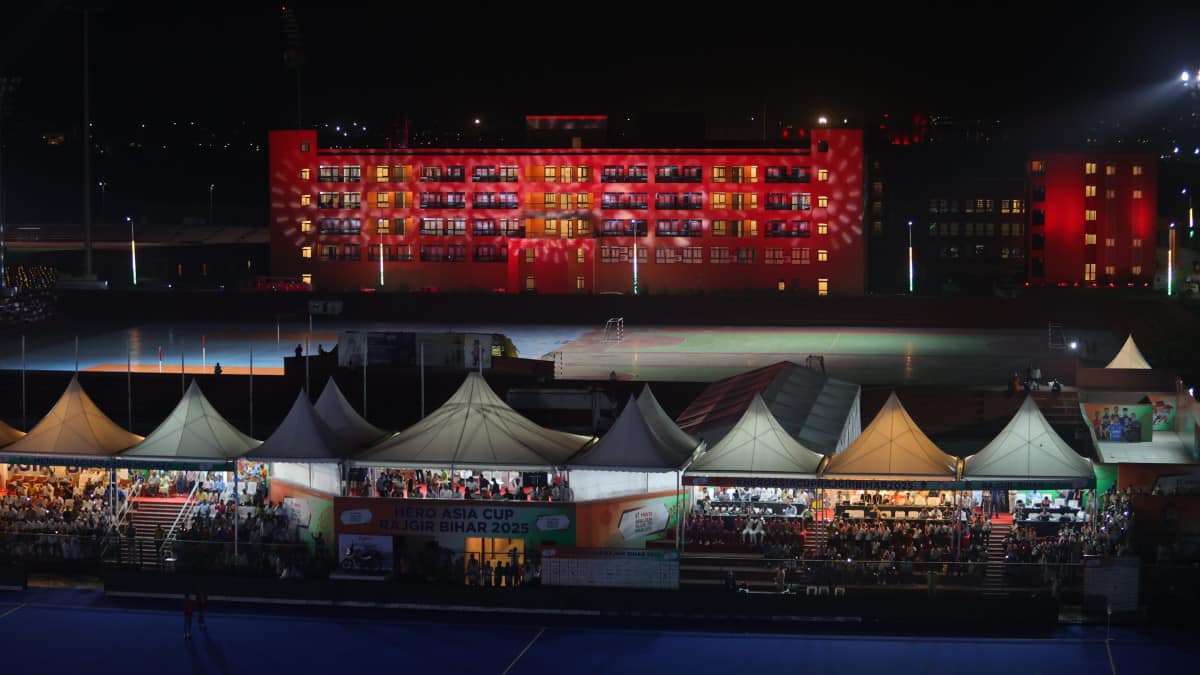
Spread in about 90 acres and built with an investment to the tune of Rs 750 crore, the Rajgir Sports Complex – currently hosting the Men's Hockey Asia Cup – stands out not just in terms of world-class facilities for 24 sports, but also for housing the residential Bihar Sports University.

Rajgir: Not often in the recent past has Bihar left a mark on the national or international sports map. But the state has vowed to change that, making Rajgir – a city with varied footprints of history – the epicentre with a state-of-the-art sports complex.
Padma Shri Moin-ul-Haq, who was born in the Nalanda district, of which Rajgir is also a part, was the flagbearer for sports in Bihar.
He served as the general secretary of the Indian Olympic Association in the 1950s and was also one of the founding members of the Bihar Cricket Association. The endeavour of the state government is to revive that legacy, and it can’t be a coincidence that the sports complex has come up in the same region from where Haq belonged.
 More from Sports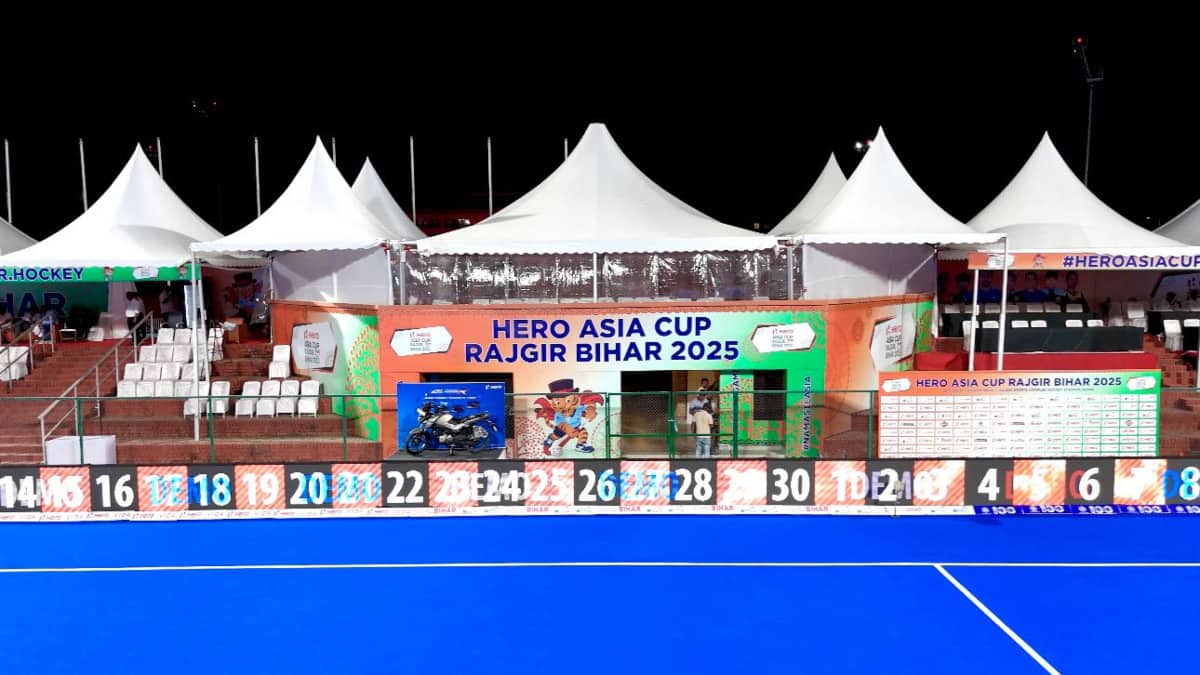
Rajgir's unique ties with history and sport
Talking about ancient history and its relation to sport, about 20 kilometres from the Rajgir Sports Complex (RSC), there is ‘Jarasandh Ka Akhada’ – a site that dates back to the Mahabharata days, when Jarasandh used to invite kings to compete with him in wrestling. But that is not it. The Nalanda ruins, remains of the Cyclopean Wall and footprints of Buddhism are some of the other world famous relations of Rajgir with history.
RSC is the latest addition to the landmarks in the Rajgir. Spread in about 90 acres and built with an investment to the tune of Rs 750 crore, the sports complex stands out not just in terms of world-class facilities for 24 sports, but also for housing the residential Bihar Sports University as one of the stand-out features.
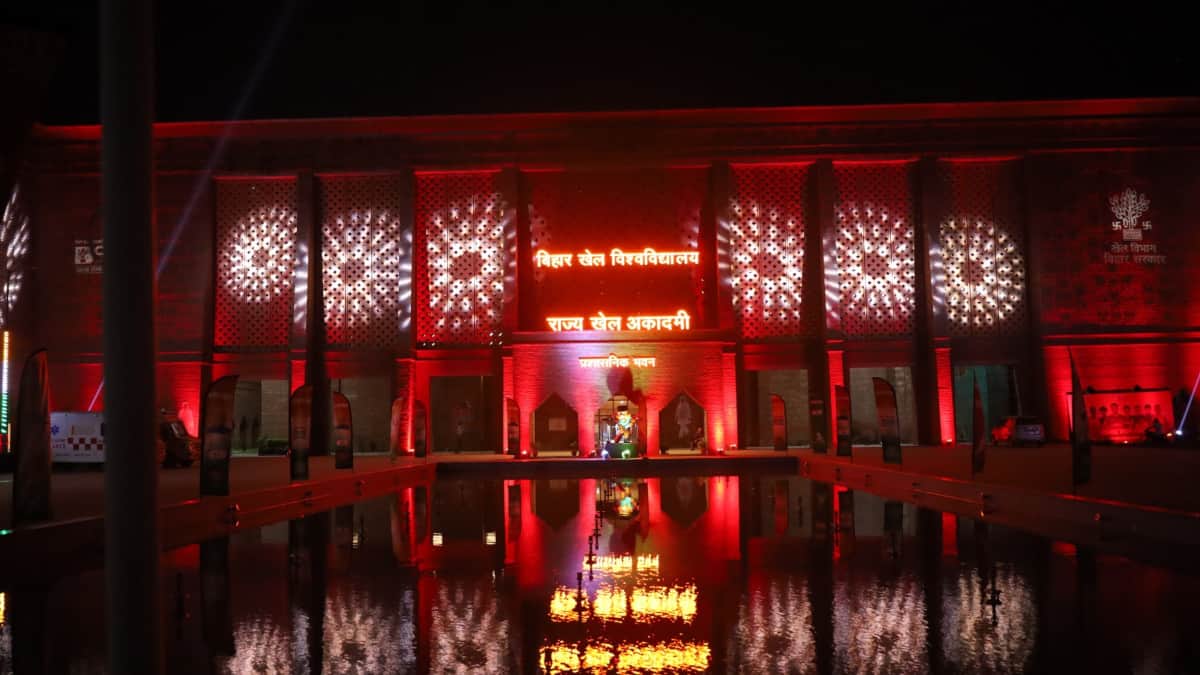
Inaugurated as recently as last year, the university offers students to get trained at world-class facilities for cricket, football, athletics, hockey, volleyball, basketball, badminton, Judo, taekwondo, lawn tennis, handball, cycling, swimming, kabaddi, wrestling, weightlifting, boxing, wushu, fencing, squash, archery, shooting, table tennis, and cycling velodrome.
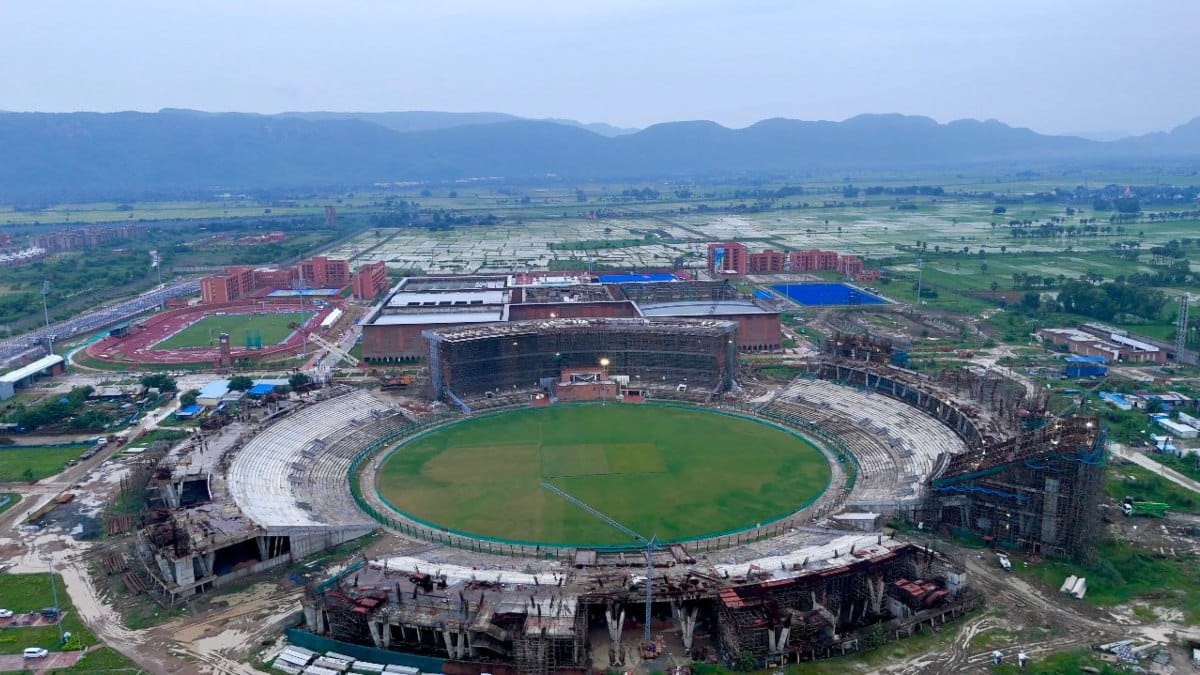
While the majority of the facilities, including the hockey stadium where the men’s Asia Cup is being played, are operational, a 40,000-capacity cricket stadium is in the works, expected to be completed by the end of this year.
Also available to the young athletes are facilities like sauna and steam bath and techno gym, with faculty for sports science, sports medicine, physiotherapy, anthropometry, nutrition and psychology and a 25-bed health centre.
At the helm of the Sports Complex here is Raveendran Sankaran, IPS, who is the Director General and CEO of the Bihar State Sports Academy (BSSA).
“If you talk about the construction part of this complex, it started in 2012. But for two years it stopped because of COVID, after which the construction work resumed and was completed,” Sankaran told Firstpost. “Nowhere in India will you get to see a sports complex and a university in the same premises. So, this is one of its kind.”
The complex also houses separate hostels for boys and girls, besides a residential facility for the officials, a guest house with 10 rooms and separate administrative and utility buildings.
What’s the vision?
Five years from now, BSSA wants the complex to double up as a high-performance centre for elite athletes, particularly catering to the eastern and northeastern India to cut down their long travel hours and the need to acclimatise to different weather conditions.
For those who have visited the Kalinga Sports Complex in Bhubaneswar (Odisha), they may find resemblance to the idea behind RSC, except the Sports University part. But Sankaran disagrees.
“We did not copy; we did not take anything from Kalinga stadium. The basic difference is, we did not want to create a white elephant. Constructing multiple 50,000-capacity stadiums is a waste of money because future maintenance is very, very difficult,” he said.
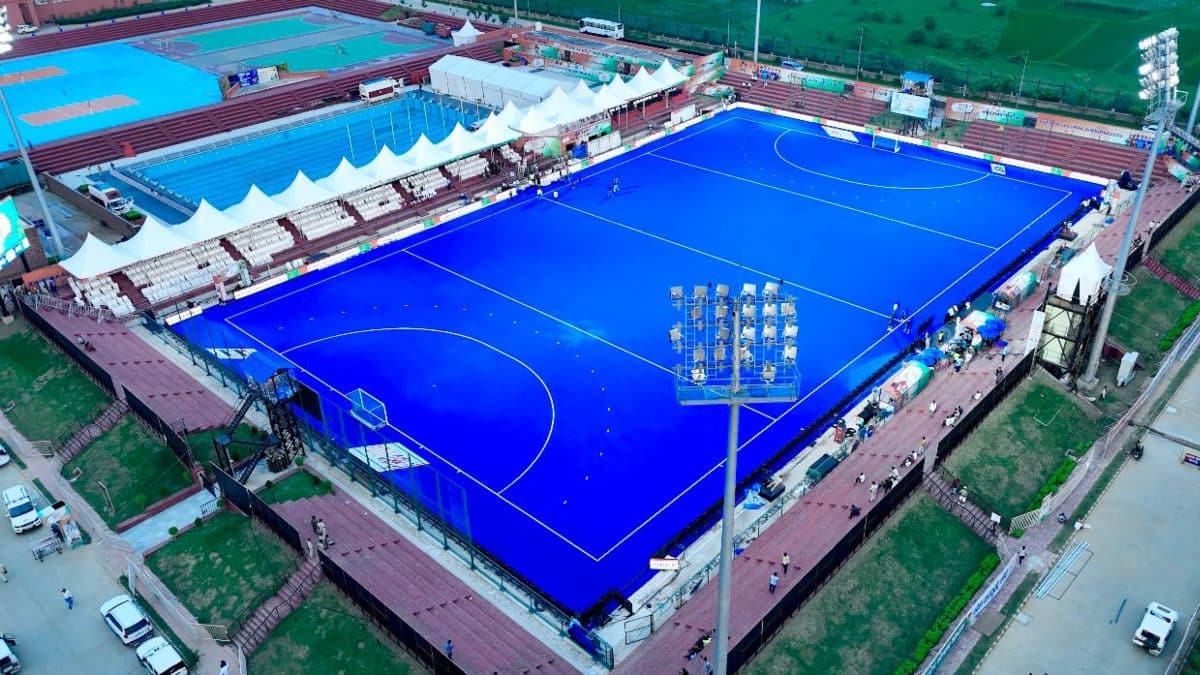
Sankaran added that Bihar and RSC would rather brand itself by creating future champions and hosting big events like the ongoing men’s Asia Cup and the Women’s Asian Champions Trophy, held last November. Besides, the state also recently hosted the Khelo India Youth Games, Asian Rugby and Sepaktakraw World Cup.
“My own sports children and we hosting these kinds of events by itself has branded Bihar in a big way. Without any brand ambassador of sports, Bihar has been branded so well. So, I think the brand ambassador for sports in Bihar is our own sports children,” said Sankaran.
But the real victory for the state will be if endeavours like the RSC can produce a player like Shivnath Singh – a two-time Olympian and the greatest long-distance runner India has ever produced, whose national record from 1978 still stands, or a Chandreshwar Prasad Singh – the former captain of the Indian football team.
That will be the real victory of a project as massive as the RSC.

'It's not over yet': PV Sindhu makes bold declaration following historic Japan Open title victory
The Luis de la Fuente effect: Spain’s secret weapon in their 2026 World Cup victory
Rodri beats Messi to win Golden Boot award; Check out full list of 2026 World Cup award winners
Messi breaks down after World Cup defeat, shares touching hug with Lamine Yamal
FIFA World Cup jackpot: What does Spain take home after beating Argentina?