


‘Americans are really friendly’: How 2026 FIFA World Cup is playing the world’s greatest unifier, one game at a time
Unlike 1994, soccer is now the USA's most popular sport after football and basketball. The flip side of this is that FIFA have capitalised on the growing interest to make the most expensive World Cup of all time. But fans aren’t letting exorbitant prices stop them from enjoying the tournament.

The 2026 FIFA World Cup is in full flow, and whether you’re in an urban metropolis or a rural community, you’re bound to find both diehard fans supporting their teams as well as people who, having ignored soccer for their entire lives, are starting to be caught up in its magical sway.
Over the past two weeks in Los Angeles and Dallas, I’ve had the chance to see some of the best players in the world face off on the world’s biggest stage. But as far as fan experiences go, the most memorable moments have come outside the stadium.
Braving exorbitant prices for the experience
In contrast to 1994, when soccer was a mere footnote in the USA’s lexicon, it’s now the country’s most popular sport after football and basketball. The flip side of this is that FIFA have capitalised on the growing interest to make the most expensive World Cup of all time; unlike in 1994, when average, working-class families could afford to attend matches, that’s no longer the case. But these fans aren’t letting these exorbitant prices stop them from enjoying the tournament.
 More from Football News
This was on full display in Santa Monica, when a horde of Colombia fans packed the community’s bars and restaurants to watch their team face off against the Democratic Republic of Congo. They could have stayed at home and watched the game on their television, but instead, they drove out to the boulevard, braving excessive parking fees and outrageous prices for food and drinks to watch it as a group.
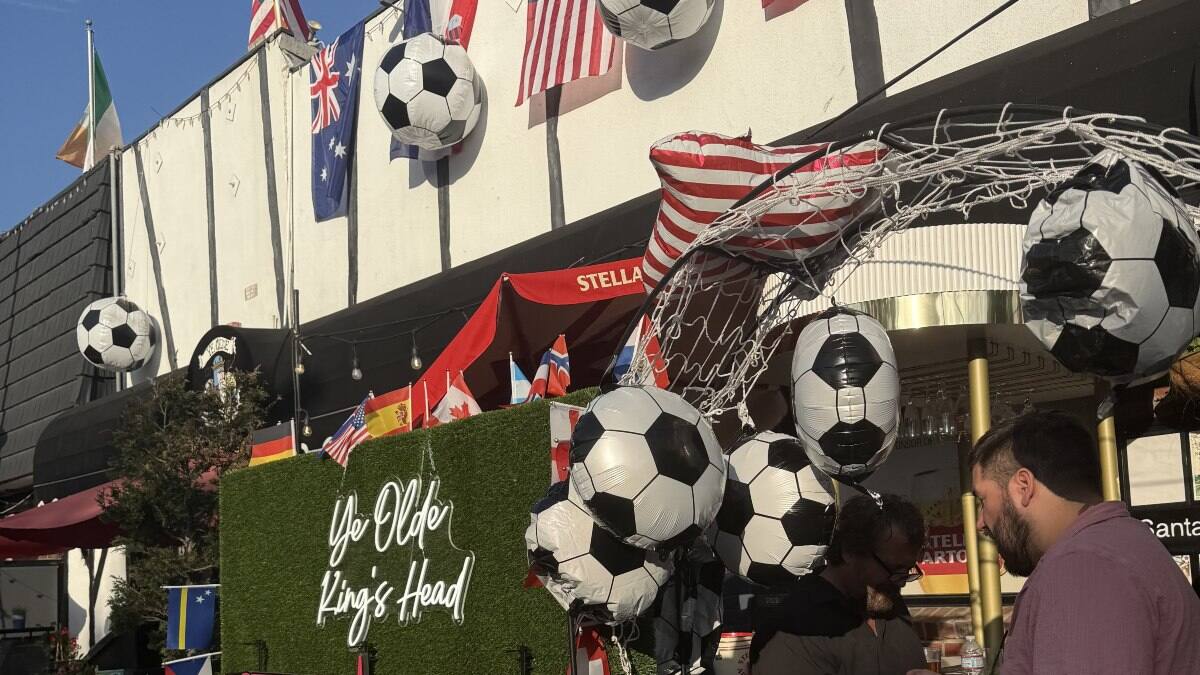
When I tried to enter Santa Monica’s famous pier after the game, I was unable to do so as a seemingly endless arsenal of ‘Cafeteros’ fans continued to pour out of the bridge. Whilst there wasn’t a Congolese fan in sight, there were hundreds, if not thousands of yellow shirt-clad supporters who massed to watch their team play. Most of them had never even met each other, but by the time the night was over, they were hugging and singing traditional Colombian songs as if they were long-lost cousins.
"I’m a lifelong soccer fan, but I don’t really have any superstitions other than making sure that I’m wearing my Colombia jersey and that all my friends and loved ones also have a Colombia jersey. Not only did I have one for my wife, but I brought two for my friends as well,” stated Alex, a first-generation Colombian-American. "It’s very important, and it makes the game more fun – I’ve got two young kids, so I watch the majority of games at home or at work, but for the games that really matter, I want to be around people who are passionate about the game."
"The country shuts down whenever Colombia plays, but more than that, they bring a sense of joy and optimism to the sport that certainly doesn’t exist in the United States because they’ve largely been terrible. There’s a sense of pessimism with England, a sense of expectancy with France and Germany, where they expect to win… with Colombia, they hope they win, but they celebrate their selección even if they don’t, which is nice. I’m optimistic that we can bring that level of optimism to the World Cup. If they win, I’ll be happy, if they draw, I’ll be less happy, and if they lose, I’ll be pretty upset."
There have been traditional elements of American fan culture that have been wiped out for this summer’s tournament. There are no marching bands or pep rallies, and in stark contrast to NFL games and other sporting events, there’s been little to no tailgating, where fans gather in stadium parking lots hours before kickoff to grill food like burgers, ribs, chili, and drink beer. Many stadiums have restricted or prohibited tailgating, often due to reduced parking availability caused by FIFA taking over lots for security perimeters and fan zones. If you are able to tailgate, you’ll have to stump up thousands of dollars for both tickets as well as parking passes.
'If Scotland scores, we’ll scream at the TV and even jump on the table'
This has created a void, one that has enabled the fans who have travelled from all over the world to find ways to bond with one another and celebrate the unique aspects of their sporting culture. If you’re a Belgium fan, this meant heading to ‘CineVita,’ a 15,000-square-foot, hand-crafted Belgian Spiegeltent (Mirror Tent) which offered an immersive 360-degree experience, and then marching together to the stadium to watch Belgium play Iran. If you’re a Scotland fan like George, this meant playing bagpipes on the eve of Scotland’s match vs. Brazil, much to the adulation of the countless fans who lined up at Tom’s Watch Bar.
"We like to play bagpipes before the games to get warmed up and excited, and if Scotland scores, we’ll scream at the TV and even jump on the table. If they don’t score, we’ll still scream at the TV, and if they let in a goal, we’ll still scream at the TV," stated nine-year-old George, who, in addition to wearing a Scotland jersey, had a Scotland flag painted on his left cheek and ‘No Scotland No Party’ on his left arm. "I like to watch Scotland games with my family. We’re very loud, we drink a lot of alcohol – not me – and we love the game."
"We like eating haggis and tarties and potatoes, and when I’m watching Scotland with my family, I love seeing how excited we all get."
For George, who was born in England and who has spent the past 2.5 years of his life in California, watching Scotland isn’t just about supporting his team. It’s about connecting with his Scottish ancestors and showcasing his national pride. In case he ever forgot it, the paint on his left leg would remind him: a Celtic knot that stated, “Alba gu bràth,” or "Scotland Forever" in Gaelic.
In addition to having millions of US Men’s National Team fans, the Los Angeles area also boasts some of the biggest diasporas in the world. In some cases, these diasporas have been fractured over the World Cup, like when Iran supporters clashed over the usage of the pre-revolutionary flag vs. the current flag. But for the most part, these fans have come together over their teams. This was evident on June 18, when 800+ fans converged on Ditroit Taqueria, packing a medium-sized parking lot to the brim, feasting on tacos and paletas and swilling Coca-Cola and palomas, and watching Mexico vs. South Korea – two of the biggest diasporas in LA.
These fans could’ve been reclining on their sofas, with the ability to change the volume and brightness from their remote. But instead, they sat through rush hour traffic, put their eardrums at risk as the commentary blared through industrial-sized speakers, and craned their necks around hordes of people to watch the game. And when Mexico prevailed with a narrow 1-0 win, they danced to classic Mexican songs like La Chona and El Rey.
Meeting new people while enjoying the game
But it’s easy to find fellow Mexican-American fans in Los Angeles, which is the largest hub of Mexicans (900,000) outside of Mexico. It’s not so easy for Ghanaians, with the prime hubs being on the other side of the country in Maryland/Virginia and New York/New Jersey. For someone like Isaac, who left Ghana for California a couple of years ago, watching the Black Stars meant forging new connections with both his countrymen and members of his adopted country.
"I normally do not like watching a Ghana game alone by myself. Before matches, I’ll wear my Ghana jersey and post pictures on WhatsApp and Facebook," stated Isaac, who watched the game at Cosm, which immerses fans into the action with extended reality entertainment venues featuring large-format screens. "I watched our first game with four friends at my house. I invited them over. I watched the second game at Cosm, and I loved the experience, especially with the crowd and meeting other people. I think most people love to watch the game while having people around."
"It’s more fun than watching it alone. It’s nice having some snacks and drinks while watching the game. I actually made new Ghanaian friends at Cosm today. I love meeting new people, and being at Cosm today really helped me to meet new people while enjoying the game. I see a lot of people having beer while watching the game. It’s more fun. I feel Americans are really friendly at games. A lot of people took pictures with me today when they realized I was in a Ghana jersey. They came back to congratulate me after the game, which was a nice feeling."
The world's greatest unifier
More than just being the most popular sport in the world, soccer is the world’s greatest unifier. When Mark came from Liverpool to Los Angeles three decades ago, he didn’t know any other Englishmen. But by watching England games at various pubs and restaurants, he found a community of expatriates who have remained close friends to this day.
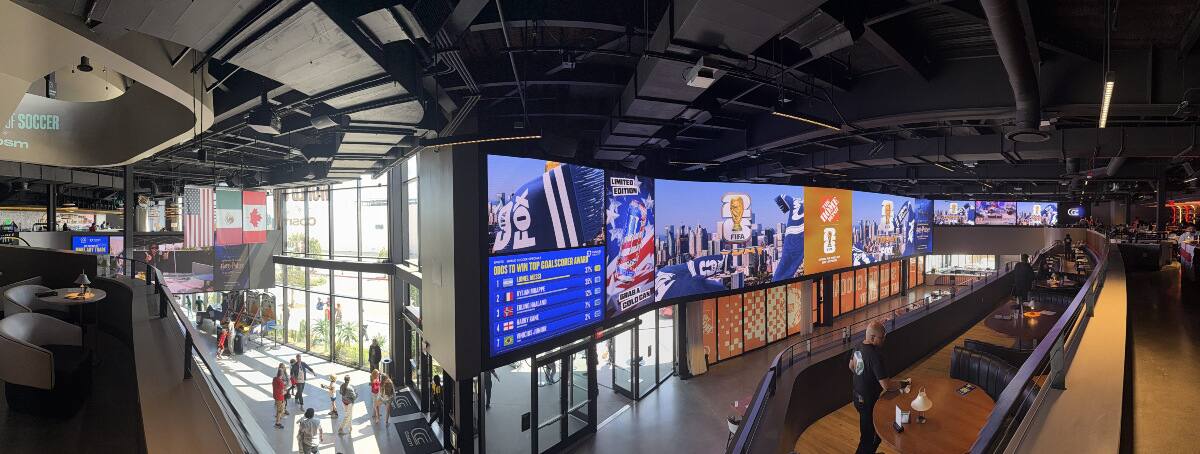
I made my way to COSM with Mark and his pals, who, despite being born in England, have raised their families in California. They slammed down pints of Guinness and Modelo, they screamed and cursed at the TVs, and they used every opportunity they could to make jokes at their friends’ expense. In what was otherwise a drab, goalless stalemate, I found myself vicariously supporting England for the first time by way of their contagious affinity for The Three Lions.
"I do love to be a couch potato, but COSM was phenomenal…what a place to watch a game," stated Mark. "I’ve been to stadiums and couches, but this place was really good. I’ve always been a football player and a drinker – football and drinking, that’s what I do. I came here in 1990 and watched nearly every World Cup with my mates, who were with me today. They’re just massive football fans, even if England always disappoints us.
"(In terms of idiosyncrasies for England fans), it’s just having a crack at others, a laugh, a drink, always knowing you’re going to be disappointed. They’ve always got the best players, but they always seem to underperform."
Zach Lowy is a seasoned freelance football journalist with more than a decade of experience writing for top-tier news outlets like ESPN, The Guardian, and The Independent. His expertise and insights have also made him a sought-after guest on radio and television, including appearances on BBC, SiriusXMFC, and other prominent sports platforms. Fluent in Spanish, Portuguese, and Italian, Lowy’s multilingualism has enabled him to bridge gaps and communicate with a number of different figures. Having previously covered the 2025 FIFA Club World Cup, Lowy is now covering the 2026 FIFA World Cup in the United States.

The Luis de la Fuente effect: Spain’s secret weapon in their 2026 World Cup victory
Rodri beats Messi to win Golden Boot award; Check out full list of 2026 World Cup award winners
Messi breaks down after World Cup defeat, shares touching hug with Lamine Yamal
FIFA World Cup jackpot: What does Spain take home after beating Argentina?
De la Fuente credits team spirit for Spain's World Cup glory