


‘You tell boys to win Nobel Prizes’: Judit Polgar on uncomfortable reason no woman has come close to her greatness
Judit Polgar, the only woman to break into the world top 10 and beat 11 world champions, sat down with Firstpost for an exclusive interview in which she dissected the bitter truth of why female players are not able to match the men in chess.

There was a time when the chess world looked at a little Hungarian girl and saw a next women's champion in a game built and celebrated by men. But Judit Polgar never wanted to be the best female player in the world. She wanted to be the best player in the world. And that attitude changed chess forever.
If you have seen the Netflix series The Queen's Gambit, you know this feeling, but Judit was living it in reality. That feeling of walking into halls filled almost entirely with men, facing legends like Garry Kasparov, Vladimir Kramnik and Viswanathan Anand while carrying the weight of expectations, criticism and disbelief on her shoulders.
 More from Chess
For those who don't know history, Judit did a very good job in those halls — becoming the only woman ever to break into the world top 10, the only female player to cross 2700+ rating, while also beating 11 world champions.
'Goals are different for girls'
She eventually retired officially in 2014 after over two decades of a trailblazing journey, but regretfully, there hasn't been any other female player who has come anywhere close to what Judit achieved.
The 49-year-old chess legend feels that the thinking process and the expectations have become the biggest and first stumbling block, which puts a ceiling that many are unable to break.
“I think the purpose and the goals are different for girls,” Judit told Firstpost in an exclusive conversation. “For them, the objective is not to be the best. There is a limitation by the parents, by the society, by the coaches that you should become a world champion, right?”
“There is a title - women's world champion and it is 200 rating points more or less in strength than in the open section. So if that’s the expectation, that’s the goal, that’s where you want to reach, right?”
For Judit, the women’s world title has unintentionally created a parallel universe, where girls are praised, protected and admired, but rarely pushed toward absolute greatness.
“So we play the same game, but somehow it seems like we are playing in a different arena…” she says.
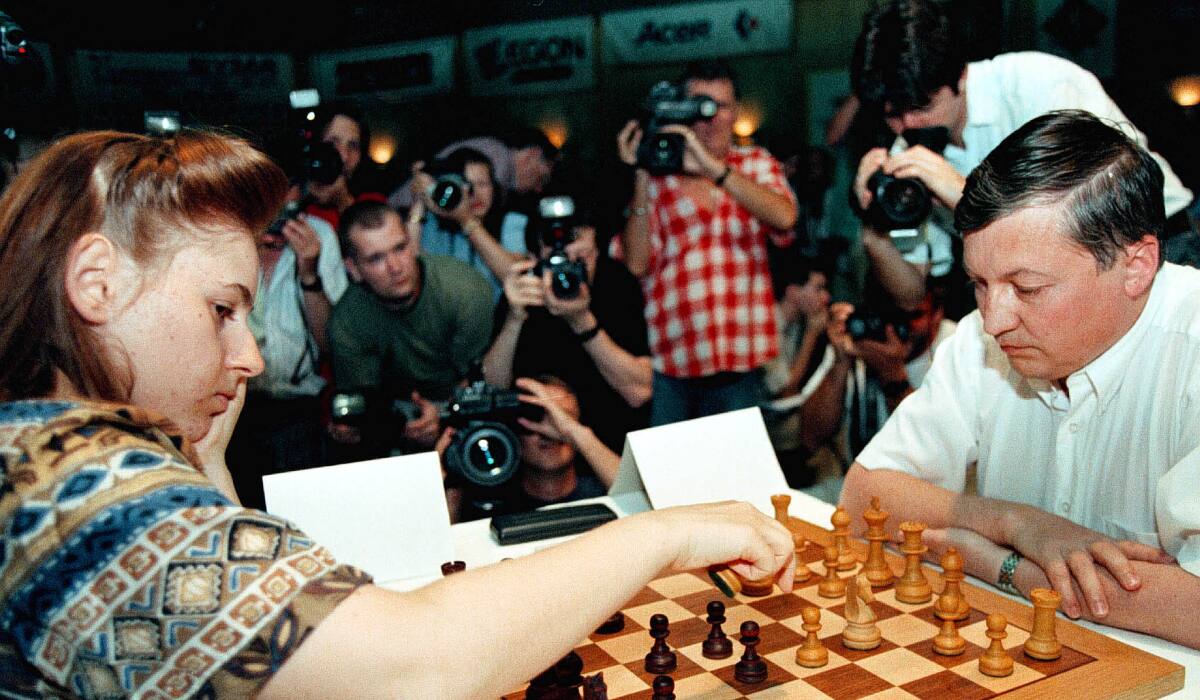
Judit, who comes from a renowned family in which her two sisters are also chess greats, used another analogy to explain how the bigger picture is often hidden from girls by setting lower targets for them.
“You don’t teach mathematics to girls in a way that it’s enough for you to know less...They want to emphasise how great they are, but still they set the limit that that’s the maximum. That’s the nicest, the most beautiful, the biggest success — to become women’s world champion.”
“And they are not realising that, it’s like you’re telling a girl that if you have a university degree, that’s already the maximum you can have. While you tell the boys that, of course, you can go for a PhD, you can be a professor, you can be a Nobel Prize winner.”
It is an argument that has quietly echoed through Indian chess, too. R Vaishali had once similarly spoken about how women's chess titles must be abolished as players are often conditioned to think differently about ambition and achievement.
Nonetheless, there are still very few invitations for women players in the top Open events, and a very few top female Grandmasters are willing to take part in them. Judit did that all her career.
That journey, and the emotional pressure around it, is revisited in the Netflix documentary Queen of Chess, which was released globally earlier this year. The film revisits her rise from a child prodigy in Hungary to one of the most influential figures in modern chess.
'Learn from failures and have perseverance'
Asked what young people should take away from her story, she surprisingly speaks not about genius, victories or records, but mistakes.
“Maybe the first thing the youngsters can take away from my story… is that no matter how many mistakes we make, we actually do have a chance to overcome.”
“And not only have a chance, but it’s part of the journey.”
For someone raised under extraordinary expectations by her father, Laszlo Polgar, who famously said geniuses are made, not born, Judit’s take on failure feels deeply relatable.
“We have to make sure that we learn from failures and we have the perseverance to move on and go on and try it again and again and again and again until it works for us.”
Now retired from professional chess, Judit’s life has moved towards commentary and education. She strongly believes chess should become a tool for classrooms rather than remain confined to elite competition.
“I’m working a lot to promote and integrate chess in education because I believe in that,” she says.
“I think in the modern age, this is something that can be very useful… not only logical thinking, analytical skills, but also critical thinking, which I think is the most important these days.”
In many ways, that feels like the perfect final move for Judit Polgar. The woman who spent her entire career breaking invisible ceilings is now trying to ensure future generations do not grow up seeing them in the first place.
Watching sports and writing about it are my favourite things in life and I try to bring you the best from the sporting world at Firstpost.
Tags

V S Rathanvel becomes India’s 99th grandmaster, fulfils long-awaited dream after crossing 2500 Elo rating
Aswath S becomes India's 98th Grandmaster, 17-year-old secures third GM norm with win over FM Vaidyanathan
R Praggnanandhaa finishes joint third; Gukesh sixth at Zagreb Grand Chess Tour; Alireza prevails
R Praggnanandhaa falls back, Firouzja rockets ahead in blitz at Zagreb Grand Chess Tour
Gukesh explains Super Rapid & Blitz Croatia participation even as classical world title defence looms: 'I thought...'