


Explained: How China’s pork obsession is hurting global badminton
China is a badminton superpower, but its obsession with pork might just be crippling the sport it once dominated as it is leading to an unexpected rise in the prices of shuttlecocks.

There are very few sporting disciplines that China has failed to master. Cricket is one. There are many that they have outclassed most other countries at. Badminton is one. Lin Dan, Chen Long dominated the men's singles. Zhang Ning the women. Cai Yun and Fu Haifeng the doubles. They’ve had a rich tradition to uphold.
But it seems like their pork obsession could strike the sport itself. How? A classic case of supply and demand. Let’s break this down.
China loves its meat. The country consumes 27% of the world’s meat production. In 2021, they consumed almost 100 million tonnes of meat. And the most popular meat is pork. China loves its pork, which is why it accounts for 60% of meat consumption.
 More from Badminton News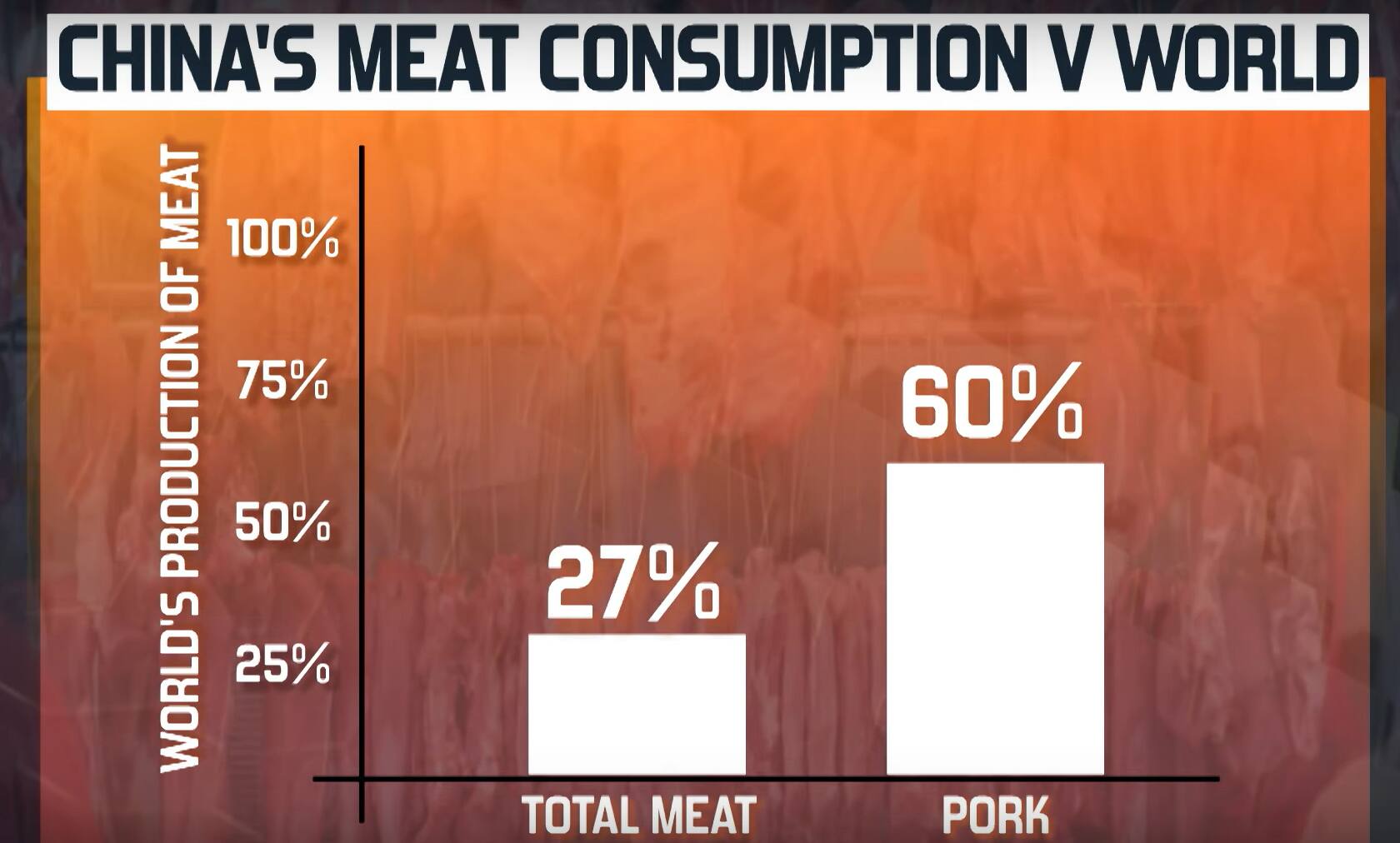
Significantly higher consumption rate compared to other meats. And China’s population also means it’s the largest consumer of pork in the world.
China's love for pork hurting sport of badminton
What’s the connection, you ask? It’s a classic case of supply and demand. The declining pork prices mean there’s more demand. Which puts other poultry out in the cold, like duck and goose.
So fewer farmers in China are willing to raise ducks and geese.
And why are these two crucial for badminton? The feathers that make up the shuttle cork. One cork needs 16 feathers from at least 4 geese. And any top-level tournament changes shuttlecocks every 1–2 minutes. So net outcome is? An increase in the cost.
France concerned over rising shuttlecock prices
One country that was hit by this in February is voicing its concerns. France has witnessed a massive boom in badminton. The Paris Olympics last year were a big factor, too. But the rising prices of shuttlecocks are proving to be a roadblock here.
"The clubs talk to me about it every day. We are taking teh full brunt of it, but we don't have the control over the prices," Frank Laurent, the President of Badminton Association, said.
Over the last 10 years, the cost hike has been nearly 100%.
But why is China alone being held responsible? The answer is simple — according to the UN Food and Agriculture Organisation, 90% of the world’s duck and goose production is concentrated in Asia, primarily China. So they hold the key to this problem.
Climate change has also played its part here. The heat wave in South Korea last year had a devastating impact on the poultry farms. The irony here? The interest in badminton in China got a fresh surge after Paris last year. So, unless China tries to change its diet plan or attempts to find another solution, this problem is only bound to multiply significantly.
Tags

'It's not over yet': PV Sindhu makes bold declaration following historic Japan Open title victory
PV Sindhu beats three-time winner Yamaguchi in straight games, wins maiden Japan Open title
Japan Open: PV Sindhu progresses to final after Chen Yufei forced to retire in semifinal
BAI president responds to unprecedented monkey mayhem at India Open 2026: 'Next time they come, give bananas'
Kidambi Srikanth displays admirable sportsmanship, refuses a point offered to him at US Open