


Preparing for silent demographic warfare: Why Hinduism needs to regain its missionary traits
India’s bordering states are under extreme stress and duress, with Hindu population depleting fast. This can stop only if there is a national will to understand the nature of this silent demographic warfare, and by turning Hinduism into a missionary religion — but with Indic characteristics

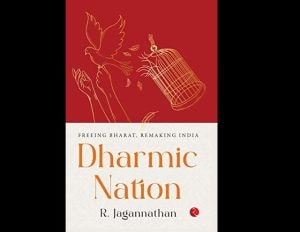
Screenshot from Amazon.in[/caption]Hinduism, at its civilisational and cultural apogee, was a missionary religion par excellence — but with its own Indic characteristics. This explains why in ancient times Sanskrit culture flourished not just within India’s traditional frontiers but outside too — from Central and West Asia to East and Southeast Asia. Lokesh Chandra, a prominent Indologist, believes that the famous Silk Route, which connected China with the Mediterranean Sea, was hardly used to carry silk. For him, it was actually a ‘Sutra Route’. “The Chinese used silk only as part of political diplomacy; to get horses, they supplied bales of silk,” he would say, adding how monks and pilgrims journeyed on it carrying Sanskrit manuscripts and disseminating Hindu-Buddhist knowledge.Centuries before the Christian Era, Central and West Asia were largely Sanskrit cultures. And it continued to flourish till the advent of Islam. So much that Kumarajiva studied Buddhism in Kashmir, but for Vedas he preferred to go to Kashgar! This also explains why most of the Central Asian invaders like Shakas, Kushanas and Hunas were already Hindus/Buddhists even before they reached India. Manu called them degraded Kshatriyas. A degraded Kshatriya was eligible for reconversion to the Hindu fold. These are clear signs of a missionary religion, bereft of associated fundamentalism of Abrahamic religions. The most notable example of Hinduism’s missionary nature was showcased during Adi Shankara’s time — a saga which is all too well known to be repeated again.One finds a similar missionary tendency in medieval and modern times when Hinduism faced an unprecedented Islamic and European (covertly Christian) challenge. Whether it was the Chaitanya movement or the reconversion of Harihara and Bukka by Guru Vidyaranya that led to the foundation of the mighty Vijayanagara Empire, they remind of the missionary nature of Hinduism. In fact, there is evidence of missionary activities of Hinduism during the reign of Akbar, when ex-Hindus were permitted to reconvert to their old faith. In the reign of Jahangir, when he discovered in his 15th year that the “Hindus at Rajauri converted and married Muslim girls of the locality, he had orders that this practice be put a stop to and the guilty be punished. Likewise, during Shah Jehan’s time, when he returned to Kashmir in the 6th year of his reign, he “discovered that Hindus of Bhadauri and Bhimsar were forcibly marrying Muslim girls and converting them to the Hindu faith… Four thousand such conversions are said to have been discovered. Many cases were also found in Gujarat and in parts of Punjab.” Shah Jehan established a special department to deal with conversions.In this backdrop, the statement of Pakistani historian SM Ikram (1908-73) is pertinent. He writes in Muslim Civilisation in India (1965): “Hinduism is not generally thought of as a missionary religion, and it is often assumed that during Muslim rule conversions were only from Hinduism to Islam. This is, however, not true. Hinduism by now was very much on the offensive and was absorbing a number of Muslims.”This phenomenon could be seen in modern times too, especially in the case of Dayananda Saraswati’s Arya Samaj and Swami Vivekananda’s Ramakrishna Mission. No wonder philosopher-president S Radhakrishan believed that at one time Hinduism was a missionary religion, though its sense of mission was different from that of some other religions.As for Jagannathan’s suggestion — to not rely on “bans on religious conversions” as the answer to Hinduism’s steady demographic decline in India — it, at a cursory glance, seems to be a reasonable idea. For, such bans have delivered pretty little in India and abroad (he has given China’s example). But then there’s a problem: One, Indian laws don’t stop conversion; it prohibits wrongful conversion. Now, whether it’s successful or not, unlawful and forced conversions cannot be allowed in a country, more so in a democracy. It’s primarily the failure of the state machinery and the apathy of Hindu populace at large. But then to get rid of the law just because it has failed would be similar to throwing away a chopping machine after it accidentally cut your fingers! If anything, India needs tougher laws to stop unlawful conversions — something Indian authorities have largely avoided thanks to their skewed sense of secularism and minority rights.Also, the time is ripe to have a relook at Article 30(1) of the Constitution, which is discriminatory in nature, giving preferential treatment to minorities in an otherwise secular country. The article states: “All minorities, whether based on religion or language, shall have the right to establish and administer educational institutions of their choice”.One would also have expected Jagannathan to explore the reasons behind Hinduism losing its élan, post-Independence. How did the religion which refused to give up to the incessant Islamic and European assaults, failed to gather its steam after Independence? Ideally, it would have been civilisational India’s moment in the sun, after centuries of struggle and hardships. But things took a turn for the worse for Hinduism, as India adopted a Western credo called secularism and mixed it with heady Nehruism to unleash havoc on the inherently plural, democratic ecosystem. Hinduism, which even the British, especially in the initial era, saw as a progressive religion, soon found itself associated with everything dark and dangerous — communalism, feudalism, patriarchy, hyper-nationalism, et al.While the minority institutions received special treatment under Art 30(1), the secular state in independent India decided to run Hindu temples and other religious institutions. To add insult to injury, as Supreme Court lawyer and author J Sai Deepak writes in his book, India That Is Bharat: Coloniality, Civilisation, Constitution, the Indian state has enacted “at least 15 Hindu-specific legislations” that enable state control and facilitate state entrenchment in Hindu institutions. This state occupation of Hindu institutions, including temples, which continues till date, has made the latter bankrupt and their liberation holds the key to Hinduism regaining its missionary nature.If one wants to understand the threats posing Hinduism, and India by extension, one needs to look at the fringe of both the nation state as well as the religion. Today, India’s bordering states are under extreme stress and duress, with Hindu population depleting fast every year. The phenomenon is not just confined to India-Pakistan or India-Bangladesh borders, but also in otherwise serene coastal frontiers of Tamil Nadu, Kerala, Andhra Pradesh and Karnataka. More and more non-Hindu pockets are being created in these regions. And as history suggests, the weakening of Hindu hold over these areas would sooner than later bolster anti-India forces.This can stop only if there is a national will to understand the nature of this silent demographic warfare. And for turning the tide in favour of Bharat, Hinduism needs to regain its missionary traits — but with inherent Indic characteristics. Missionary Hinduism cannot be a photocopy of Abrahamic religions. That, in itself, would be a tragedy of unprecedented proportions.The author is Opinion Editor, Firstpost and News18. He tweets from @Utpal_Kumar1. Views expressed are personal.Read all the Latest News, Trending News, Cricket News, Bollywood News,India News and Entertainment News here. Follow us on Facebook, Twitter and Instagram.
The author is Opinion Editor, Firstpost and News18

When Manila and Tokyo draw a line, Beijing draws a red line
Bangladesh gets a new envoy to reset its India ties
Escalation trap to an exit strategy: How can the Iran war end?
India must seize its demographic dividend before it fades
Bangladesh’s instability has sharpened India’s ‘Chicken Neck’ challenge