


Book review | 'Dakini: The Himalayan Quartet' decodes Nepal’s mystical journey
The special package experiments with semi-historical and fantasy writing. It comes out as a major work concerning Nepal’s awe-inspiring past, unique royal tradition, mysteries, and very diverse socio-cultural fabrics dominated by the Hindu way of life

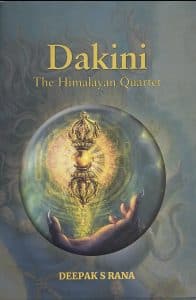
Dakini: The Himalayan Quartet by Deepak S Rana; Vajra Publications (Kathmandu, Nepal), 865pp (Paperback)[/caption]While the book has an interface of facts and fiction, the author gives it a new name ‘faction’ as he thinks that the readers of his book will enter a realm full of allusions and references to scriptures (especially Tibetan), folklore, and mythologies in the book. Indeed the fantasy and fiction spice up the reading. Dakini, the prime mover of the entire plot, is a strong woman and we get to see the true manifestation of her powers in this book.“Dakini: The Himalayan Quartet” sets out the narrative hitherto unknown for decoding the historically important characters and events that shaped Nepal as a country we know today, a republic in transition and with a past of strong monarchy. In the first novel of the collection, ‘The Bending Reed’, Nepal’s battle for throne gets a reflection in following words:“Continuity always took precedence above all else. Was this not what they were fighting for? For in the Great Game was blood not thicker than water, whether it flowed or not?”A descendant of erstwhile ruling Rana family in Nepal, his ruminations seems influenced through the belief system inherited with family legacy than mere the figments. He writes in the same first novel, ‘The Bending Reed’ indirectly giving an important reference about the legacy of a powerful Rana ruler who scripted the decisive chapters in Nepal’s history during their rule in Nepal (1846-1951):“I, Shumsher Jung Bahadur, son of Buddhi Narsing Kuwar, of humble origin, have risen from a peasant to that of MAHARAJA, neither by the will of God, nor from the good graces of any human being.The position has been achieved by me, by my own sweat, by my toil and by my KARMA.A lot of blood has been spilled in order to achieve what we have achieved. Never relax your vigilance, whether in war or peace. Be twice as vigilant in peace. For peace brings with it a softening of the senses, like the calm before the storm.Remember always that you carry the mantle and burden of a LEGACY that has been written in blood, like all legacies. When you laugh everyone will follow, but you will cry alone. Thus it is and thus it will always be.”Deepak S Rana’s painstaking efforts in bringing back to the collective imagination the complex and contested history of Nepal and its neighbours should be appreciated, particularly for exemplifying the deep conspiracies of colonial powers like the British and Chinese. In the second novel, ‘The Silent Flute’, he throws light on China’s official foray into Tibetan matters (colonial hangover) with absolute clarity:“General Zhang was the Chinese administrator or amban in Lhasa. A short thin man, he had a half-moon shaped scar on his right cheek, which made him look as cruel and sinister as he was rumoured to be. He was completely ruthless and known to be immaculate in completing his duties. This was why the Chinese government had dispatched him there in the first place. He was, to them, a man that could be trusted completely. The Chinese had established a small mission in Lhasa in 1937. After the death of the 13th Dalai Lama, China had sent a team to Lhasa to offer their condolences. Like the British, they never left.”As story unfolds in Nepal, India and Tibet in early 1951, ‘The Silent Flute’ covers the close but perplexing India-Nepal relations:“The civil war in Nepal was over. A new democratic government, fully backed by the Government of India, was in place, with a Rana retained as prime minister. Many that had joined the civil war to overthrow the autocratic Rana rule were unable to comprehend how a Rana was still the prime minister after democracy had been established? History would later show that he would be the last Rana prime minister.”With beautiful prose, the book gives a ringside view of the mystical past of Nepal and its neighbourhood at large. Thus it gets a vast canvas while dealing with many known, lesser-known and unknown facts with a cover of fiction. One of the most remarkable fiction writers and essayists from Nepal, Greta Rana M.B.E said it eloquently in her endorsement of the book:“I always look forward in anticipation to Deepak S Rana’s novels. They bring back to life the mystery of the unknown world, and induce that kind of fear that is added excitement to the humdrum of our daily lives.”Sent to Sherwood College (Nainital, India) at a hill station in the Kumaon hills, at the age of five, the author spent the next twelve years studying there. Walking in the footsteps of Jim Corbett, that great legend who wrote the enormously popular book, ‘The Maneaters of Kumaon’ and who also happened to have studied in the very same school that was previously named ‘Dicocesan Boys School’ during the British Raj. A professional hunter in real life, the author Deepak S Rana’s hunts for historically crucial stories are relentless—and hence, it is hardly surprising, as he has penned a 865-pages long book with tractions of four novels.The wonder that is Nepal has a greater chance to be positioned on the global literary map if its writers continue to research and write so diligently as Deepak S Rana did with a work that took over two decades in completion. A supremely rich collection of historical novels, “Dakini: The Himalayan Quartet” should be widely used for reference by scholars and readers alike. Strongly recommended.The author is a policy professional, columnist and writer with a special focus on South Asia. Views expressed in the above piece are personal and solely that of the author. They do not necessarily reflect Firstpost’s views. Read all the Latest News, Trending News, Cricket News, Bollywood News,India News and Entertainment News here. Follow us on Facebook, Twitter and Instagram.

When Manila and Tokyo draw a line, Beijing draws a red line
Bangladesh gets a new envoy to reset its India ties
Escalation trap to an exit strategy: How can the Iran war end?
India must seize its demographic dividend before it fades
Bangladesh’s instability has sharpened India’s ‘Chicken Neck’ challenge