


Weekly Defence Dispatch: India's biggest Southeast Asia defence deal, Agnipath overhaul, China's new submarine missile and more
Prime Minister Narendra Modi's Indonesia visit delivers India's biggest Southeast Asia defence export breakthrough with BrahMos and Astra deals as the Agnipath scheme heads for an overhaul and China's new submarine missile shifts the Indo-Pacific balance. Firstpost tracks the week's top defence developments.

Modi's Indonesia Visit: BrahMos, Astra Deals Mark India's Biggest Southeast Asian Defence Export Push
Prime Minister Narendra Modi's visit to Jakarta has produced India's biggest defence export win in Southeast Asia so far. Indonesia is now the third country, after the Philippines and Vietnam, to operate the BrahMos cruise missile. This time it comes paired with Astra, India's beyond-visual-range air-to-air missile, an entirely different weapons category being sold alongside it.
What's actually being sold: BrahMos is a known quantity by now. Built jointly with Russia, its reputation only grew stronger after India used it operationally during Operation Sindoor last year. A missile that's been fired in combat sells itself in a way no defence expo ever could. Astra is the newer piece of this story. It's a DRDO-built missile with long strike range and speeds well past Mach 4, and Bharat Dynamics will now integrate it onto Indonesia's Su-30 fighter fleet alongside a local Indonesian firm. That last part matters more than it sounds, integration work isn't a one-time sale, it locks India into servicing and upgrading Jakarta's frontline fighter squadron for years to come.
 More from India
Why Jakarta is actually buying this: Indonesia is hedging. Its military has traditionally bought from Russia, the US and Europe all at once, and that mix comes with real risk, sanctions exposure, spare parts getting political, being forced to pick a side. Buying from India lets Jakarta diversify without stepping directly into the middle of a US-China standoff it has no interest in joining. For an archipelagic country sitting right along some of the world's busiest and most contested shipping lanes, staying unaligned isn't idealism, it's strategy.
The bigger pattern: Since Operation Sindoor, every BrahMos deal, the Philippines, Vietnam, now Indonesia, has moved faster and gone bigger than the one before it. Several more countries, including the UAE, are reportedly in talks. This is what India's defence self-reliance push was always supposed to lead to eventually, not just building weapons for its own military, but actually taking market share in a region Russia and Western suppliers have dominated for decades.
The part that matters more than the missiles: Buried in this visit is a quieter decision to revive joint development of Sabang Port in Indonesia. Sabang sits right at the western mouth of the Strait of Malacca, close enough to India's own upcoming transhipment hub at Great Nicobar that the two sit on opposite sides of the same chokepoint. This project was first floated back in 2018 and went nowhere. It's back on the table now.
Malacca isn't just any shipping lane, close to 80 per cent of China's energy imports pass through it, a dependency Chinese strategists have openly worried about for years, they even have a name for it, the "Malacca dilemma." An Indian-linked port at Sabang, sitting alongside Great Nicobar, gives India a presence on both sides of that chokepoint's northern approach. Chinese analysts have already noticed, and they're not reading it as a coincidence.
Great Nicobar is still years from being fully operational. Sabang isn't meant to compete with it directly, it's positioned more as a logistics and marine-services hub. But for the Indian Navy, that's still useful, a forward base for anti-piracy patrols, disaster relief operations, and simply keeping an eye on Chinese naval movement into the eastern Indian Ocean. And unlike India's other stalled port ambitions, Chabahar in Iran, Mongla in Bangladesh, this one has an advantage those didn't, Indonesia actually wants it built too. That mutual interest is what gives it a real chance of surviving this time.
Why it matters: A long list of agreements came out of this visit, but two will outlast the joint statement. One is India establishing itself as a real defence exporter in a region Russia and the West have owned for decades. The other is a maritime foothold that quietly narrows China's options at one of the most sensitive chokepoints on the map. Modi called it a "golden new chapter." The missile deals are the part everyone will read about. Sabang, if it actually gets built this time, is the part that could genuinely change how this region looks a decade from now.
India Must Learn from Russia & Nato: Good Drones Need Faster Bureaucracies
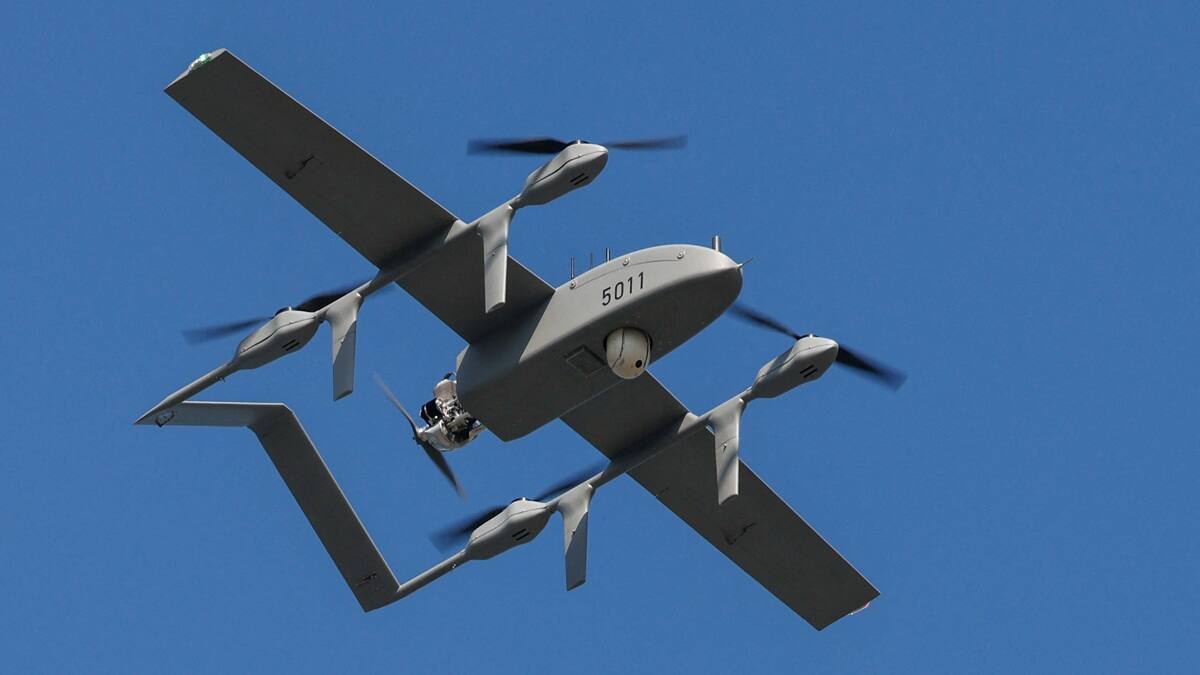
The advancement of drone warfare and lessons from the Russia-Ukraine and West Asia conflicts show how countries are quickly ramping up their UAV game. Three unrelated stories from this week point to the exact same conclusion that having the organisational agility to build, deploy, and adapt to new drone tactics at scale is crucial for all militaries.
Russia is now scaling a dedicated brigade, the 50th "Varyag" Unmanned Systems Brigade, to become a mainstay of its forces. It will report straight to the top of the military instead of a regional command. Russia had in 2024, it set up a unit called Rubicon to hunt down Ukrainian drone crews and jam their signals. It worked so well that Russian forces have also started flying strike drones that fly themselves along a set path, no radio signal needed, which makes them much harder to jam or shoot down. None of this is new technology. What changed is speed: Russia took something that worked on one battlefield and rolled it out across its entire army in months, not years. That's usually the hardest thing for a big, slow-moving military to do.
Meanwhile, Nato and the US are chasing the same problem from the other direction, they're behind, and trying to catch up. Nato countries have put together over $40 billion over five years just to detect and shoot down drones, not build them. They've also set up a shared marketplace, so any member country can buy tested counter-drone equipment quickly instead of running its own slow, separate tender process, plus a plan to train five times as many drone operators by 2027. Their reasoning: cheap drones, some costing just a few thousand dollars, have become a bigger daily problem than expensive missiles, and old-style air defence built for jet fighters and cruise missiles is too slow and too costly to use against them.
In the US, the Pentagon has gone even further. It has put one official in charge of nearly all American drone programmes across air, sea and land, ending years where the Army, Navy and Air Force each ran their own separate, disconnected drone efforts. The reason given: Russia is set to build over 7 million small drones this year, China controls most of the world's drone parts, and the US has simply fallen behind on numbers.
What this means for India: Take away the details, and all three stories are saying the same thing: the problem isn't the technology, it's the organisation. India already has plenty of drone experience, from Pakistan's incursions in the west to China's activity near the LAC. But experience only helps if it gets turned into standard practice quickly. And that's exactly where things get stuck, because India's drone efforts are split across the Army, Navy, Air Force, DRDO and private industry, each moving at its own speed and answering to its own chain of command.
India's counter-drone technology is already being built by DRDO and private firms, so that's not really the weak point. The weak point is how fast India can buy and roll out that technology once it exists. A 32-country alliance just found a way to buy counter-drone gear fast by pooling all its members' demand into one marketplace. The world's richest military just decided that having four separate drone offices was slower than having one office in charge, even though each of those four offices had more money and expertise than most countries' entire militaries. Russia, fighting under sanctions with far fewer resources than India, took one good drone unit and turned it into a nationwide model in under two years.
Why it matters: None of these are countries India should copy exactly. Russia's expansion has come with its own problems around quality and training. Nato's and the Pentagon's fixes are only a few weeks old and still unproven. But all three are moving in the same direction, and that's worth noticing. The real question for India isn't whether it has good drones or good lessons from two active fronts, it clearly has both. The question is whether there's a system in place to turn a frontline fix into force-wide practice before the next crisis hits, instead of it staying stuck inside one service's silo.
01
THREAT BOARD
China's Submarine Test That Matters More Than It Sounds
China fired a submarine-launched ballistic missile into the South Pacific on July 6. It landed inside a nuclear-free zone that China itself signed up to. Australia, New Zealand and Japan all protested.
Here's why it matters. Until now, Chinese submarines had to sail far out into the open Pacific to get America in range, which meant US and allied forces could track and hunt them the whole way. This missile changes that. Chinese submarines can now stay close to home, protected by China's own navy and radar, and still hit distant targets. That's a huge deal. It means China's nuclear submarines are much harder to find and destroy than before.
What this means for India: The missile wasn't aimed at India. But here's the catch: once China's submarines don't need heavy escort to stay safe near home, its other attack submarines are freed up to go elsewhere. The Indian Ocean is the likely destination. China has also been sending "research" ships around the Indian Ocean for years, quietly mapping the seabed, which helps its submarines hide and helps them find India's. India's own underwater missile programme is still catching up. The answer isn't building more missiles to match China one for one. It's building better submarine-hunting capability and using India's geographic advantage, since most Chinese ships still have to pass through narrow chokepoints India can watch closely.
Xi Is Rebuilding His Military, One General at a Time
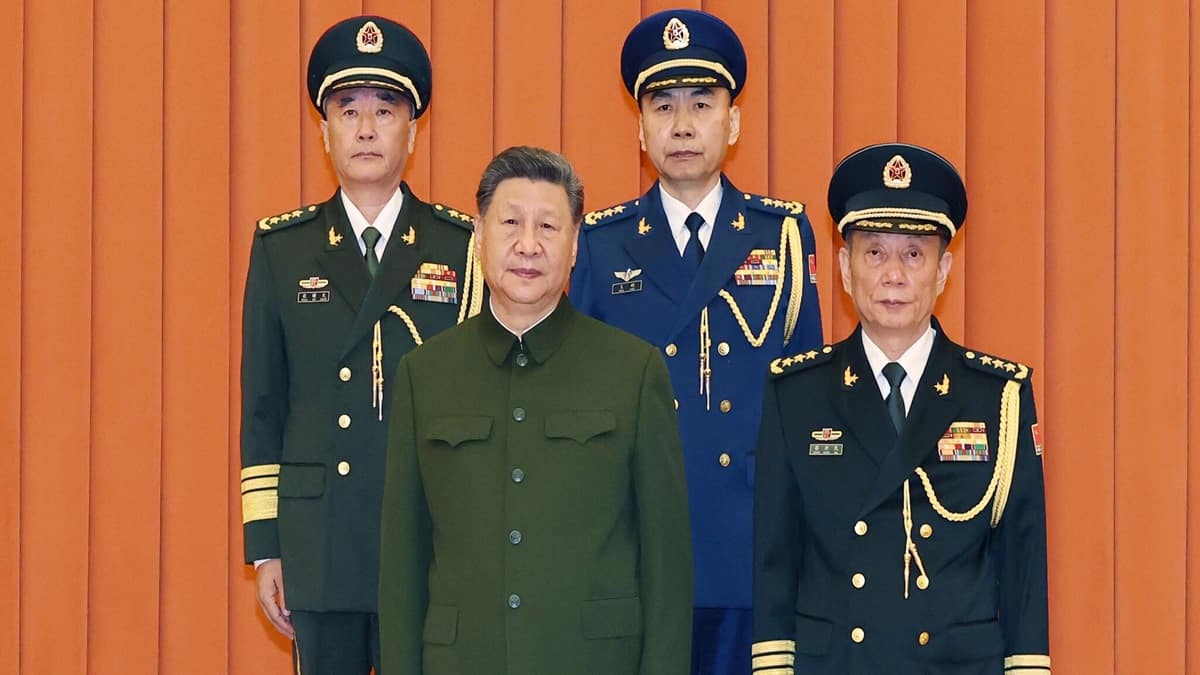
On July 3, Xi Jinping promoted two officers to full general, the PLA's highest active rank. Before this, the PLA, a force of over 2 million, had only four serving full generals. Years of purges had gutted the top ranks, and Xi is now rebuilding them on his own terms.
What it means for India: Officers who've watched two vice chairmen and a defence minister get purged in three years learn one lesson fast: don't act without cover from the top. That should lower the odds of a local commander improvising at the LAC the way frontline units did before Galwan in 2020.
It cuts the other way too. When no one wants to make a call without Beijing's sign-off, standoffs take longer to de-escalate, not less. India's teams at the Special Representatives talks and the Western Theatre Command hotline should read future stalemates through that lens: not necessarily stonewalling, but a chain of command built to reward caution in both directions.
02
INDIA DEFENCE UPDATES
Indian Navy to Commission Sixth Stealth Frigate INS Mahendragiri
INS Mahendragiri will be commissioned at Visakhapatnam today, on July 11. It's the sixth Project 17A frigate built at Mazagon Dock. Over 75 percent of the ship was built in India, and the design itself came from the Navy's own Warship Design Bureau. It carries weapons for air, surface and submarine threats, along with electronic warfare systems and a combat management setup that connects everything together. Its engines let it run fast when needed but still cover long distances efficiently.
Why it matters: Getting six frigates like this into service in about a year gives the Navy more ships to actually patrol the Indian Ocean with. China's navy has been growing steadily, so that extra presence matters. But the bigger story is the 75 percent figure. It shows India can now build a warship this complicated mostly on its own, instead of depending on foreign yards for the hard parts.
Indian Army Floats RFP for 450 Carl Gustaf Mk-IV Rocket Launchers
The Army has put out a tender for 450 Carl Gustaf Mark-IV launchers, to be manufactured in India along with spares and accessories. The new launcher has to weigh under 7 kg, last 1,500 rounds or 15 years, and hit targets 800 metres out. It also has to work in temperatures from -20°C to +50°C, so it can be used in Siachen just as easily as in the Rajasthan desert. The winning vendor gets 12 months to deliver, and countries sharing a land border with India can't bid, which keeps China out.
Why it matters: infantry units have carried the Mark-III version of this launcher for years. It's their main tool for taking out tanks and bunkers. A lighter launcher that lasts longer sounds like a small change, but for a soldier walking uphill with this on his back, weight makes a real difference. Small upgrades like this add up over time, even if they never make front-page news.
Agnipath Scheme Review: Armed Forces Push for Higher Agniveer Retentio
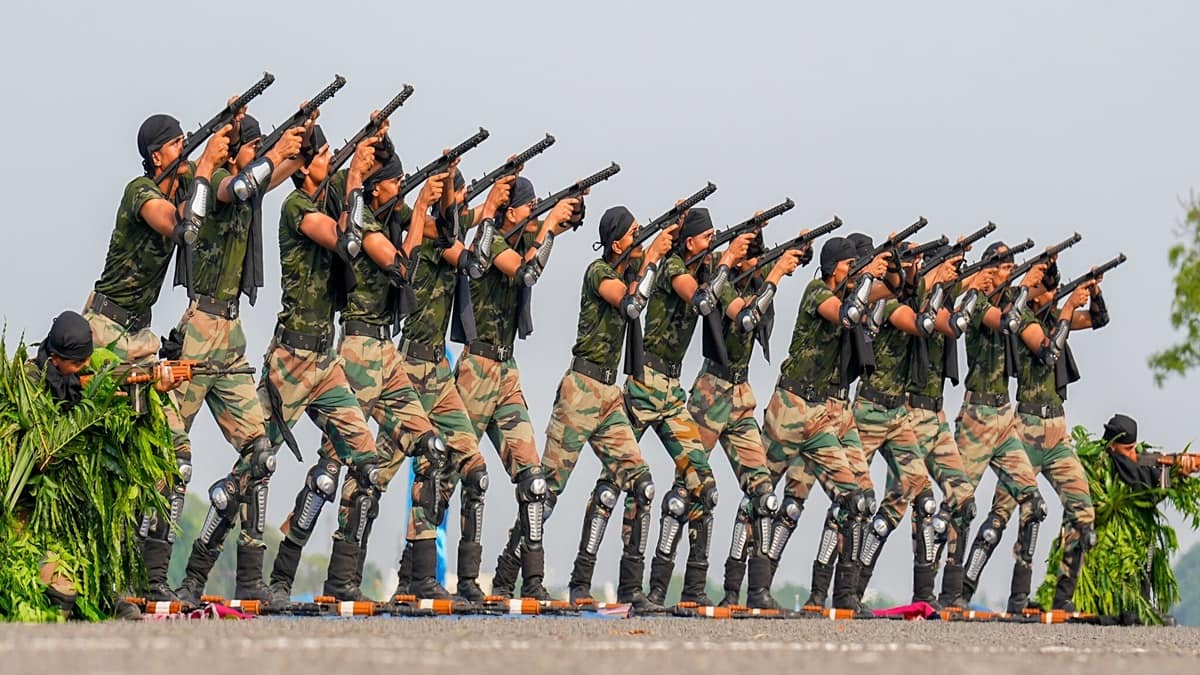
The first batch of Agniveers completes its four-year tenure later this year, and all three services want the exit door narrower than promised. The Army, Navy and Air Force have submitted proposals to the Department of Military Affairs seeking a sharp jump above the current 25 per cent retention cap as reported by Firstpost, the first real test of whether Agnipath survives contact with its own outcomes.
The numbers: The Navy is pushing hardest, seeking to retain up to 75 per cent of its Agniveers. The Army and Air Force are asking for around 50 per cent. Both would roughly double or triple the retention ceiling set when the scheme launched in 2022. A similar proposal was floated earlier and sent back for re-evaluation, so this isn't the first attempt, and it may not clear easily this time either.
Why now: The pitch rests on four years of operational data the services didn't have at launch. Agniveers have been present through Operation Sindoor and a stretch of high-tempo border deployment, and sources cite that experience as the trigger for the retention push. The underlying argument is about training economics as much as loyalty: the platforms India has inducted since Sindoor, more complex radars, precision-guided systems, integrated air defence, take longer to master than a four-year cycle allows for. Train someone for two years on a system and release them at year four, and the institutional knowledge walks out the door with them.
The fallback option: If the DMA doesn't move the overall cap, the services have a workaround ready: skew retention by unit type rather than raise it across the board. The Army's newly raised Bhairav battalions, light commando-style units built for hybrid warfare, are cited as the model, formations that could carry a much higher proportion of retained, experienced Agniveers while regular infantry continues to run closer to the original 75-25 release-retain split. That keeps the average retention number intact for the government's messaging while giving specialised units the depth they're asking for.
Why it matters: Agnipath was built on a specific trade: younger units, a lighter pension bill, a national talent pipeline into the civilian economy. Retention above 25 percent chips at all three, more experienced but older personnel, a bigger long-term salary and pension liability, and a smaller annual release cohort feeding the reservation quotas set up for the Coast Guard and defence PSUs. None of that makes the case for higher retention wrong. It just means the political framing of Agnipath as a lean, youth-first reform will need updating if the numbers land anywhere near what the Navy is asking for. The government has stayed publicly silent on both proposals. What it decides in the coming months will set the template not just for this batch, but for how Agnipath is recruited, trained and sold from here on.
03
PROCUREMENT AND INDUSTRY TRACKER
DRDO Advances AESA Radar and AMCA Cooling Systems
Bengaluru's radar establishment under DRDO has a new AESA radar family in the works, and one variant stands out: a Low Band Active Antenna Array built specifically to catch things that don't want to be caught, low-observable aircraft, ships hugging the horizon, targets at long range. This isn't a standalone project either. It's meant to feed straight into Uttam, the radar slated for the Tejas Mk2.
On a separate track, DRDO has handed over two thermal management systems to BHEL for full-scale production, a pre-cooler heat exchanger and a condenser-heat exchanger. Both were originally built for the Tejas Mk1, but they're being scaled up to deal with a much bigger problem: the AMCA runs hotter. Cramming AESA radar, electronic warfare gear and internal weapons bays into one airframe generates heat loads the older cooling systems were never designed for.
Why it matters: Nobody gets excited about a radar chip or a heat exchanger, but this is where fighter jets actually win or lose. A radar that overheats loses range. A jet that runs too hot glows brighter on infrared sensors, which defeats the entire point of stealth. So this is really about survivability, not electronics. And handing the cooling tech to BHEL instead of leaving it in a DRDO lab is the bigger tell here, it means India is trying to build actual manufacturing muscle for AMCA parts, not just prototypes that work once on a test bench.
India Develops Containerised Sonar System to Turn Any Warship Into a Submarine Hunter
The Navy has issued a Request for Information for a new sonar concept called CTLS, short for Containerised Theatre Level Sonar, and the idea behind it is simple. Instead of building a submarine-hunting sensor into a warship's hull, you pack it into a standard container. Any ship with a certified A-frame and winch can carry it, frigates, OPVs, even support vessels that were never designed for anti-submarine work. Several units can link up and triangulate a submarine's position across a wide area, switching between mono, bi and multi-static detection modes depending on the situation.
Why it matters: New warships take years to build, sometimes a decade from keel-laying to commissioning. CTLS skips that timeline though the system is still at the RFI stage, well short of a contract . The Navy can bolt sonar capability onto ships already in the water, which matters a lot given how active Chinese submarines have become in the Indian Ocean lately.
Adani Defence Breaks Ground on South Asia's Largest Private Missile Manufacturing Complex
Adani Defence & Aerospace has begun construction on a ₹2,500 crore missile manufacturing complex in Shivpuri, Madhya Pradesh. What makes this one different from Adani's other defence facilities is that it covers the full missile value chain, propellant production through to finished, mission-ready systems, all at one site. The company says it'll build medium and long-range missiles here, create around 5,000 jobs, and pull in more than 50 MSMEs as suppliers. It joins Adani's existing Gwalior plant, which already makes small arms for the forces.
You can read more about it here.
Why it matters: missile production in India has mostly stayed inside DRDO and the public sector. A private company setting up end-to-end missile manufacturing at this scale hasn't really happened before. It widens the base of who can actually build this stuff, which matters if India wants supply chains that don't buckle under a single point of failure.
Virupaksha AESA Radar Integration Work Begins on Su-30MKI Radome
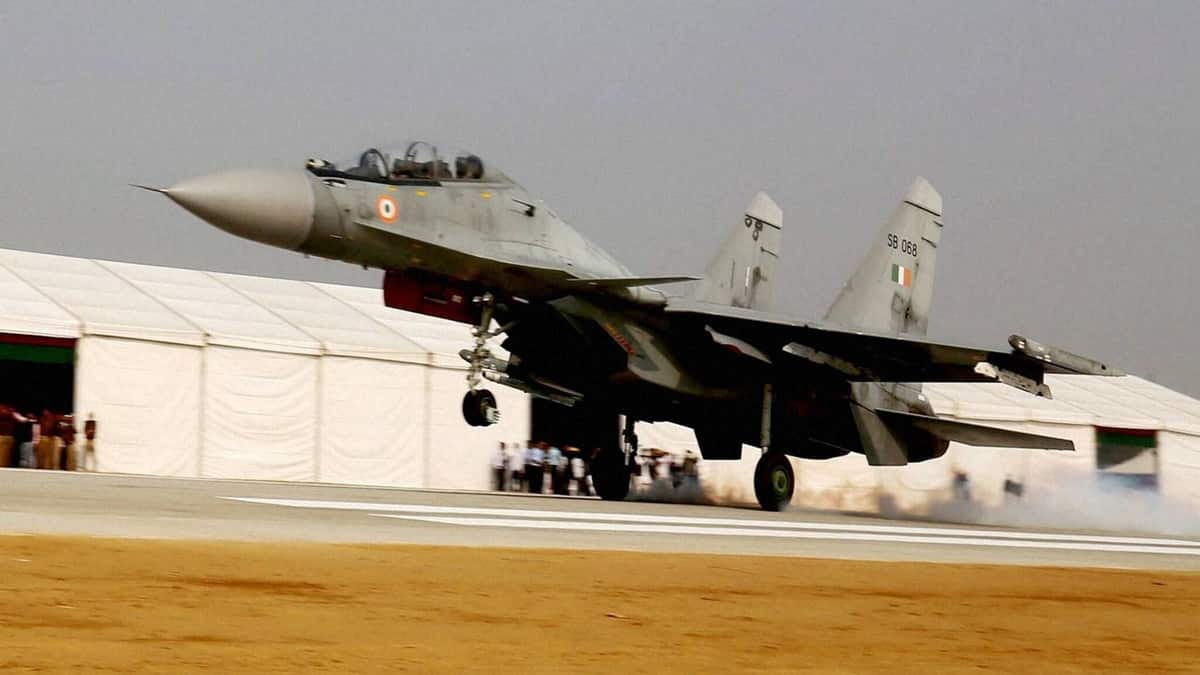
DRDO and HAL have begun structural load studies on the Su-30MKI's nose radome, the protective cone housing the aircraft's radar, to prepare for the fitting of the new indigenous Virupaksha AESA radar. Engineers are testing how the radome holds up under high speed and high-angle manoeuvres, since even a slight flex could throw off the radar's accuracy. It's not just the radar either, this sits inside a bigger upgrade package for the Su-30MKI that also includes new mission computers, updated electronic warfare systems, and integration with the Astra Mk-3 missile and BrahMos, all aimed at pushing the fleet closer to 4.5-generation capability.
Why it matters: The Su-30MKI makes up the largest chunk of the IAF's fighter fleet, over 250 aircraft, and all of them are currently flying with radar technology that's decades old at this point. An AESA radar changes what these jets can actually do in a fight, better jamming resistance, more targets tracked at once, and a much better chance of picking up stealth aircraft. This is the difference between retiring the fleet in ten years or keeping it frontline for twenty.
DRDO Successfully Flight-Tests Pinaka Guided Rocket at 60 km Range
DRDO test-fired the Pinaka Long Range Guided Rocket at Chandipur on July 8, hitting a target 60 km out. The trajectory matched predictions closely enough that officials called it a textbook run. The rocket was fired using the Army's existing Pinaka launcher, no new equipment needed. Rajnath Singh described it as a major step for India's long-range rocket capability.
Why it matters: The launcher compatibility is really the point here. The same system already in service can now fire multiple Pinaka variants across different ranges, so the Army adds strike depth without procuring anything new. For units stationed along the LAC and LoC, that's a meaningful jump in how far and how precisely they can hit targets.
04
INTERNATIONAL DEVELOPMENTS
India Secures Removal of Four Defence Firms From US Sanctions List
Four Indian companies, Lokesh Machines, RRG Engineering Technologies, Galaxy Bearings and Shaurya Aeronautics, are off the US Treasury's sanctions list after being designated back in October 2024 over alleged links to Russia's defence supply chain. What's notable isn't just the removal, it's the speed. These delistings typically take five to six years to work through. This one took 20 months, driven by a combination of MEA and NSCS diplomatic pressure and US legal counsel that three of the four firms hired to fight their case directly.
You can read more about it here.
Why it matters: This is the first time an Indian company has come off an OFAC Russia-sanctions list since the 2024 crackdown began, and that's the real story here, not the four firms themselves. India's defence industry has one foot in old Russian-origin supply chains and the other in a fast-growing US tech relationship, a position that was always going to create friction like this. What just happened gives every other Indian firm caught in that same bind an actual precedent to point to, proof that this is fixable, and roughly how long it takes.
Trump Faces Pushback Over Returning Turkey to the F-35 Programme
Trump told reporters at the Nato summit in Ankara that the US will lift sanctions on Turkey and may readmit it to the F-35 programme, seven years after Washington expelled Ankara for buying Russia's S-400 missile system. Turkey never gave up the S-400. Under US law, that alone blocks the F-35 sale. Congress has not signalled any appetite to change that. Israel has objected too, arguing a Turkish F-35 fleet would erode its regional air advantage. Separately, Trump has already approved Turkey's purchase of F110 jet engines.
You can read more about it here.
Why it matters: The F-35 is the single biggest lever Trump has to pull Ankara back into Washington's orbit. But Congress, not Trump, controls the certification that Turkey no longer has the S-400, and Erdogan has given no indication he plans to part with it. A workaround, if one emerges, would be the clearest test yet of how far the US will stretch its own sanctions law for a NATO member that keeps one foot in Moscow. India faced the identical CAATSA problem over its S-400 purchase and settled for a waiver rather than a fix, so this outcome carries a direct precedent for New Delhi.
Russian Bear Buzzes British Carrier Strike Group in the Arctic
A Russian Tu-142 Bear-F patrol plane flew low past HMS Prince of Wales in the Norwegian Sea on July 2, close enough that it dropped a string of sonobuoys near the carrier and didn't respond when the UK radioed it. Two F-35Bs scrambled off the ship to intercept and see it off. London called it unsafe. This wasn't a one-off either, Nato says Russian naval activity near UK waters has jumped 30 percent over the last two years, and these Bear flybys have basically become routine at this point, Russia testing how fast a carrier group reacts and what its radar picks up.
Nato Selects Saab GlobalEye to Replace Ageing AWACS Fleet
Nato has settled on Saab's GlobalEye as its next airborne early warning plane, with 11 members, including Germany, Canada, the Netherlands and Sweden, signing up to buy roughly ten of them together. Boeing's E-7 Wedgetail was the original pick, but the US pulled out of the programme last year over cost and shifting priorities, leaving GlobalEye as effectively the only Western jet-based option left standing. GlobalEye works by combining Saab's Erieye radar with sensors that also track ships and ground movement, all mounted on a Bombardier business jet, and it can stay in the air for over 11 hours at a time.
Canada Selects ThyssenKrupp to Build New Submarine Fleet
Canada has picked Germany's ThyssenKrupp Marine Systems to build up to 12 new Type 212CD submarines, replacing its ageing Victoria-class fleet. PM Mark Carney called it the biggest defence purchase in Canadian history. Canada is joining Germany and Norway's existing production line, with first delivery expected by 2034. The 212CD runs on hydrogen fuel cells, letting it stay submerged far longer than a standard diesel-electric boat. Germany beat out a South Korean bid for the contract.
The deal is as much about Nato burden-sharing as submarines. Canada has lagged on defence spending for years, and this is Ottawa's signal that it's serious about hitting Nato's 5 percent GDP target by 2035. For Germany, it cements TKMS as Europe's dominant conventional submarine builder, already supplying over a third of Nato members. It's relevant to India too: TKMS is one of two shortlisted bidders, alongside Spain's Navantia, for Project-75I, so the terms Berlin offered Canada are worth watching as those talks continue.
UK Awards Major Contract for New Amphibious Ships
Britain and the Netherlands will build eight new amphibious transport ships together under a £2.4 billion agreement signed this week, four for each navy. The design comes from the Dutch, but construction will happen in UK yards, the ships are meant to move troops, vehicles and drones. Britain has been without a proper amphibious fleet since HMS Albion and Bulwark went to Brazil after being retired in 2024. This deal fills that gap.
Sharing the build with the Netherlands brings the cost down and locks in interoperability between two navies that already train together under the Joint Expeditionary Force. UK yards have taken this kind of allied order before, most recently the Type 26 frigate deal with Norway. The pattern is becoming familiar: British shipbuilding isn't chasing full independence after Brexit so much as embedding itself in NATO co-production arrangements it can rely on for repeat work.
Egypt Inaugurates Massive 'Octagon' Military Headquarters Complex
Egypt just opened a new military command centre called The Octagon, built in its new capital city east of Cairo. It's enormous, roughly 22,000 acres across eight connected octagon-shaped buildings, bigger in footprint than the Pentagon. President Sissi called it a major upgrade to how Egypt runs its command and control, and the building brings the Army, Navy, Air Force, intelligence agencies and civilian government functions together under one roof, tied into AI-linked systems. Egypt has also been a growing defence partner for India in recent years, from joint air exercises to interest from Cairo in platforms like Tejas and BrahMos, so a more centralised, modernised Egyptian command structure is a relevant data point for India's own push to widen its defence-export footprint across the Middle East and North Africa.
05
EXERCISES, DIPLOMACY, AND PARTNERSHIPS
India Explores Reviving Chabahar Rail Link as Iran Sanctions Ease
Reports suggest India wants to restart the Chabahar-Zahedan rail line, a 700-km stretch through Iran that's been talked about for nearly a decade but never actually built. The reason it's back on the table now is Iran. Washington and Tehran appear to have reached some kind of understanding that loosens sanctions, and part of that reportedly includes India resuming crude oil purchases from Iran, something that stopped almost seven years ago. Nothing here is official yet, no announcement, no signed agreement, no dates. But the direction is clear enough that it's worth tracking.
You can read more about it here.
The rail line itself would connect Chabahar port to Zahedan, and from Zahedan into Iran's existing network, which eventually links up with the International North-South Transport Corridor running toward Central Asia and Russia. The whole appeal of this route for India has always been that it avoids Pakistan completely.
Why it matters: India has spent money and diplomatic effort on Chabahar since 2016, mainly to get into Afghanistan and Central Asia without going through Pakistan. But a port is only as useful as what connects to it. Chabahar has had cargo moving out by truck, which was never going to be enough to justify the investment. A rail line changes that. It's what turns Chabahar from a talking point into something India can actually run trade through, a real alternative to Gwadar rather than just a rival to it on paper.
INS Sudarshini Wraps Up New York Stop on Lokayan 2026 Voyag

INS Sudarshini completed her New York port call on July 8, part of Lokayan 2026, the Navy's 10-month sail training deployment. She took part in the Parade of Sail marking 250 years of American independence, sailing past the Statue of Liberty on the Hudson, and opened her decks to over 1,000 visitors in Brooklyn, many from the Indian diaspora there. She now heads to Boston for Sail Boston 2026.
India and Rwanda Deepen Defence Cooperation
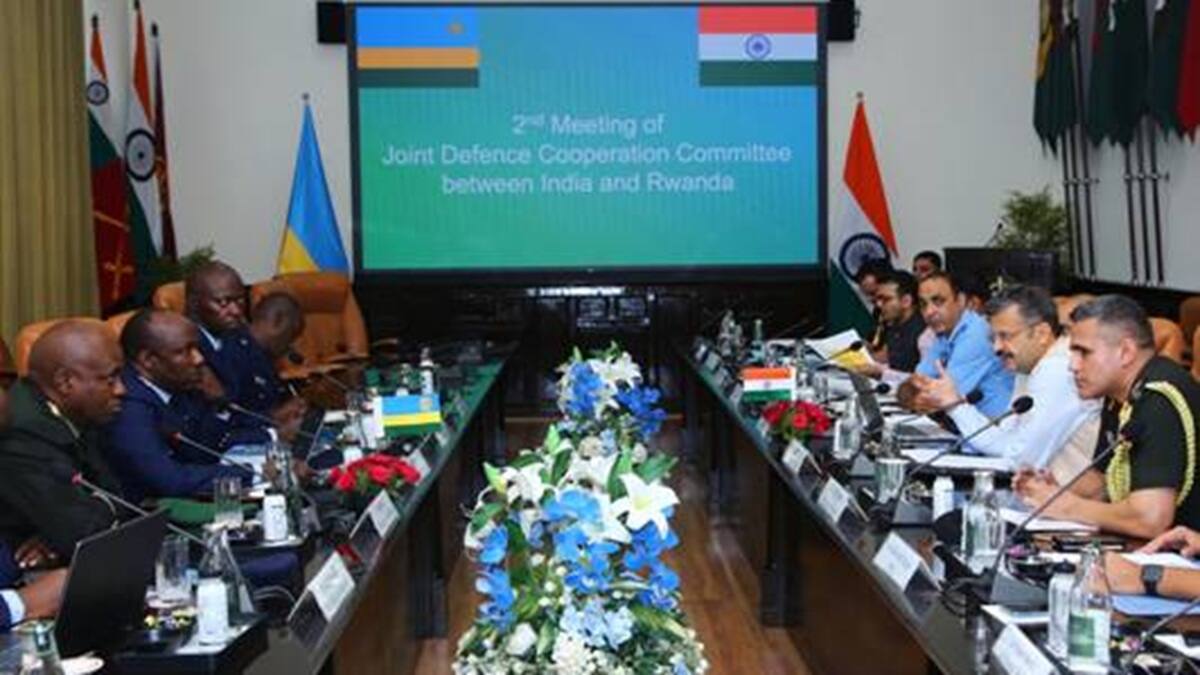
Indian and Rwandan defence officials sat down in Delhi on July 6 and 7 for their second Joint Defence Cooperation Committee meeting, and came out of it with plans to widen training exchanges, joint exercises, military medical cooperation, and defence-industry ties, all on a fixed timeline this time round. Rwanda's delegation also got a tour of India's defence production ecosystem and a stop at Army Hospital in Delhi, and met Defence Secretary Rajesh Kumar Singh. The relationship itself isn't new, it traces back to a defence MoU signed in 2018.
Tags

J&K cop on Amarnath Yatra duty shot dead in Anantnag terror attack; TRF claims responsibility
Jaishankar meets Canada's Anita Anand, discusses bilateral cooperation and shared interests
Delhi, Bengaluru, Hyderabad... Neet paper leak protest spreads nationwide even as govt reaches out to CJP, Opposition
Why is India seeing 95% cloud cover despite a Super El Niño?
Jaishankar, Rubio review trade, defence, AI cooperation at Manila meeting