


One year after Air India crash: What happened in the final 32 seconds of AI171?
Air India-Boeing 787-8 crash, one of the world's worst aviation disasters, marks one year today (June 12). On its anniversary, Firstpost speaks to veteran aviation journalist Christine Negroni and air safety researcher Jeremy John Thompson on the probe process, technical aspects of Boeing 787 and more

On June 12, 2025, Air India’s Ahmedabad to London Flight AI171 went down seconds after take-off, killing 241 of the 242 occupants in one of India’s worst aviation disasters that triggered an outpouring of grief, sparked a multi-layered investigation, and spawned many theories on what could have gone wrong.
One year on, what caused it remains deeply contested. The final report is awaited. India’s Aircraft Accident Investigation Bureau (AAIB) released a preliminary report a month after the Boeing 787-8 Dreamliner crash had sparked a fierce debate. Reports suggest that the AAIB could release an interim report today (June 12) on the first anniversary of the tragedy.
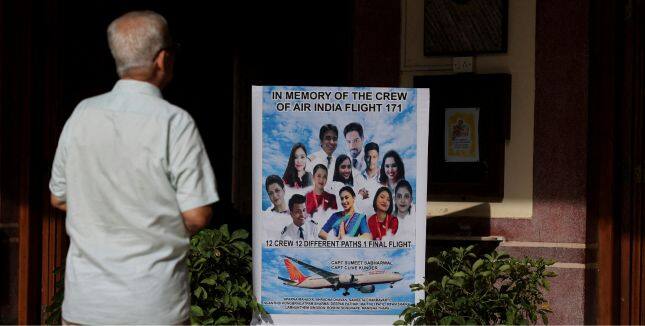
The international press published articles questioning the pilots, drawing condemnation by AAIB, which called out "selective and unverified reporting" in an "irresponsible” manner.
Firstpost spoke to veteran aviation journalist Christine Negroni and air safety researcher Jeremy John Thompson on the probe process. Neither is part of the official investigation — but both bring technical depth pertinent to an investigation of this scale.
 More from India
Complicated probe
“The plane can collect far more information than what is contained in the Digital Flight Data Recorder, a type of black box. It may have greater recording capability than any other airliner flying. But the point here is, you cannot button up an accident this complicated in a year,” Negroni said, explaining the complexity of the probe.
She said something could have been “wrong with that airplane before the fuel switches went to cutoff, and we know that as the RAT (Ram Air Turbine) was deployed just after the plane rotated.”
The preliminary report released in July last year had said that the aircraft’s engine fuel control switches "transitioned" from “RUN” to “CUTOFF” position within a second of each other moments after take-off. The report didn’t mention that these switches, which allow fuel flow to the plane’s engines, were physically moved.
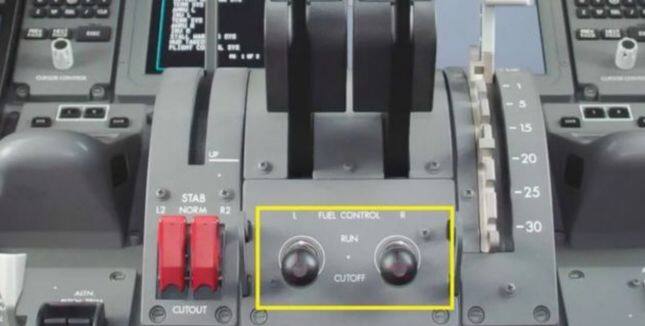
But the initial report also emphasised that there were no recommended actions to Boeing or GE Aerospace (the manufacturer of the engines on Boeing 787-8), indicating that a fault in the aircraft or engines was unlikely.
Using the cockpit voice recorder data, the report revealed that one pilot asked another why he had cut off the fuel, to which the other responded, saying he did not. Sections of the western media dwelt on this conversation to float the pilot theory.
“What was wrong with that airplane to trigger the RAT to deploy?... Find out on what conditions a RAT could deploy immediately after rotation? Why not find out other mechanisms of 787 that could cause fuel to stop flowing to the engines outside of the fuel switches?" Negroni asked, outlining questions investigators could be dealing with.
Thrust control
She said there was another mechanism due to which the fuel could stop flowing to the engine: that’s the TCMA (thrust control malfunction accommodation).
“The engines, for some reason, stopped working, and TCMA is part of a system that, under certain circumstances, can shut fuel to the engine without pilot input,” Negroni added.
“If it were a TCMA defect, then the engine controller called FADEC (Full Authority Digital Engine Control), perceived that something was wrong, or the controller itself was damaged. It (FADEC) then triggered the powering down of the engines by shutting off the fuel supply through a digital command,” Negroni said.
“If TCMA failure happens, pilots have no control. There’s nothing they can do. If TCMA was involved in shutting down the engines of 171, those pilots could do nothing. It’s the opposite of the intentional act.”
“When FADEC determines engines need protection, pilots have no control. The software takes over, and pilots can do nothing until the engines restart,” she said.
The thrust control malfunction accommodation or TCMA system acts as the aircraft’s sensor to detect whether the plane is in the air or on the ground. Once it senses a landing, it signals the FADEC — the engine’s “brain”—to automatically cut power and throttle back without any pilot input.
Negroni also weighed in on the cockpit conversation of the pilots that is at the centre of the debate.
“It does not really say more than anything that two people were confused about why their plane was not functioning as it should. Here we are a year later, still confused why the plane was not functioning as it should,” she said.
RAT deployment
Australian electrical engineer Thompson said the 787’s RAT is an emergency backup power system, and all but one of the conditions that trigger it take several seconds to develop.
“A RAT deployment within about two seconds suggests an immediate loss of all DC (direct current) electrical power to the instrument buses rather than a normal engine rundown or generator failure,” he added.
Thompson quoted the preliminary report’s RAT deployment timeline. From first fuel cutoff to RAT deployment, it accounts for four seconds in total.
According to him, RAT needs at least six to seven seconds to supply hydraulic power—and technically, it’s impossible for the RAT to supply hydraulic power within three to four seconds.
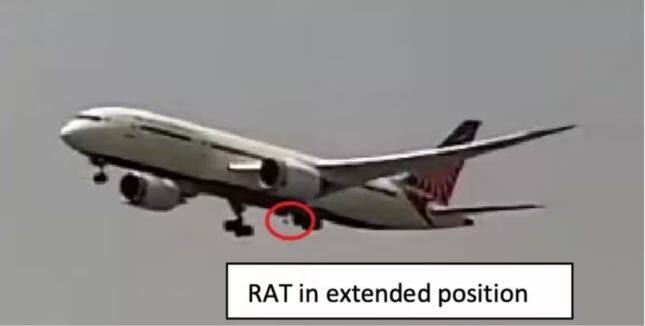
“The key issue is timing. The RAT appears to have deployed before the reported fuel cutoff switch transitions could have caused the engines to slow enough to trigger it,” Thompson said.
“To resolve this, investigators need to release the underlying recorded data showing the exact timing of the fuel control system, engine speeds, electrical power buses, and RAT deployment. If the timing is as currently reported, the RAT deployment would appear to be a consequence of an earlier failure rather than a result of the fuel switches themselves,” he explained.
“If both engines were still operating normally, an early RAT deployment would point toward a major loss of electrical power to the aircraft’s critical flight instrument systems rather than an engine failure. In my analysis, the most plausible explanation is a failure involving the aircraft's 28-volt DC electrical system and battery circuitry.”
He argued that moisture in the electronics bay could plausibly cause electrical faults, but that did not readily explain a dual-engine shutdown. “The 787’s engine control systems remain independently powered while the engines are operating, so a simple power loss elsewhere in the aircraft could not stop the engines.”

After initial findings were made public, Boeing said that it would defer to the probe body, AAIB, for information about AI171, in adherence with the United Nations International Civil Aviation Organisation protocol.
Meanwhile, the Indian pilots’ bodies, including the Federation of Indian Pilots (FIP) and the Airline Pilots Association of India (ALPA), strongly condemned speculation about pilot error as “reckless, unprofessional, and profoundly insensitive”.
Amid the row, Civil Aviation Minister Ram Mohan Naidu had said it would be unwise to jump to any conclusions. “Once the final report is out, only then can we arrive at a concrete conclusion.”
A day before the one-year anniversary of the crash, Reuters reported that Indian investigators could delay the final report, citing the need to complete an analysis of the plane's engines. Only the final report, when it comes, will be able to answer what caused the tragedy.
Shiksha is a Sub-Editor at Firstpost, where she writes explainers on global affairs and a wide range of other subjects. An aviation enthusiast, she loves reading and writing about aircraft. When not analyzing stories, you can find her diving into painting or getting lost in good books. Follow her on X (@shiksha_dev) and reach out to her at Shiksha.Dev@nw18.com for tips, feedback.

J&K cop on Amarnath Yatra duty shot dead in Anantnag terror attack; TRF claims responsibility
Jaishankar meets Canada's Anita Anand, discusses bilateral cooperation and shared interests
Delhi, Bengaluru, Hyderabad... Neet paper leak protest spreads nationwide even as govt reaches out to CJP, Opposition
Why is India seeing 95% cloud cover despite a Super El Niño?
Jaishankar, Rubio review trade, defence, AI cooperation at Manila meeting