


How screen addiction is harming children: India’s top doctors explain
Children are spending more time on gadgets like phones and video games, which is bad for their bodies and minds. From autism to declining IQs, research points to several side effects. Can laws to restrict screentime help?

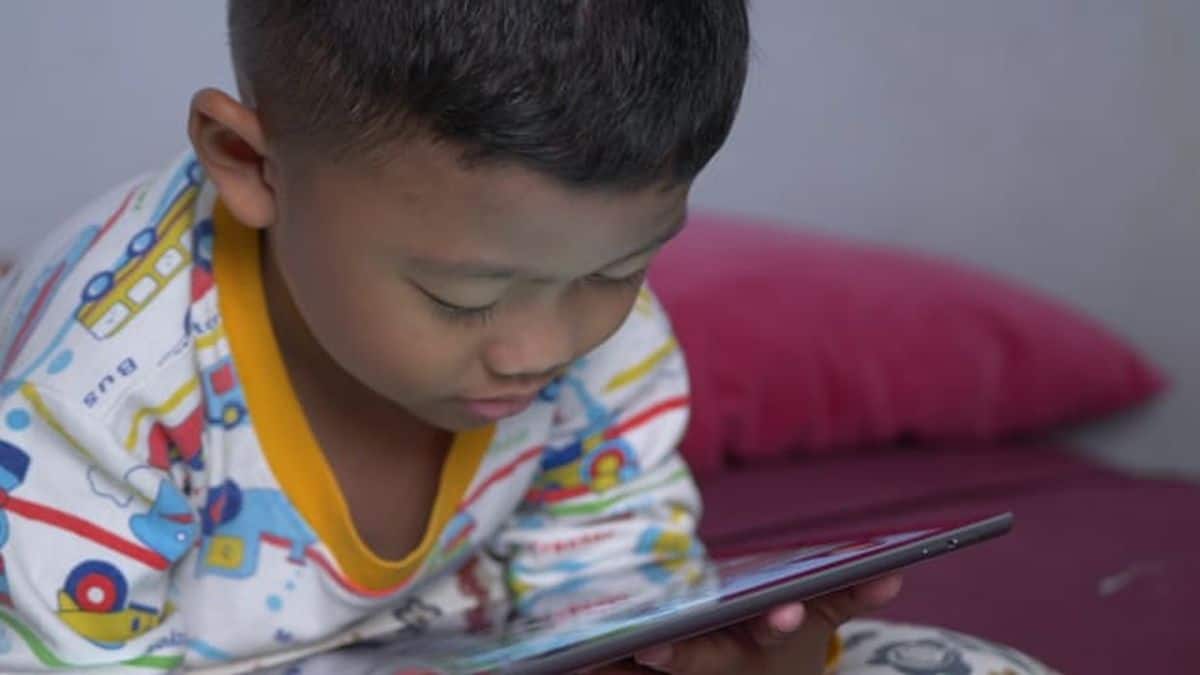
It is 8.30 pm. A four-year-old boy’s face is lit up in a dark bedroom – not by the table lamp, but by the tablet he holds. His mother, juggling calls and household chores, needs a breather. A little more cartoon time keeps him occupied and lets her finish work before she can focus on putting him to bed.
This might not be the story of just one Indian household. It is a familiar scene worldwide. Childhood is no longer measured in muddy clothes or bruised knees, but hidden behind the glow of the screen.
In one of the top clinics in New Delhi, Dr Jitendra Nagpal expects to see at least three children, whose parents have called in for screen addiction on a given day. A senior consultant psychiatrist who has worked in child, adolescent, and adult mental health for decades, he says children and adolescents have been spending more time online over the past few years.
 More from Health
How the quiet shift to screens unfolded
Over the last decade, screen time has slipped into the earliest years of life. “Children are sometimes hooked to screens even before they learn language itself. They are being introduced to digital devices at the age when their brains are still wiring the basics of attention, language, and emotional response,’’ Dr Nagpal points.
Parents distract their children with gadgets, notes Dr Anupam Sibal, a senior paediatrician and group medical director of Apollo Hospitals. “They let the child watch a cartoon if he or she is not eating properly. From a very early age, children throw tantrums if they don’t get their screen time. The only way of calming the child down is to give in and let them go back to a video or cartoon,” he says.
Experts warn that children are spending more time on gadgets like phones and video games. This immersion harms both their bodies and minds. Research also suggests that early childhood screen exposure is linked to cognitive and psychosocial outcomes. Effects depend on context: what children watch, how long they watch, and whether adults are involved.

What are screens taking away from us?
This nuance is important, as the issue is not solely about harm but also about displacement. The question is what gets replaced when a child looks at a screen?
“Our society is going through a major transition. In the past, we needed physical interaction and went places or talked to people for support. Now, technology has taken over that role. For children, technology is central to many aspects of life, including education, and this has become more noticeable since Covid and the rise of online classes,” says Dr Sibal.
Online classes are now the norm. Bad weather or high AQI causes schools to shift online. Work gets submitted through online programmes. Parents and teachers use WhatsApp groups to send and receive assignments digitally.
The role and usage of screens have increased manyfold. Parents spend a lot of time on phones or screens. Naturally, children follow their example.
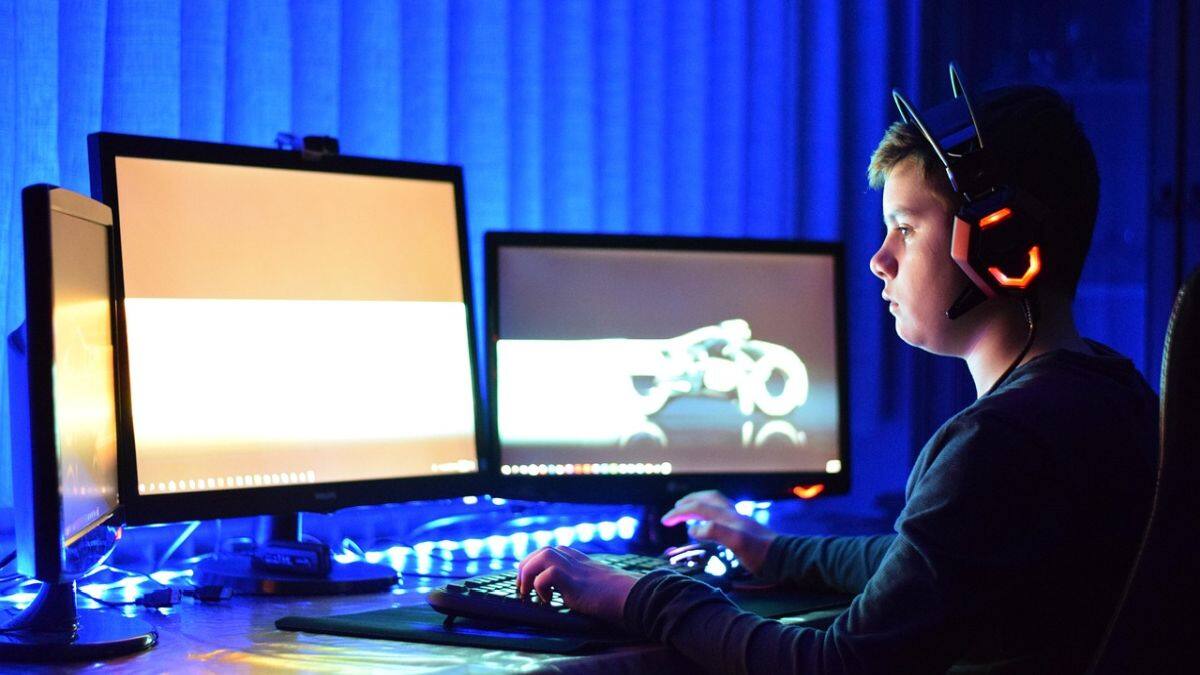
Studies find that most children and adolescents spend more than half their waking hours on screens. Teens average eight hours a day, two hours more than what it was in 2015. Preteens, ages eight to 12, spend about five hours, one hour more than a decade ago.
According to Dr Nagpal, usage jumped in 2019, just before the Covid-19 pandemic. “There has been a delayed awakening. Small research studies from 2013 to 2019 started to show declines in child development. This happened with the introduction of Edutech tools in classrooms worldwide,” he adds.
How seriously can screens harm children?
For toddlers, development is interaction: the faces they see, the voices, touch, and repetition. Experts say screens, even the educational ones, are interrupting that loop.
Early results of a recent ongoing study by the All India Institute of Medical Sciences (AIIMS) in Delhi found that children exposed to higher screen time before the age of one were more likely to show signs of autism by the age of three. Children with autism spectrum disorder (ASD) who had excess digital use also showed higher rates of sleep problems and reduced physical activity.
“ASD is a neurodevelopmental disorder affecting brain development. The children may develop communication issues and exhibit some restricted and repetitive behaviours and interests. The symptoms show up in the first few months, like in six months the child doesn’t even give a social smile, they miss their language milestones, no babbling, no significant words said even at the age of 18 months,” explains Dr Sheffali Gulati, professor of paediatric neurology at AIIMS, who is doing the study.
However, this is not restricted to India. Dr Gulati insisted that prevalence is on the rise globally. “Older Indian data suggested about one in 89 children, but newer international estimates, including recent CDC data, indicate much higher prevalence. The WHO estimates around 1 in 100 globally in 2022.”
The doctor, however, emphasised that autism has many causes and screen time should be taken as one such factor. “There is genetic predisposition, there are certain environmental factors, and also epigenetic factors like behaviours; environmental factors cause changes that affect gene expression, and screen time is one of them,” said Dr Gulati.
The environmental factors include diet, stress, toxins (such as air pollution and pesticide exposure), and the fathers’ advanced age. “So screen time is like one of the significant environmental factors which can bring about the change in gene expression,’’ she adds.
A study in JAMA Pediatrics found the estimated ASD prevalence was 3.14 per cent among children and adolescents in the US in 2019 and 2020.
According to Dr Nagpal, studies worldwide have also shown cognitive decline and a decline in imaginative learning. “The use of technology tools for education is not allowing children to think about their own thinking. The interaction with teachers, textbook learning, reading, writing, and talking cannot be taken away. Screen time took over cognitive learning, and the impact is being seen now.’’
He says many studies have found that children’s (Gen Z, Gen Alpha) IQs decline compared to their parents’ and grandparents’. The reason is heavily loaded, tool-based learning. “Screen dependence may make children less adaptive. Intelligence means adapting to change; these children show less of it. Emotional regulation declines, irritability increases, and sleep disorders rise globally.
In adolescents, the side effects are also hormonal dysfunction, caused by a lack of a balanced diet and a sedentary lifestyle.
Many studies are hinting that screen time is causing brain dysmorphia. “MRI scans show a change in brain structure and degeneration. There is a decline in the neural pathways. earlier childhood activities would enliven the entire brain, now the brain is not properly utilised, hence it's not developing properly,” Dr Nagpal says.
Another 2020 JAMA Pediatrics study of 47 preschoolers (aged three to five) found an association between higher screen use and lower white matter integrity, as well as poorer language/literacy scores.
In another Australian study, brain scans of 60 children aged three to five found that interactive screen time is associated with a measurable loss of white matter in their developing brains. Some studies have linked even two hours of screen time per day to impaired neural connectivity, language, and literacy development.
Other researchers, however, say these links are complex and that the effects are not due to screen time alone, but are often tied to factors such as sleep loss, reduced activity, and a lack of social interaction.
“It’s hard to comment at this stage; it is a little premature. We don’t know what will happen in the next stage. The best thing to do is to delay introducing screen time to a child as much as possible. Also, limit the screen time when they get older. Some say it’s two hours, others say it’s three,’’ observes Dr Sibal.

Will the push toward restriction help?
The uncertainty, however, hasn’t stopped policymakers in some countries from acting, especially with younger children.
In France, authorities have taken a strong position and banned screens in day care for children under three. In China, the government has imposed strict limits on minors, especially gaming, with curfews and time caps.
Sweden and Denmark are pushing back from digital-first learning, reintroducing printed books in schools. Australia and Sweden have recommended no-screen time guidelines for children under two. Australia also recommends one hour a day for ages two to four, and two hours for ages five to 17. Sweden restricts it to three hours for teens.

Dr Nagpal says the Indian government needs to enact laws to restrict screen time. “We have the world’s largest population of children. We have 40 crore children under the age of 18 years,” he informs.
Dr Sibal opines that, until regulations are in place, mindfulness is the key. “This is the same rule as we apply to maybe diet. We tell people to be mindful of what they eat, including carbohydrates. Similarly, people need to be mindful of how much screen time they allow their children. I would say the lesser the better.”
The use of screens at a later age may not be inherently harmful, and taking them out completely from the lives of our older children might not be possible. The problem lies in excess, in the replacement of human interactions and in the silences where conversations are needed.
Toufiq Rashid is a journalist based in Noida.
Tags

Stroke in young adults, silent symptoms and late diagnosis: India's growing brain health challenge
Brain tumours aren't always fatal, but delayed diagnosis can be: Experts explain the key warning signs
Spices, health and the Indian plate: Why chilli can be good for you—but moderation is still key
Organ donation: 5 myths you need to stop believing, according to a transplant specialist
Fish over meat: Why a pescatarian diet may help people with obesity live longer