


Does IPL need football-style revolution? Experts anwer as lack of competition becomes a concern
IPL 2026 has repeatedly seen one-sided matches and that has led a section of fans to call for a football style promotion and relegation system for the league. As interesting as it sounds, is it feasible?

The points table of the ongoing IPL season (after the RCB vs DC match on April 27) makes for very interesting reading. It’s almost as if the 10 competing teams have been divided into two sections. While teams one to five are clearly the “alpha” units of the season, dominating the table, teams six to ten seem to have been playing catch-up from the time the season began about a month ago.
Of course, there has been some upward movement for the teams that find themselves in the bottom half of the table, but let’s face it, if anyone were to ask you who your top three favourites to win the title this year are, would you really pick teams like the Kolkata Knight Riders, or the Mumbai Indians, or the Lucknow Super Giants, or Delhi Capitals? No chance, right?
 More from Firstcricket
Due to this disparity in points, which is also a reflection of course of the gulf that exists between the in-form and out of form teams (if one could use those tags), many fans have been complaining about the “one-sided contests” – matches which eventually become really boring and have no suspense value or ability to really hold the viewer’s attention, because the outcome is often quite evident quite soon.
A great example of that is the RCB vs DC match that was played on April 27, that saw DC being bowled out for 75 and RCB wrapping up the contest comfortably with as many as 81 balls remaining. It’s results like this and similar ones that has led to platforms like Reddit and Facebook being flooded with fan debates over whether the IPL should adopt a two-tier system - with the top tier featuring the elite teams and the bottom one the “others” - those which are struggling to compete. This in turn would make matches of the top tier more competitive and enjoyable to watch.
How fan sentiment builds every season?
Now, before we get into just how viable or unviable a system like this could be, let’s understand how fan sentiment firms up every season. Die-hard city or franchise loyalty cannot factor in this, because that would make this discussion moot. Overall, the larger IPL fan sentiment changes gradually. No one knows when an IPL season begins which teams are going to be the ones to beat and which teams will do poorly.
Sure, last season’s form, how much the squads have changed or haven’t, changes in coaching staff etc. are all indicators, but we only know for sure once the action well and truly begins on the field and at least about 30% of the league games (21 matches) have been played. By this time almost every team would have ideally played around two games each and that can suffice as a pretty good starting point to ascertain whether a team’s form trajectory is heading north or south.
Think about this – when Rajasthan Royals bowled out the Chennai Super Kings for 127 in Guwahati in their season opener, there has to have been a part of you that thought – “maybe CSK can still pull this off. Maybe this was just one bad day at the office for the yellow army.” This despite having the knowledge that CSK have been struggling with multiple issues and finished last in the previous season in 2025. After all, they did win the title in 2023 and there have been personnel changes – the player of the tournament of the 2026 men’s T20 World Cup, Sanju Samson was traded in to CSK. RR though eventually won that game by 8 wickets.
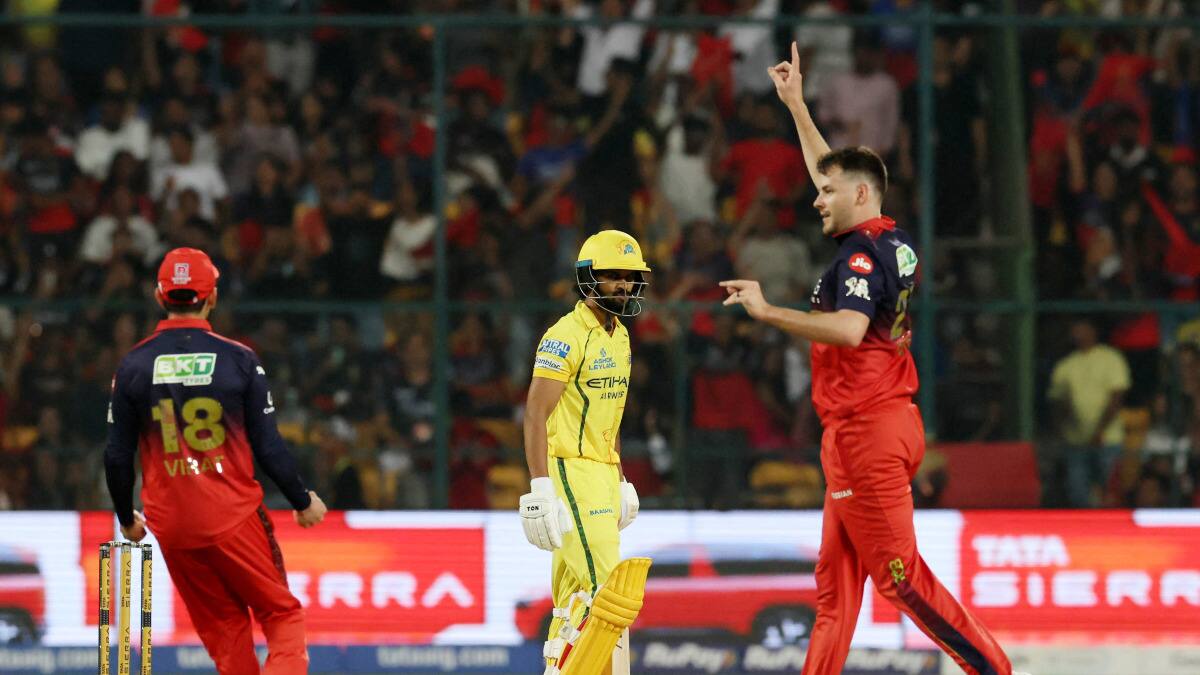
CSK’s next match was at home and they scored a competitive 209/5 against Punjab Kings – a massive improvement in terms of putting runs on the board after batting first, right? Surely this time you would have had more confidence in Ruturaj Gaikwad and co. pulling off a win? Punjab won that match by 5 wickets, with eight balls remaining. By this time, you would have been getting the idea that CSK, especially without the Midas touch of MS Dhoni, who calls many shots on the field, despite having handed the captain’s armband over to Ruturaj, are going to struggle this season. Their next match was against the defending champions, Royal Challengers Bengaluru, who batted first and put up 250/3, before beating CSK by 43 runs. By now, it was quite clear that CSK were riddled with problems and would be hovering somewhere around the bottom half of the points table for large parts of the season.
Now, what fans who are proposing a two-tier system in the IPL want to see are more competitive matches. They don’t want to see for example a team like the current CSK outfit, or LSG or KKR struggling against the in-form teams, regardless of how many titles they might or might not have under their belts. They don’t want to see teams just turning up and not putting up a good fight. So, they want a super competitive top tier and the second tier can be a potential feeder division of sorts.
Can two-tier IPL really work?
Of course, a million different things need to be worked out for something like this to succeed, but on the face of it, can this really work?
“Interesting. But how do we decide (which team goes into which tier)? There is also an auction which happens every three years and then there is a retention which also has to be looked at. So, I'm not saying no, that it should not be tried. But of course, the logistics and (a) realistic possibility of it taking place will be very difficult,” former India captain Anjum Chopra told Firstpost.
As Anjum rightly asks – the very first hurdle if you are to divide the current 10 teams into two divisions is – which team goes into which tier? CSK is a great example to cite here. They might be really struggling for the last couple of seasons after their title win in 2023 (though in 2022 they finished ninth), but they are also five-time champions.
“Why it might not work - obviously the number one thing is how will you classify and how will you decide. Like for example, Chennai and Mumbai are five-time champions and for the last couple of seasons they haven't been doing well, (but) who will accept the fact that they go to the bottom tier or the bottom half of the table? And obviously, nobody would want that as well because you want such teams to be competing. So, logistically also, it will be difficult to understand how this thing can be pulled off…who will accept that a five-time champion is not seeded first, second or third?” Anjum further questioned.
Lalit Modi formula
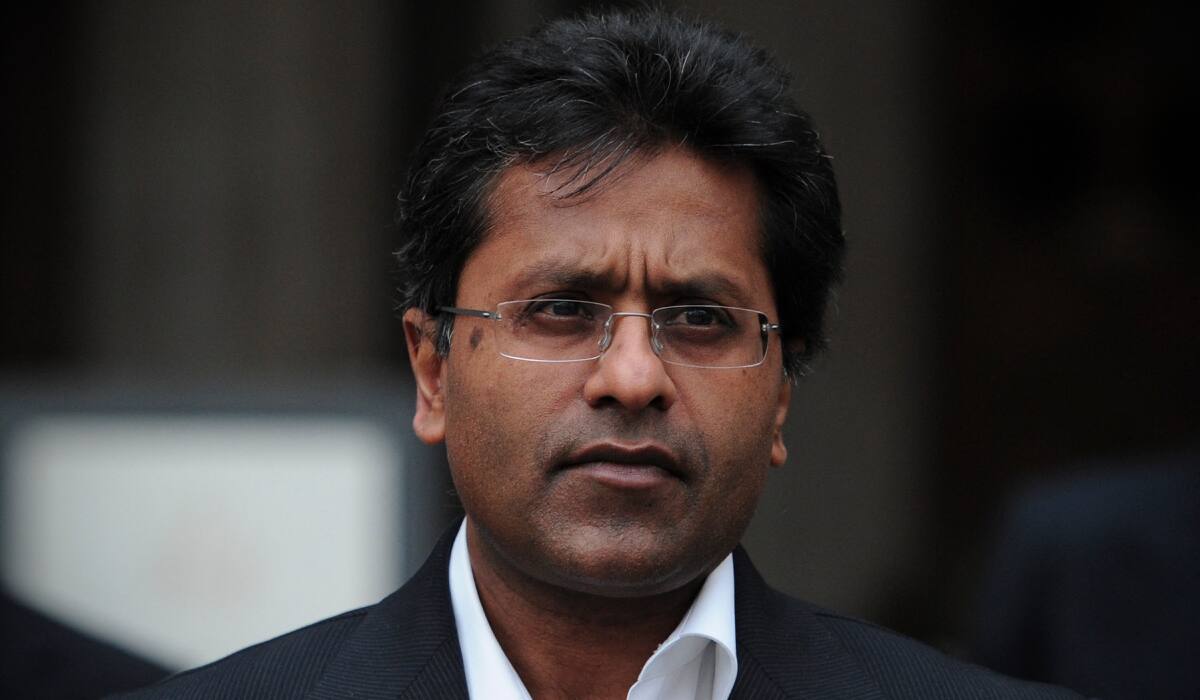
One potential solution for this is the Lalit Modi formula. The IPL founder and the man who is still called “the billion-dollar brain” behind the league has also called for a two-tier system and has suggested a model. He feels the BCCI should look at a secondary division with as many as 20 teams, based in Tier-2 and Tier-3 cities, where there is a large untapped "appetite" for the game, with the winner of the second division being promoted to the top division or the “main IPL” for next season – along the lines of the model that is followed in European football. He has in fact suggested that the window previously earmarked for the defunct Champions League T20 – in September-October – be used to play the second division matches.
Now, hypothetically, if a model like this is adopted and we do see a pyramid structure in the IPL, what would the big pros and cons be?
The biggest pros of having a two-tier IPL system are - 1. Enhanced competition, with almost every match being highly competitive, in both divisions, because the top teams will constantly fight so as not to go into the relegation zone and the teams in the second division will do the same because they all would want to be promoted; 2. More domestic and also associate nation players can be attracted to the teams in the second division, thereby boosting the talent pipeline – for both India and other countries; 3. Tier-2 and Tier-3 Indian cities which don’t have local IPL teams currently could have their own franchises, thereby broadening the overall fanbase and also potentially helping build more cricketing infrastructure in these cities.
“I think in ICC tournaments, there is a structure like that. When you come in to play the World Cup, obviously the top teams get to the World Cup, but then there are always teams that have to go through qualifiers. So, there is an automatic qualification and then other teams have to go through qualifiers to get a spot in the World Cup. So, yes, that is workable, but then that happens over three or four years. It doesn't happen in like two months. So, whilst it's a thought, and never kill a thought, but yeah, it will possibly be very difficult for it to come into action,” Anjum further said.
The automatic qualification that we see in the ICC World Cups depend on team rankings. For example, in the 2027 ODI World Cup the top 8 teams and the co-hosts will receive automatic qualification. In the IPL maybe this could be swapped for season results – with the previous title winners forming one group and the others going into the second one? But that is still an extremely ambitious thought, considering as many as seven of the existing ten IPL teams having won the title at least once.
Issues with two-tier system
If one were to look at the cons of a two-tier system, with promotion and relegation, they are quite evident.
1. Finances of teams which are relegated will be hit hard. Overall team sponsorship will take a hit and potentially so will ticket sales; 2. The host broadcaster too will have quite a few objections. The really big encounters always feature the same three to four teams and the marquee matches like MI vs CSK or RCB vs CSK or KKR vs MI are given top billing. If a top team is relegated, both viewership and advertisement revenue will nosedive; 3. Also, if the European football model is taken as an indicator – there could be a massive gulf that is created between the top and bottom tiers or divisions, with teams in the second rung division struggling to find quality players and support staff and also having to clear constant financial hurdles; 4. Also let us not forget that there is an auction every year and teams are allowed to retain and release players – how will these logistics work for a two-tier system? 5. If the two divisions have to be played concurrently such that they fit into the current two-month window, there is unlikely to be enough stadia to host the games and the broadcaster might not be able to produce/broadcast all matches; 6. Overall team valuation could take a huge hit as and when a team is relegated – no team owner will be ready to take that risk.
No prizes for guessing that there are way too many obstacles for this hypothetical model to be taken seriously. No franchise owner would readily agree to adopt this model, as such, even though some critics have pointed out that as more and more teams are added, the overall quality of competition will be diluted and a two-tier system could be a solution that allows the BCCI to add more teams to the IPL roster, in the long-run.
But the experts remain skeptical.
“A two-tier system I don't think will be that competitive. This is my feeling. I feel the IPL brand is superb for everyone. It's great entertainment, you know, we see some great skills by the players on the field. The top players in the world are participating. The league has got that competitive edge and I just feel sometimes you think that can you do something different, but I think (not for) a brand, a league that is so good. Everyone across the world watches it. There's so much fan following. I think this is the way it should be going on. So, I just think this (the current model) is the right way to carry on with the league,” former First-Class cricketer and veteran commentator, Ajay Mehra told Firstpost.
BCCI's view
As things stand, the BCCI is not looking to add more teams to the IPL bandwagon any time soon. But they are looking to potentially increase the number of matches to about 94, so that every team-on-team contest can be played on a home and away basis. The IPL Chairman Arun Singh Dhumal in fact was quoted as saying last year – “Ideally, we'd want a larger window, or to maybe go on from 74 to 84 or 94 at some point… So that every team gets to play against every team home and away, for that, you need 94 games. Given the window and the kind of commitments that we have with regards to bilateral cricket and ICC events, that may not be possible in the short term. But given the landscape, how it is changing and evolving over the years, maybe at some point in time we would look and take that option.”
The suggestion to use the September-October window meanwhile could be a good one – whether it’s for exactly this model or something else. While a two-tier IPL system seems rather unlikely any time in the near future, there have been reports over the last two-three years of the BCCI exploring a separate "Tier-2" white-ball tournament, similar to the IPL. This could be in the T10 format, though, according to reports, discussions have been held about playing this tournament in the T20 format as well, with the September–October window being targeted for this. Though initial reports suggested that the BCCI is aiming to launch this in 2024, as of now there have been no updates.
If this tournament does indeed see the light of day, it could potentially revolutionise the cricket franchise model even further, while of course boosting the BCCI’s finances. Existing IPL team owners could well line up to buy franchises in this league, which could also attract foreign investment. But perhaps the biggest challenge will be to structure it such that it doesn’t dilute the popularity of the IPL.
Akaash is a former Sports Editor and primetime sports news anchor. He is also a features writer, a VO artist and a stage actor

Shreyas Iyer calls for quicker adaptation after 'rough patch' during England T20 tour: 'Have to stay in present'
Rohit Sharma finally responds to growing speculation over his India future: 'Let the noise be there'
Shubman Gill pins India's loss on death-over lapses after England run riot: 'We gave away lot of runs'
Rohit shines with historic Lord's ton, but England seal series 2-1
India and England players don black armbands, observe minute's silence at Lord's to honour Sir Garfield Sobers