
Advertisement


Sections
This American will live underwater for 100 days. Here's how it will affect him
Joe Dituri, a former US Navy diver and biomedical engineer, studies the effects of hyperbaric pressure on the human body. He hopes to use his time spent below the surface to investigate the effects of living in this high-pressure environment on his health

As nightmares go, being trapped in a small box deep underwater is probably high on many peoples’ lists. But one US professor is doing this on purpose.Joe Dituri, a former US navy diver and expert in biomedical engineering has been living in 55 square metre space 30 feet below the surface of the Florida Keys since 1 March, and plans to stay for 100 days. If he manages this, he will break a record for most time spent in a habitat beneath the surface of the ocean.Dituri conducts research into the effects of hyperbaric pressure — when air pressure is greater than it would be at sea level — on the human body. He is hoping to use his time spent below the surface to examine what impact living in this high-pressure environment has on his health.![]() Interestingly, Dituri’s endeavour will be very different from living on a submarine. Submarines are sealed when submerged and maintained at sea level pressure. Image used for representational purpose/Pixabay[/caption]Scientists don’t fully understand why this happens, but it could be due to changes in the way neurotransmitters signal between neurons in our brain. Fortunately, this won’t be a risk to Dituri, as he’s only at a depth of ten metres.Health changesBut Dituri can expect to experience other physical changes while living in his underwater habitat.Although the habitat has large windows, Dituri will still only be exposed to half the amount of sunlight as on land. This could cause issues with his circadian rhythm — the internal “clock” that controls many body functions, including our sleep-wake cycle — which relies on daylight. This may mean disrupted sleeping.Another challenge for Dituri will be getting enough vitamin D. The skin must receive UV exposure to make this vitamin, and this typically comes from the sun. It’s likely that Dituri will not be exposed to enough vitamin D while living in his underwater environment.Vitamin D plays key roles in maintaining bone density, muscle function and immunity.Research on people who lived at an underwater habitat run by NASA as a spaceflight analogue found they had reduced immune function after only a 14-day stay.Dituri will need to get vitamin D from other sources — such as foods high in vitamin D, supplements or from UV lamps — to minimise reductions in his immune function.Even though Dituri will be living alone, astronauts living in similar environments report latent infections occuring. These are viruses that many of us carry which our immune system normally keeps under control. This could also cause Dituri to fall ill if his immune function wavers.Besides a minimal amount of walking around a very small habitat, the only exercise Dituri will get is from swimming. As swimming is non-weight bearing, losses in bone and muscle mass are likely — and may be similar to what astronauts see during long missions on the International Space Station (but not as extreme).Adding some resistance exercises such as squats and lunges may help Dituri offset muscle and bone mass losses.Long-term effectsWhile Dituri’s underwater habitat will be different from a submarine, the amount of time he’s spending there is not altogether different from what many submarine crews endure.We know from research on submariners that even just a few months below the surface can have long-term effects, despite measures to prevent this from happening.For instance, even after two months below the sea, submariners still had disturbed sleep patterns and problems with the levels of certain hormones linked to sleep.Crew also showed losses in bone and muscle mass.This reinforces how important it will be for Dituri to get enough vitamin D exposure and exercise.Of course, the biggest question that remains is what effect long-term hyperbaric pressure will have on Dituri. What studies we do have on the effects of hyperbaric pressure have only looked at short-term exposures, which may have shown positive effects on wound healing.This will be both a physiologically and possibly psychologically challenging feat so, although Dituri is only one person, data from his experiment will still be useful to the field.
Interestingly, Dituri’s endeavour will be very different from living on a submarine. Submarines are sealed when submerged and maintained at sea level pressure. Image used for representational purpose/Pixabay[/caption]Scientists don’t fully understand why this happens, but it could be due to changes in the way neurotransmitters signal between neurons in our brain. Fortunately, this won’t be a risk to Dituri, as he’s only at a depth of ten metres.Health changesBut Dituri can expect to experience other physical changes while living in his underwater habitat.Although the habitat has large windows, Dituri will still only be exposed to half the amount of sunlight as on land. This could cause issues with his circadian rhythm — the internal “clock” that controls many body functions, including our sleep-wake cycle — which relies on daylight. This may mean disrupted sleeping.Another challenge for Dituri will be getting enough vitamin D. The skin must receive UV exposure to make this vitamin, and this typically comes from the sun. It’s likely that Dituri will not be exposed to enough vitamin D while living in his underwater environment.Vitamin D plays key roles in maintaining bone density, muscle function and immunity.Research on people who lived at an underwater habitat run by NASA as a spaceflight analogue found they had reduced immune function after only a 14-day stay.Dituri will need to get vitamin D from other sources — such as foods high in vitamin D, supplements or from UV lamps — to minimise reductions in his immune function.Even though Dituri will be living alone, astronauts living in similar environments report latent infections occuring. These are viruses that many of us carry which our immune system normally keeps under control. This could also cause Dituri to fall ill if his immune function wavers.Besides a minimal amount of walking around a very small habitat, the only exercise Dituri will get is from swimming. As swimming is non-weight bearing, losses in bone and muscle mass are likely — and may be similar to what astronauts see during long missions on the International Space Station (but not as extreme).Adding some resistance exercises such as squats and lunges may help Dituri offset muscle and bone mass losses.Long-term effectsWhile Dituri’s underwater habitat will be different from a submarine, the amount of time he’s spending there is not altogether different from what many submarine crews endure.We know from research on submariners that even just a few months below the surface can have long-term effects, despite measures to prevent this from happening.For instance, even after two months below the sea, submariners still had disturbed sleep patterns and problems with the levels of certain hormones linked to sleep.Crew also showed losses in bone and muscle mass.This reinforces how important it will be for Dituri to get enough vitamin D exposure and exercise.Of course, the biggest question that remains is what effect long-term hyperbaric pressure will have on Dituri. What studies we do have on the effects of hyperbaric pressure have only looked at short-term exposures, which may have shown positive effects on wound healing.This will be both a physiologically and possibly psychologically challenging feat so, although Dituri is only one person, data from his experiment will still be useful to the field.![The Conversation]() This article is republished from The Conversation under a Creative Commons license. Read the original article.Read all the Latest News, Trending News, Cricket News, Bollywood News,India News and Entertainment News here. Follow us on Facebook, Twitter and Instagram.
This article is republished from The Conversation under a Creative Commons license. Read the original article.Read all the Latest News, Trending News, Cricket News, Bollywood News,India News and Entertainment News here. Follow us on Facebook, Twitter and Instagram.
Interestingly, Dituri’s endeavour will be very different from living on a submarine.Submarines are sealed when submerged and maintained at sea level pressure. This means there’s no significant difference in pressure, even when a submarine is at depths of hundreds of metres.But Dituri’s underwater habitat won’t have any solid hatches or air locks between the ocean and the dry living space, as a submarine does. Think of it like when a glass of water is turned upside down and pushed into a sink full of water. A pocket of air will still exist at the top of Dituri’s living space, with a pool of water in the floor of one room that comes from the ocean outside.This means that the air inside his habitat is squeezed by the ocean’s weight, increasing the air pressure around him. At a depth of 30 feet, the air pressure inside this habitat is about twice as much as what he’d be used to on land.Under pressureLittle research has investigated what effect long-term exposure to hyperbaric pressure has on the body.As every certified diver is well aware, though, hyperbaric pressure can pose a very real threat to us. Our bodies have been adapted by generations of evolution for sea level conditions, where the two major gases involved in breathing (oxygen and carbon dioxide) are the only two that freely cross between our lungs and our blood.But as pressure increases, nitrogen in the air is forced across the delicate walls of our lungs and into our blood. This can cause a range of adverse effects.At depths of ten to 30 metres, this may cause mild euphoria and positive moods. After about 30 metres below sea level and beyond, it can lead to intoxicated-like behaviour — hence the name “narcosis”.[caption id="attachment_12405132" align="alignnone" width="640"]
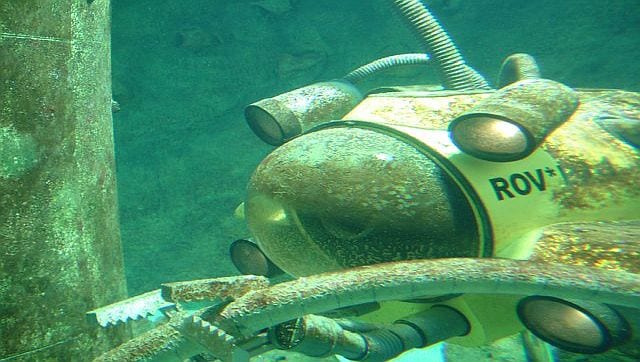 Interestingly, Dituri’s endeavour will be very different from living on a submarine. Submarines are sealed when submerged and maintained at sea level pressure. Image used for representational purpose/Pixabay[/caption]Scientists don’t fully understand why this happens, but it could be due to changes in the way neurotransmitters signal between neurons in our brain. Fortunately, this won’t be a risk to Dituri, as he’s only at a depth of ten metres.Health changesBut Dituri can expect to experience other physical changes while living in his underwater habitat.Although the habitat has large windows, Dituri will still only be exposed to half the amount of sunlight as on land. This could cause issues with his circadian rhythm — the internal “clock” that controls many body functions, including our sleep-wake cycle — which relies on daylight. This may mean disrupted sleeping.Another challenge for Dituri will be getting enough vitamin D. The skin must receive UV exposure to make this vitamin, and this typically comes from the sun. It’s likely that Dituri will not be exposed to enough vitamin D while living in his underwater environment.Vitamin D plays key roles in maintaining bone density, muscle function and immunity.Research on people who lived at an underwater habitat run by NASA as a spaceflight analogue found they had reduced immune function after only a 14-day stay.Dituri will need to get vitamin D from other sources — such as foods high in vitamin D, supplements or from UV lamps — to minimise reductions in his immune function.Even though Dituri will be living alone, astronauts living in similar environments report latent infections occuring. These are viruses that many of us carry which our immune system normally keeps under control. This could also cause Dituri to fall ill if his immune function wavers.Besides a minimal amount of walking around a very small habitat, the only exercise Dituri will get is from swimming. As swimming is non-weight bearing, losses in bone and muscle mass are likely — and may be similar to what astronauts see during long missions on the International Space Station (but not as extreme).Adding some resistance exercises such as squats and lunges may help Dituri offset muscle and bone mass losses.Long-term effectsWhile Dituri’s underwater habitat will be different from a submarine, the amount of time he’s spending there is not altogether different from what many submarine crews endure.We know from research on submariners that even just a few months below the surface can have long-term effects, despite measures to prevent this from happening.For instance, even after two months below the sea, submariners still had disturbed sleep patterns and problems with the levels of certain hormones linked to sleep.Crew also showed losses in bone and muscle mass.This reinforces how important it will be for Dituri to get enough vitamin D exposure and exercise.Of course, the biggest question that remains is what effect long-term hyperbaric pressure will have on Dituri. What studies we do have on the effects of hyperbaric pressure have only looked at short-term exposures, which may have shown positive effects on wound healing.This will be both a physiologically and possibly psychologically challenging feat so, although Dituri is only one person, data from his experiment will still be useful to the field.
 This article is republished from The Conversation under a Creative Commons license. Read the original article.Read all the Latest News, Trending News, Cricket News, Bollywood News,India News and Entertainment News here. Follow us on Facebook, Twitter and Instagram.
First Published:Apr 04, 2023, 16:48:14 IST
Advertisement
Advertisement

Cruise missiles, drones and more... The deadly arsenal of the Houthis
The Houthis have evolved into one of the world's most formidable non-state military forces, deploying anti-ship ballistic missiles, cruise missiles, drones and explosive boats to threaten Red Sea shipping. Their latest attacks on Saudi oil tankers have raised concerns over shipping through the Bab el-Mandeb Strait amid the Strait of Hormuz crisis
10 min read
Why India may not witness a medal rush at 2026 Commonwealth Games
A 125-strong Indian contingent is in Glasgow for the 2026 Commonwealth Games, starting today (July 23), chasing international glory. However, with a roster of sports such as badminton and wrestling being cut from the event, the country’s medal chances have been drastically reduced
4 min read
Delhi Police asks personnel to wear uniform: What the law says on cops in plainclothes during protests
The Delhi Police has instructed all its personnel to wear uniforms when they report for duty at Jantar Mantar for crowd control. This comes after outrage grew over videos of men in civilian clothes or without name tags hitting protesters in the Capital. Is it legal for the police to ditch uniforms during protests?
4 min read
Military drones & police check-ups: How Sri Lanka is fighting against worst dengue outbreak in a decade
Sri Lanka is fighting its most severe dengue outbreak in nearly a decade, with infections rising sharply across the nation. Military drones have been deployed to tackle the outbreak, which has claimed 56 lives. Health officials said the outbreak is being driven primarily by the DENV-2 variant of the virus
3 min read
How Facebook job ad lured 2 Karnataka men into Myanmar cyber scam camp
The Karnataka Cyber Command has rescued two youths from a scam compound in Myanmar operated by Chinese fraudsters. The duo from Karnataka were lured on the pretext of data-entry jobs. They were asked to work for 16 hours a day and were expected to sleep for six hours daily
4 min read
Advertisement
Advertisement