


US lifts sanctions on Iranian oil. Why this could be good news for India
The United States’ decision to grant a 60-day sanctions waiver allowing the production, delivery and sale of Iranian oil could have huge implications for India. Increased oil availability will reduce prices, which in turn will lower India’s import bill. Moreover, it gives New Delhi access to yet another source of crude

After years of being sanctioned, Iranian oil will now flow across the globe after the United States partially lifted sanctions on Iranian oil exports following “encouraging” talks over ending their conflict.
On Monday (June 22), a day after the US delegation wrapped up talks with the Iranian side in the presence of officials from Pakistan and Qatar in Switzerland, the US Treasury issued a 60-day sanctions waiver, paving the way for the production, delivery, and sale of Iranian oil.
While the move has huge implications for US-Iran ties, it also has huge implications for India.
How? We explain it all.
US allows Iran to sell oil after years
On Monday (June 22), the US waived sanctions on Iranian oil for 60 days after the first talks under a nascent peace deal. The waiver also covers associated services such as shipping, insurance, and banking. It will remain valid until August 21.
 More from Explainers
While the sanctions waiver permits Iranian oil to be imported into the US, it does not authorise transactions involving US-sanctioned North Korea or Cuba, or Russian-occupied Ukraine.
The waiver is part of the 60-day memorandum of understanding (MoU) signed between Washington and Tehran on June 17.
With the waiver, decades of crippling restrictions that prompted Tehran to rely on a shadow network of tankers to export its crude, mostly to Beijing, come to an end. Interestingly, America has not imported Iranian oil since 1979, when Washington imposed measures following the Islamic Revolution in the country.
The US Treasury said Tehran could now legitimately sell oil from sanctioned vessels, effectively legalising its shadow fleet.
Many experts called the sanctions waiver a huge win for Tehran as the country can be paid in dollars, a boon for the regime, which is in desperate need of foreign exchange. It also means Iranian banks can receive payments directly from abroad, allowing the regime to more easily repatriate its oil revenues.
Following this move, the price of crude fell. On Tuesday, the benchmark Brent crude was trading at just under $78 per barrel after climbing to as high as $114 amid the Iran war.
Why it matters to India
The US announcement on Iranian oil comes as a big relief to countries, but particularly for India.
India is highly dependent on oil imports — 85 per cent of the country’s oil requirements are fulfilled by imports.
In 2009, Iran accounted for 14 per cent of India’s crude imports, making the Islamic Republic its second-largest supplier. But, as sanctions intensified, India’s crude import from Tehran reduced substantially — to 16.1 metric tonnes (mt) in 2010-11, 14.9 mt in 2011-12, 13.2 mt in 2012-13, 11.3 mt in 2013-14, and 11.2 mt in 2014-15.
And, by 2019, under pressure from US President Trump during his first term, India stopped buying Iranian oil altogether.
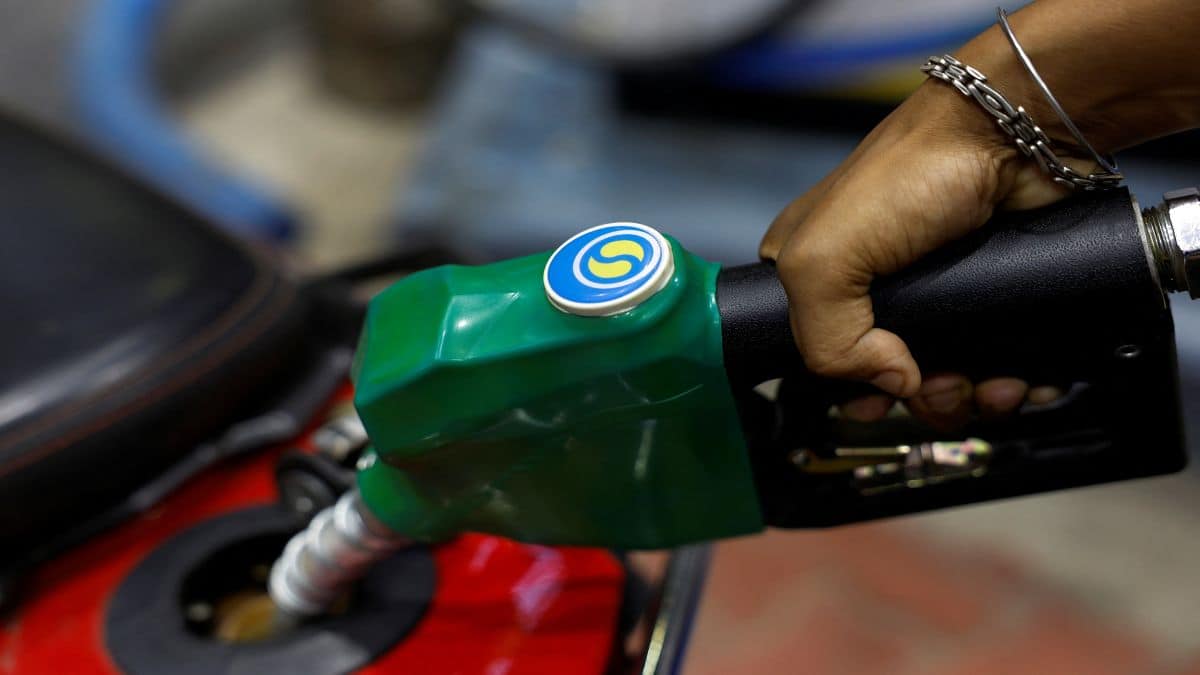
Following this, India began to diversify its oil basket. As the Russia-Ukraine war broke out, India emerged as one of the biggest buyers of Russian crude. Today, Moscow accounts for roughly one-third to 40 per cent of India’s crude imports, making it one of New Delhi’s largest suppliers.
Simultaneously, India relies heavily on oil producers from the Gulf region, namely Saudi Arabia, Iraq, and the UAE. As per data available, OPEC countries accounted for around half of India’s crude imports in 2025. But depending on these countries puts India at risk when tensions flare up in West Asia, as it has since the start of the US-Iran war in February.
In fact, owing to the war, India’s oil imports have been hit, resulting in prices of fuel increasing in India, resulting in cost of other goods also seeing a hike.
But with Iran being allowed to sell its oil, India can look at yet another option for its crude requirements.
A News18 report also added that the US waiver could also strengthen the negotiating position of Indian refiners with suppliers in the Gulf and Russia.
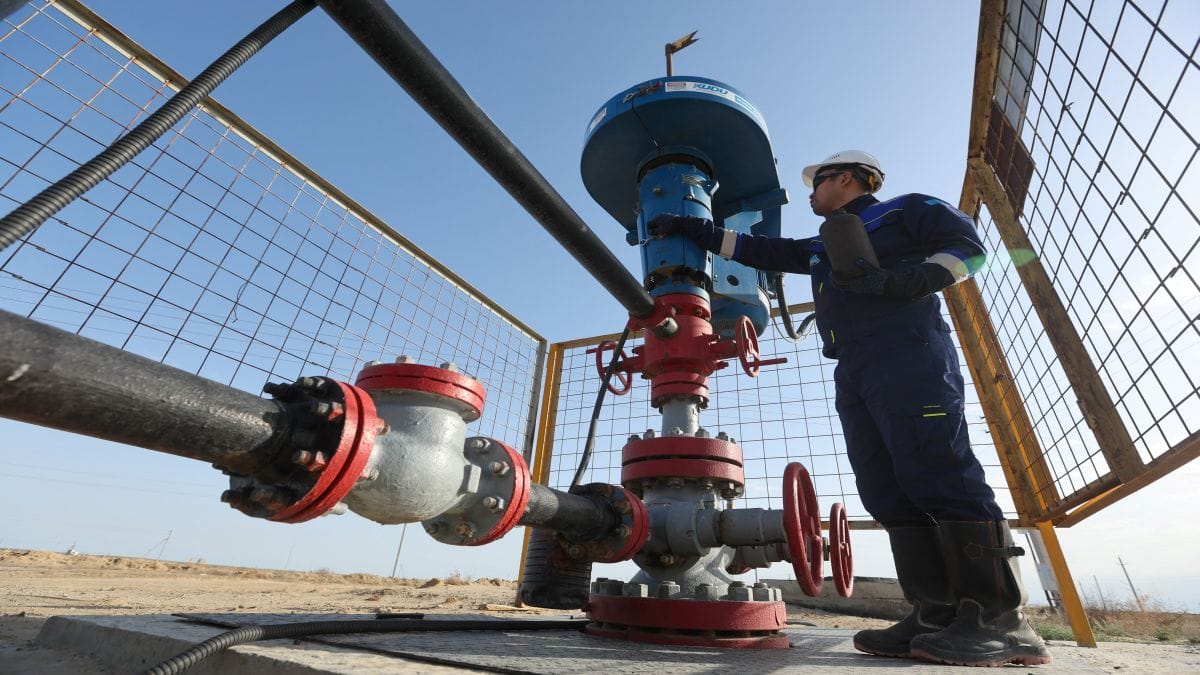
Notably, shortly after the announcement, reports emerged that the National Iranian Oil Company (NIOC) had reached out to international oil companies, including Indian refiners and trading houses, to resume commercial ties in a bid to restart its global oil exports.
But there are challenges too
However, a Moneycontrol report has revealed that Indian refiners aren’t rushing to place their orders for Iranian oil yet.
Indian refiners are determining whether Iranian crude can be bought without sanctions risk, whether payments can be routed smoothly, whether shipping and insurance are available, and whether Iran is willing to price its crude attractively enough to offset compliance concerns.
Moreover, there’s also the issue of Iran’s prices being competitive. “India will buy Iranian crude again if sanctions are removed, but Iran is returning to a very different market from the one it left in 2018,” said B Anand, industry expert and former CEO of Nayara Energy, told Platts, part of S&P Global Energy. “A return to pre-sanctions import levels should not be viewed as automatic. Iran will have to compete for market share rather than simply reclaim it.”
Premasish Das, executive director for oil analytics at S&P Global Energy CERA, also concurred with this view. “If sanctions are lifted, Indian refiners are likely to ramp up purchases of Iranian barrels, as we have seen during temporary waivers, as an opportunistic swing supply source to optimise crude costs and diversify.
“However, the appetite will depend on the length and stability of sanctions relief and competition from other Asian buyers, especially China,” he added.
With inputs from agencies

Cruise missiles, drones and more... The deadly arsenal of the Houthis
Why India may not witness a medal rush at 2026 Commonwealth Games
Delhi Police asks personnel to wear uniform: What the law says on cops in plainclothes during protests
Military drones & police check-ups: How Sri Lanka is fighting against worst dengue outbreak in a decade
How Facebook job ad lured 2 Karnataka men into Myanmar cyber scam camp