


From call centre to WhatsApp CEO: How CRED’s Kunal Shah joined elite club of Indian CEOs in tech
In a surprise move, Meta has named CRED founder Kunal Shah to be the next CEO at WhatsApp, replacing Will Cathcart. This is a big moment for Indians — Shah’s elevation marks yet another entrant to the ever-growing club of Indians leading tech giants globally

It’s a big moment for Indians in tech. On Monday (June 22), Meta’s longtime WhatsApp leader stepped down, and the company announced that he would be replaced by the founder of the Indian fintech startup CRED.
Kunal Shah, who founded CRED in 2018, will step into the shoes of Will Cathcart, who has been at WhatsApp for seven years. CRED is a credit card payment platform that rewards users who pay their bills on a timely basis.
Shah’s elevation to WhatsApp head comes alongside a major strategic investment, with Meta committing nearly $900 million into CRED at a valuation of about $4.5 billion, deepening its push into India’s fast-growing digital economy.
The appointment has not only sparked interest in Shah’s entrepreneurial life but also highlighted India’s growing influence in the global tech world.
 More from Explainers
Kunal Shah’s humble beginnings
Kunal Shah’s rise to the top didn’t start in a boardroom. In fact, he has quite the humble beginnings.
Shah was born in Ahmedabad and raised in Mumbai, where he studied philosophy at Wilson College. He briefly enrolled in an MBA programme, but dropped out. In the early 2000s, like many other young Indians, Shah entered the workforce by taking up a job at a call centre, where he was exposed to a generation of workers in global businesses and customers.
His first big moment arrived in 2010 when he co-founded FreeCharge with Sandeep Tandon. The platform allowed users to recharge mobile phones and utility accounts while earning rewards. As smartphones and digital payments gained traction, FreeCharge emerged as one of India’s most recognisable internet brands.
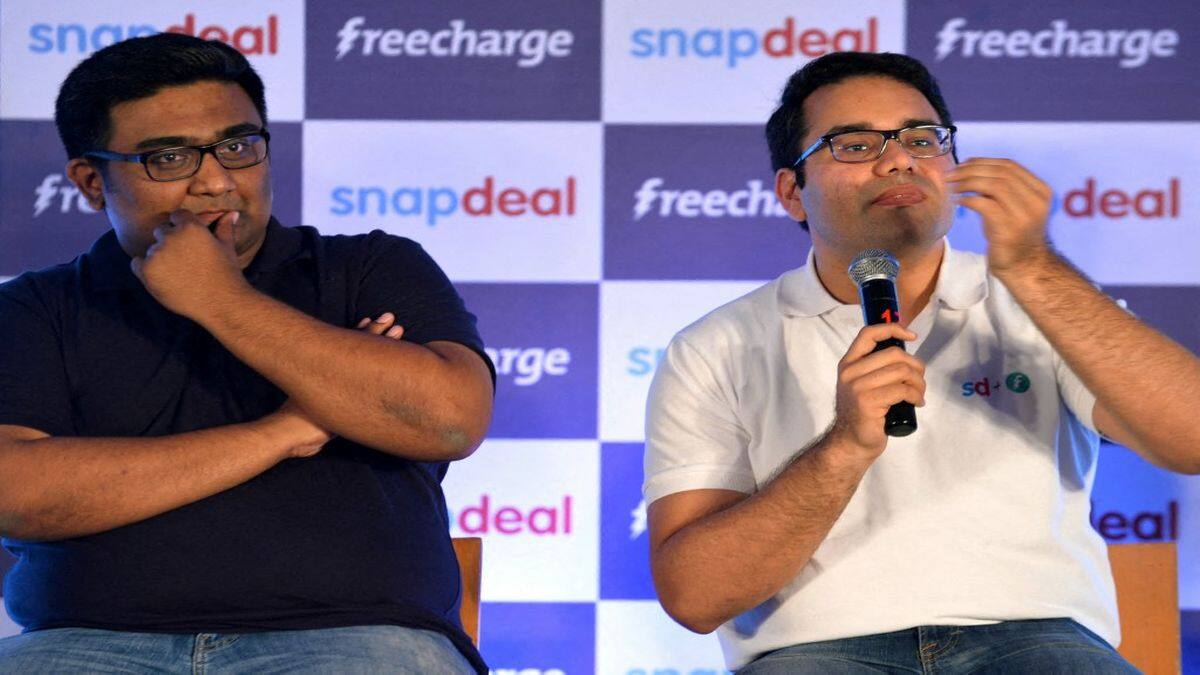
Five years later, Snapdeal acquired it, with Shah staying on to oversee operations before exiting in 2016. At the time, it was one of the largest startup acquisitions in India. Axis Bank would later acquire the company in 2017.
Following Freecharge’s success, he spent several years as an angel investor, backing dozens of technology startups.
Kunal Shah and the CRED chapter
It was during this time that Shah pondered about his next venture and what problem he wanted to solve.
The answer came in the form of CRED in 2018 — a platform initially designed to reward users for paying credit card bills on time.
From 2019 to 2025, Shah scaled CRED from zero to around 17 million members with his team. He also expanded into verticals such as payments, lending, insurance, commerce, wealth, and credit cards, while also raising over $900 million from global investors and conducting multiple ESOP buybacks.
Today, CRED generates nearly Rs 3,200 crore in annual revenue.
Alongside CRED, Shah has also earned a reputation for being one of India’s most prolific tech investors. He has invested in several startups such as Razorpay, Spinny, Unacademy, Go-Jek, and many others. He has also taken on advisory and mentorship roles with some of the world’s most influential startup accelerators and venture firms, cementing his status as one of the most connected figures in India’s entrepreneurial ecosystem.
Shah's new beginning with WhatsApp
On Monday (June 22), it was announced that Shah would become the next head of WhatsApp. Meta’s Mark Zuckerberg said in a statement that Will Cathcart would be transitioned into another role at Meta, where he’ll “build new products from the ground up”.
On appointing Shah, Zuckerberg said that Shah’s “builder mentality and global perspective” made him a good fit to lead WhatsApp.
According to a Moneycontrol report, Meta’s chief product officer, Chris Cox, approached Shah directly while searching for a leader who understood markets where WhatsApp already has a strong foothold, recognised the app’s global product potential, and could effectively represent users’ needs.

While Shah will begin work from India, he will eventually relocate to Meta’s headquarters in Menlo Park, California. Meanwhile, Miten Sampat, Shah’s deputy, will take over the reins at the CRED. In a message to his employees, Shah noted: “Team Cred, I’ll still expect you to be a 10x version of yourselves.”
But why did Zuckerberg choose Shah to lead WhatsApp? It’s because the messaging platform’s largest market is India. Additionally, the country has emerged as a key battleground for Meta’s ambitions in business messaging and digital payments, areas seen as critical to WhatsApp’s next phase of growth.
Until now, WhatsApp’s push into digital payments has been a mixed bag. While WhatsApp Pay has gained traction, it hasn’t been able to replicate the success of PhonePe or Google Pay. Hence, Zuckerberg is betting that Shah’s experience building a consumer internet company in India can help unlock WhatsApp’s next phase of growth.
Shah joins the elite club of Indian CEOs
Shah’s appointment is also yet another indicator that Indians are at the forefront of global tech. The CRED founder’s rise marks a significant addition to the growing list of Indian-origin executives steering the world’s most influential technology companies.
Early this year, Indian-origin Asha Sharma was named CEO of Microsoft Gaming, taking over from Phil Spencer. Additionally, Rahul Patil joined AI giant Anthropic as its Chief Technology Officer last October.

Earlier in 2023, Neal Mohan became CEO of YouTube, and Ravi Kumar S became CEO of Cognizant.
However, the leaders of this elite Indian tech CEOs club are none other than Sundar Pichai, who took the helm of Google in 2015 and later its parent company, Alphabet, in 2019, and Satya Nadella at Microsoft. In fact, Nadella, who became CEO of Microsoft in 2014, is widely credited with orchestrating the company’s turnaround by shifting focus toward cloud computing and AI.
And they are joined by long-tenured leaders such as Shantanu Narayen, who has led Adobe since 2007, and IBM CEO Arvind Krishna, who, over his 35-year career at the American multinational firm, has led a series of bold transformations.
Shah’s appointment is a clear indicator that Indians in tech are here to stay.
With inputs from agencies
Tags

Cruise missiles, drones and more... The deadly arsenal of the Houthis
Why India may not witness a medal rush at 2026 Commonwealth Games
Delhi Police asks personnel to wear uniform: What the law says on cops in plainclothes during protests
Military drones & police check-ups: How Sri Lanka is fighting against worst dengue outbreak in a decade
How Facebook job ad lured 2 Karnataka men into Myanmar cyber scam camp