
Advertisement


Sections
What is Israel’s Iron Dome anti-missile system that took on Hamas’ rain of rockets?
Hamas, the Palestinian terror group, fired a barrage of rockets – over 5,000 in 20 minutes – at Israel on Saturday. Israel's Iron Dome was at work once again, intercepting many of the projectiles, though some hit their targets. We take a closer look at this air defence system

Israel is at war. It’s Day 2 of gun battle after the Palestinian terror group Hamas launched one of its biggest and deadliest attacks against Israel on Saturday (7 October), prompting Israeli’s Benjamin Netanyahu to announce that his country was now “at war”.“What happened today has never been seen in Israel. We will take mighty vengeance for this black day,” Netanyahu said in a televised speech on Saturday. “Israel will reach every place Hamas is hiding.”The surprise attacks have since claimed the lives of at least 350 people and caused unprecedented damage and destruction.Mohammed Deif, head of the Palestinian group’s military wing al-Qassam Brigades announced the group had fired over 5,000 rockets in the “first strike of 20 minutes” under ‘Operation Al-Aqsa Flood’ on Saturday. In addition, the group also launched ground attacks, infiltrating military bases and overrunning parts of two southern Israel towns, taking hostages in the process.Amid the gun battle, many questions are being raised? Is it an intelligence failure on the part of Tel Aviv? How was Hamas able to launch a barrage of rockets against Israel’s famous Iron Dome – an air defence system meant especially for this purpose?We take a closer look at what exactly is the Iron Dome air defence system? How does it work and how equipped is it during an all-out war?What is the Iron Dome?The Iron Dome, operational since 2011, is Israel’s short-range air defence system known for taking down largely unguided rockets fired from Palestinian territory. It was first created by Israeli firms Rafael Advanced Defense Systems and Israel Aerospace Industries with some support from the United States.The genesis of the Iron Dome came after the 2006 Lebanon conflict when thousands of rockets were launched into Israel, causing huge damage, mass evacuations and dozens of deaths. After that Israel said a new missile defence shield would be developed.The Iron Dome is used for countering rockets, artillery & mortars (C-RAM) as well as aircraft, helicopters and unmanned aerial vehicles. As NDTV reports, it has a range of approximately 70 km and has three central components that form a unit, namely; Detection and Tracking radar, Battle Management and Weapons Control and the Missile Launcher armed with 20 Tamir Missiles.It is effective in all weather conditions, including during the day and night.The Iron Dome doesn’t take down each and every rocket fired; it relies on radar and artificial intelligence (AI) to determine whether an incoming trajectile is a threat and only fires when the incoming rocket is running the risk of hitting a populated area or infrastructure. If the system determines there is no danger, then it allows the rocket to land.The manufacturer of the Iron Dome states that the success rate of the air defence system is as high as 90 per cent, but experts agree the success rate is over 80 per cent.[caption id="attachment_13219022" align="alignnone" width="640"]![]() A view of an Iron Dome launcher, which is used to fire interceptor missiles against Hamas. File image/Reuters[/caption]However, the Iron Dome doesn’t come cheap. In fact, a lot has been said about its cost. Each battery, or the full unit, can cost over $50 million (Rs 415 crore), and one interceptor Tamir missile costs around $80,000 (Rs 66.5 lakh).But Retired Air Marshal Anil Chopra, who heads the Centre for Air Power Studies (CAPS) think tank in New Delhi, told the Indian Express that it is not the right way to judge its cost effectiveness. “If I have to take… rockets, which cost very little, and I am firing any missile, then it’s an expensive exercise.”“But it proves a deterrent,” he told the newspaper, “Additionally, the morale of the nation is maintained as it doesn’t get intimidated by rockets.”This has been echoed by Jean-Loup Samaan, a research affiliate with the Middle East Institute at the National University of Singapore who has studied Israel’s missile defence. Speaking to Vox earlier, he said that the Iron Dome is an “insurance policy”; it reassures citizens and protects against loss of life and property damage.[caption id="attachment_13219062" align="alignnone" width="640"]
A view of an Iron Dome launcher, which is used to fire interceptor missiles against Hamas. File image/Reuters[/caption]However, the Iron Dome doesn’t come cheap. In fact, a lot has been said about its cost. Each battery, or the full unit, can cost over $50 million (Rs 415 crore), and one interceptor Tamir missile costs around $80,000 (Rs 66.5 lakh).But Retired Air Marshal Anil Chopra, who heads the Centre for Air Power Studies (CAPS) think tank in New Delhi, told the Indian Express that it is not the right way to judge its cost effectiveness. “If I have to take… rockets, which cost very little, and I am firing any missile, then it’s an expensive exercise.”“But it proves a deterrent,” he told the newspaper, “Additionally, the morale of the nation is maintained as it doesn’t get intimidated by rockets.”This has been echoed by Jean-Loup Samaan, a research affiliate with the Middle East Institute at the National University of Singapore who has studied Israel’s missile defence. Speaking to Vox earlier, he said that the Iron Dome is an “insurance policy”; it reassures citizens and protects against loss of life and property damage.[caption id="attachment_13219062" align="alignnone" width="640"]![]() An Israeli missile launched from the Iron Dome defence missile system attempts to intercept a rocket, fired from the Gaza Strip, over the city of Netivot in southern Israel. AFP[/caption]It’s important to note here that the Iron Dome isn’t effective against more potent missiles, for instance, a ballistic missile. Those missiles are bigger and faster, with longer and steeper trajectories. Iron Dome is specifically for shorter-range threats.The success of the Iron Dome has generated a lot of interest from other countries – parts of it have already been sold to countries like Canada, Britain, the Czech Republic and Slovakia. However, Israel has refrained from selling the system to Ukraine, despite Kyiv repeatedly requesting to purchase the costly technology to protect its civilians from heavy Russian shelling during the ongoing war.[caption id="attachment_13219032" align="alignnone" width="640"]
An Israeli missile launched from the Iron Dome defence missile system attempts to intercept a rocket, fired from the Gaza Strip, over the city of Netivot in southern Israel. AFP[/caption]It’s important to note here that the Iron Dome isn’t effective against more potent missiles, for instance, a ballistic missile. Those missiles are bigger and faster, with longer and steeper trajectories. Iron Dome is specifically for shorter-range threats.The success of the Iron Dome has generated a lot of interest from other countries – parts of it have already been sold to countries like Canada, Britain, the Czech Republic and Slovakia. However, Israel has refrained from selling the system to Ukraine, despite Kyiv repeatedly requesting to purchase the costly technology to protect its civilians from heavy Russian shelling during the ongoing war.[caption id="attachment_13219032" align="alignnone" width="640"]![]() A member of Israel's security walks past a police station which was the site of a battle following a mass infiltration by Hamas gunmen from the Gaza Strip, in Sderot, southern Israel. Reuters[/caption]So, what happened on Saturday?On Saturday (7 October), Hamas, the Palestinian terror group, who has long been trying to find a weakness in the Iron Dome over powered the defence system.They overwhelmed the system – firing over 5,000 rockets in less than 20 minutes, making it difficult for the control system to intercept all targets.News18 has reported that Hamas is also developing its crude rocket technology and it has increased its range to cover major cities of Israel including Tel Aviv and Jerusalem. Moreover, a rocket launched by Hamas is much cheaper than the Tamir missile fired to intercept it.In fact, following the attacks, Iran’s Nournews reported that Israel could not predict their operations, and that its Iron Dome was nothing but a dome of straw above a sand castle.Moreover, Hamas didn’t restrict itself to just rocket launches. Hamas terrorists travelled in vehicles, boats and motorised paragliders. They breached Gaza’s security barrier and attacked nearby Israeli towns and military posts, opening fire on residents and passersby.With inputs from agencies
A member of Israel's security walks past a police station which was the site of a battle following a mass infiltration by Hamas gunmen from the Gaza Strip, in Sderot, southern Israel. Reuters[/caption]So, what happened on Saturday?On Saturday (7 October), Hamas, the Palestinian terror group, who has long been trying to find a weakness in the Iron Dome over powered the defence system.They overwhelmed the system – firing over 5,000 rockets in less than 20 minutes, making it difficult for the control system to intercept all targets.News18 has reported that Hamas is also developing its crude rocket technology and it has increased its range to cover major cities of Israel including Tel Aviv and Jerusalem. Moreover, a rocket launched by Hamas is much cheaper than the Tamir missile fired to intercept it.In fact, following the attacks, Iran’s Nournews reported that Israel could not predict their operations, and that its Iron Dome was nothing but a dome of straw above a sand castle.Moreover, Hamas didn’t restrict itself to just rocket launches. Hamas terrorists travelled in vehicles, boats and motorised paragliders. They breached Gaza’s security barrier and attacked nearby Israeli towns and military posts, opening fire on residents and passersby.With inputs from agencies
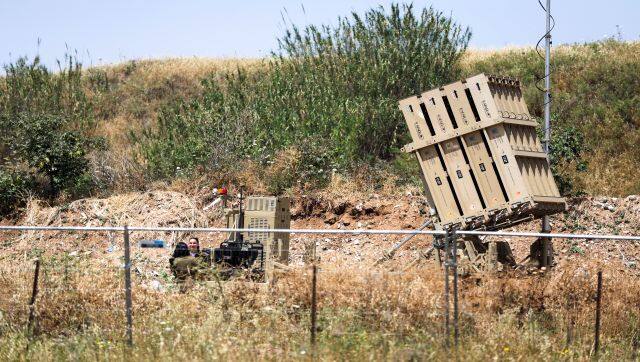 A view of an Iron Dome launcher, which is used to fire interceptor missiles against Hamas. File image/Reuters[/caption]However, the Iron Dome doesn’t come cheap. In fact, a lot has been said about its cost. Each battery, or the full unit, can cost over $50 million (Rs 415 crore), and one interceptor Tamir missile costs around $80,000 (Rs 66.5 lakh).But Retired Air Marshal Anil Chopra, who heads the Centre for Air Power Studies (CAPS) think tank in New Delhi, told the Indian Express that it is not the right way to judge its cost effectiveness. “If I have to take… rockets, which cost very little, and I am firing any missile, then it’s an expensive exercise.”“But it proves a deterrent,” he told the newspaper, “Additionally, the morale of the nation is maintained as it doesn’t get intimidated by rockets.”This has been echoed by Jean-Loup Samaan, a research affiliate with the Middle East Institute at the National University of Singapore who has studied Israel’s missile defence. Speaking to Vox earlier, he said that the Iron Dome is an “insurance policy”; it reassures citizens and protects against loss of life and property damage.[caption id="attachment_13219062" align="alignnone" width="640"]
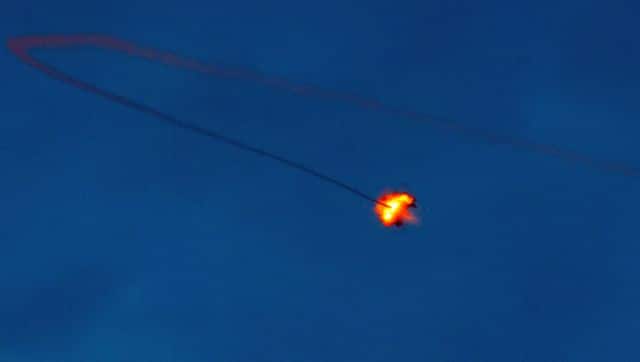 An Israeli missile launched from the Iron Dome defence missile system attempts to intercept a rocket, fired from the Gaza Strip, over the city of Netivot in southern Israel. AFP[/caption]It’s important to note here that the Iron Dome isn’t effective against more potent missiles, for instance, a ballistic missile. Those missiles are bigger and faster, with longer and steeper trajectories. Iron Dome is specifically for shorter-range threats.The success of the Iron Dome has generated a lot of interest from other countries – parts of it have already been sold to countries like Canada, Britain, the Czech Republic and Slovakia. However, Israel has refrained from selling the system to Ukraine, despite Kyiv repeatedly requesting to purchase the costly technology to protect its civilians from heavy Russian shelling during the ongoing war.[caption id="attachment_13219032" align="alignnone" width="640"]
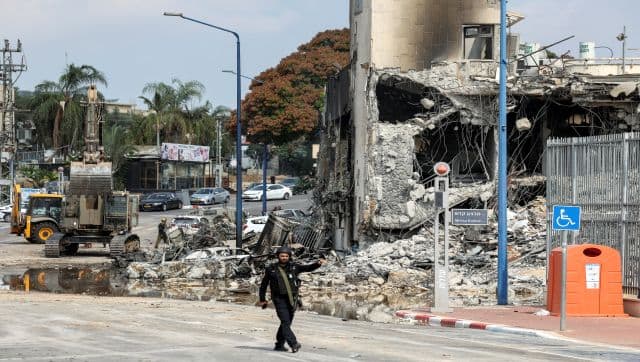 A member of Israel's security walks past a police station which was the site of a battle following a mass infiltration by Hamas gunmen from the Gaza Strip, in Sderot, southern Israel. Reuters[/caption]So, what happened on Saturday?On Saturday (7 October), Hamas, the Palestinian terror group, who has long been trying to find a weakness in the Iron Dome over powered the defence system.They overwhelmed the system – firing over 5,000 rockets in less than 20 minutes, making it difficult for the control system to intercept all targets.News18 has reported that Hamas is also developing its crude rocket technology and it has increased its range to cover major cities of Israel including Tel Aviv and Jerusalem. Moreover, a rocket launched by Hamas is much cheaper than the Tamir missile fired to intercept it.In fact, following the attacks, Iran’s Nournews reported that Israel could not predict their operations, and that its Iron Dome was nothing but a dome of straw above a sand castle.Moreover, Hamas didn’t restrict itself to just rocket launches. Hamas terrorists travelled in vehicles, boats and motorised paragliders. They breached Gaza’s security barrier and attacked nearby Israeli towns and military posts, opening fire on residents and passersby.With inputs from agencies
First Published:Oct 08, 2023, 15:04:34 IST
Advertisement
Advertisement

Military drones & police check-ups: How Sri Lanka is fighting against worst dengue outbreak in a decade
Sri Lanka is fighting its most severe dengue outbreak in nearly a decade, with infections rising sharply across the nation. Military drones have been deployed to tackle the outbreak, which has claimed 56 lives. Health officials said the outbreak is being driven primarily by the DENV-2 variant of the virus
3 min read
How Facebook job ad lured 2 Karnataka men into Myanmar cyber scam camp
The Karnataka Cyber Command has rescued two youths from a scam compound in Myanmar operated by Chinese fraudsters. The duo from Karnataka were lured on the pretext of data-entry jobs. They were asked to work for 16 hours a day and were expected to sleep for six hours daily
4 min read
Why is India seeing 95% cloud cover despite a Super El Niño?
India is witnessing nearly 95 per cent cloud cover despite a Super El Niño, a climate event usually linked to weaker monsoons. Regional weather systems, cyclonic circulations, the monsoon trough and moisture from two seas are temporarily overpowering one of the world's strongest climate phenomena
5 min read
What is CJP’s fourth demand to the government as protests in Delhi intensify?
The protest by the Cockroach Janta Party at Delhi’s Jantar Mantar refuses to die down. The group have made a fourth demand to the Centre, asking that no FIRs are filed against the agitators and that no legal action be taken. The government has expressed willingness to speak to the protesters, but refused to accede on the resignation of Education Minister Dharmandra Pradhan
5 min read
The new geography of war: Why the Houthis can no longer be ignored
The rise of the Houthis marks the emergence of a new geography of war — one in which influence flows not only from capitals and conventional armies, but also from rugged mountains overlooking vital sea lanes
6 min read
Advertisement
Advertisement