
Advertisement


Sections
Germany’s heatwave and the debate over siestas, explained
German doctors are recommending siestas to deal with rising temperatures, which in turn hamper productivity. The Spanish word refers to the midday break that many people take that often includes sleep or other forms of rest. They also suggested workers could use cold foot baths under their desks

Europe is sweltering, with temperatures exceeding 40 degrees Celsius in many places.As a way to deal with rising temperatures that hamper productivity, Germany has come up with an out-of-the-box solution. The introduction of siestas.Yes, you are right, midday naps.Johannes Niessen, the head of the Federal Association of Physicians of German Public Health Departments (BVÖGD), told the RND media network in an interview published on Tuesday, “We should orient ourselves to how people work in the heat in southern countries: get up early, work productively in the morning, and take a siesta at midday. It is a concept that we should adopt in the summer months.”Also read: Explained: What is the deadly Cerberus heatwave sweeping across Europe?Need for a siestaThe Spanish word "siesta" refers to the midday break that many people take, which frequently includes sleep or other forms of rest. However, it's a routine in the world's hotter regions, according to German outlet DW.The more taxing hours of the day should be performed in the morning before the extreme heat exhausts workers, according to the BVGD doctors.Niessen said, “People are not as productive as normal when it’s very hot. Moreover, bad sleep due to warm nights can lead to additional concentration problems.”[caption id="attachment_12890222" align="alignnone" width="640"]![]() People rest during a hot and sunny day of summer in Madrid, Spain. AP[/caption]The public health chief also called for "sufficient fans and lighter clothing, even if the attire rules for an office don't allow it.""A cold footbath under the desk would be another option to stay cool while working from home," he said.Since Germany has never had extended afternoon breaks, it remains to be seen whether the notion will be put into practice.Also read: Cerberus, Charon, Xenia: Why are some heatwaves now being named?The debateThe German government reacted positively to the suggestion and said that call for siestas should be taken “very seriously” given sharply rising temperatures. However, it also said companies and employees would have to decide whether to take it up.Health Minister Karl Lauterbach tweeted that “siesta in the heat is certainly not a bad suggestion” but signalled that the government doesn't intend to get involved in the issue.“Employers and employees should negotiate on that themselves," he wrote, adding, "Certainly makes sense medically for many professions.”On holiday in Italy, Lauterbach tweeted that high temperatures had stopped him from going on a day trip to Rome, according to Reuters."My daughter would rather stay in the pool while I will read. Next try tomorrow."The BDA employers association said more flexible working hours could enable employees to take longer midday breaks if it suited both parties.Also read: Scorching summer in Europe, US: When will the deadly heatwaves end?Not as hot as in southern EuropeAccording to AP, while Germany has avoided the kind of temperatures roasting southern Europe this week, it has sizzled at times this summer in temperatures in the mid-30s Celsius (90s Fahrenheit).The highest temperature so far this year, 38.8 degrees Celsius (101.8 degrees Fahrenheit), was recorded in Bavaria on Saturday. Since then, the heat has receded.Still, this summer's high temperatures have been enough to prompt the head of the BVOeGD association, which represents public health officers across Germany, to propose that the country rethink its working habits during heat waves.Also read: Heat is On: How 3 July becomes the world's hottest day and the worst is yet to comeIntense heat boils EuropeThe World Meteorological Organisation warned on Monday that the heatwave in Southern Europe, which experts say is being driven by a combination of climate change and an El Niño weather pattern, is set to intensify this week.According to the UN weather agency, temperatures in Europe may potentially surpass the 48.8 degrees Celsius (119.84 degrees Fahrenheit) record that Sicily set two years ago.Three huge wildfires raged outside Athens for a second day as Greece prepares for a second heatwave that is expected to arrive on Thursday.[caption id="attachment_12890252" align="alignnone" width="640"]
People rest during a hot and sunny day of summer in Madrid, Spain. AP[/caption]The public health chief also called for "sufficient fans and lighter clothing, even if the attire rules for an office don't allow it.""A cold footbath under the desk would be another option to stay cool while working from home," he said.Since Germany has never had extended afternoon breaks, it remains to be seen whether the notion will be put into practice.Also read: Cerberus, Charon, Xenia: Why are some heatwaves now being named?The debateThe German government reacted positively to the suggestion and said that call for siestas should be taken “very seriously” given sharply rising temperatures. However, it also said companies and employees would have to decide whether to take it up.Health Minister Karl Lauterbach tweeted that “siesta in the heat is certainly not a bad suggestion” but signalled that the government doesn't intend to get involved in the issue.“Employers and employees should negotiate on that themselves," he wrote, adding, "Certainly makes sense medically for many professions.”On holiday in Italy, Lauterbach tweeted that high temperatures had stopped him from going on a day trip to Rome, according to Reuters."My daughter would rather stay in the pool while I will read. Next try tomorrow."The BDA employers association said more flexible working hours could enable employees to take longer midday breaks if it suited both parties.Also read: Scorching summer in Europe, US: When will the deadly heatwaves end?Not as hot as in southern EuropeAccording to AP, while Germany has avoided the kind of temperatures roasting southern Europe this week, it has sizzled at times this summer in temperatures in the mid-30s Celsius (90s Fahrenheit).The highest temperature so far this year, 38.8 degrees Celsius (101.8 degrees Fahrenheit), was recorded in Bavaria on Saturday. Since then, the heat has receded.Still, this summer's high temperatures have been enough to prompt the head of the BVOeGD association, which represents public health officers across Germany, to propose that the country rethink its working habits during heat waves.Also read: Heat is On: How 3 July becomes the world's hottest day and the worst is yet to comeIntense heat boils EuropeThe World Meteorological Organisation warned on Monday that the heatwave in Southern Europe, which experts say is being driven by a combination of climate change and an El Niño weather pattern, is set to intensify this week.According to the UN weather agency, temperatures in Europe may potentially surpass the 48.8 degrees Celsius (119.84 degrees Fahrenheit) record that Sicily set two years ago.Three huge wildfires raged outside Athens for a second day as Greece prepares for a second heatwave that is expected to arrive on Thursday.[caption id="attachment_12890252" align="alignnone" width="640"]![]() Men help a firefighter as they try to extinguish a wildfire burning near the village Vlyhada, near Athens, Greece. Reuters[/caption]Due to wildfires, the most severely damaged areas were referred to as "fiery hell" by local media.According to one headline, "Heatwave Kleon: Fiery hell with the mercury at 44 degrees - The difficult days," reported Sky News.From Bolzano in the north to Palermo in the south, health officials in Italy issued excessive temperature warnings for 20 cities, with that number growing to 23 on Wednesday.There are now more worries about the possibility of wildfires in Spain as a result of the country's ongoing drought.On La Palma in Spain's Canary Islands, a blaze was burning for a fourth day in a row despite efforts by 400 firemen and nine water-dumping helicopters.Around 150 firefighters, police, soldiers, and other emergency services from Switzerland battled a wildfire on a mountainside in the southwest Wallis region with the assistance of helicopters.Four nearby villages and hamlets had to evacuate their residents owing to the fire.Also read: The Deadly Summer of 2023: Why long heatwaves are here to stayRising concerns about climate changeThe latest heat wave added to concerns about climate change. The World Meteorological Organization said preliminary global figures showed last month was the hottest June on record.[caption id="attachment_12890262" align="alignnone" width="640"]
Men help a firefighter as they try to extinguish a wildfire burning near the village Vlyhada, near Athens, Greece. Reuters[/caption]Due to wildfires, the most severely damaged areas were referred to as "fiery hell" by local media.According to one headline, "Heatwave Kleon: Fiery hell with the mercury at 44 degrees - The difficult days," reported Sky News.From Bolzano in the north to Palermo in the south, health officials in Italy issued excessive temperature warnings for 20 cities, with that number growing to 23 on Wednesday.There are now more worries about the possibility of wildfires in Spain as a result of the country's ongoing drought.On La Palma in Spain's Canary Islands, a blaze was burning for a fourth day in a row despite efforts by 400 firemen and nine water-dumping helicopters.Around 150 firefighters, police, soldiers, and other emergency services from Switzerland battled a wildfire on a mountainside in the southwest Wallis region with the assistance of helicopters.Four nearby villages and hamlets had to evacuate their residents owing to the fire.Also read: The Deadly Summer of 2023: Why long heatwaves are here to stayRising concerns about climate changeThe latest heat wave added to concerns about climate change. The World Meteorological Organization said preliminary global figures showed last month was the hottest June on record.[caption id="attachment_12890262" align="alignnone" width="640"]![]() Tourists sit in the shade to shelter from the sun during a heatwave, in Palermo, Italy. Reuters[/caption]“The extreme weather, an increasingly frequent occurrence in our warming climate, is having a major impact on human health, ecosystems, economies, agriculture, energy and water supplies,” WMO Secretary-General Petteri Taalas said Wednesday.“This underlines the increasing urgency of cutting greenhouse gas emissions as quickly and as deeply as possible.”According to Professor Richard Betts, a climate scientist at the Met Office and the University of Exeter, the worrying highs are consistent with experts’ warnings about the continued use of fossil fuels.He told BBC, “This is all a stark reminder of what we’ve known for a long time, and we will see ever more extremes until we stop building up more greenhouse gases in the atmosphere.”With inputs from agencies
Tourists sit in the shade to shelter from the sun during a heatwave, in Palermo, Italy. Reuters[/caption]“The extreme weather, an increasingly frequent occurrence in our warming climate, is having a major impact on human health, ecosystems, economies, agriculture, energy and water supplies,” WMO Secretary-General Petteri Taalas said Wednesday.“This underlines the increasing urgency of cutting greenhouse gas emissions as quickly and as deeply as possible.”According to Professor Richard Betts, a climate scientist at the Met Office and the University of Exeter, the worrying highs are consistent with experts’ warnings about the continued use of fossil fuels.He told BBC, “This is all a stark reminder of what we’ve known for a long time, and we will see ever more extremes until we stop building up more greenhouse gases in the atmosphere.”With inputs from agencies
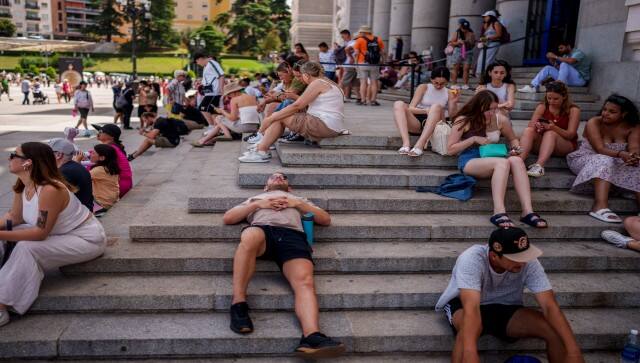 People rest during a hot and sunny day of summer in Madrid, Spain. AP[/caption]The public health chief also called for "sufficient fans and lighter clothing, even if the attire rules for an office don't allow it.""A cold footbath under the desk would be another option to stay cool while working from home," he said.Since Germany has never had extended afternoon breaks, it remains to be seen whether the notion will be put into practice.Also read: Cerberus, Charon, Xenia: Why are some heatwaves now being named?The debateThe German government reacted positively to the suggestion and said that call for siestas should be taken “very seriously” given sharply rising temperatures. However, it also said companies and employees would have to decide whether to take it up.Health Minister Karl Lauterbach tweeted that “siesta in the heat is certainly not a bad suggestion” but signalled that the government doesn't intend to get involved in the issue.“Employers and employees should negotiate on that themselves," he wrote, adding, "Certainly makes sense medically for many professions.”On holiday in Italy, Lauterbach tweeted that high temperatures had stopped him from going on a day trip to Rome, according to Reuters."My daughter would rather stay in the pool while I will read. Next try tomorrow."The BDA employers association said more flexible working hours could enable employees to take longer midday breaks if it suited both parties.Also read: Scorching summer in Europe, US: When will the deadly heatwaves end?Not as hot as in southern EuropeAccording to AP, while Germany has avoided the kind of temperatures roasting southern Europe this week, it has sizzled at times this summer in temperatures in the mid-30s Celsius (90s Fahrenheit).The highest temperature so far this year, 38.8 degrees Celsius (101.8 degrees Fahrenheit), was recorded in Bavaria on Saturday. Since then, the heat has receded.
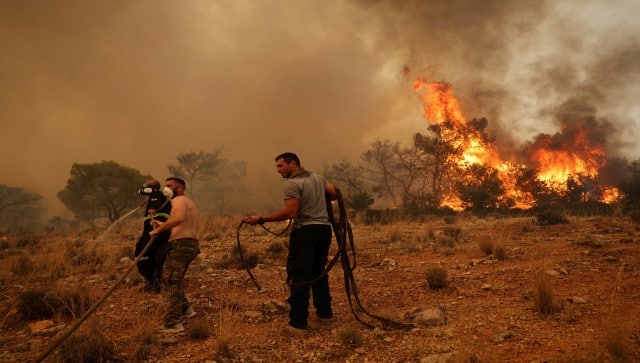 Men help a firefighter as they try to extinguish a wildfire burning near the village Vlyhada, near Athens, Greece. Reuters[/caption]Due to wildfires, the most severely damaged areas were referred to as "fiery hell" by local media.According to one headline, "Heatwave Kleon: Fiery hell with the mercury at 44 degrees - The difficult days," reported Sky News.From Bolzano in the north to Palermo in the south, health officials in Italy issued excessive temperature warnings for 20 cities, with that number growing to 23 on Wednesday.There are now more worries about the possibility of wildfires in Spain as a result of the country's ongoing drought.On La Palma in Spain's Canary Islands, a blaze was burning for a fourth day in a row despite efforts by 400 firemen and nine water-dumping helicopters.Around 150 firefighters, police, soldiers, and other emergency services from Switzerland battled a wildfire on a mountainside in the southwest Wallis region with the assistance of helicopters.Four nearby villages and hamlets had to evacuate their residents owing to the fire.Also read: The Deadly Summer of 2023: Why long heatwaves are here to stayRising concerns about climate changeThe latest heat wave added to concerns about climate change. The World Meteorological Organization said preliminary global figures showed last month was the hottest June on record.[caption id="attachment_12890262" align="alignnone" width="640"]
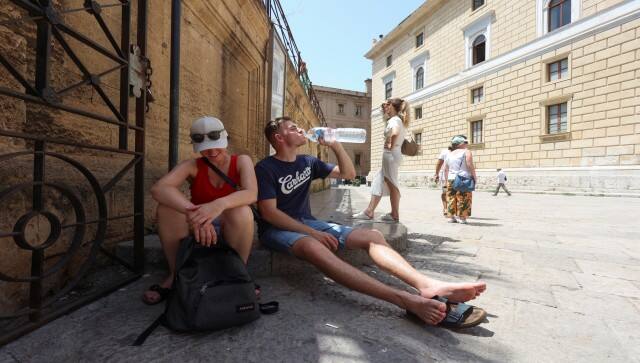 Tourists sit in the shade to shelter from the sun during a heatwave, in Palermo, Italy. Reuters[/caption]“The extreme weather, an increasingly frequent occurrence in our warming climate, is having a major impact on human health, ecosystems, economies, agriculture, energy and water supplies,” WMO Secretary-General Petteri Taalas said Wednesday.“This underlines the increasing urgency of cutting greenhouse gas emissions as quickly and as deeply as possible.”According to Professor Richard Betts, a climate scientist at the Met Office and the University of Exeter, the worrying highs are consistent with experts’ warnings about the continued use of fossil fuels.He told BBC, “This is all a stark reminder of what we’ve known for a long time, and we will see ever more extremes until we stop building up more greenhouse gases in the atmosphere.”With inputs from agencies
First Published:Jul 20, 2023, 11:50:08 IST
Advertisement
Advertisement

Cruise missiles, drones and more... The deadly arsenal of the Houthis
The Houthis have evolved into one of the world's most formidable non-state military forces, deploying anti-ship ballistic missiles, cruise missiles, drones and explosive boats to threaten Red Sea shipping. Their latest attacks on Saudi oil tankers have raised concerns over shipping through the Bab el-Mandeb Strait amid the Strait of Hormuz crisis
10 min read
Why India may not witness a medal rush at 2026 Commonwealth Games
A 125-strong Indian contingent is in Glasgow for the 2026 Commonwealth Games, starting today (July 23), chasing international glory. However, with a roster of sports such as badminton and wrestling being cut from the event, the country’s medal chances have been drastically reduced
4 min read
Delhi Police asks personnel to wear uniform: What the law says on cops in plainclothes during protests
The Delhi Police has instructed all its personnel to wear uniforms when they report for duty at Jantar Mantar for crowd control. This comes after outrage grew over videos of men in civilian clothes or without name tags hitting protesters in the Capital. Is it legal for the police to ditch uniforms during protests?
4 min read
Military drones & police check-ups: How Sri Lanka is fighting against worst dengue outbreak in a decade
Sri Lanka is fighting its most severe dengue outbreak in nearly a decade, with infections rising sharply across the nation. Military drones have been deployed to tackle the outbreak, which has claimed 56 lives. Health officials said the outbreak is being driven primarily by the DENV-2 variant of the virus
3 min read
How Facebook job ad lured 2 Karnataka men into Myanmar cyber scam camp
The Karnataka Cyber Command has rescued two youths from a scam compound in Myanmar operated by Chinese fraudsters. The duo from Karnataka were lured on the pretext of data-entry jobs. They were asked to work for 16 hours a day and were expected to sleep for six hours daily
4 min read
Advertisement
Advertisement