


Explained: Why El Salvador's Bitcoin experiment has proven to be a spectacular failure
A year ago, El Salvador became the first country to make Bitcoin legal tender. However, today just 20 per cent of the population use it for transactions, making it a cautionary tale of what happens when a country adopts a cryptocurrency

A year ago, El Salvador became the first country to make Bitcoin legal tender — alongside the US dollar, which the Central American country adopted in 2001 to replace its own currency, the colón.President Nayib Bukele, a cryptocurrency enthusiast, promoted the initiative as one that would deliver multiple economic benefits.Making Bitcoin legal tender, he said, would attract foreign investment, generate jobs and help “push humanity at least a tiny bit into the right direction”.His ambitions extended to building an entire “Bitcoin city” — a tax-free haven funded by issuing $1 billion in government bonds. The plan was to spend half the bond revenue on the city, and the other half on buying Bitcoin, with assumed profits then being used to repay the bondholders.
Business acceptance of Bitcoin in El Salvador
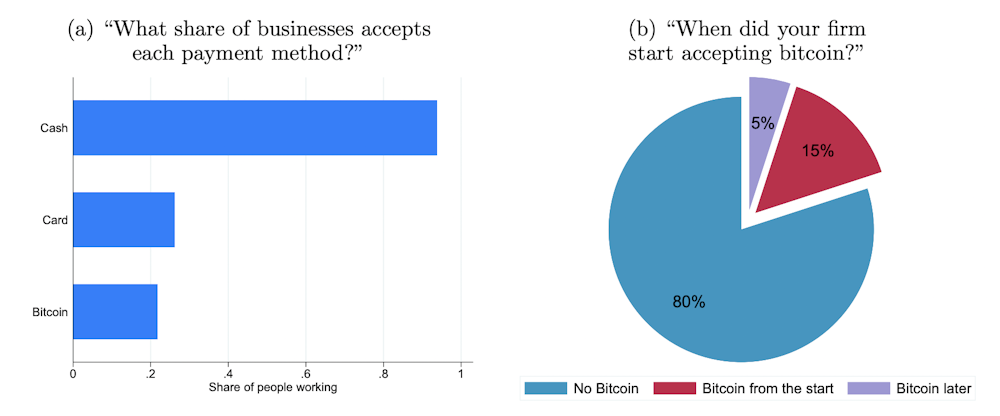
A survey for the El Salvador Chamber of Commerce in March found only 14 per cent of businesses were transacting using Bitcoin.Making huge lossesFortunately for Salvadorans, nothing has come of the $1 billion Bitcoin bonds scheme. But the Bukele government has still spent more than $100 million buying bitcoins — which are now worth less than $50 million.When Bukele announced his plans in July 2021, Bitcoin’s value was about $35,000. By the time the legislation came into effect, on 7 September 2021, it was about $45,000. Two months later, it peaked at $64,400.Now it is trading at around $20,000.Bukele has made self-congratulatory tweets about “buying the dip” but almost all the bitcoins bought by the government have been for more than $30,000, at an average price of more than $40,000.A year ago, Bukele was urging his citizens to hold their money in bitcoins. For anyone who did, the losses would be devastating.Flawed analysesBukele’s misunderstanding of Bitcoin — and economics more generally — has been demonstrated repeatedly.In June 2021 he tweeted: “Bitcoin has a market cap of $680 billion. If 1 per cent of it is invested in El Salvador, that would increase our GDP by 25 per cent.”This suggests he seemed to think Bitcoin was some sort of investment fund. It also showed he did not understand GDP. Foreign investment is not a component of GDP. There has been no surge in foreign investment nor GDP.In a January 2022 tweet he argued a “gigantic price increase is just a matter of time” because there will only ever be 21 million bitcoins while there are 50 million millionaires in the world. “Imagine when each one of them decides they should own at least ONE #Bitcoin,” he proclaimed. Bitcoin’s value has since halved.The rest of the world is not impressedThe Bitcoin plan has adversely affected El Salvador’s credit rating and relations with the International Monetary Fund (IMF). With investors more wary of lending to the country, local borrowers have had to offer higher interest rates.In January, the IMF urged El Salvador to reverse Bitcoin’s legal lender status because of the “large risks for financial and market integrity, financial stability and consumer protection”. Bitcoin is notorious for its use in scams and other illegal activities, as well as its volatility.Bukele tweeted a dismissive response involving a Simpsons-themed meme.This seems particularly rash, given El Salvador has been seeking a loan of more than $1 billion from the IMF.International credit rating agencies Fitch has downgraded El Salvador’s credit rating this year, citing concerns about its Bitcoin policies.No other country with its own currency, not even ones such as Zimbabwe and Venezuela with discredited currencies, has followed suit and made Bitcoin legal tender.Given El Salvador’s record, it is unlikely any ever will.
 This article is republished from The Conversation under a Creative Commons license. Read the original article.Read all the Latest News, Trending News, Cricket News, Bollywood News,India News and Entertainment News here. Follow us on Facebook, Twitter and Instagram.
Cruise missiles, drones and more... The deadly arsenal of the Houthis
Why India may not witness a medal rush at 2026 Commonwealth Games
Delhi Police asks personnel to wear uniform: What the law says on cops in plainclothes during protests
Military drones & police check-ups: How Sri Lanka is fighting against worst dengue outbreak in a decade
How Facebook job ad lured 2 Karnataka men into Myanmar cyber scam camp