
Advertisement


Sections
Meet FTII student Payal Kapadia, whose film Afternoon Clouds, was selected for Cannes 2017
Payal Kapadia is the director of Afternoon Clouds, the only Indian film to compete at Cannes 2017. She is also the only FTII student whose film has gone to the prestigious festival.

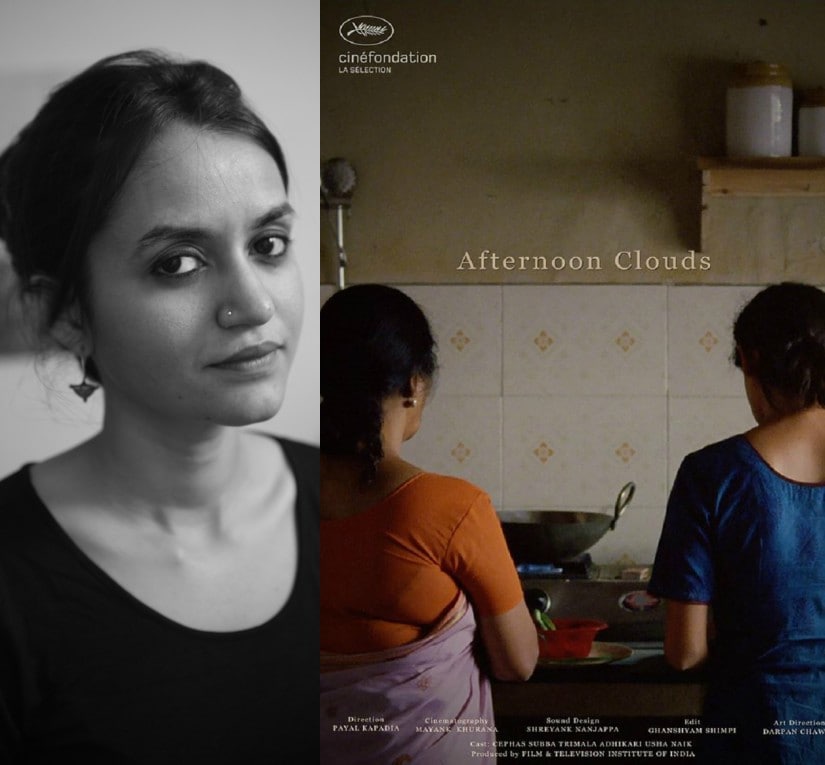 Payal Kapadia and the poster of Afternoon Clouds. Images via Facebook[/caption]She says that she has been preoccupied by the subjects the film explores across various projects. "In India, I think love expressed by women is a very complex and difficult thing. It comes with the mixed feelings of exhilaration and fear. There is a sense of uncertainty that lingers on in the decision one makes. These are also very personal preoccupations and so I was compelled to explore them through cinema," she explains.Such feelings are sensitive, and Kapadia said her own personal questions about them inspired her to make the film, which was partly influenced by her own grandmother's story. She says that daily life is a huge inspiration for her, and that the mundane and banal are a great space for drama. "One does not need to look too far for inspiration because the life that surrounds us is full of poetic possibilities including dreams and memories," she says.[caption id="attachment_3534729" align="alignnone" width="825"]
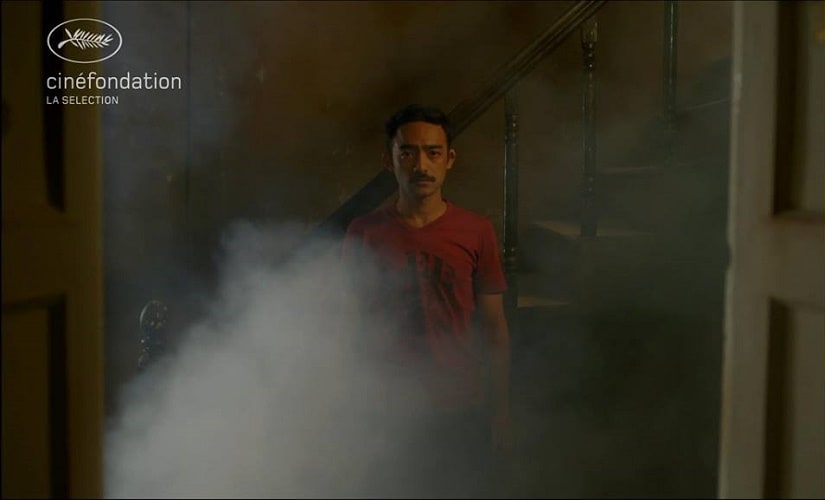 A still from Afternoon Clouds. Image from Facebook[/caption]The other major influence for this film was senior Indian artist Arpita Singh's paintings, in which she finds a sense of lightness combined with melancholy. She finds that through drawings of the female body, Singh manages to talk about transient feelings by using seemingly simple devices.If you take a look at the trailer of Afternoon Clouds, you will notice that there is a sense of silence ad tranquil to it. The focus is on the visuals and subjects, with the sound and dialogues being minimalistic. This is also true of the glimpses you will get of her other films, such as Watermelon, Fish and Half Ghost and The Last Mango Before Monsoon. She says that the challenge with respect to making this 13-minute film lay in bringing to life a believable set and mise-en-scène, when every little detail had to be recreated inside the four walls of a studio. Another challenging aspect was the creation of natural light, and giving the film a realistic feel.[caption id="attachment_3534735" align="alignnone" width="825"]
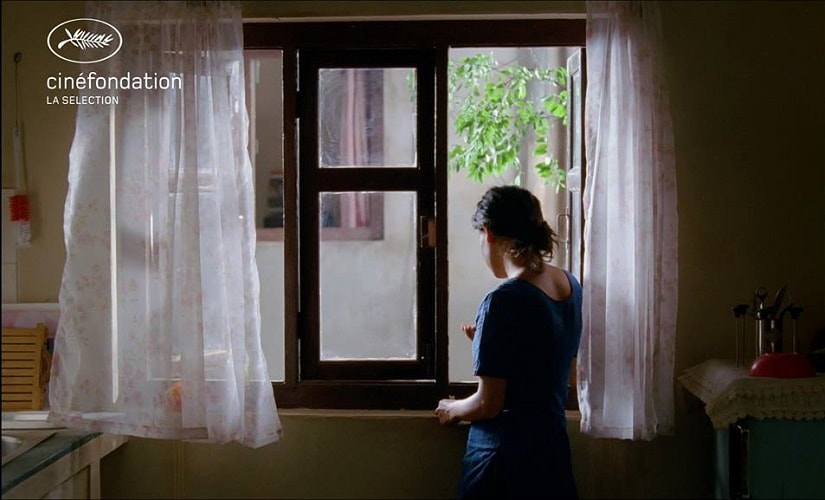 A still from Afternoon Clouds. Image from Facebook[/caption]Kapadia describes the feeling of receiving the news about her film's selection surreal. She was shooting a documentary film with her crew in a remote forest of Bhimashankar, Maharashtra, when she received an e-mail from Cinéfondation. A few weeks later, she and the Afternoon Clouds team were at Cannes, where she was exposed to the "serious side" of the festival, which she says is not portrayed by the media. "It was wonderful to meet and interact with filmmakers from around the world who were also presenting their films at Cinefondation. There was a lot to learn from each and every film," she says.She also holds the honour of being FTII's only student whose film has gone to Cannes. Now Payal's back at FTII, where she has two more projects lined up as a part of her last year coursework. She describes the film institute as one of the best learning experiences, and says that it has contributed to her style of film making too. "Film school — like any art school — is not just about learning the skill or using the camera. It is about constantly engaging with ones medium and interacting with others who have similar yet varied preoccupations. It gives you time to think about your practice and develop a language for yourself," she says.[caption id="attachment_3534741" align="alignnone" width="825"]
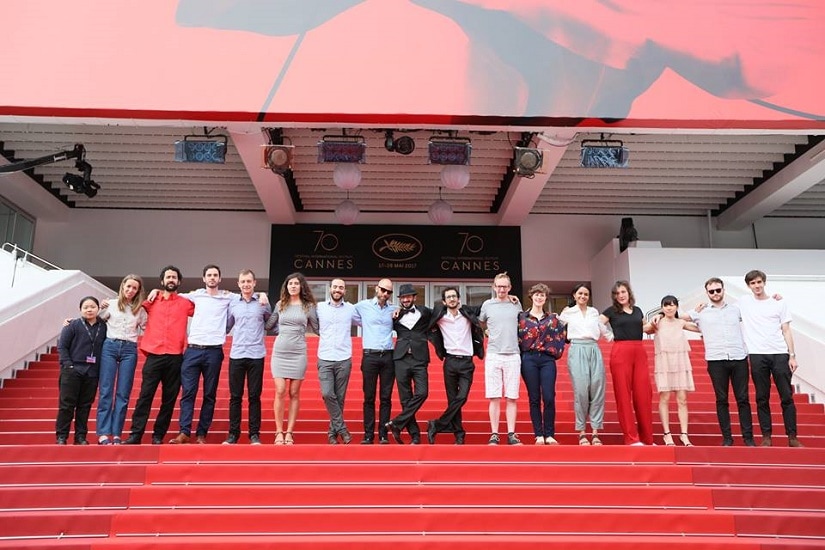 Payal Kapadia (fifth from right) at Cannes 2017. Image from Facebook[/caption]Kapadia further goes on to talk about her peers and professors, whose processes and discussions have shaped her point of view on cinema. This, as well as the ability to access rare films due to FTII's association with the National Film Archive, has been important to her learning process.She also highlights the fact that FTII is a subsidised school where people from different socio-economic backgrounds can learn film making, which is expensive. She says that many people may not have not the opportunity to study film if it were not for a space like her film school. "It allows for a wide range of views and experiences to be expressed and heard, which truly represent a microcosm of the entire country," she adds. After she graduates, Kapadia hopes to develop a feature film and continue experimenting with the short film format.Watch the trailer of Afternoon Clouds here:
First Published:Jun 10, 2017, 12:59:35 IST
Advertisement
Advertisement

How Spider-Man actor Tom Holland has been on a sobriety journey of 4.5 years after being "addicted to alcohol"
Tom Holland has been open about his struggle with alcohol addiction and his 4.5-year sobriety journey, even at the height of his Spider-Man and The Odyssey fame.
3 min read
Sitar virtuoso Rishab Sharma steals the spotlight with Rs 35.8 lakh Jacob & Co Ram Janmabhoomi watch at ‘Ramayana’ event: Here's what makes it rare
Sitarist Rishab Sharma grabbed attention at the Ramayana event with a limited-edition Rs 35.8 lakh Jacob & Co. Epic X Ram Janmabhoomi watch. Here's what makes the luxury timepiece so special.
2 min read
Amitabh Bachchan reveals being admitted to the ICU and undergoing surgery, calls recovery 'the most difficult phase of life'
Amitabh Bachchan has revealed he was hospitalised, underwent surgery and spent time in the ICU. The veteran actor reflected on the emotional and physical challenges of recovery in a deeply personal blog post.
2 min read
Avengers Doomsday trailer out: What to expect from Marvel's ultimate crossover
Marvel Studios has dropped the first trailer for Avengers: Doomsday. From Robert Downey Jr.'s Doctor Doom and Chris Evans' return to the X-Men crossover, here's everything you need to know.
3 min read
Christopher Nolan banned the orchestra for 'The Odyssey': The sound of gongs, scrap metal and more
Composer Ludwig Göransson reveals how he built the epic's entire sound world from bronze gongs, scrap metal and ancient Greek instruments like the aulos and lyre.
2 min read
Advertisement
Advertisement