


How fantasy films like The Shape of Water provide feel-good solutions to actual problems
Films now deal with the political issues of today but ‘allegorises’ them in such a way as to distance them from the actual experience of socio-political life.

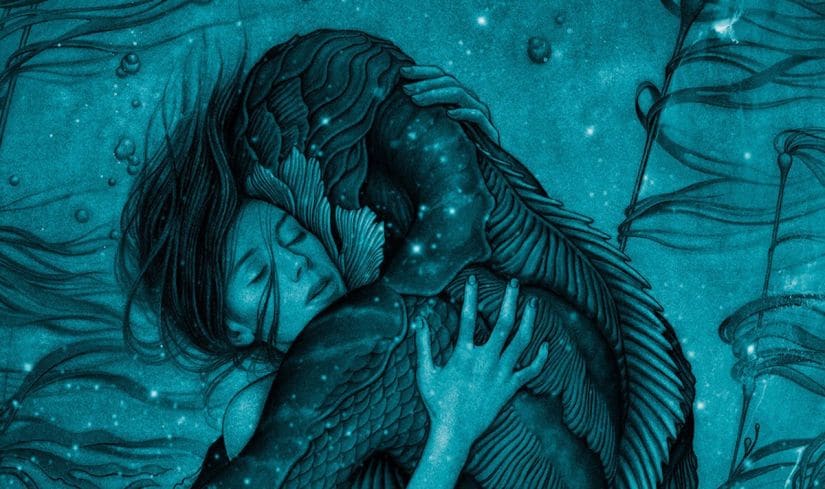
The Shape of Water[/caption]The Shape of Water, a ‘fantasy’ which won the Oscars for both best film and best director in 2018, is set during the Cold War, with Russian intelligence and the American military establishment as its principal villains. The protagonists are a mute Hispanic woman (physically challenged racial minority), her African-American friend (racial minority) and her next door neighbour, a closeted gay (sexual minority). Thus, the film adroitly includes all the political categories relevant in the US today. Needless to add, the good people — represented by minorities and disadvantaged — take on the might of the military and eventually triumph, as a liberal might dream.In the film, Elisa Esposito lives alone above a cinema and works as a cleaning woman at a top secret military establishment, with Giles, an illustrator in advertising, as her neighbour. One day, a mysterious swamp creature (described as an ‘asset’) is brought in and she learns that it was worshipped as a god by a South-American tribe until it was captured by the military and transported here in a container. The creature, which is humanoid, is also an amphibian and the military intends to vivisect it. The scientific information thus obtained will be of help in the space race. The ‘asset’ antagonised Colonel Strickland, the security-in-charge, whose fingers it bit off, and Strickland relishes tormenting it with an electrical prod. But Elisa discovers that she can communicate with it in sign language and that it shares her love for music. She falls in love with it and the two have a relationship. She finds allies in Giles, her African-American co-worker Zelda and Dr Robert Hoffstetler, entrusted with studying the creature, but also a Russian spy; he is a benign scientist at heart and doubted by his Soviet superiors.‘Fantasy’, by definition, depends on an imagination unfettered by ‘knowledge’ and the fantasy genre from Hollywood depends on an entire public not knowing, thereby driving them to use their imagination instead. For example, a wonder suit as a solution for Afghanistan. The distance between the socio-political experience depicted or allegorised and the shape it is given in Hollywood ‘fantasies’ corresponds to the gap between what is happening and what the public does not know about, but partly suspects. There is also an enormous body of fact the public ‘knows’ only through terminology which it does not understand and these terms could be in the law, forensics, technology, politics or military usage etc. Because they are in use the public is ‘acquainted’ with them although it has a small understanding of what the terms actually mean. But these terms become cues for the imagination and serve to inspire fantasies among the public. The term ‘asset’ is such a term in military usage, it can be argued.The Shape of Water itself apparently deals with the political issues of today but ‘allegorises’ them in such a way as to distance them from the actual experience of socio-political life. One can interpret the swamp creature as a recognisable political entity — for instance a prisoner in Guantanamo Bay who represents no threat but who might still have information extractable through illegal procedures. If the ‘political prisoner’ were represented as such, the audience would need to confront the inconvenient fact that they are participants in a democracy but can do little to prevent successive elected governments — including one headed by an admired President like Barack Obama — from stopping such unlawful work.Transforming him into a humanoid amphibian allows the public to recast the entire possibility as a benign fantasy about love between individuals with contrary capabilities, desires and affiliations. The public is deliberately led to feel good although the political truth underlying the story might make it uncomfortable. The swamp creature brought back from the jungles of Brazil becomes token representation of what the imagination of the public makes out of US military doings abroad.This leads us to an uncomfortable recognition which is that as the world we live in gives us access to things which make our lives easier and seemingly more enriched, the gap between what we use (socio-political as well as technological tools) and our understanding of them is growing, and making the citizen more and more powerless. The proliferation of fantasies in Hollywood points to the increasing non-understanding by the public of the milieu in which it is placed, and hence ‘the imagined’ gradually supplanting what is knowable in virtually every domain.MK Raghavendra is a film scholar and author of seven books including The Oxford India Short Introduction to Bollywood (2016). He is deeply interested in social, political and cultural issues in India, an interest that informs his books on film.

How Spider-Man actor Tom Holland has been on a sobriety journey of 4.5 years after being "addicted to alcohol"
Sitar virtuoso Rishab Sharma steals the spotlight with Rs 35.8 lakh Jacob & Co Ram Janmabhoomi watch at ‘Ramayana’ event: Here's what makes it rare
Amitabh Bachchan reveals being admitted to the ICU and undergoing surgery, calls recovery 'the most difficult phase of life'
Avengers Doomsday trailer out: What to expect from Marvel's ultimate crossover
Christopher Nolan banned the orchestra for 'The Odyssey': The sound of gongs, scrap metal and more