
Advertisement


Sections
Hereditary, The Babadook, Don't Look Now: How horror films help us cope with grief, death and loss
Horror films not only make us psychologically engage with our deepest fears but they also help us process our repressed emotions.

You're lost in the deep, dark woods. The thorns and thistles keep pulling at your clothes. You try to find your way out but dead ends force you to retrace your steps. And haunting, lurking and forever ready to strike in the shadows is a spectre.Sorry, that's not the plot of Hereditary.They say that expressing your loss in metaphors facilitates the grieving process and helps us better negotiate with the reality. But, if that doesn't work for you, you know something else that's particularly therapeutic — cinema.[caption id="attachment_4554401" align="alignnone" width="825"]![Promo poster for Hereditary. © A24]() Promo poster for Hereditary. © A24[/caption]Grief, death and loss have been enduring themes in storytelling throughout history but these complex human experiences are particularly cathartic when captured on film. Not only can films reflect your own experience but they can also give you a fresh perspective on how to deal with the emotional toll of losing a loved one.In Krzysztof Kieslowski's Three Colours: Blue, internalising her grief turns Juliette Binoche into an impassive recluse before she finds emotional salvation through unselfish love. In Manchester by the Sea, Kenneth Lonergan examines the all-encompassing effect of grief (and guilt) capturing all its complexities and paradoxes. In Up, Pixar turns the story of a man honouring his wife's memory into a neon bright coloured, helium-powered adventure with an important life lesson about grieving.However, in the aftermath of a tragedy, horror films have a cathartic value unlike any other. Sure, most horror films are exploitative and transgressive solely to capitalise on shock value but many ask fundamental questions about the human experience — most importantly our collective fear of death and the unknown.
Promo poster for Hereditary. © A24[/caption]Grief, death and loss have been enduring themes in storytelling throughout history but these complex human experiences are particularly cathartic when captured on film. Not only can films reflect your own experience but they can also give you a fresh perspective on how to deal with the emotional toll of losing a loved one.In Krzysztof Kieslowski's Three Colours: Blue, internalising her grief turns Juliette Binoche into an impassive recluse before she finds emotional salvation through unselfish love. In Manchester by the Sea, Kenneth Lonergan examines the all-encompassing effect of grief (and guilt) capturing all its complexities and paradoxes. In Up, Pixar turns the story of a man honouring his wife's memory into a neon bright coloured, helium-powered adventure with an important life lesson about grieving.However, in the aftermath of a tragedy, horror films have a cathartic value unlike any other. Sure, most horror films are exploitative and transgressive solely to capitalise on shock value but many ask fundamental questions about the human experience — most importantly our collective fear of death and the unknown.![Donald Sutherland in Don't Look Now. Image via Facebook]() Donald Sutherland in Don't Look Now. Image via Facebook[/caption]Many films — like The Descent for example — have found their monsters from the fall-out of acute grief and have challenged the way cinema personifies grief. Watching protagonists, of such films, deal with loss helps us cope with the anxieties that rise from our own fears. Their fictitious anxieties alleviate our real ones and purge all our negative emotions.Not only do horror films make us psychologically engage with our deepest fears, they also help us process our repressed emotions. As Carl Jung put it, they tap into “primordial archetypes buried deep in our collective subconscious.”In Jennifer Kent’s The Babadook, grief manifests itself in the form of a physical entity as a single mother struggles to raise her son after the sudden death of her husband. Her confrontations with the titular boogeyman represent the five stages of grief — denial, anger, bargaining, depression and acceptance. In the film's conclusion, by accepting the fact that grief and pain will always exist within her, she learns to control her demon. Something, the protagonists of The Orphanage and Good Night Mommy learn the hard way.[caption id="attachment_4554351" align="alignnone" width="825"]
Donald Sutherland in Don't Look Now. Image via Facebook[/caption]Many films — like The Descent for example — have found their monsters from the fall-out of acute grief and have challenged the way cinema personifies grief. Watching protagonists, of such films, deal with loss helps us cope with the anxieties that rise from our own fears. Their fictitious anxieties alleviate our real ones and purge all our negative emotions.Not only do horror films make us psychologically engage with our deepest fears, they also help us process our repressed emotions. As Carl Jung put it, they tap into “primordial archetypes buried deep in our collective subconscious.”In Jennifer Kent’s The Babadook, grief manifests itself in the form of a physical entity as a single mother struggles to raise her son after the sudden death of her husband. Her confrontations with the titular boogeyman represent the five stages of grief — denial, anger, bargaining, depression and acceptance. In the film's conclusion, by accepting the fact that grief and pain will always exist within her, she learns to control her demon. Something, the protagonists of The Orphanage and Good Night Mommy learn the hard way.[caption id="attachment_4554351" align="alignnone" width="825"]![Essie Davis reads to her son in The Babadook. Image via Facebook]() Essie Davis reads to her son in The Babadook. Image via Facebook[/caption]Living vicariously through these characters and their horrifying experiences help us conquer these fears in a safe, controlled environment. As we watch them beat death and carry on in the most adverse circumstances, it offers us hope that we can conquer our own demons. More often than not, the demons in our own hearts and minds can be far scarier than the zombies, vampires and killer clowns found in our books and films.Hereditary opens in Indian cinemas on 22 June.Watch the trailer below:
Essie Davis reads to her son in The Babadook. Image via Facebook[/caption]Living vicariously through these characters and their horrifying experiences help us conquer these fears in a safe, controlled environment. As we watch them beat death and carry on in the most adverse circumstances, it offers us hope that we can conquer our own demons. More often than not, the demons in our own hearts and minds can be far scarier than the zombies, vampires and killer clowns found in our books and films.Hereditary opens in Indian cinemas on 22 June.Watch the trailer below:
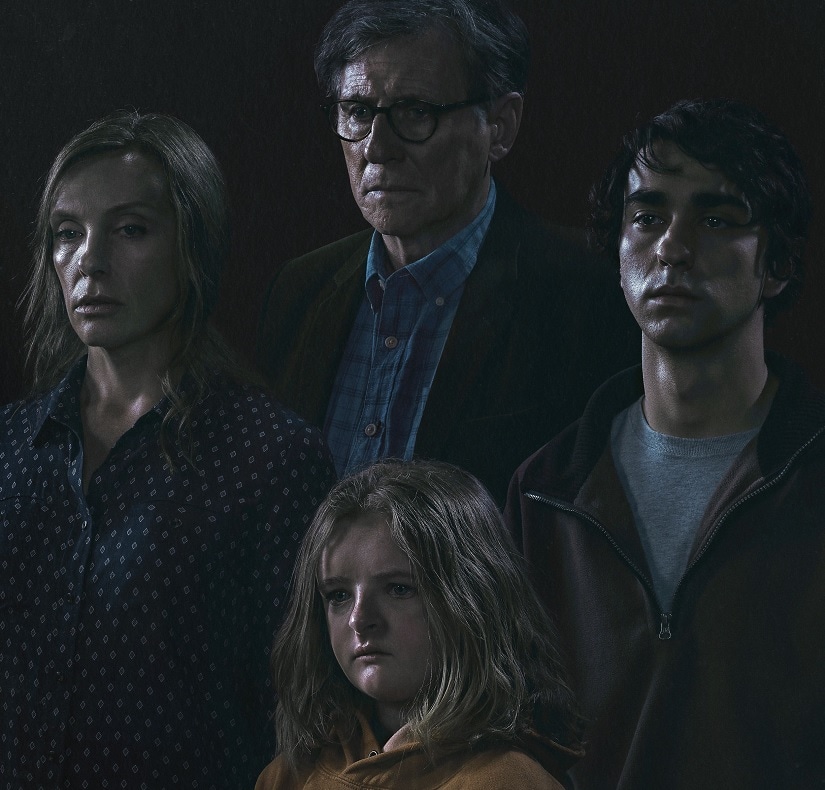 Promo poster for Hereditary. © A24[/caption]Grief, death and loss have been enduring themes in storytelling throughout history but these complex human experiences are particularly cathartic when captured on film. Not only can films reflect your own experience but they can also give you a fresh perspective on how to deal with the emotional toll of losing a loved one.In Krzysztof Kieslowski's Three Colours: Blue, internalising her grief turns Juliette Binoche into an impassive recluse before she finds emotional salvation through unselfish love. In Manchester by the Sea, Kenneth Lonergan examines the all-encompassing effect of grief (and guilt) capturing all its complexities and paradoxes. In Up, Pixar turns the story of a man honouring his wife's memory into a neon bright coloured, helium-powered adventure with an important life lesson about grieving.However, in the aftermath of a tragedy, horror films have a cathartic value unlike any other. Sure, most horror films are exploitative and transgressive solely to capitalise on shock value but many ask fundamental questions about the human experience — most importantly our collective fear of death and the unknown.
“It’s rare that I see films — especially genre films — that treat the subject of grief and trauma with adequate gravity. But Kenneth Lornegan has done it with Margaret and Manchester by the Sea. I just know that when I first endeavoured to write a horror movie about grief and trauma, I wanted to make sure that before I attended to any of the horror elements, that I was making something that felt honest and true to me.” - Ari Aster, writer-director of Hereditary (in an interview with MUBI Notebook)Since its premiere at the 2018 Sundance Film Festival, Hereditary — starring Toni Collette — has earned wide critical acclaim, with many claiming how its "sinister concoction of grief, mental illness, and full-blown supernatural terror" make it "singularly the most terrifying horror film in years."Of course, characters coping with the death of a loved one has been the starting point of some of the most terrifying yet moving horror films over the years. Nicholas Roeg’s 1973 classic Don’t Look Now remains one of the most poignant tales of the emotional and physical scars of loss. Wracked with guilt following the tragic drowning of their daughter, John Baxter (Donald Sutherland) and his wife Laura (Julie Christie) head to Venice desperate to shake off their grief. When two old women approach them with news that their daughter may still be alive, a series of bizarre incidents throw the couple’s life into turmoil. It's eerie, alienating and discomforting right up until its shocking, unforgettable climax where John thinks he has finally caught up with his daughter.
"I wanted to make a film that served as a serious meditation on grief and trauma. It begins as a family tragedy, and then continues down that path, but gradually curdles into a full-bore nightmare — in the same way that life can really feel like a nightmare, like everything is falling apart.” - Ari Aster (Vanity Fair interview)[caption id="attachment_4554361" align="alignnone" width="825"]
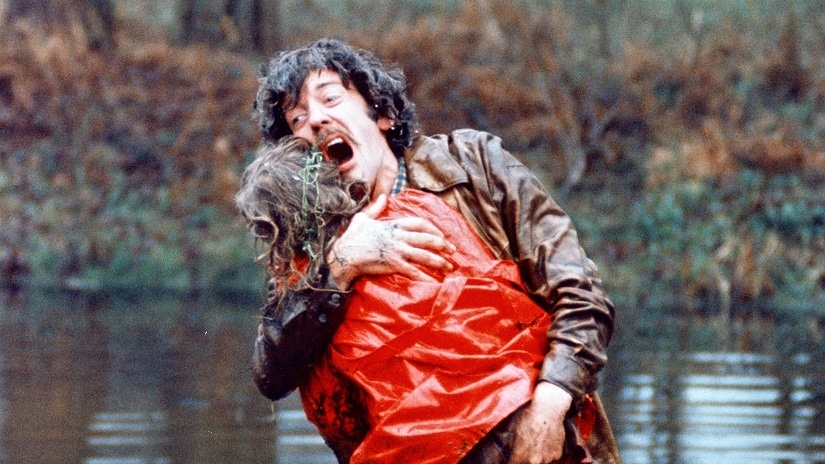 Donald Sutherland in Don't Look Now. Image via Facebook[/caption]Many films — like The Descent for example — have found their monsters from the fall-out of acute grief and have challenged the way cinema personifies grief. Watching protagonists, of such films, deal with loss helps us cope with the anxieties that rise from our own fears. Their fictitious anxieties alleviate our real ones and purge all our negative emotions.Not only do horror films make us psychologically engage with our deepest fears, they also help us process our repressed emotions. As Carl Jung put it, they tap into “primordial archetypes buried deep in our collective subconscious.”In Jennifer Kent’s The Babadook, grief manifests itself in the form of a physical entity as a single mother struggles to raise her son after the sudden death of her husband. Her confrontations with the titular boogeyman represent the five stages of grief — denial, anger, bargaining, depression and acceptance. In the film's conclusion, by accepting the fact that grief and pain will always exist within her, she learns to control her demon. Something, the protagonists of The Orphanage and Good Night Mommy learn the hard way.[caption id="attachment_4554351" align="alignnone" width="825"]
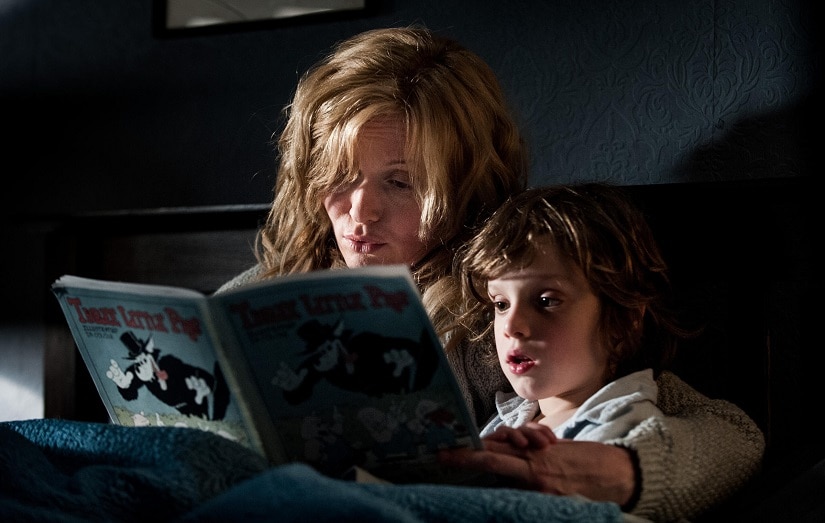 Essie Davis reads to her son in The Babadook. Image via Facebook[/caption]Living vicariously through these characters and their horrifying experiences help us conquer these fears in a safe, controlled environment. As we watch them beat death and carry on in the most adverse circumstances, it offers us hope that we can conquer our own demons. More often than not, the demons in our own hearts and minds can be far scarier than the zombies, vampires and killer clowns found in our books and films.Hereditary opens in Indian cinemas on 22 June.Watch the trailer below:
First Published:Jun 20, 2018, 19:03:25 IST
Advertisement
Advertisement

How Spider-Man actor Tom Holland has been on a sobriety journey of 4.5 years after being "addicted to alcohol"
Tom Holland has been open about his struggle with alcohol addiction and his 4.5-year sobriety journey, even at the height of his Spider-Man and The Odyssey fame.
3 min read
Sitar virtuoso Rishab Sharma steals the spotlight with Rs 35.8 lakh Jacob & Co Ram Janmabhoomi watch at ‘Ramayana’ event: Here's what makes it rare
Sitarist Rishab Sharma grabbed attention at the Ramayana event with a limited-edition Rs 35.8 lakh Jacob & Co. Epic X Ram Janmabhoomi watch. Here's what makes the luxury timepiece so special.
2 min read
Amitabh Bachchan reveals being admitted to the ICU and undergoing surgery, calls recovery 'the most difficult phase of life'
Amitabh Bachchan has revealed he was hospitalised, underwent surgery and spent time in the ICU. The veteran actor reflected on the emotional and physical challenges of recovery in a deeply personal blog post.
2 min read
Avengers Doomsday trailer out: What to expect from Marvel's ultimate crossover
Marvel Studios has dropped the first trailer for Avengers: Doomsday. From Robert Downey Jr.'s Doctor Doom and Chris Evans' return to the X-Men crossover, here's everything you need to know.
3 min read
Christopher Nolan banned the orchestra for 'The Odyssey': The sound of gongs, scrap metal and more
Composer Ludwig Göransson reveals how he built the epic's entire sound world from bronze gongs, scrap metal and ancient Greek instruments like the aulos and lyre.
2 min read
Advertisement
Advertisement