


Dunkirk: Lessons in visual storytelling from the silent film rendition of Christopher Nolan's film
A recent 8-minute silent edit of Christopher Nolan’s Dunkirk reimagines the film as a silent era movie and despite the 2-hour long film having minimal dialogues, the shorter version still manages to hold its own.

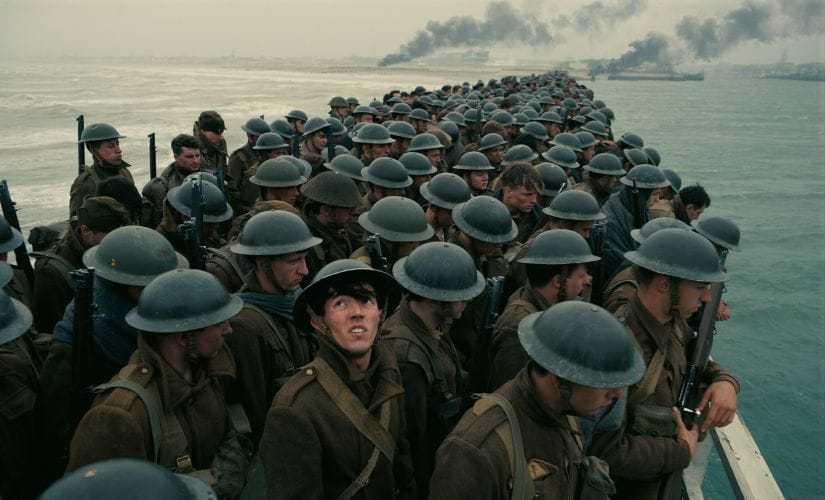
A still from Christopher Nolan's Dunkirk[/caption]A recent 8-minute silent edit of Christopher Nolan’s Dunkirk reimagines the film as a silent era movie and despite the 2-hour long film having minimal dialogues, the shorter version still manages to hold its own. Although the experiment includes onscreen intertitles, which were also used in the silent era to present key dialogue and at times comment on the action for the cinema audience, the sheer power of the images in the 8-minute version does not let anything get lost in translation. Of late, such experiments where iconic films are reimagined without any dialogue have become quite common. A few years ago Steven Soderbergh also made a silent edit of Indiana Jones and Raiders of the Lost Ark to reiterate how Spielberg’s storytelling has always been visual than aural. These have become a great tool for film fans and students to go back to the basic “Show, Don’t Tell” tenant, which was being pushed back thanks to a hyper-kinetic MTV like shot-taking or the highly stylized style of auteurs such as John Woo or Quentin Tarantino.
In an Indian context, perhaps Satyajit Ray would be a pioneer in using visual elements to narrate any story. The mise en scène of his films such as Pather Panchali (1955), Kanchenjungha (1962) and Shatranj Ke Khirai (1977) transforms the visual to not just a cinematic pleasure but also text. Premchand’s short story that was adapted by Ray took passing references to the decaying feudal class, life and times in Awadh of the 19th century and translated them into an unforgettable and visually alluring treatise on the same subject. The manner in which Vijay Anand framed his visuals also conveyed much more than what was being said. In the last few years, there has been an increase in the number of Hindi films that have changed the ways films are told from a visual perspective. But these Bollywood filmmakers still have a lot to learn when it comes to using images and playing with perspective.
Even animation films such as Wall-E (2008), where the first 40-minutes or so of the film practically has no dialogue, have revolutionised visual storytelling. Director Andrew Stanton asked Pixar artists how silent comedians such as Buster Keaton, Harold Lloyd, and of course Charlie Chaplin could tell some of the best stories without sophisticated special effects, flashy cameras, or sound? As the film was being developed, they attempted to recreate the magic of the silent era images and many have called it "inventive" and "as brilliant as the classics". Perhaps, the manner in which realism is making a return behind the scenes in the universe that operates Hindi films (read budgets and themes) maybe experiments in true visual storytelling, too, are a matter of time.
 More from Entertainment
How Spider-Man actor Tom Holland has been on a sobriety journey of 4.5 years after being "addicted to alcohol"
Sitar virtuoso Rishab Sharma steals the spotlight with Rs 35.8 lakh Jacob & Co Ram Janmabhoomi watch at ‘Ramayana’ event: Here's what makes it rare
Amitabh Bachchan reveals being admitted to the ICU and undergoing surgery, calls recovery 'the most difficult phase of life'
Avengers Doomsday trailer out: What to expect from Marvel's ultimate crossover
Christopher Nolan banned the orchestra for 'The Odyssey': The sound of gongs, scrap metal and more