
Advertisement


Sections
Flashback | 35 years on, Smita Patil's Mirch Masala remains a frenetic journey in search of a woman's right to her space
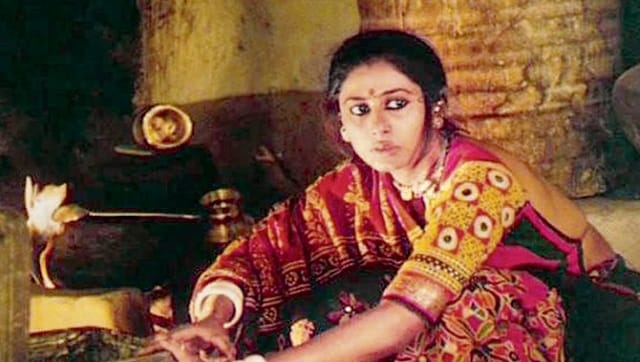
Mirch Masala could be perceived as a parable of female bonding or a straightforward thriller about the victim and the perpetrator. Either way, the poise and power of the film remain undiminished over the years.

Smita Patil died before she could see herself in Mirch Masala. Would she have placed it among her best works? She missed out on one of her most alluring performances in a film that refuses to age.What is it about Mirch Masala that is so tantalizing and engaging? Is it the congregation of these beautiful women in a Gujarati village, all strong and yet lorded over by the rules of a patriarchal society?Twenty-five years after it was made, Ketan Mehta’s Mirch Masala ![mirch masala 1_11zon]() Sisters Ratna and Supriya
Sisters Ratna and Supriya ![mirch masala]() The finale, where the watchman is gunned down, is not a moment of defeat for the protector. We know what Mehta says goes beyond the immediate death of the noble character. Sometimes, just putting up a fight against injustice is enough to shake the foundation of a suffocating male order. Sometimes, women can guard their dignity even when the weapons at their disposal are just tokens of protest. Sometimes, saying ‘no’ to wrongdoing is enough.Mehta’s film is actually a wondrous womb with a view. It is no coincidence that one of the women in the chilli factory goes into labour while Sonbai is being combed out of her fortress. Mirch Masala is a frenetic journey in search of a woman’s right to her space.
The finale, where the watchman is gunned down, is not a moment of defeat for the protector. We know what Mehta says goes beyond the immediate death of the noble character. Sometimes, just putting up a fight against injustice is enough to shake the foundation of a suffocating male order. Sometimes, women can guard their dignity even when the weapons at their disposal are just tokens of protest. Sometimes, saying ‘no’ to wrongdoing is enough.Mehta’s film is actually a wondrous womb with a view. It is no coincidence that one of the women in the chilli factory goes into labour while Sonbai is being combed out of her fortress. Mirch Masala is a frenetic journey in search of a woman’s right to her space.
 Sisters Ratna and Supriya
  The finale, where the watchman is gunned down, is not a moment of defeat for the protector. We know what Mehta says goes beyond the immediate death of the noble character. Sometimes, just putting up a fight against injustice is enough to shake the foundation of a suffocating male order. Sometimes, women can guard their dignity even when the weapons at their disposal are just tokens of protest. Sometimes, saying ‘no’ to wrongdoing is enough.Mehta’s film is actually a wondrous womb with a view. It is no coincidence that one of the women in the chilli factory goes into labour while Sonbai is being combed out of her fortress. Mirch Masala is a frenetic journey in search of a woman’s right to her space.
It could be perceived as a parable of female bonding or a straightforward thriller about the victim and the perpetrator. Either way, the poise and power of the film remain undiminished over the years.The subedaar’s power-hungry mechanisations are manoeuvred by a tremendous satire. The cheesy subedaar has lately bought himself a miracle machine known as the Gramophone (the film is set in pre-Independence India). He plays his 78 rpm records on his new toy to terrorise villagers and seduce their women. He is the rogue element sanctioned by the State to perpetrate a power that he is ill-equipped to use. He therefore ends up looking ludicrous in his self-importance.Mirch Masala makes excessive power look ridiculous and funny. When the subedaar decides to break down the chilli factory’s gate, he thinks he’s breaking Sonbai’s defences. Absolute power does not just corrupt absolutely. It also blinds. No wonder the women throw chilli powder into the sickening Subedaar’s lustful eyes at the end. He cannot see his own brutish arrogance anyway. Mirch Masala Trivia
- Smita Patil’s last film; she died before its release.
- Mohan Gokhale, who plays the Oberoi’s kid brother, also died very young, at the age of 40.
- Suresh Oberoi won the National Award for the mukhiya role.
- One can see Paresh Rawal, who later played Sardar Patel in Mehta’s biopic, as one of the villagers.
- Dina Pathak, and both her daughters Ratna and Surpiya, were in the film. It is the only time they all appeared together in one film.
- Om Puri was only 30 when he played the 80-year old watchman of the chilli factory.
Subhash K Jha is a Patna-based journalist. He's been writing about Bollywood for long enough to know the industry inside out.
First Published:Feb 13, 2022, 08:55:59 IST
Advertisement
Advertisement

Nargis Fakhri rings in New Year's with rumoured boyfriend Tony Beig and ex-boyfriend Uday Chopra, photo goes viral
Before Tony, Nargis was in a relationship with Uday Chopra. In a conversation with ETimes, the Main Tera Hero actress revealed that she dated Uday for five years, adding he was the most beautiful human she met in India
Karan Johar drops selfie with Rani Mukerji and a message for trolls as 2024 begins
In the picture, Karan posed for a selfie with Rani Mukerji. The duo twinned in black. He accompanied the picture with a text that read "Ami Rani…2024"
WATCH: Ira Khan And Nupur Shikhare's wedding festivities begin at Aamir Khan’s Mumbai home
Nupur Shikhare made a romantic proposal to Ira Khan during a sports event. He went down on one knee to present the love of his life with a ring
'Three months of hell': Sonam Kapoor on husband Anand Ahuja's illness which 'no doctor could diagnose'
Sonam went on to reflect on how she balanced supporting her husband in his work while trying to spend time with her precious family and incredible friends and called it the most tough, amazing, fulfilling and enriching year
Prakash Raj summoned by Enforcement Directorate in a 100-crore ponzi & fraud case, actor reacts
The investigation pertains to a case against Pranav Jewellers, a partnership firm based in Tiruchirapalli, whom the ED raided on November 20 and claimed to have seized "unexplained" cash of Rs 23.70 lakh and some gold jewellery
Advertisement
Advertisement