
Advertisement
Co Presented By
Co Presented By


Sections
Premium for gold bars rises to 1-year high in India
There is a sudden demand in the market as prices have fallen.

Premiums for gold bars in India, the world's biggest importer of bullion, rose to the highest level in more than a year to top $2 an ounce due to sudden demand triggered by a 10 percent fall from early September peak, three importers and a supplier said on Wednesday.
[caption id="attachment_94448" align="alignleft" width="380" caption="Reuters"]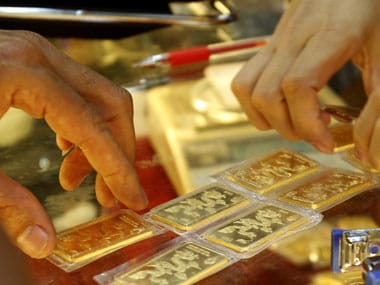 [/caption]
"There is a sudden demand in the market as prices have fallen," said a official with a state-run bullion importing bank in Mumbai.
Advertisement
There was difficulty in getting gold supplies abroad for import, the banker added.
Reuters
First Published:Sep 28, 2011, 12:36:52 IST
Advertisement
Advertisement

India’s trade surplus with US may cross $90 billion after tariff cuts, says SBI report
Lower duties under the India–US trade deal could push exports past $100 billion annually and sharply widen the surplus, SBI analysis suggests.
1 min read
Inflation likely to be a big focus area for budget 2024, say sources
Retail inflation in India jumped in November and peaked three months later at 5.55 per cent, according to statistics released on December 12 by the National Statistics Office (NSO)
Explained: Will the Bank of Japan break tradition and raise interest rates?
Even as the Federal Reserve and the world’s other central banks raise interest rates to try to curb inflation, the Bank of Japan has stood firm, keeping its key interest rate at minus 0.1 per cent even as the yen sinks to three-decade lows against the dollar
UK enters recession, central bank admits
Bank of England’s Monetary Policy Committee released minutes of its meetings, which most recently included a warning about the UK economy entering or possibly even already being in a recession. Read more.
Explained: How the rising US dollar can affect everyone
The dollar is near its highest level in more than two decades against major currencies, including the euro and Japanese yen. Many professional investors don't expect it to ease off anytime soon
Advertisement
Advertisement