
Advertisement


Sections
Two years on, over a million Rohingya refugees still without rights, status or justice
The conditions for the Rohingya inside the world’s largest refugee camp in Cox’s Bazar are far from acceptable. Refugees live in emergency conditions, but still they choose to remain rather to return under a repatriation deal without guarantees of justice.

By Abdullah YusufThis month marks the second anniversary of Rohingya refugees fleeing into Bangladesh following a brutal crackdown by Myanmar’s security forces. A predominantly Muslim ethnic minority from the Rakhine state of Buddhist Myanmar, the Rohingya have been called the “most persecuted minority in the world”.[caption id="attachment_7199141" align="alignnone" width="825"]![Yasmin, a Rohingya girl who was expelled from Leda High School for being a Rohingya. Photo credit: Reuters/Mohammad Ponir Hossain.]() Yasmin, a Rohingya girl who was expelled from Leda High School for being a Rohingya. Photo credit: Reuters/Mohammad Ponir Hossain.[/caption]Promised their own autonomous state in return for helping Britain during the World War II (which never happened), the Rohingya have a history of being resented by the Burmese/Myanmarese people. More recently, stripped of citizenship under a 1982 law which deemed the Rohingya as Bengali, they now find themselves stateless, as Myanmar and Bangladesh refuse to acknowledge them as citizens.In a recent visit to Cox’s Bazar, the coastal district in Bangladesh which houses Rohingya refugee camps, senior Myanmar officials tried to persuade them to return home. A repatriation deal was signed between Bangladesh and Myanmar in 2017 and 2018, but as I wrote last year, without a concrete commitment regarding their safety and the granting of citizenship, the Rohingya will continue to refuse the repatriation plea. To date, almost none have volunteered to return.Now hosting more than 1.1 million Rohingyas, Bangladesh has pledged not to force anyone to leave the country. The refugees are officially registered as “forcibly displaced Myanmar nationals”, a designation that denies their refugee status and any associated rights.This official stance makes them more vulnerable to denial of their human rights – freedom from detention and exploitation, access to public services, education, livelihoods and freedom of movement. Though Bangladesh is not a signatory to the 1951 Refugee Convention or its 1967 Protocol, it has an obligation under international human rights law to ensure that all people, including refugees, retain fundamental rights.International responseIn a recent leaked report, the Association of Southeast Asian Nations (ASEAN) – of which Myanmar is a member – has been optimistic about the return of the Rohingyas, predicting an overall “smooth and orderly” repatriation.While Malaysia and Indonesia, ASEAN’s two largest Muslim-majority member states, called for a proactive approach to address the crisis, other members offered only weak criticism of Myanmar’s handling of the situation and refrained from direct accusations of mass atrocities committed against the Rohingya population. Unsurprisingly, ASEAN was heavily criticised by human rights groups for the report, which did not even acknowledge the identity of Rohingyas, choosing to refer to them instead as “Bengalis”.Another vital player in the Rohingya crisis has been the United Nations. In 2018 the United Nations High Commissioner for Refugees (UNHCR) signed a secret agreement that pushed for repatriation and the establishment of an identity card scheme, which many Rohingya opposed. An independent report analysing the involvement of the United Nations in Myanmar between 2010-2018, highlights its systemic failures, stating that:
Yasmin, a Rohingya girl who was expelled from Leda High School for being a Rohingya. Photo credit: Reuters/Mohammad Ponir Hossain.[/caption]Promised their own autonomous state in return for helping Britain during the World War II (which never happened), the Rohingya have a history of being resented by the Burmese/Myanmarese people. More recently, stripped of citizenship under a 1982 law which deemed the Rohingya as Bengali, they now find themselves stateless, as Myanmar and Bangladesh refuse to acknowledge them as citizens.In a recent visit to Cox’s Bazar, the coastal district in Bangladesh which houses Rohingya refugee camps, senior Myanmar officials tried to persuade them to return home. A repatriation deal was signed between Bangladesh and Myanmar in 2017 and 2018, but as I wrote last year, without a concrete commitment regarding their safety and the granting of citizenship, the Rohingya will continue to refuse the repatriation plea. To date, almost none have volunteered to return.Now hosting more than 1.1 million Rohingyas, Bangladesh has pledged not to force anyone to leave the country. The refugees are officially registered as “forcibly displaced Myanmar nationals”, a designation that denies their refugee status and any associated rights.This official stance makes them more vulnerable to denial of their human rights – freedom from detention and exploitation, access to public services, education, livelihoods and freedom of movement. Though Bangladesh is not a signatory to the 1951 Refugee Convention or its 1967 Protocol, it has an obligation under international human rights law to ensure that all people, including refugees, retain fundamental rights.International responseIn a recent leaked report, the Association of Southeast Asian Nations (ASEAN) – of which Myanmar is a member – has been optimistic about the return of the Rohingyas, predicting an overall “smooth and orderly” repatriation.While Malaysia and Indonesia, ASEAN’s two largest Muslim-majority member states, called for a proactive approach to address the crisis, other members offered only weak criticism of Myanmar’s handling of the situation and refrained from direct accusations of mass atrocities committed against the Rohingya population. Unsurprisingly, ASEAN was heavily criticised by human rights groups for the report, which did not even acknowledge the identity of Rohingyas, choosing to refer to them instead as “Bengalis”.Another vital player in the Rohingya crisis has been the United Nations. In 2018 the United Nations High Commissioner for Refugees (UNHCR) signed a secret agreement that pushed for repatriation and the establishment of an identity card scheme, which many Rohingya opposed. An independent report analysing the involvement of the United Nations in Myanmar between 2010-2018, highlights its systemic failures, stating that:![Kefayat Ullah, expelled from Leda High School for being a Rohingya. Photo credit: Reuters/Mohammad Ponir Hossain.]() Kefayat Ullah, expelled from Leda High School for being a Rohingya. Photo credit: Reuters/Mohammad Ponir Hossain.[/caption]Peace vs justiceThe conditions for the Rohingya inside the world’s largest refugee camp in Cox’s Bazar are far from acceptable. Refugees lack proper sanitation and live in emergency conditions, but still they choose to remain rather to return under a repatriation deal without guarantees of justice for past (or potential) crimes against them.Human Rights Watch says that the Myanmar national government and the Rakhine state government have consistently avoided responsibility for creating a safe space with basic human rights for returning refugees. Myanmar also refuses to provide access to international investigators to monitor the situation, and in terms of coverage of the Rohingya plight, press freedoms are very limited.The Myanmar government is responsible for multiple crimes against the Rohingya, including genocide, rape and arson. Given that none of the key perpetrators have been held accountable, the Rohingya’s distrust of their plan is understandable.The prosecution of key perpetrators is needed urgently, both for those who have lost loved ones as well as those who suffered violence and had to flee their country in fear of their lives. In the past, such trials have been paramount in attaining a sense of justice for victims while consolidating post-conflict peace.[caption id="attachment_7199231" align="alignnone" width="825"]
Kefayat Ullah, expelled from Leda High School for being a Rohingya. Photo credit: Reuters/Mohammad Ponir Hossain.[/caption]Peace vs justiceThe conditions for the Rohingya inside the world’s largest refugee camp in Cox’s Bazar are far from acceptable. Refugees lack proper sanitation and live in emergency conditions, but still they choose to remain rather to return under a repatriation deal without guarantees of justice for past (or potential) crimes against them.Human Rights Watch says that the Myanmar national government and the Rakhine state government have consistently avoided responsibility for creating a safe space with basic human rights for returning refugees. Myanmar also refuses to provide access to international investigators to monitor the situation, and in terms of coverage of the Rohingya plight, press freedoms are very limited.The Myanmar government is responsible for multiple crimes against the Rohingya, including genocide, rape and arson. Given that none of the key perpetrators have been held accountable, the Rohingya’s distrust of their plan is understandable.The prosecution of key perpetrators is needed urgently, both for those who have lost loved ones as well as those who suffered violence and had to flee their country in fear of their lives. In the past, such trials have been paramount in attaining a sense of justice for victims while consolidating post-conflict peace.[caption id="attachment_7199231" align="alignnone" width="825"]![A Rohingya woman and her baby detained in a police station. Photo credit: Reuters/Surapan Boonthanom.]() A Rohingya woman and her baby detained in a police station. Photo credit: Reuters/Surapan Boonthanom.[/caption]Criminal accountability for the crimes committed is also crucial in order to establish and reinforce the rule of law in any post-conflict society. But peace should not be achieved through the expunging of past crimes – this simply perpetuates trauma and the sense of injustice felt by the victims.When past mass-crimes remain unaddressed, the chances of recurrence remain high. Justice should not be perceived as an impediment to achieving peace; peace and justice should be seen as reinforcing one another – something the Myanmar government, the United Nations and ASEAN must recognise if they wish any repatriation deal to be accepted.The overall situation of the Rohingya remains chaotic. The prospects for a repatriation deal that will cover the demands of the Rohingya remain unrealistic, at least in the short term, and their current status within Bangladesh as displaced Myanmar nationals is untenable. International organisations, such as ASEAN and the United Nations, are pushing for repatriation while ignoring the importance of attaining justice for the Rohingya people.The danger of pushing for this fragile peace, which would at best only be a temporary measure, is that the motives of the conflict will not be resolved – namely the Myanmar people’s nationalistic support for their government’s refusal to acknowledge the Rohingya people.The Rohingya will not accept any deal that does not acknowledge the crimes against them or which allows the perpetrators to escape justice. And they need to know that any future aggression against them will have lawful repercussions – a fundamental right that ASEAN and the United Nations must consider.
A Rohingya woman and her baby detained in a police station. Photo credit: Reuters/Surapan Boonthanom.[/caption]Criminal accountability for the crimes committed is also crucial in order to establish and reinforce the rule of law in any post-conflict society. But peace should not be achieved through the expunging of past crimes – this simply perpetuates trauma and the sense of injustice felt by the victims.When past mass-crimes remain unaddressed, the chances of recurrence remain high. Justice should not be perceived as an impediment to achieving peace; peace and justice should be seen as reinforcing one another – something the Myanmar government, the United Nations and ASEAN must recognise if they wish any repatriation deal to be accepted.The overall situation of the Rohingya remains chaotic. The prospects for a repatriation deal that will cover the demands of the Rohingya remain unrealistic, at least in the short term, and their current status within Bangladesh as displaced Myanmar nationals is untenable. International organisations, such as ASEAN and the United Nations, are pushing for repatriation while ignoring the importance of attaining justice for the Rohingya people.The danger of pushing for this fragile peace, which would at best only be a temporary measure, is that the motives of the conflict will not be resolved – namely the Myanmar people’s nationalistic support for their government’s refusal to acknowledge the Rohingya people.The Rohingya will not accept any deal that does not acknowledge the crimes against them or which allows the perpetrators to escape justice. And they need to know that any future aggression against them will have lawful repercussions – a fundamental right that ASEAN and the United Nations must consider.![The Conversation]() Abdullah Yusuf, Lecturer in Politics, University of DundeeThis article is republished from The Conversation under a Creative Commons license. Read the original article.
Abdullah Yusuf, Lecturer in Politics, University of DundeeThis article is republished from The Conversation under a Creative Commons license. Read the original article.
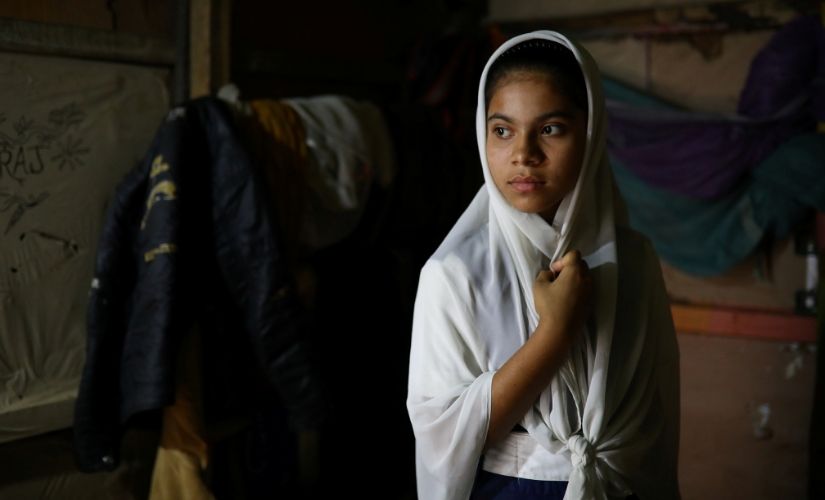 Yasmin, a Rohingya girl who was expelled from Leda High School for being a Rohingya. Photo credit: Reuters/Mohammad Ponir Hossain.[/caption]Promised their own autonomous state in return for helping Britain during the World War II (which never happened), the Rohingya have a history of being resented by the Burmese/Myanmarese people. More recently, stripped of citizenship under a 1982 law which deemed the Rohingya as Bengali, they now find themselves stateless, as Myanmar and Bangladesh refuse to acknowledge them as citizens.In a recent visit to Cox’s Bazar, the coastal district in Bangladesh which houses Rohingya refugee camps, senior Myanmar officials tried to persuade them to return home. A repatriation deal was signed between Bangladesh and Myanmar in 2017 and 2018, but as I wrote last year, without a concrete commitment regarding their safety and the granting of citizenship, the Rohingya will continue to refuse the repatriation plea. To date, almost none have volunteered to return.Now hosting more than 1.1 million Rohingyas, Bangladesh has pledged not to force anyone to leave the country. The refugees are officially registered as “forcibly displaced Myanmar nationals”, a designation that denies their refugee status and any associated rights.This official stance makes them more vulnerable to denial of their human rights – freedom from detention and exploitation, access to public services, education, livelihoods and freedom of movement. Though Bangladesh is not a signatory to the 1951 Refugee Convention or its 1967 Protocol, it has an obligation under international human rights law to ensure that all people, including refugees, retain fundamental rights.
"Serious errors were committed, and opportunities were lost in the UN system, following a fragmented strategy rather than a common plan of action."The report frames the political component as a downside to United Nations actions on the ground. Further criticism has come from human rights experts who have blasted the United Nations for downplaying the severity of the crisis until it was too late.[caption id="attachment_7199211" align="alignnone" width="825"]
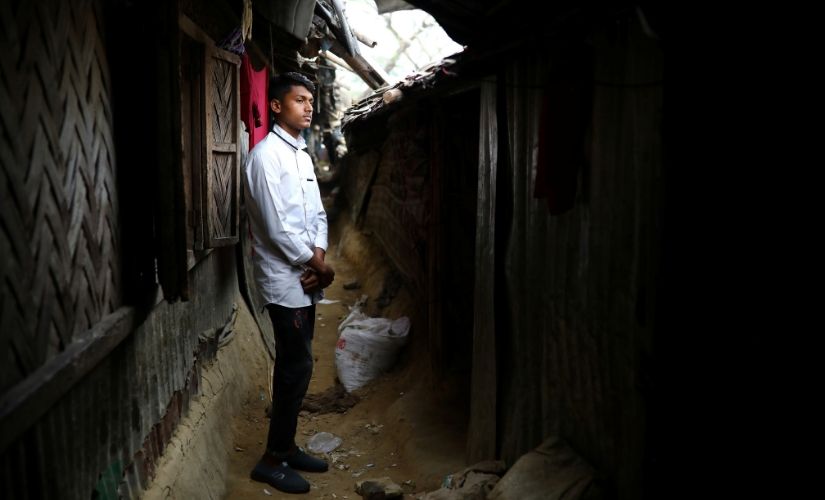 Kefayat Ullah, expelled from Leda High School for being a Rohingya. Photo credit: Reuters/Mohammad Ponir Hossain.[/caption]Peace vs justiceThe conditions for the Rohingya inside the world’s largest refugee camp in Cox’s Bazar are far from acceptable. Refugees lack proper sanitation and live in emergency conditions, but still they choose to remain rather to return under a repatriation deal without guarantees of justice for past (or potential) crimes against them.Human Rights Watch says that the Myanmar national government and the Rakhine state government have consistently avoided responsibility for creating a safe space with basic human rights for returning refugees. Myanmar also refuses to provide access to international investigators to monitor the situation, and in terms of coverage of the Rohingya plight, press freedoms are very limited.The Myanmar government is responsible for multiple crimes against the Rohingya, including genocide, rape and arson. Given that none of the key perpetrators have been held accountable, the Rohingya’s distrust of their plan is understandable.The prosecution of key perpetrators is needed urgently, both for those who have lost loved ones as well as those who suffered violence and had to flee their country in fear of their lives. In the past, such trials have been paramount in attaining a sense of justice for victims while consolidating post-conflict peace.[caption id="attachment_7199231" align="alignnone" width="825"]
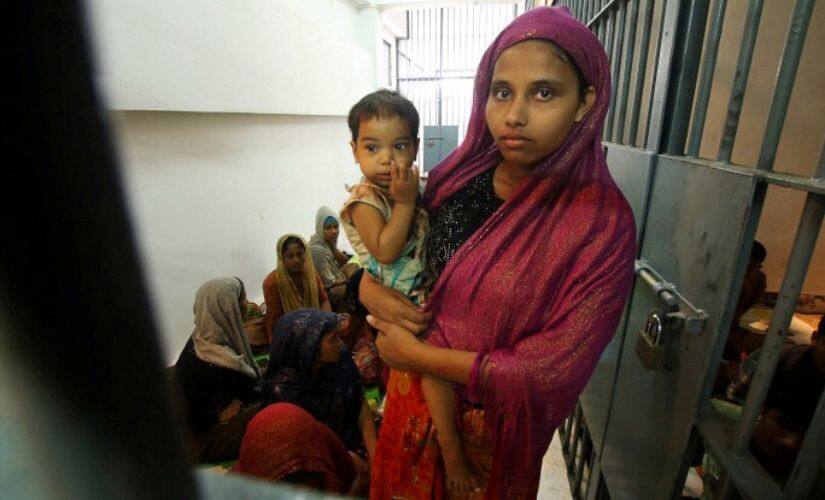 A Rohingya woman and her baby detained in a police station. Photo credit: Reuters/Surapan Boonthanom.[/caption]Criminal accountability for the crimes committed is also crucial in order to establish and reinforce the rule of law in any post-conflict society. But peace should not be achieved through the expunging of past crimes – this simply perpetuates trauma and the sense of injustice felt by the victims.When past mass-crimes remain unaddressed, the chances of recurrence remain high. Justice should not be perceived as an impediment to achieving peace; peace and justice should be seen as reinforcing one another – something the Myanmar government, the United Nations and ASEAN must recognise if they wish any repatriation deal to be accepted.The overall situation of the Rohingya remains chaotic. The prospects for a repatriation deal that will cover the demands of the Rohingya remain unrealistic, at least in the short term, and their current status within Bangladesh as displaced Myanmar nationals is untenable. International organisations, such as ASEAN and the United Nations, are pushing for repatriation while ignoring the importance of attaining justice for the Rohingya people.The danger of pushing for this fragile peace, which would at best only be a temporary measure, is that the motives of the conflict will not be resolved – namely the Myanmar people’s nationalistic support for their government’s refusal to acknowledge the Rohingya people.The Rohingya will not accept any deal that does not acknowledge the crimes against them or which allows the perpetrators to escape justice. And they need to know that any future aggression against them will have lawful repercussions – a fundamental right that ASEAN and the United Nations must consider.
 Abdullah Yusuf, Lecturer in Politics, University of DundeeThis article is republished from The Conversation under a Creative Commons license. Read the original article.
First Published:Aug 21, 2019, 12:13:59 IST
Advertisement
Advertisement

Explorers discover wreckage of plane 72 years later. Will this help in finding MH370?
On April 11, 1952, a Pan Am Flight 526A, crashed into the Atlantic Ocean, killing 52 of the 69 people on board. After decades of effort, explorers have found the wreck of the plane at the bottom of the seabed near Puerto Rico. The discovery offers new hope to families who lost loved ones in the Malaysia Airlines Flight 370 crash in 2014
5 min read
Chinese Defence Attache praise India’s rescue of 12 sailors off Kerala cost
Rear Admiral You Jian, the Defence Attache at the Embassy of China in India, has praised India for rescuing 12 Chinese crew members off the coast of Kerala last year.
1 min read
'China ready to work with India,' says Wang Yi after talks with Jaishankar in Manila
China's Foreign Minister Wang Yi said that Beijing and New Delhi should 'consolidate positive momentum' in bilateral ties during his talks with his Indian counterpart Dr S. Jaishankar.
1 min read
Secret Service agent on JD Vance security detail put on leave over alleged leak of travel plans
A US Secret Service agent assigned to Vice President JD Vance's security detail has been placed on administrative leave after being suspected of leaking sensitive information about the vice president's travel plans to the media
2 min read
China has dominated Myanmar’s rare earth mines — now India eyes deal to harness country’s critical minerals
India is deepening rare earth cooperation with Myanmar as New Delhi seeks alternative sources of critical minerals dominated by China, including dysprosium and terbium used in EVs, defence systems and clean energy technologies
6 min read
Advertisement
Advertisement